
Today: 18 July 2026
Browse Category

EPA:HO 2 April 2025 - 23 October 2025

Europe’s $7.5 Billion Space Alliance: Airbus, Thales & Leonardo Join Forces to Challenge Musk’s Starlink

Europe’s $7.5 Billion Space Alliance: Airbus, Thales & Leonardo Join Forces to Challenge Musk’s Starlink

Europe is finally uniting its space champions. In a landmark agreement announced on October 23, aerospace giants Airbus, Thales, and Leonardo unveiled plans to combine their satellite divisions into a single joint venture worth €6.5 billion in annual salesreuters.com. The move wraps up months of negotiations and seeks to create a European “one-stop-shop” for satellites and space systems that can compete with Elon Musk’s Starlink megaconstellation and other rivalsreuters.com. It’s a strategic play to regain ground in the global space race, where Europe’s once-leading satellite firms have fallen behind the explosive growth of U.S. and Chinese players.
23 October 2025
Belgium’s Space Boom: From Small Nation to Satellite Powerhouse

Belgium’s Space Boom: From Small Nation to Satellite Powerhouse

Belgium’s journey in space began in the 1960s, making it one of the earliest European nations involved in space endeavors Belgium. In 1962 the government formed Belgospace, an industry-academia forum to coordinate Belgium’s participation in Europe’s first space organizations Switchtospace. Belgium became a founding member of ESA in 1975 and embraced a multilateral approach – recognizing that pooling resources was the way for a small country to achieve big goals in space Belgium. Over decades, Belgium honed specific strengths rather than trying to do everything. Early on, Belgian firms contributed equipment to ESA’s first satellites and launchers. By the 1980s and 90s, Belgium was a key player in Ariane rocket development and in European science missions.

Italy’s Space Industry Skyrockets: Inside the Satellite Boom and Race to 2030

Italy’s Space Industry Skyrockets: Inside the Satellite Boom and Race to 2030

Italy’s engagement with space stretches back to the dawn of the Space Age. In the 1950s, visionaries like aerospace engineer Luigi Broglio and physicist Edoardo Amaldi laid the groundwork for Italy’s space program Wetheitalians Wetheitalians. Their efforts led to the San Marco project, a collaboration with NASA that saw Italy design and build its own satellites while the U.S. provided launch vehicles. On December 15, 1964, Italy’s first satellite, San Marco 1, was successfully launched – making Italy the fifth country to put a satellite in orbit Wetheitalians Wikipedia. This early achievement is commemorated in Italy every year as the National Space Day on December 16th Wetheitalians.
Rocketing Ambitions: Inside France’s Booming Space & Satellite Industry in 2025

Rocketing Ambitions: Inside France’s Booming Space & Satellite Industry in 2025

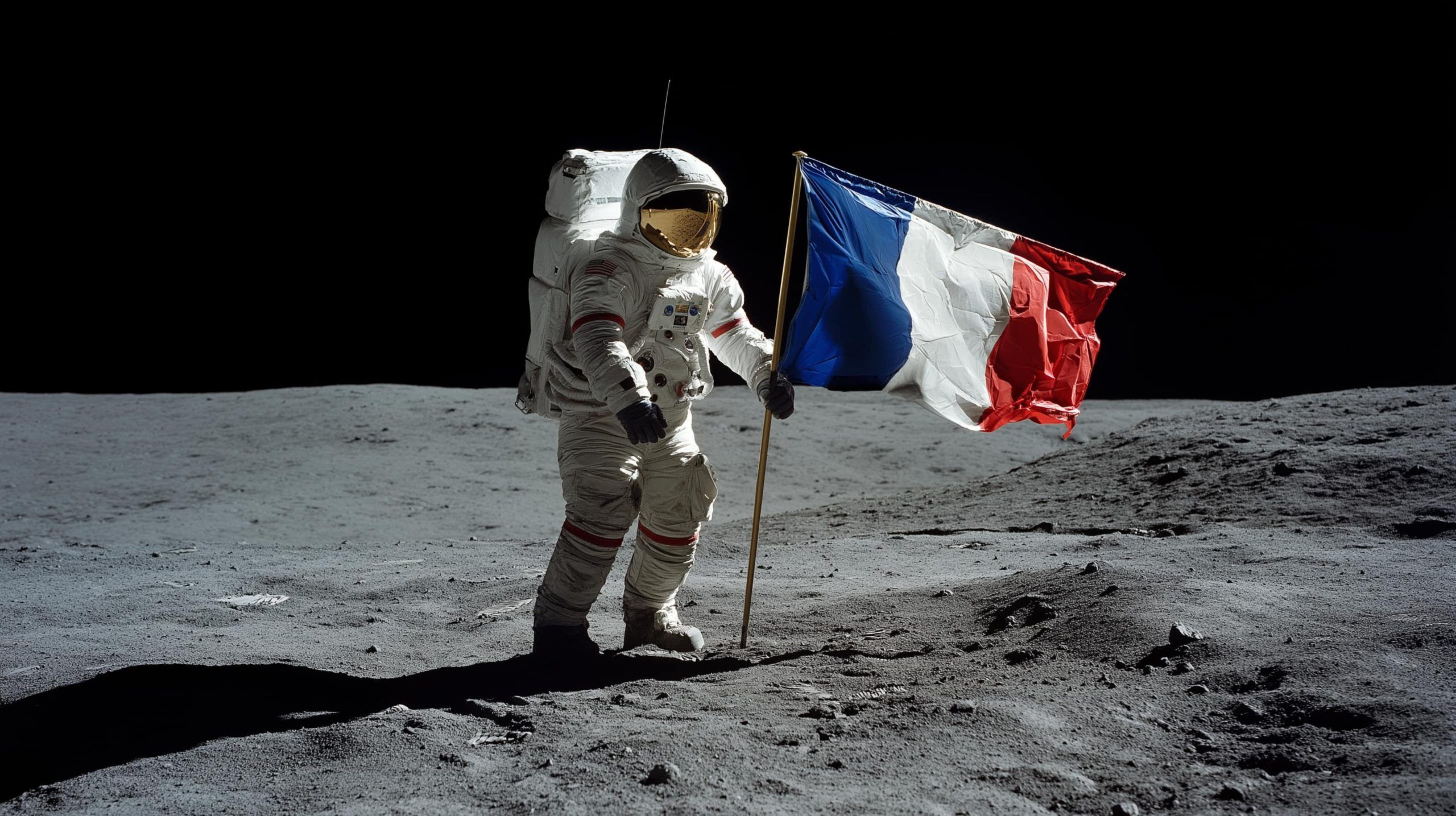
France’s space journey began in the Cold War era with a quest for strategic independence. General de Gaulle established CNES in 1961 to make France an autonomous space power cnes.fr. This goal was dramatically realized on 26 November 1965, when France’s Diamant rocket launched the Astérix satellite into orbit from Algerian soil – making France the third country to launch its own satellite cnes.fr cnes.fr. This early success kick-started a proud legacy of French “firsts,” including the opening of the Guiana Space Centre in Kourou in 1965 and the development of French satellite series like FR-1/FR-2 and scientific payloads through the 1960s.
Inside the Struggle for Internet Access in Western Sahara: From Political Blackouts to Satellite Lifelines

Inside the Struggle for Internet Access in Western Sahara: From Political Blackouts to Satellite Lifelines

Western Sahara – a sparsely populated desert territory disputed between Morocco and the Sahrawi Arab Democratic Republic – faces unique challenges in connecting to the digital world. The region’s political limbo and harsh geography have historically kept it on the margins of internet development. Basic telecom statistics weren’t even tracked separately for Western Sahara for many years due to its contested status en.wikipedia.org. Yet, as the internet becomes essential for economic growth, education, and activism, Western Sahara’s people are striving to get online. This report delves into the current state of internet access in Western Sahara, the providers and infrastructure that enable it, and the obstacles – political, geographic, and economic – that still hamper connectivity. It also compares Western Sahara’s digital landscape with its neighbors and highlights initiatives aimed at bridging the digital divide in Africa’s last colony.
F‑22 Raptor’s Explosive 2025: Combat Missions, Big Upgrades & a New Lease on Life

F‑22 Raptor’s Explosive 2025: Combat Missions, Big Upgrades & a New Lease on Life

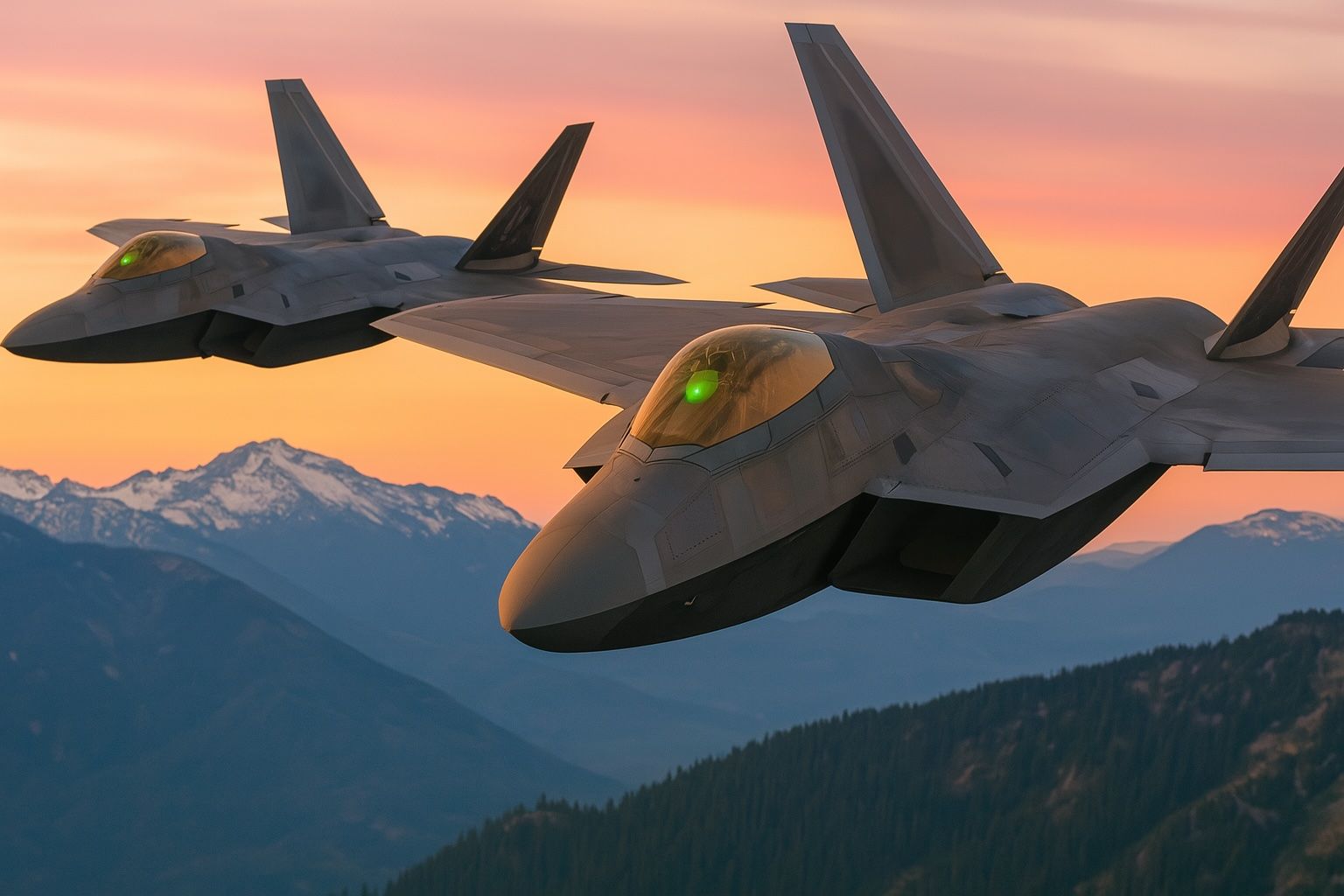
The legendary F-22 Raptor stealth fighter has had a pivotal year in 2025, marked by high-stakes combat operations, ambitious modernization plans, and fierce debates over its future. From spearheading airstrikes in the Middle East to receiving cutting-edge upgrades aimed at countering rising threats, the F-22 has proven why it remains one of the world’s most formidable fighter jets. This in-depth roundup covers all the major developments – operational deployments and incidents, upgrade programs, fleet changes and retirement plans, expert commentary, U.S. policy moves, and even international reactions – that defined the Raptor’s dramatic year.
Latest Satellite News / Updated: 2025, June 29th, 23:59 CET

Latest Satellite News / Updated: 2025, June 29th, 23:59 CET

Commercial Maxar satellite imagery shows Fordo bomb craters rapidly clearing and heavy engineering near damaged ventilation shafts after Iran’s airstrikes, with General Dan Kane confirming the use of 12 Massive Ordnance Penetrator bombs described as turning “night into day”. Natanz enrichment complex repairs have begun, with ISW analysts noting restoration work and reports of a destroyed radar installation in Khuzestan province. Japan launched the final H-2A rocket carrying the GOSAT-GW greenhouse gas and water-cycle satellite, retiring the H-2A after 50 missions with a 98% success rate and equipping GOSAT-GW with a microwave radiometer and greenhouse gas sensor. The H-2A retirement
Orbiting Eyes: How Space-Based ADS-B Is Revolutionizing Air Traffic Surveillance

Orbiting Eyes: How Space-Based ADS-B Is Revolutionizing Air Traffic Surveillance

Automatic Dependent Surveillance–Broadcast is an aircraft surveillance technology that has transformed how air traffic is monitored. In simple terms, ADS-B equips aircraft with GPS-based transponders that automatically broadcast their precise position, identity, altitude, velocity and other data to anyone with the proper receiver faa.gov aireon.com. The system is dependent on onboard navigation sources for accuracy and broadcasts its information periodically without any pilot or controller input faa.gov. ADS-B emerged in the early 2000s as part of aviation modernization efforts to replace or augment traditional radar. Unlike radar – which sends out radio waves and requires bulky ground antennas to detect reflected signals – ADS-B uses satellite navigation signals and direct broadcasts from aircraft faa.gov faa.gov. In effect, ADS-B leverages satellites for positioning instead of ground-based radar, allowing more precise and frequent updates faa.gov.
26 June 2025
Satellite Bus Showdown: Legacy Titans vs. NewSpace Mavericks (2024–2033)

Satellite Bus Showdown: Legacy Titans vs. NewSpace Mavericks (2024–2033)

The satellite manufacturing industry is entering a boom period from 2024 through 2033, with “bus” platforms – the modular chassis of satellites – at the center of a fierce global competition. Established aerospace giants are vying with agile NewSpace startups to meet surging demand for satellites across Low-Earth Orbit constellations, traditional Geostationary missions, and everything in between. Market forecasts predict robust growth: the global satellite bus market is projected to increase from about $14.1 billion in 2023 to $23.4 billion by 2033, at a moderate ~5.4% annual CAGR openpr.com. By 2030, some analyses even foresee the market roughly doubling from mid-decade levels mordorintelligence.com, reflecting unprecedented investment in space infrastructure worldwide. This report dives into the competitive landscape driving this growth – from the key manufacturers and evolving bus designs to regional market trends, major programs, and cutting-edge technology shaping the next decade.
In-Flight Wi-Fi Takes Off: The Sky-High Race for Satellite Connectivity 2024–2030

In-Flight Wi-Fi Takes Off: The Sky-High Race for Satellite Connectivity 2024–2030

In-flight connectivity via satellite has shifted from a luxury novelty to an expected amenity in air travel. As airlines emerge from the pandemic, they are accelerating investments in high-speed Wi-Fi to meet passenger demand and gain competitive edge. Recent surveys show that 83% of passengers are more likely to rebook with an airline that offers quality onboard Wi-Fi, and free connectivity is now the most influential factor when choosing an airline Inmarsat Inmarsat. This report provides a comprehensive roadmap of IFC adoption from 2024 through 2030, examining global and regional trends, airline strategies, and the evolving satellite technologies enabling the next generation of in-flight Wi-Fi. It also explores market dynamics driving IFC expansion, including passenger expectations for home-like internet speeds aloft, competitive differentiation through free Wi-Fi offerings, and new revenue streams for airlines. Key technical and regulatory considerations – from antenna innovations and bandwidth scalability to spectrum policy and cybersecurity – are analyzed. A year-by-year deployment timeline is outlined, and a comparative table of major IFC providers highlights their coverage, technology, partnerships, bandwidth, and airline clients.
Sky Is No Limit: Global Satcom Market Set to Soar Through 2035

Sky Is No Limit: Global Satcom Market Set to Soar Through 2035

Overview: The global satellite communications industry is entering a decade of explosive growth and transformation. In 2024, the overall space economy reached $415 billion, with commercial satellite activities dominating about $293 billion of that total ts2.tech. The number of active satellites in orbit has surged from ~3,300 in 2020 to over 11,500 by end-2024, thanks to new “mega-constellations” of communications satellites ts2.tech. This rapid expansion of space infrastructure – largely for broadband connectivity – is outpacing revenue growth and driving down costs per satellite. Established aerospace giants and traditional satcom operators are now joined by “NewSpace” entrants like SpaceX and OneWeb, intensifying competition ts2.tech. The stage is set for satellite communications to skyrocket in scale from 2025 to 2035, fueled by demand for connectivity, technological innovations, and bold investments. This report provides a comprehensive outlook for the global satcom market over the next decade, including market size forecasts, regional and segment analysis, emerging tech trends, key players’ strategies, regulatory developments, and investment/M&A activity.
From Yurts to YouTube: Inside Mongolia’s Internet Revolution

From Yurts to YouTube: Inside Mongolia’s Internet Revolution

Mongolia’s internet market is dominated by a few key players. Univision LLC leads with about 62% of the market, making it the largest Internet Service Provider in the country. Univision offers fiber-optic broadband and IPTV services, underpinning its broad market reach. The second largest ISP is MobiCom Corporation, with roughly 15% share. MobiCom is a pioneer in Mongolian telecommunications and operates both mobile networks and internet services. Other notable ISPs include Skymedia Corporation and Mobinet LLC. Smaller providers like ONDO and others make up the rest. This relatively concentrated market means competition has historically been limited – the Internet Society rates Mongolia’s market competitiveness for internet services as “Poor”.
2 April 2025
Go toTop