
Today: 29 June 2026
Browse Category

CSE:IAM 2 June 2025 - 4 August 2025

Inside the Struggle for Internet Access in Western Sahara: From Political Blackouts to Satellite Lifelines

Inside the Struggle for Internet Access in Western Sahara: From Political Blackouts to Satellite Lifelines

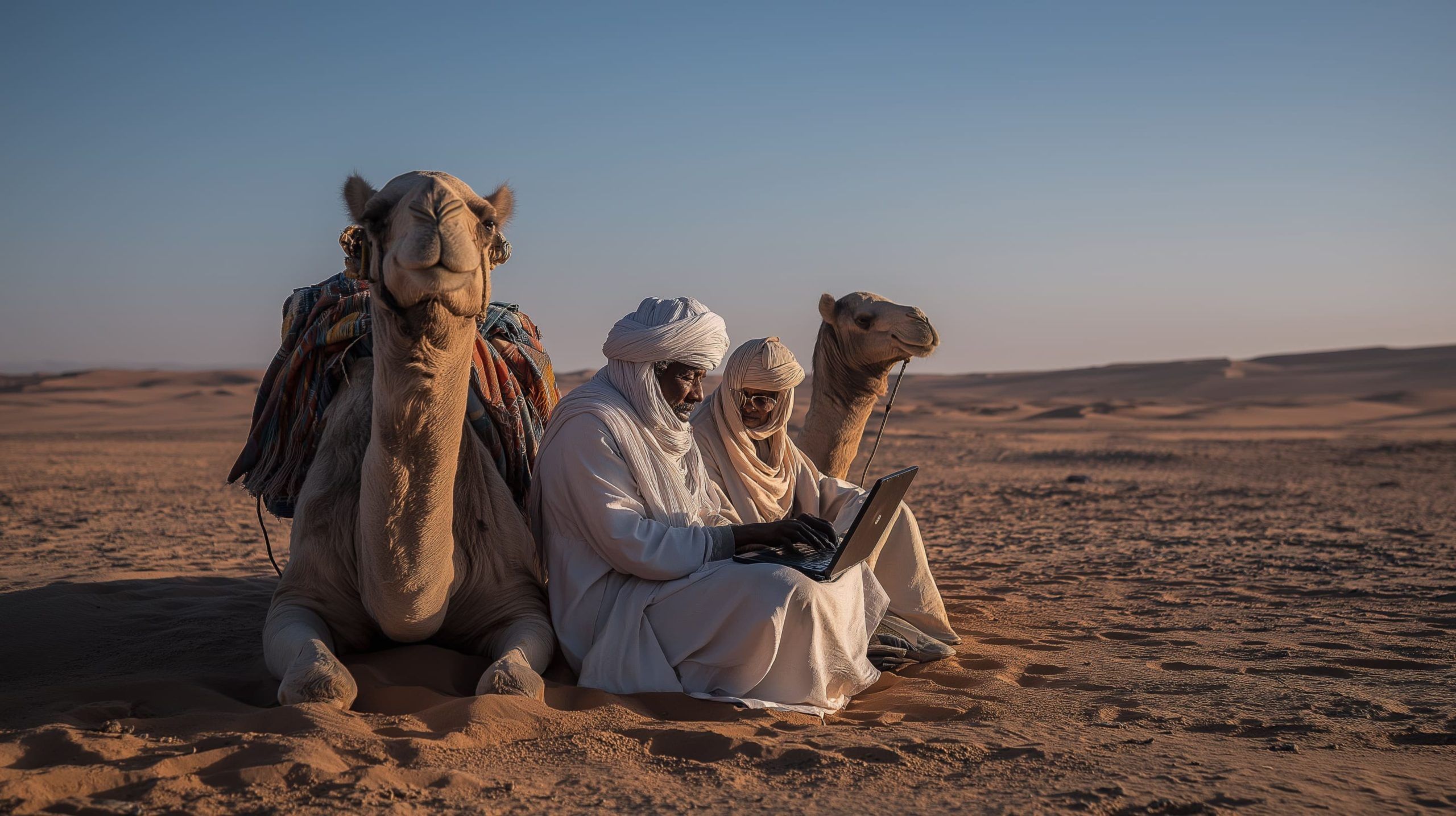
Western Sahara – a sparsely populated desert territory disputed between Morocco and the Sahrawi Arab Democratic Republic – faces unique challenges in connecting to the digital world. The region’s political limbo and harsh geography have historically kept it on the margins of internet development. Basic telecom statistics weren’t even tracked separately for Western Sahara for many years due to its contested status en.wikipedia.org. Yet, as the internet becomes essential for economic growth, education, and activism, Western Sahara’s people are striving to get online. This report delves into the current state of internet access in Western Sahara, the providers and infrastructure that enable it, and the obstacles – political, geographic, and economic – that still hamper connectivity. It also compares Western Sahara’s digital landscape with its neighbors and highlights initiatives aimed at bridging the digital divide in Africa’s last colony. Internet use in Western Sahara has grown markedly in recent years, though it still lags behind the global average. As of January 2024, there were roughly 398,000 internet users in Western Sahara, representing about 67.1% of the population datareportal.com. This is a dramatic rise – the user base jumped by 19% in one year datareportal.com – indicating rapid uptake of digital
Global Tech Shake-Up: Massive Breakthroughs and Crises Rock the Industry (12–13 July 2025 Roundup)

Global Tech Shake-Up: Massive Breakthroughs and Crises Rock the Industry (12–13 July 2025 Roundup)

July 13, 2025 – It’s been a whirlwind weekend in tech. From record-shattering electric vehicles in China and Europe to major moves in crypto policy and renewable energy breakthroughs, the past 48 hours showcased the diverse innovations and headlines redefining technology across the globe. Here are the most important and intriguing tech stories from July 12–13, 2025, spanning consumer gadgets, semiconductor advances, electric vehicles, cybersecurity, clean energy, blockchain, telecom, and more. China’s electric car industry is pushing the performance envelope. Leaks from Chinese auto bloggers hint that Geely’s EV brand Zeekr is preparing a hypercar with over 2,000 horsepower, an unprecedented figure that would eclipse even the 1,500hp Xiaomi SU7 Ultra unveiled earlier this year techradar.com techradar.com. The rumored model – an upgraded version of Zeekr’s 001 FR, which already boasts 1,300hp – would set a new high bar for EV acceleration and track performance. Industry observers note that “the pace of progress in the Chinese EV market is staggering,” with domestic brands rapidly closing the gap with Western automakers techradar.com. If realized, Zeekr’s 2,000hp EV would join a very exclusive club of electric hypercars and underscore China’s determination to lead in next-gen autos.

Inside Morocco’s Internet Revolution: From Fiber Optics to Satellite Access

Inside Morocco’s Internet Revolution: From Fiber Optics to Satellite Access

Morocco has experienced a dramatic expansion in internet connectivity over the past decade. As of early 2024, there were 34.47 million internet users in the country, representing an internet penetration rate of about 90.7% of the population datareportal.com datareportal.com. The vast majority of Moroccans online access the internet via mobile networks, reflecting the country’s strong mobile market. In fact, mobile phone subscriptions exceed the population size – with 51.36 million cellular connections as of 2024 datareportal.com. This high penetration is due to many users owning multiple SIMs and the ubiquity of mobile service. The mobile market is served by three major telecom operators: Maroc Telecom, Orange Maroc, and Inwi, which together dominate both mobile and fixed internet services trade.gov. Maroc Telecom is the former state incumbent and the largest provider, while Orange and Inwi are the other key players. According to recent figures, Maroc Telecom holds about 42.9% of the mobile market, Orange 33.2%, and Inwi 23.9% trade.gov. These three companies also offer fixed-line internet and effectively account for almost all internet subscriptions in Morocco trade.gov trade.gov. Infrastructure: Morocco’s internet infrastructure is a mix of robust backbone networks and last-mile connectivity that is still evolving. Fiber-optic cables form the core
The Shocking Truth About Internet Access in Burkina Faso – From White Zones to Starlink Dreams

The Shocking Truth About Internet Access in Burkina Faso – From White Zones to Starlink Dreams

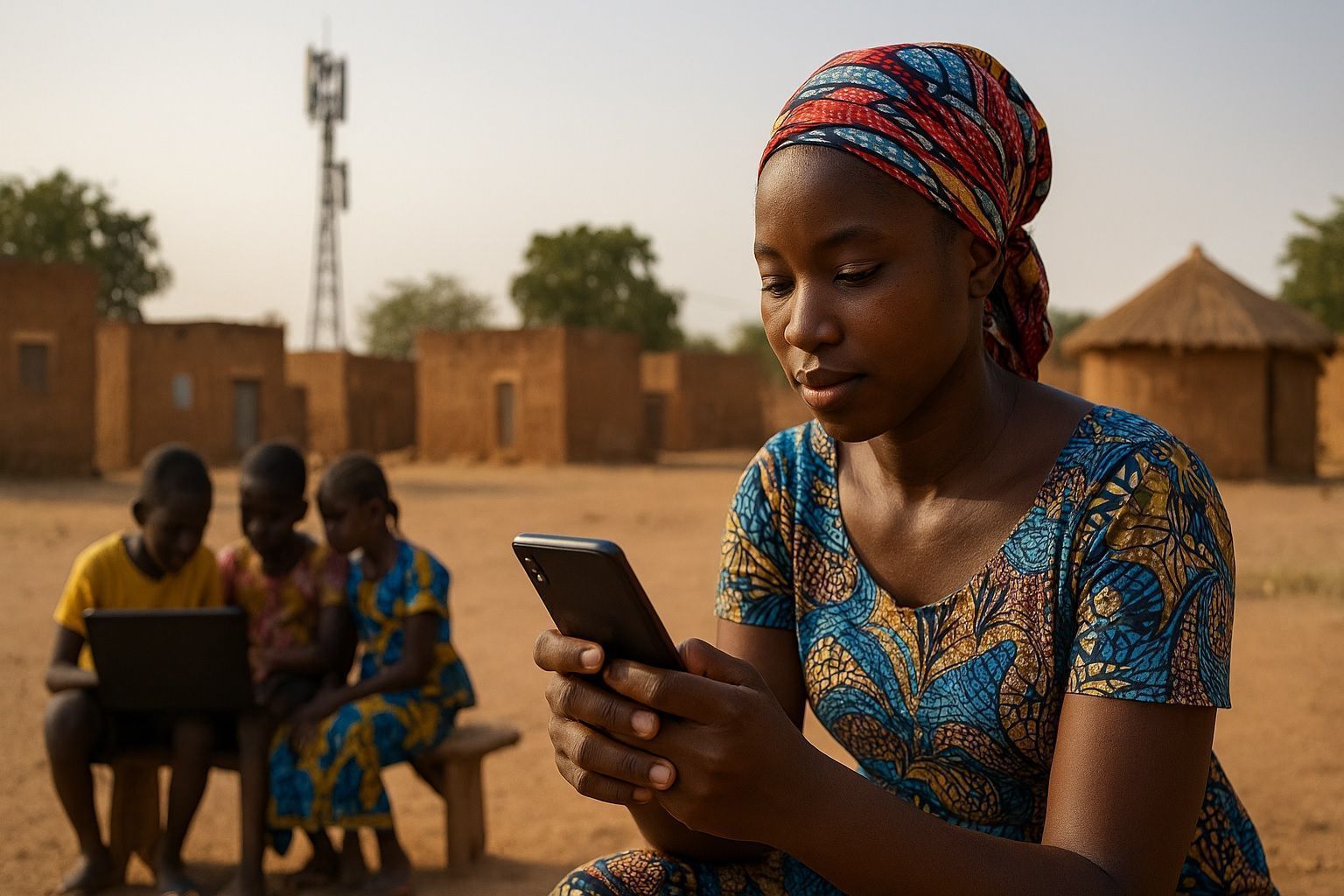
Burkina Faso’s digital landscape is marked by low internet penetration and heavy reliance on mobile networks. As of 2023, only about 17–20% of the population are internet users, well below the African average pulse.internetsociety.org and the global average datareportal.com. In raw numbers, that equates to roughly 4.7 million active internet users in a country of ~23 million people digitalmagazine.bf. This means barely one in five Burkinabè have used the internet in the last 3 months, underscoring a significant digital divide. Mobile vs. Fixed Access: Internet access in Burkina Faso is overwhelmingly mobile-centric. By late 2023, there were about 17 million mobile internet subscriptions recorded – roughly a 77% population coverage in terms of access digitalmagazine.bf. However, “subscription” doesn’t always mean active usage. In stark contrast, fixed broadband is extremely limited: only about 84,807 fixed internet subscriptions were active in Q3 2023 digitalmagazine.bf. Fixed connections – primarily new fiber-optic lines in major cities – have grown rapidly digitalmagazine.bf, but still account for a tiny fraction of overall internet access. Essentially, for the vast majority of Burkinabè, the internet means a mobile phone rather than a home broadband line.

Stock Market Today

  • ASX Penny Stocks: Alligator Energy, Hearts and Minds, Hansen Technologies in Focus
    June 29, 2026, 3:56 PM EDT. Penny stocks on the ASX are grabbing attention as volatility continues. Alligator Energy (ASX:AGE) is still pre-revenue, valued at A$230.73 million, and betting on uranium exploration. The company is running deeper losses but says its cash should last 2.7 years, and analysts see a possible 62.8% jump in shares. Hearts and Minds Investments (ASX:HM1) has a market cap of A$670.92 million. The investment firm's profits are down 84.9%, and its 6.48% dividend yield has investors wondering about longevity. Hansen Technologies sits at a A$904.29 million market cap, pulling in revenue from its Energy & Utilities business. Together, the names show the range of plays and issues in the ASX penny stock scene.
Go toTop