Marcin Frąckiewicz

CEO of TS2 Space and founder of TS2.tech. Expert in satellites, telecommunications, and emerging technologies, covering trends in space, AI, and connectivity.

Starlink Global Coverage and Availability Report

Starlink Global Coverage and Availability Report

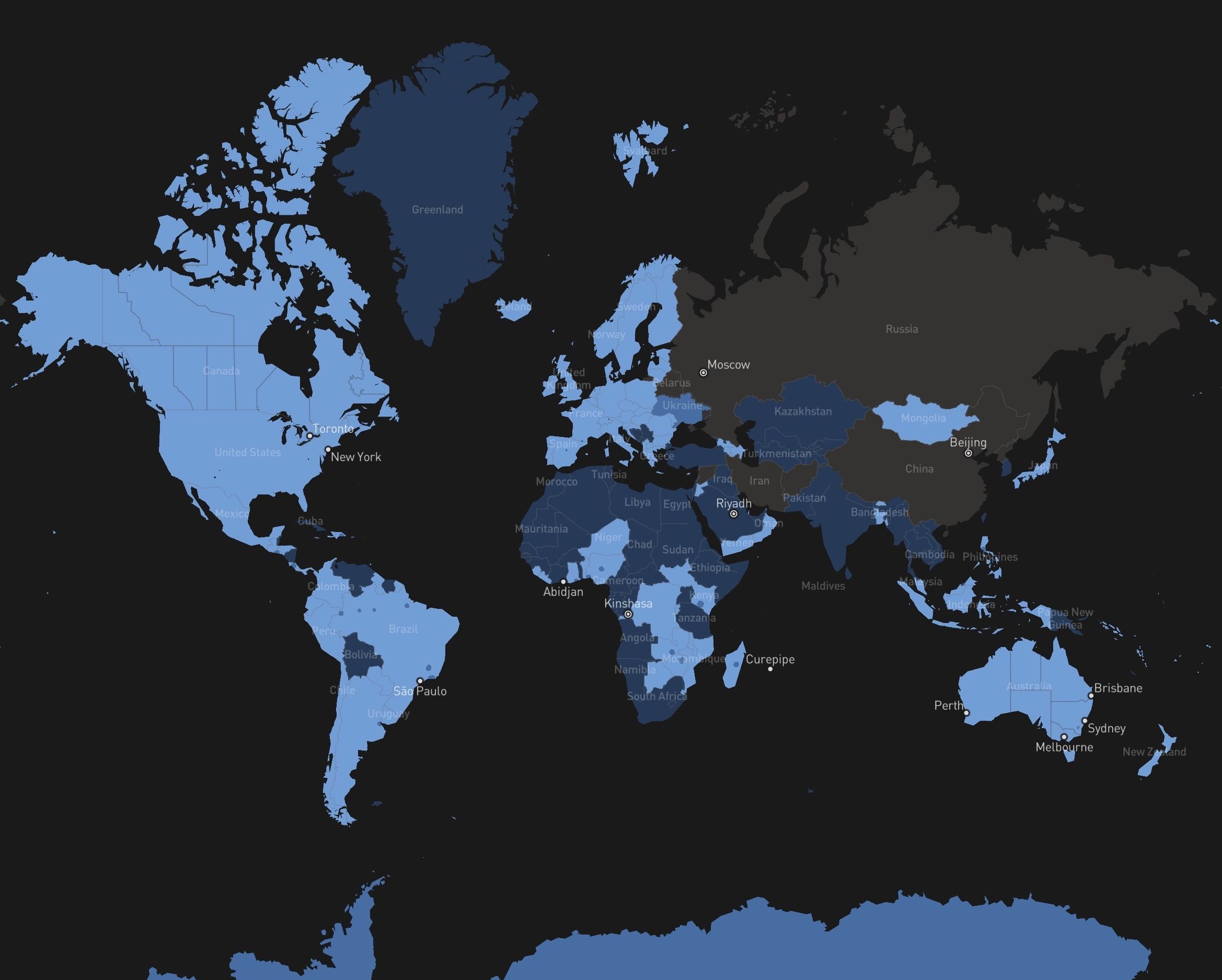
As of mid-2025, Starlink is available in over 110 countries and territories. In the United States, Starlink began with limited trials in August 2020 and the public beta “Better Than Nothing Beta” in November 2020, and now has nationwide commercial coverage including Puerto Rico and the U.S. Virgin Islands, with over 2.5 million subscribers as of early 2025. Canada went live in January 2021 after a late-2020 beta and now has broad coverage across all provinces. Mexico received a license in mid-2021, began service by November 2021, and by 2024 had over 160,000 subscribers, with the federal “Internet para Todos”

7 June 2025
Satellite Imagery: Principles, Applications, and Future Trends

Satellite Imagery: Principles, Applications, and Future Trends

The first space images were captured in 1946 from a sub-orbital U.S. V-2 rocket at about 105 km altitude. The first actual satellite photograph of Earth was taken on August 14, 1959 by the U.S. Explorer 6 satellite. In 1960, TIROS-1 transmitted the first television image of Earth from orbit, a milestone for weather observation. Landsat 1, launched in 1972, began the longest-running civilian Earth-observation program with a 50-year archive, and Landsat 9 was launched in 2021 to continue it. The KH-11 KENNEN program began near-real-time digital imaging in 1977, eliminating the need for film return. IKONOS, launched in 1999,
7 June 2025
fldksafljads

Satellite Phones: Comprehensive Global FAQ

Iridium operates about 66 LEO satellites at roughly 780 km, offering truly global coverage including the poles with a one-way latency around 0.1–0.2 seconds. Inmarsat uses 3–4 GEO satellites at about 35,786 km, delivering near-global coverage (roughly ±70° latitude) with about 0.5 second latency, and IsatPhone 2 offers up to 8 hours of talk and 160 hours of standby. Thuraya, based in the UAE, operates 2 GEO satellites covering roughly 160 countries in Europe, Africa, the Middle East, Asia, and Australia, with XT-LITE priced around $650. Globalstar currently operates a Gen2 constellation of 24 LEO satellites at about 1,414 km,
7 June 2025
Starlink Satellite Internet FAQ

Starlink Satellite Internet FAQ

Starlink is SpaceX’s satellite-based broadband internet service, and by 2025 the constellation has launched over 7,500 satellites with about 6,750 active in orbit. The satellites orbit in low Earth orbit at roughly 550 km altitude, delivering typical download speeds of 50–200+ Mbps and latency around 20–40 ms. SpaceX began launching Starlink in 2019, and by early 2025 it served more than 5 million customers in 125+ countries. The residential Starlink kit costs about $599 in many regions, with US promotions as low as $349, and monthly service typically $90–$120, with occasional $0 hardware deals tied to multi-month commitments. There are
7 June 2025
Satellite Internet FAQ

Satellite Internet FAQ

Traditional GEO satellite internet sends data roughly 22,000 miles to a satellite and back, yielding a round-trip latency of about 600–800 ms. Satellite internet can reach virtually anywhere with a clear view of the sky, including most of the continental United States. HughesNet uses geostationary satellites and advertises speeds up to 25 Mbps download and about 3 Mbps upload on all plans. Viasat offers downloads from roughly 12 Mbps up to 100 Mbps with uploads around 3 Mbps. Starlink uses a low-Earth orbit constellation and typically provides 50–200 Mbps download and 20–40 Mbps upload with latency around 20–40 ms. Amazon’s
6 June 2025
Satellite Technologies FAQ

Satellite Technologies FAQ

Sputnik 1, launched by the Soviet Union on October 4, 1957, was the first artificial satellite. Explorer 1 became the United States’ first satellite in 1958. As of 2025, there are roughly 11,000+ active satellites orbiting Earth, with tens of thousands of pieces of inactive satellites and debris. Geostationary satellites orbit about 35,786 km (22,236 miles) above the equator and stay fixed over one ground spot. Most satellites use solar panels with large arrays and rechargeable batteries to power their instruments and systems, including during eclipses. The first known accidental collision of two satellites occurred in 2009. Starlink is SpaceX’s
6 June 2025
Where Satellite Phones Are Illegal?

Where Satellite Phones Are Illegal?

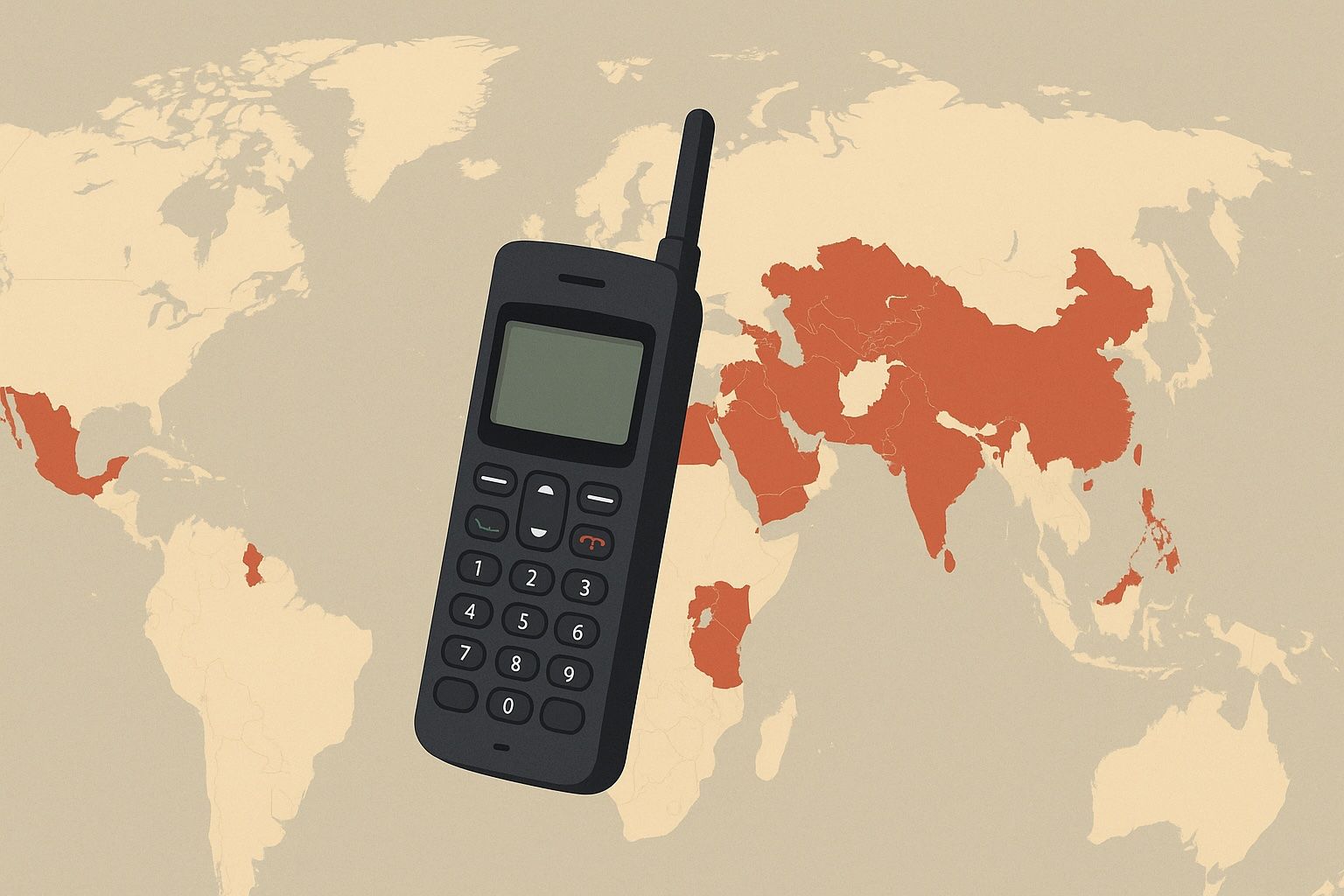
Bangladesh bans satellite phone use; possession can lead to arrest and imprisonment. North Korea prohibits all unauthorized communication devices, foreigners must surrender phones and privacy is not guaranteed, with detention possible. India restricts satellite phones to government‑approved Inmarsat devices, requiring a license (No Objection Certificate) from the Department of Telecommunications before bringing one in. China maintains a de facto ban on private sat phones, requiring registration for limited state use and has deployed jammers in some areas to block unapproved devices. Chad bans satellite phones under any circumstances, with Thuraya explicitly outlawed and Iridium sometimes tolerated. Myanmar (Burma) effectively bans
6 June 2025
DJI Matrice 4E and Matrice 4T Series Drones: Comprehensive Report

DJI Matrice 4E and Matrice 4T Series Drones: Comprehensive Report

The DJI Matrice 4 Series was launched in January 2025 and comprises two models, Matrice 4T (Thermal) and Matrice 4E (Enterprise), both with foldable airframes and about 1.22 kg takeoff weight. The Matrice 4T adds a radiometric thermal camera (640×512 px, 12 µm, 30 Hz) and a built-in near‑IR spotlight with a 6° field of view, covering roughly 100 m range. The Matrice 4E targets geospatial tasks, pairing a 20 MP wide camera with a 4/3″ sensor and mechanical shutter, plus 48 MP medium and 48 MP tele cameras enabling up to 112× hybrid zoom. Both drones use the O4
5 June 2025
Military Satellite Services: Complete Guide to Secure Communications

Military Satellite Services: Complete Guide to Secure Communications

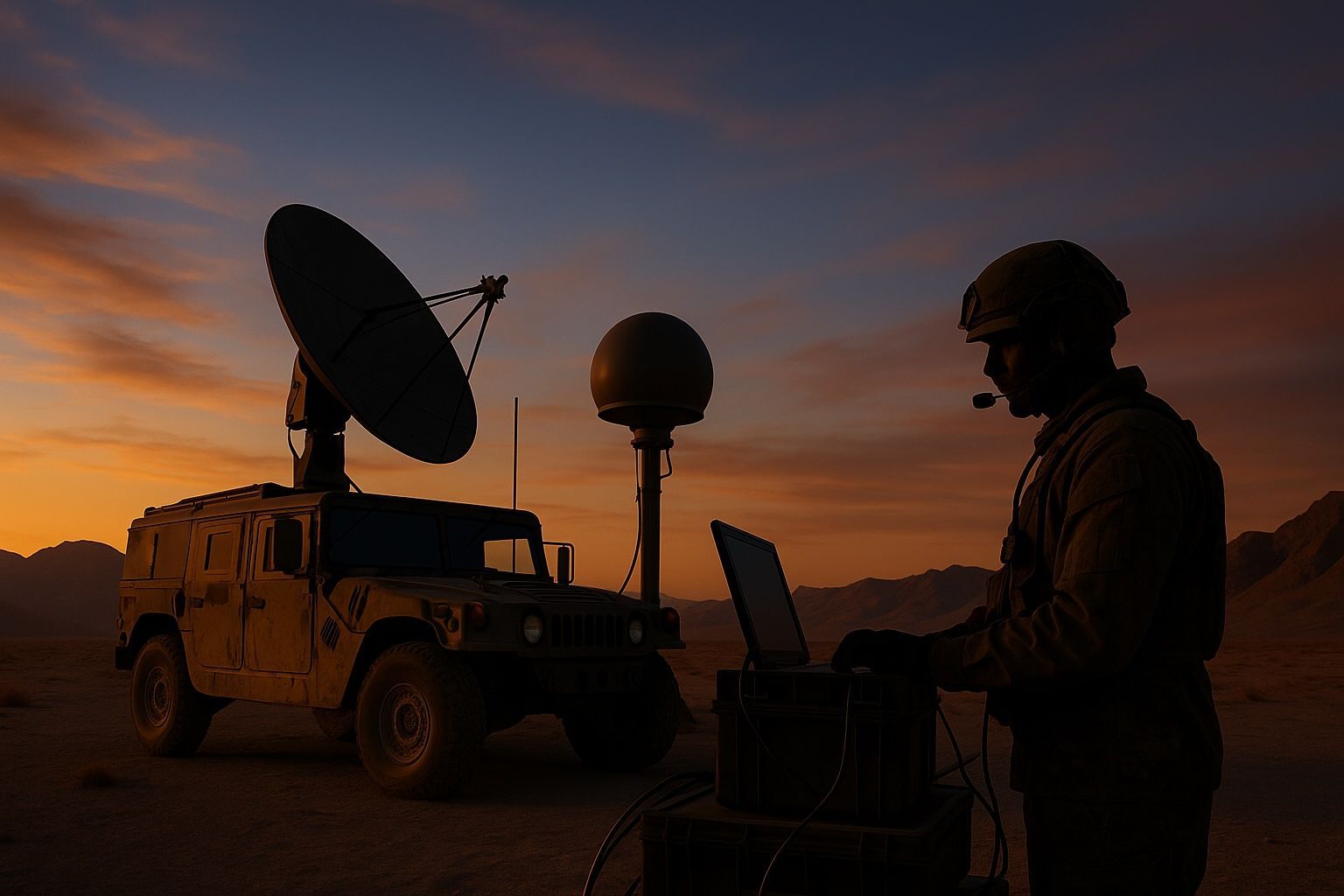
The United States operates the Advanced Extremely High Frequency (AEHF) constellation, delivering jam-resistant, global, protected military communications including nuclear command and control links. Navstar GPS is a 31-satellite global navigation system that provides precise positioning, navigation, and timing to guide munitions such as JDAM and to synchronize encrypted networks. Defense Support Program (DSP) and the Space-Based Infrared System (SBIRS) form the U.S. early-warning constellation that uses infrared sensors to detect missile launches worldwide. U.S. Keyhole KH-11 optical reconnaissance satellites (and successors) provide high-resolution imagery from space. Russia operates the Liana ELINT constellation, including Lotos-S1 in low orbit and Pion-NKS in
4 June 2025
Aviation Satellite Services: Benefits, Providers, and New Technologies

Aviation Satellite Services: Benefits, Providers, and New Technologies

By late 2022, more than 10,000 aircraft worldwide were equipped with in-flight connectivity, and about 65% of airlines planned further IFC investments in the next few years. Aireon’s space-based ADS-B payloads on Iridium NEXT have been operational since 2019, enabling global real-time tracking and supporting ICAO’s 15-minute GADSS position reporting standard. COSPAS-SARSAT, a global satellite distress system, relays 406 MHz ELT signals from aircraft to ground stations to coordinate search and rescue and has saved thousands of lives. Global Navigation Satellite Systems—GPS (USA), GLONASS (Russia), Galileo (EU), BeiDou (China)—provide precise positioning, while SBAS like WAAS and EGNOS offer 1–2 meter
4 June 2025
Maritime Satellite Services: Complete Guide to Ship Connectivity & Communications

Maritime Satellite Services: Complete Guide to Ship Connectivity & Communications

L-band MSS terminals, such as Inmarsat FleetBroadband and Iridium Certus, provide global coverage with compact antennas but limited data throughput. Ku-band VSAT (12–18 GHz) has been the maritime workhorse, Ka-band HTS (26–40 GHz) offers higher capacity, while C-band deployments are restricted near shore due to interference and large dish requirements. GEO satellites offer broad coverage with about 600 ms latency, while LEO Iridium NEXT, a 66-satellite constellation upgraded 2017–2019, provides true global L-band coverage and was recognized as a GMDSS provider in 2020. SpaceX Starlink and OneWeb have emerged as disruptive LEO players in maritime, with Starlink signing on nearly
4 June 2025
Global Drone Market Outlook (2025–2030)

Global Drone Market Outlook (2025–2030)

In 2024, the total global drone market was about $73 billion, with forecasts to reach roughly $163–165 billion by 2030 at around a 14% CAGR. Some analyses forecast growth from about $30 billion in 2022 to $260.5 billion by 2030, implying a 27–39% annual growth rate. By 2030 the market’s major segments are projected to be: Consumer about $11.6B, Commercial about $55B, Military about $90B, Delivery about $10.5B, and Agricultural about $22.5B in annual revenue. DJI dominates the consumer drone market with an estimated 70–80% global share, over 90% in some sub-categories, led by Phantom and Mavic series as of
1 579 580 581 582 583 586

Stock Market Today

BBAI stock jumps 16% into BigBear.ai share-vote week — what to watch next

BBAI stock jumps 16% into BigBear.ai share-vote week — what to watch next

7 February 2026
BigBear.ai Holdings shares surged 15.7% Friday to $4.72 ahead of a key shareholder vote on doubling authorized shares to 1 billion. Options trading was heavy, with a put/call ratio of 0.19. The company recently announced deals in AI customs technology and a partnership with Abu Dhabi’s AD Ports Group. The special meeting is set for Feb. 18, with online voting open until late Feb. 17.
American Airlines stock jumps nearly 8% as airlines rally — what to watch next week

American Airlines stock jumps nearly 8% as airlines rally — what to watch next week

7 February 2026
American Airlines shares jumped 7.6% to $15.24 Friday, rebounding with a broad rally that sent the Dow past 50,000 for the first time. Investors are watching the carrier’s battle with United at Chicago O’Hare, where a summer capacity surge could trigger a fare war. American also announced new Philadelphia–Porto service for 2027 and launched a centennial inflight menu.
Apple stock price ends week higher as Dow hits 50,000; jobs and CPI loom next

Apple stock price ends week higher as Dow hits 50,000; jobs and CPI loom next

7 February 2026
Apple closed up 0.8% at $278.12 Friday, then slipped 0.3% after hours. The S&P 500 jumped 1.97% and the Nasdaq rose 2.18% as chipmakers rallied, while Amazon fell 5.6% on higher capex guidance. Investors await U.S. jobs data Feb. 11 and CPI Feb. 13. Apple’s next dividend is $0.26 per share, payable Feb. 12.
Go toTop