Marcin Frąckiewicz

CEO of TS2 Space and founder of TS2.tech. Expert in satellites, telecommunications, and emerging technologies, covering trends in space, AI, and connectivity.

Satellite Phones: A Comprehensive Report

Satellite Phones: A Comprehensive Report

Iridium, a LEO network, started service in 1998 and operates 66 active cross-linked satellites, delivering near-global coverage, with the Iridium NEXT second-generation network launched in 2019. Globalstar uses 48 satellites (24 second-generation as of 2013), has no inter-satellite links and relies on ground gateways, and Apple’s Emergency SOS on iPhone 14 uses about 85% of Globalstar’s capacity for emergency texts. Inmarsat operates a GEO fleet of about 11 satellites, offers IsatPhone handheld services, the IsatPhone 2 provides ~8 hours of talk time and 160 hours of standby, and Inmarsat expanded with I-4/I-6 series after its 2023 acquisition by Viasat. Thuraya

2 June 2025
Starlink Global Availability and Impact Report

Starlink Global Availability and Impact Report

Starlink is available in over 100 countries as of mid-2025, spanning North America, Europe, Asia, Africa, Oceania, and parts of South America. As of late 2024, Starlink had surpassed 4 million subscribers. Starlink offers five service types: Residential, Roam, Business (Priority), Maritime, and Aviation. Typical speeds range from about 50 Mbps to 150+ Mbps, with most users above 100 Mbps under good conditions, and latency around 20–50 ms. Monthly pricing ranges from about $90–$120 in well-connected markets, with discounts to roughly $30–$50 in developing regions. The United States was the first to receive Starlink, with public beta in mid-2020 and
2 June 2025
Starlink and the Satellite Internet Market (2025) – Comprehensive Report

Starlink and the Satellite Internet Market (2025) – Comprehensive Report

Starlink uses a direct-to-consumer model with a Starlink kit (dish antenna + WiFi router) and monthly service, priced around $100–$120 per month, with the kit originally costing about $599 (some markets as low as $350). Speeds reach roughly 50–200 Mbps down and 10–20 Mbps up, with latency around 20–40 ms, far lower than geostationary satellites. Starlink Roam for RVs, Maritime for ships (initially about $5,000 per month with dual terminals for ocean coverage), and Aviation with dedicated aero antennas (about $150,000 hardware and $12,500–25,000 monthly for unlimited in-flight Wi‑Fi) illustrate its multi-sector strategy. In 2023 Starlink began beta mobile-phone connectivity
Global Satellite and Space Industry Report 2025: Market Overview and Outlook to 2030

Global Satellite and Space Industry Report 2025: Market Overview and Outlook to 2030

In 2024, the global space economy reached $415 billion in revenue, up 4% from 2023. Commercial satellite activities totaled about $293 billion in 2024, representing 71% of the global space economy. The number of operational satellites rose from roughly 3,371 in 2020 to 11,539 by the end of 2024, a more than threefold increase. SpaceX dominated US launches in 2024, conducting 138 of 145 orbital launches with Falcon 9/Heavy rockets and Starship test flights. In 2024, the United States accounted for about 65% of global launch revenue; China performed 68 orbital launches, and Europe conducted 3. Global government space spending
Satellite Technology in Military and Defense: A Global Overview

Satellite Technology in Military and Defense: A Global Overview

The United States operates roughly 120–130 dedicated military satellites, spanning KH-11 imaging, SBIRS/DSP early warning, AEHF/Milstar communications, and the Wideband Global SATCOM network. Russia maintains about 70–80 active military satellites, including the Persona and Bars-M reconnaissance systems, the Liana ELINT network, the GLONASS navigation constellation, and the Tundra early-warning fleet. China operates approximately 60–70 military satellites, featuring the Yaogan reconnaissance fleet, the Beidou 35-satellite GNSS, and the Shentong/Tianlian military communications satellites, along with an active ASAT program. India demonstrated an ASAT capability in March 2019 with Mission Shakti, destroying a satellite in low Earth orbit. Israel’s Ofek series has operated
Global Drone Industry: 2025 Market Report

Global Drone Industry: 2025 Market Report

The global drone market was valued at about $73 billion in 2024 and is forecast to reach $163+ billion by 2030, with a 14%+ CAGR in the latter 2020s. Military and defense end-use accounted for about 60% of total drone market value in 2024. DJI held an estimated 70%+ share of the global drone market by 2024. Ukraine produced over 2 million drones domestically in 2024 and, per President Zelensky in early 2025, has the capacity to build 4 million drones annually. Baykar’s TB2 armed drone has endurance over 24 hours and by 2024 Baykar had export deals with 30
29 May 2025
Drones in Ukraine (2022–2025): A Comprehensive Report

Drones in Ukraine (2022–2025): A Comprehensive Report

By late 2023, nearly every Ukrainian combat brigade had integrated drones, with dedicated UAV units for surveillance, artillery spotting, and attack missions. Small off-the-shelf DJI Mavic quadcopters, priced around $1,500–$3,000, were widely used for frontline reconnaissance and artillery correction. FPV kamikaze drones cost as little as $400–$500 to assemble and have been linked to a large share of Russian losses, with estimates of 60–80%. UkrJet’s UJ-22 has an 800 km range for long-range strikes, while Antonov’s Lyuty reportedly has a 750 km range and a sub-$200,000 price per unit. By end-2024 Ukraine conducted the world’s first fully unmanned joint attack
Inside Ethiopia’s Internet Boom: Fiber Optics, 5G Dreams, and Starlink Skies

Inside Ethiopia’s Internet Boom: Fiber Optics, 5G Dreams, and Starlink Skies

As of early 2025, about 28.6 million Ethiopians were internet users, roughly 21.3% of the population. Ethio Telecom owned about 23,000 km of fiber-optic cable across Ethiopia as of 2023, forming the national backbone and linking to neighboring undersea cables via Djibouti. In late 2024, Ethio Telecom signed a Horizon Fiber corridor deal with Djibouti Telecom and Sudatel to create a multi-terabit cross-border link between Ethiopia, Djibouti, and Sudan. Ethio Telecom launched commercial 5G in Addis Ababa in October 2022, with 145 sites active in the capital by September 2023 and expansion to additional cities planned. Safaricom Ethiopia launched commercial
29 May 2025
10 Gbps in Paradise: Inside Seychelles’ High-Speed Internet Revolution (and the Satellite Showdown)

10 Gbps in Paradise: Inside Seychelles’ High-Speed Internet Revolution (and the Satellite Showdown)

The Seychelles East Africa System (SEAS) became Seychelles’ first major undersea cable, linking the islands to continental Africa in the early 2010s and ending reliance on satellites. In August 2021, Intelvision secured support to lease a branch of the 2Africa submarine cable, enabling 600 Gbps of international capacity and added redundancy. Cable & Wireless Seychelles (CWS) began a nationwide Fibre-to-the-Home rollout in 2017, aiming to replace all copper lines with fiber by 2020. By late 2024, Cable & Wireless Seychelles launched “GigaNet,” Africa’s first 10 Gbps broadband service, using 50G-PON technology. International bandwidth available to Seychelles’ ISPs grew from about
State of Internet Access in Mexico: The Digital Divide, Ground and Sky

State of Internet Access in Mexico: The Digital Divide, Ground and Sky

As of early 2024, Mexico had over 107 million internet users, about 83% of the population. Fixed broadband is increasingly fiber-based, with around 70% of fixed connections using fiber (FTTH) and Telmex migrating about 85% of its broadband customers from DSL to fiber. Red Compartida, launched in 2018 by Altán Redes, reached 95.3% of the population by June 2024, exceeding its 92.2% target. CFE TEIT started in 2022 and had installed 91,000 free Wi‑Fi access points nationwide by early 2024. Mexico’s mobile market reached 125.4 million active mobile lines by early 2024, about 97% of the population. 5G rollout progressed
Fire, Ice, and Fiber: How Iceland’s Internet Leaves the World in the Dust

Fire, Ice, and Fiber: How Iceland’s Internet Leaves the World in the Dust

Fixed fiber dominates Iceland’s broadband, with FTTH at 88.7% of fixed lines and over 93% of homes having gigabit-capable fiber, including at least 1 Gbps nationwide and 10 Gbps in most areas. Iceland is linked internationally by four submarine cables—FARICE-1, DANICE, Greenland Connect, and IRIS (launched in 2023 to Ireland)—totaling 208.8 Tbit/s of capacity, of which about 3 Tbit/s is currently used. Three mobile operators—Síminn, Vodafone Iceland (Sýn), and Nova—provide nationwide 4G/5G, with Nova launching 5G in 2020 and Síminn and Vodafone in 2021. By 2023, 5G signals blanket most towns and transit routes across Iceland, with widespread 4G/5G coverage
29 May 2025
The Shocking Truth Behind Chile’s Internet Boom: 96% Connected (and Counting)

The Shocking Truth Behind Chile’s Internet Boom: 96% Connected (and Counting)

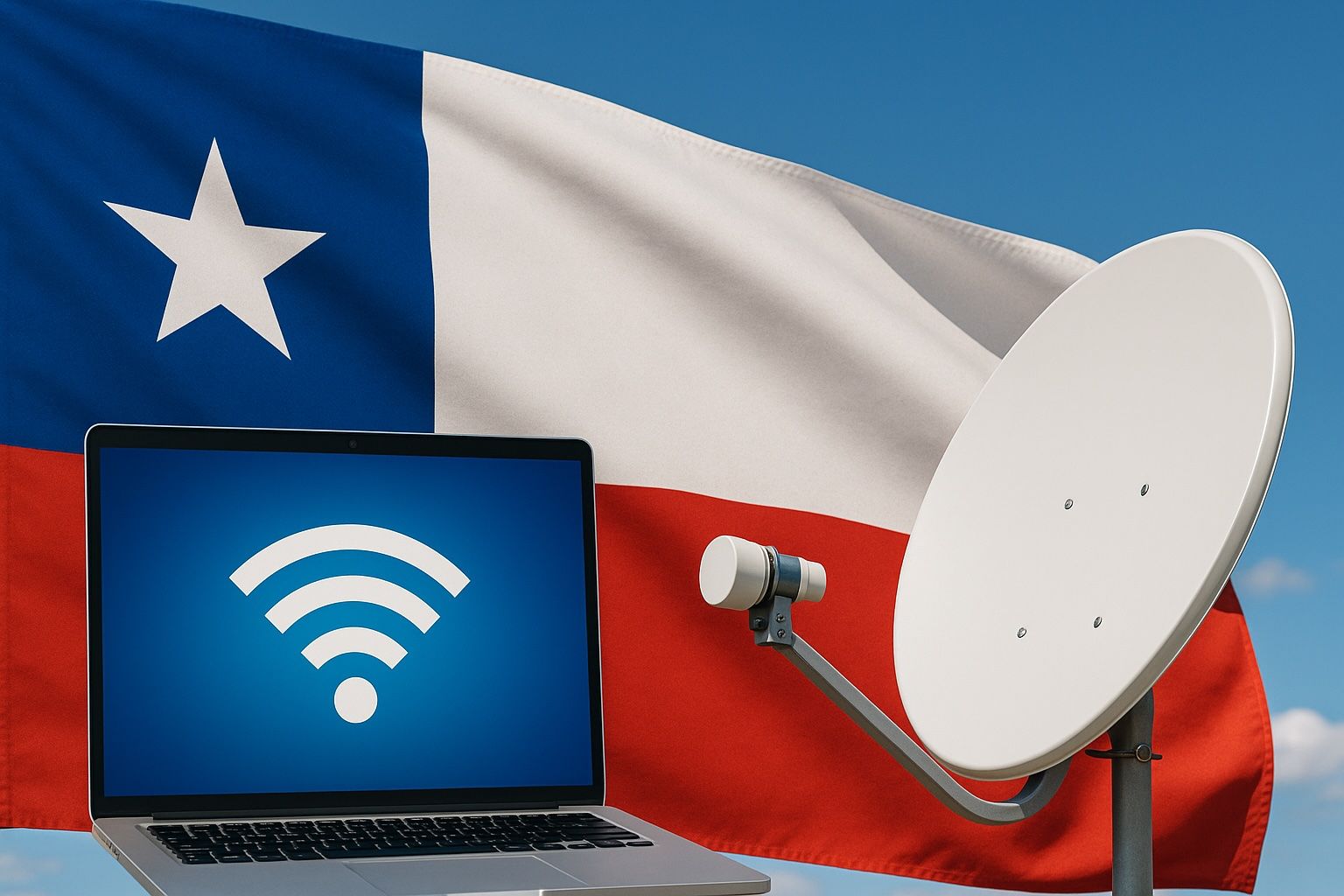
As of early 2024, 96.5% of Chilean households have internet access, up from about 70.2% in 2015. Fixed broadband subscriptions reached 4.52 million in 2023, or 22.6 per 100 inhabitants. As of late 2023, nearly 70% of fixed connections are fiber-optic (FTTH/B), with copper DSL largely replaced. 96.8% of urban households and 94.5% of rural households have internet access, narrowing the urban–rural gap to about 2 percentage points. Chile launched 5G in December 2021, and by late 2024 there were over 5.3 million 5G users, with roughly 40% of mobile subscriptions 5G-capable. Starlink commands about 58% of Chile’s satellite internet
29 May 2025
1 580 581 582 583 584 586

Stock Market Today

Wall Street Feels the Heat (and Thrill): Fed Cuts, Tariffs & Mega-Mergers Set NYSE Buzz

Stock Market Today 07.02.2026

7 February 2026
LIVEMarkets rolling coverageStarted: February 7, 2026, 12:00 AM ESTUpdated: February 7, 2026, 12:26 AM EST Dollar Dips as Stocks Rally and US Data Influences Fed Rate Expectations February 7, 2026, 12:18 AM EST. The **dollar index** fell 0.17%, pressured by a rebound in equity markets reducing demand for the safe-haven currency. Weaker-than-expected U.S. labor market data raised the odds of a Fed rate cut to 18% for March, though consumer sentiment improved to a six-month high, limiting losses. Hawkish comments from Atlanta Fed's Raphael Bostic emphasized maintaining restrictive monetary policy. The dollar faces medium-term weakness amid expectations for rate cuts
Seagate (STX) stock jumps nearly 6% as Citi hikes target — what to watch next week

Seagate (STX) stock jumps nearly 6% as Citi hikes target — what to watch next week

7 February 2026
Seagate shares rose 5.9% to $429.32 Friday after Citigroup raised its price target to $480 and reiterated a buy rating. The gain ended a two-day slide but left the stock 6.6% below its Feb. 3 high. CEO Dave Mosley sold 20,000 shares on Feb. 2 under a pre-arranged plan, SEC filings show. U.S. jobs and inflation data next week are seen as key tests for tech stocks.
Cummins (CMI) stock price rebounds after earnings whipsaw as investors eye data-center power demand

Cummins (CMI) stock price rebounds after earnings whipsaw as investors eye data-center power demand

7 February 2026
Cummins shares jumped 6.8% to $577.73 Friday, recovering from a nearly 9% post-earnings drop the day before. The company reported Q4 revenue up 1% to $8.54 billion, took a $218 million charge tied to its hydrogen business, and guided for 2026 EBITDA of 17–18% of sales. Demand for data center generators offset weakness in North American truck markets. Analyst reaction was mixed; Truist raised its price target.
Corning stock hits first record close since 2000 as jobs, CPI data loom

Corning stock hits first record close since 2000 as jobs, CPI data loom

7 February 2026
Corning shares surged 8.3% to $122.16 Friday, their highest close since the dot-com era, after Meta agreed to buy up to $6 billion in fiber-optic cables. The stock is up 40% since late 2025, fueled by strong first-quarter guidance and AI data-center demand. Insiders sold shares following the rally, SEC filings show. Investors await next week’s U.S. jobs and inflation data for rate signals.
Go toTop