Mateusz Kaczmarek

A technology and finance expert writing for TS2.tech. He analyzes developments in satellites, telecommunications, and artificial intelligence, with a focus on their impact on global markets. Author of industry reports and market commentary, often cited in tech and business media. Passionate about innovation and the digital economy.

LEO Gold Rush: The Billion-Dollar Race to Own Low Earth Orbit (2024–2030)

LEO Gold Rush: The Billion-Dollar Race to Own Low Earth Orbit (2024–2030)

SpaceX’s Starlink has launched over 8,000 satellites since 2019, with about 4,000 operational and service in 125+ countries serving more than 5 million users. OneWeb merged with France’s Eutelsat in 2023 to form a combined GEO+LEO operator, after launching 618 of 648 Gen1 satellites by March 2023 and planning Gen2 at around 300 satellites. Amazon’s Project Kuiper aims for 3,236 satellites, with the first operational Kuiper launch in April 2025 carrying 27 satellites and a deployment target of about 1,618 satellites by mid-2026 under an 83-launch pre-purchase deal. China’s Guowang megaconstellation targets roughly 13,000 LEO satellites by the early 2030s,
The State of Internet Access in Denmark: From Fiber to Satellite in 2025

The State of Internet Access in Denmark: From Fiber to Satellite in 2025

Fiber-to-the-premises reach about 88% of Danish households as of early 2024, up from just over 84% in mid-2023. DSL coverage has declined to around 87–89% as copper networks are retired, with full decommission planned by 2030. Hybrid fiber-coaxial cable networks upgraded to DOCSIS 3.1 now cover roughly two-thirds of households, with rural fiber reach around 90.3% of rural homes by mid-2023. 5G coverage reached 98% of populated areas by 2023, with high-band 3.5 GHz reaching about 85% of the population by mid-2023, and a 5G Standalone core activated in 2023. Denmark has 151% mobile penetration with over 9 million mobile
Sky Is No Limit: Global Satcom Market Set to Soar Through 2035

Sky Is No Limit: Global Satcom Market Set to Soar Through 2035

In 2024 the global space economy reached $415 billion, with commercial satellite activities totaling about $293 billion (71%). The number of active satellites rose from about 3,300 in 2020 to over 11,500 by end-2024 due to mega-constellations. SpaceX and OneWeb have joined traditional players like Airbus, Boeing, Lockheed Martin, Thales Alenia, Intelsat, SES, Eutelsat, and Inmarsat, intensifying competition. By 2035 the global satcom market could exceed $500 billion, more than 5× its 2024 size. The satellite internet access market is forecast to grow from $14.6 billion in 2024 to $312.3 billion by 2035, a ~32% CAGR, driven by Starlink and
Unlocking the Sun: Inside NASA and ESA’s Daring Missions to Touch the Solar Inferno

Unlocking the Sun: Inside NASA and ESA’s Daring Missions to Touch the Solar Inferno

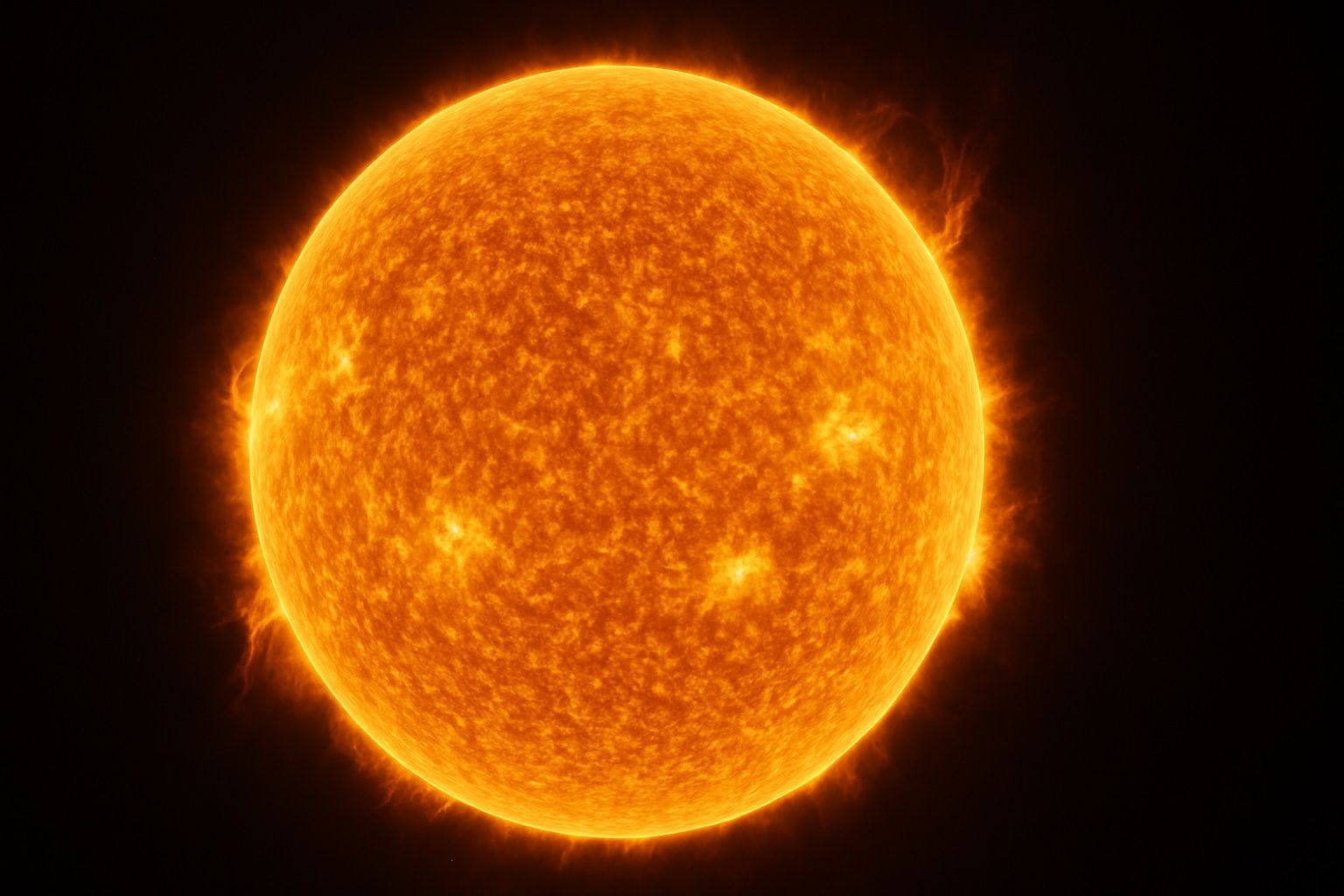
Parker Solar Probe, launched August 12, 2018 on a Delta IV Heavy, became NASA’s first mission to fly through the Sun’s corona and “touch the Sun” in April 2021 when it crossed the Alfvén critical boundary during its 8th orbit. At its closest approaches Parker reaches about 3.8–4 million miles (6.2 million km) from the Sun, roughly 9 solar radii, traveling faster than 430,000 mph (700,000 km/h). The probe’s heat shield is a 4.5-inch-thick carbon-composite foam sandwich that keeps instruments near room temperature while the shield surface heats to about 2,500°F (1,377°C). Parker carries four instrument suites—FIELDS, SWEAP, IS☉IS, and
8 June 2025
Internet Access in Cuba: From Control to Constellations

Internet Access in Cuba: From Control to Constellations

The first internet connection in Cuba was established in 1996 as a 64 Kbps link via Sprint in the United States. In 2011, with help from Venezuela, Cuba installed the ALBA-1 undersea fiber-optic cable, which became publicly usable in January 2013, replacing the old satellite backbone. From December 6–8, 2018, ETECSA rolled out mobile internet over 3G for Cuban cellphone users. By the end of 2019, an estimated 7.1 million Cubans were online in some capacity, as mobile data began to take hold. In 2023, the Arimao undersea cable, built with France’s Orange, was completed, linking Cuba to Martinique and
Space-Weather Satellites: Earth’s Cosmic Early Warning System

Space-Weather Satellites: Earth’s Cosmic Early Warning System

SOHO (Solar and Heliospheric Observatory), launched in 1995, became the first satellite to continuously observe the Sun from the Sun–Earth L1 point and carries the LASCO coronagraph, enabling CME tracking and the discovery of more than 5,000 comets. ACE (Advanced Composition Explorer), launched in 1997, and NOAA’s DSCOVR (Deep Space Climate Observatory), launched in 2015, sit at the Sun–Earth L1 to sample the solar wind and provide roughly 15 minutes to 60 minutes of advance warning of approaching CMEs. STEREO, launched in 2006, consists of two spacecraft, STEREO-A ahead of Earth and STEREO-B behind, providing stereoscopic views of solar activity;
8 June 2025
The Croatian Connection: How Fast, Far, and Future-Proof Is Internet Access in 2025?

The Croatian Connection: How Fast, Far, and Future-Proof Is Internet Access in 2025?

As of 2022, Croatia had about 77% of the population as regular internet users, with 97% among youth. In cities, 86% of households have access to fast broadband, while rural areas had only about 39% in 2022. Fixed broadband uptake is roughly 75% of households, slightly below the EU average of about 78%. There is near-universal 4G/LTE coverage (about 98%), and 5G had expanded to roughly 83.4% of the country by 2023, though coverage remains denser in urban areas. HT holds about 59% of fixed broadband subscriptions in 2024, with A1 around 25–30% and Telemach about 10–15%. HT added 150,000
Côte d’Ivoire’s Internet Revolution: Fiber Optics, 5G Dreams, and Satellite Solutions

Côte d’Ivoire’s Internet Revolution: Fiber Optics, 5G Dreams, and Satellite Solutions

As of 2024, about 53.4% of Ivorians live in urban areas, while urban internet usage is roughly 50% compared with 22% in rural areas. Côte d’Ivoire has laid over 5,200 km of fiber under the RNHD backbone, targeting nearly 7,000 km by September 2025. The country is connected to the ACE and WACS submarine cables, and the 2Africa mega-cable is expected to land in 2023–2024, adding about 180 Tbps design capacity. By 2023, about 92% of Ivorians had access to at least one 4G network. MTN Côte d’Ivoire began 5G trials in 2021 and launched first 5G sites in late
8 June 2025
Eyes on the Infinite: The Next Generation of Space Telescopes Set to Rewrite the Cosmos

Eyes on the Infinite: The Next Generation of Space Telescopes Set to Rewrite the Cosmos

The Nancy Grace Roman Space Telescope is planned to launch in late 2026 (latest commitment by May 2027) aboard SpaceX’s Falcon Heavy to a halo orbit around the Sun-Earth L2, about 1.5 million kilometers from Earth. Roman uses a 2.4-meter primary mirror repurposed from Hubble and a 300-megapixel Wide Field Instrument that covers about 0.28 square degrees, enabling sky surveys roughly 1,000 times faster than Hubble. Its Coronagraph Instrument aims to directly image exoplanets and disks by suppressing starlight with deformable mirrors, potentially detecting planets a billion times fainter than their stars. Roman’s microlensing survey is expected to find over
Cosmic Time Machine: The Jaw-Dropping Science Unleashed by the James Webb Space Telescope

Cosmic Time Machine: The Jaw-Dropping Science Unleashed by the James Webb Space Telescope

JWST launched on December 25, 2021, aboard an ESA Ariane 5 rocket to the Sun-Earth L2 point, reaching about 1.5 million kilometers from Earth in January 2022. Its 6.5-meter segmented gold-coated beryllium primary mirror consists of 18 hexagonal segments, each about 1.32 meters across and roughly 20 kilograms, designed to fold for launch. JWST uses a five-layer Kapton sunshield measuring roughly 21 by 14 meters to keep the optics around 40 kelvin, while the MIRI instrument operates at about 7 kelvin with a dedicated cryocooler. JWST carries four main instruments: NIRCam (0.6-5 μm; 4-megapixel arrays and wavefront sensing), NIRSpec (0.6-5
7 June 2025
Internet Access in Comoros: From Island Gaps to Satellite Signals

Internet Access in Comoros: From Island Gaps to Satellite Signals

The Union of the Comoros comprises Grande Comore (Ngazidja), Anjouan (Ndzuwani), Mohéli (Mwali) and the Mayotte territory, with island geography that complicates terrestrial network rollout. Submarine cables have transformed connectivity: EASSy landed in Moroni in 2010–2011, AVASSA was completed in 2016, and FLY-LION3 landed at Itsandra, Moroni in 2019, creating three major international links. Internally, AVASSA connects Grande Comore and Anjouan (Mohéli is linked by microwave), while a Comoros Domestic Cable System (CDCS) is planned and Comoros Cables manages open wholesale access for both carriers. Fixed broadband remains scarce, with about 3,000 fixed broadband subscriptions in 2023 (roughly 0.3 per
Hyperspectral Eyes in the Sky: How Space-Based Imaging Is Revolutionizing Earth Observation

Hyperspectral Eyes in the Sky: How Space-Based Imaging Is Revolutionizing Earth Observation

NASA’s Hyperion, launched in 2000 on the EO-1 satellite, collected 220 spectral bands from 400 to 2500 nm at 30 m resolution. A hyperspectral data cube stacks hundreds of narrow wavelength bands for every ground pixel, creating a two-dimensional spatial image plus a spectral dimension. Hyperspectral imaging records hundreds of narrow bands (often 10 nm or less) enabling identification of materials by their spectral fingerprints, unlike RGB’s 3 broad bands or multispectral’s 5–30 bands. Space-based hyperspectral sensors are typically passive, in sun-synchronous low Earth orbits, and commonly use pushbroom scanning to build full images with high signal-to-noise ratio. The VNIR-SWIR
1 226 227 228 229 230 233

Stock Market Today

Corning stock price hits record close — what’s driving GLW and the next big test

Corning stock price hits record close — what’s driving GLW and the next big test

7 February 2026
Corning shares jumped 8.3% to a record $122.16 Friday, gaining 11% over two sessions amid strong demand for AI infrastructure stocks. The move follows a $6 billion optical fiber deal with Meta and upgraded company forecasts. Shares traded as high as $122.56 and rose 0.6% after hours. COO Avery Nelson sold 1,894 shares for tax withholding, retaining 66,050.
PepsiCo stock: €2.5 billion bond deal lands as investors size up the price-cut gamble

PepsiCo stock: €2.5 billion bond deal lands as investors size up the price-cut gamble

7 February 2026
PepsiCo priced €2.5 billion in euro notes across four maturities, with settlement set for Feb. 11, according to an SEC filing. The company plans to use proceeds for general corporate purposes, including repaying commercial paper. Shares closed at $170.49 Friday, up 1.8%. PepsiCo is also cutting U.S. snack prices by up to 15% after consumer pushback.
Go toTop