Mateusz Kaczmarek

A technology and finance expert writing for TS2.tech. He analyzes developments in satellites, telecommunications, and artificial intelligence, with a focus on their impact on global markets. Author of industry reports and market commentary, often cited in tech and business media. Passionate about innovation and the digital economy.

No Signal: The Shocking Digital Divide in the DRC and the Race to Connect Millions

No Signal: The Shocking Digital Divide in the DRC and the Race to Connect Millions

The Democratic Republic of the Congo has a population of over 100 million, but only about 27% were using the internet in early 2024, leaving roughly 75 million offline. <li Internet users rose from 1.4 million in 2013 to 28.9 million in 2023, with mobile internet subscribers jumping about 40% over three years. <li As of 2025, only 9,361 km of fiber has been laid, far short of the 50,000 km target in Horizon 2025, covering about 19% of the plan. <li The DRC’s four major mobile operators—Vodacom, Airtel, Orange, and Africell—dominate the market, with 3G/4G in major cities and

7 June 2025
Sky Scanners: How SAR Imaging Satellites Are Redefining Earth Observation

Sky Scanners: How SAR Imaging Satellites Are Redefining Earth Observation

About 75% of the planet is obscured by cloud cover or darkness at any moment, making optical imaging inaccessible. Synthetic Aperture Radar (SAR) satellites actively illuminate the ground with microwave radar and synthesize a large aperture by moving the antenna to produce high-resolution images. SAR can operate day or night and in all weather, providing 24/7 imaging. Sentinel-1 (ESA) comprises satellites Sentinel-1A launched in 2014 and Sentinel-1B in 2016, with C-band SAR offering ~5 m resolution in high-resolution modes and 250–400 km swaths, and a 12-day revisit. RADARSAT-2 (Canada) launched in 2007, followed by the RADARSAT Constellation Mission (RCM) in
7 June 2025
Connecting Colombia: Bridging the Digital Divide from Cities to the Amazon

Connecting Colombia: Bridging the Digital Divide from Cities to the Amazon

As of early 2025, 41.1 million Colombians were internet users, representing about 77% of the population. By 2025 Colombia had 78.3 million cellular mobile connections in service, roughly 147% of the population. The urban–rural gap remains wide: 63.9% of households had internet in 2023, 28.8% of the rural population were online, and fewer than 13% of rural households had fixed internet subscriptions. Claro dominates the market with about 37% of fixed broadband subscriptions and around 45% of mobile subscribers; Movistar has ~17% fixed and ~25% mobile; Tigo ~17% fixed and ~18% mobile; WOM ~7% mobile. Starlink entered Colombia and went
6 June 2025
Eyes in the Sky: How Satellites Are Revealing Our Changing Climate

Eyes in the Sky: How Satellites Are Revealing Our Changing Climate

Radar altimeters on TOPEX/Poseidon, Jason-1, Jason-2, Jason-3, and Sentinel-6 Michael Freilich have provided a global mean sea level record since 1992, showing a rise of about 3.3 millimeters per year and roughly 10 centimeters over 30 years. Arctic summer sea ice extent has declined by about 12% per decade since the 1980s, with the Arctic minimum shrinking from about 7.5 million km² in 1980 to 4.4 million km² in 2023. GRACE and GRACE-FO gravity missions have revealed that Greenland and Antarctica are losing hundreds of billions of tons of ice each year, contributing to sea level rise. NASA’s PACE mission,
6 June 2025
Chad’s Digital Desert: The Shocking Truth Behind the Country’s Internet Revolution

Chad’s Digital Desert: The Shocking Truth Behind the Country’s Internet Revolution

As of 2025, Chad has about 2.74 million internet users (13.2% of the population), with roughly 87% of Chadians still offline. There are about 14.5 million active mobile subscriptions in Chad (roughly 70% of the population) in 2025, with many people owning multiple SIM cards. Chad has just one Internet Exchange Point in N’Djamena, and as of 2025 about 33% of the country’s networks exchange traffic locally at DJAMIX. Fixed broadband is virtually non-existent in Chad, with zero fixed subscriptions and mobile networks providing the main internet access, where 2G covers about 85% of the population and 3G/4G only about
Everything You Never Knew You Needed to Know About Differential and Precise Point Positioning

Everything You Never Knew You Needed to Know About Differential and Precise Point Positioning

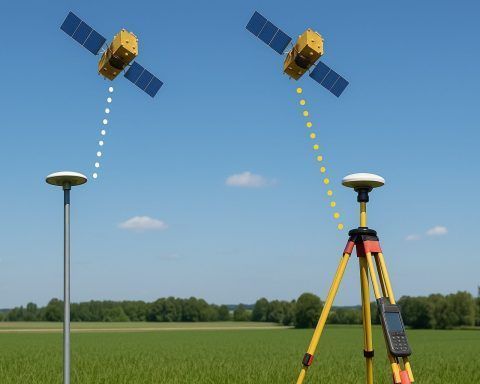
DGNSS improves GNSS accuracy by using stationary reference receivers to broadcast corrections to rovers, transforming standalone GPS accuracy from about 5–15 m to sub-meter or centimeter levels, with SBAS like WAAS (USA) and EGNOS (Europe) delivering about 1–3 m for aviation. Real-Time Kinematic (RTK) uses carrier-phase measurements and double-differencing to fix integer ambiguities, delivering centimeter-level accuracy in real time, with highest performance when the base is within about 10–20 km. Early differential GPS (DGPS) yielded about 1 meter accuracy within tens of kilometers of the base, with degradation of roughly 1 m per 150 km. Precise Point Positioning (PPP) provides
6 June 2025
Internet Access in Cape Verde: Current Status and Outlook

Internet Access in Cape Verde: Current Status and Outlook

As of early 2025, about 73.5% of Cape Verde’s population were internet users, roughly 387,000 people out of ~526,000. Fixed broadband subscriptions totaled about 38,000 in 2023, approximately 7 per 100 people. Cape Verde Telecom (CVTelecom) reported passing over 22,000 FTTH homes by the end of 2021, primarily in urban areas. There were over 600,000 mobile cellular connections active in early 2025, about 115% of the population, with 91% of connections broadband-capable (3G/4G). Total internet subscription density reached about 90 per 100 inhabitants in mid-2023, while around 73% of people were online. In early 2024, the median fixed broadband download
6 June 2025
Global Navigation Showdown: How GPS III, Galileo, BeiDou & GLONASS Upgrades Will Change How You Navigate

Global Navigation Showdown: How GPS III, Galileo, BeiDou & GLONASS Upgrades Will Change How You Navigate

GPS III, first launched in 2018, delivers three times the accuracy and eight times the anti-jamming performance of previous GPS generations, with a GPS III satellite named Katherine Johnson launched by SpaceX in 2025. GPS modernization includes the L1C common civil signal for interoperability with Galileo and a Next Generation OCX ground system to handle new signals and security. Galileo is planned as a 30-satellite constellation, with 27 in orbit by late 2024 and the full 30-satellite fleet expected by the end of 2025. Galileo’s HAS began in 2023, delivering about 20 cm horizontal and 40 cm vertical accuracy, while
The Space Race for the Internet: Inside the Billion-Dollar Satellite Mega-Constellation Boom

The Space Race for the Internet: Inside the Billion-Dollar Satellite Mega-Constellation Boom

As of mid-2025, Starlink operates about 7,500 active satellites, the largest fleet in history, accounting for more than 60% of all active satellites. Starlink’s next-generation satellites (v2) weigh about 800 kg each, vs 260 kg for v1, and use inter-satellite laser links to route data across continents. Amazon’s Project Kuiper plans 3,236 LEO satellites at roughly 600 km altitude, with more than $10 billion invested, the first 27 operational satellites launched in April 2025, and a target to deploy half the constellation by July 2026. OneWeb completed its Gen1 constellation with 618 of 648 satellites in 1,200 km polar orbits
Inside America’s Silent Sentinels: The Untold Story of GSSAP in Space Surveillance

Inside America’s Silent Sentinels: The Untold Story of GSSAP in Space Surveillance

GSSAP-1 and GSSAP-2 were launched on July 28, 2014 aboard a Delta IV M+(4,2) from Cape Canaveral, accompanied by the ANGELS experimental satellite. The GSSAP satellites operate in near-geosynchronous orbit roughly 35,900 km (22,300 miles) above Earth and function as a “neighborhood watch” for the GEO belt, providing space situational awareness to USSPACECOM. Built by Northrop Grumman on the GeoStar-1 bus, GSSAP satellites are three-axis stabilized and carry high-resolution optical sensors capable of rendezvous and proximity operations with other GEO objects. Each GSSAP spacecraft carries limited onboard propellant, meaning its maneuvering life spans only a few years before it must
5 June 2025
Mega-Constellations Exposed: How Swarms of Tiny Satellites Are Taking Over Low Earth Orbit

“No Signal? No Problem!” – Next‑Gen Satellite Phones Set to Change Everything

In 2022, Apple’s iPhone 14 introduced Emergency SOS via satellite, later expanded in the iPhone 15 to support satellite texting via Globalstar. In April 2023, AST SpaceMobile’s BlueWalker 3 demonstrated a two-way 4G call using a standard smartphone on Earth with a 64 m² satellite antenna. Lynk Global demonstrated the first direct satellite text to an unmodified phone in 2022 and is partnering with mobile operators in over 40 countries to fill coverage dead zones. SpaceX’s Starlink Direct to Cell uses 2023-generation satellites with advanced antennas to connect to ordinary phones via terrestrial bands, with a plan to offer basic
5 June 2025
Orbiting at Zero Speed: How Geostationary Satellites Rule Global Communications

Orbiting at Zero Speed: How Geostationary Satellites Rule Global Communications

Geostationary orbit sits at about 35,786 km above the equator and completes a sidereal day (~23h56m), so satellites appear fixed over one longitude; Arthur C. Clarke popularized it in 1945, giving the region the nickname the Clarke Belt. A GEO satellite remains stationary relative to the ground, allowing ground antennas to point at a fixed spot without tracking. Three GEO satellites spaced roughly 120° apart can provide near-global coverage, excluding polar regions. Syncom 2, launched in 1963, reached a geosynchronous orbit with a slight inclination, while Syncom 3, launched in 1964, was placed over the equator with zero inclination and
5 June 2025
1 227 228 229 230 231 233

Stock Market Today

Alphabet stock drops for a fourth straight day as AI spending jitters linger

Alphabet stock drops for a fourth straight day as AI spending jitters linger

7 February 2026
Alphabet shares fell 2.53% to $322.86 Friday, marking a fourth straight decline as investors questioned heavy AI-related spending. The Nasdaq slipped Thursday after Alphabet detailed up to $185 billion in capex, while the Dow and S&P 500 rose Friday on chipmaker gains. U.S. markets reopen Monday, with attention on Alphabet’s outlook and upcoming jobs and inflation data.
BBAI stock jumps 16% into BigBear.ai share-vote week — what to watch next

BBAI stock jumps 16% into BigBear.ai share-vote week — what to watch next

7 February 2026
BigBear.ai Holdings shares surged 15.7% Friday to $4.72 ahead of a key shareholder vote on doubling authorized shares to 1 billion. Options trading was heavy, with a put/call ratio of 0.19. The company recently announced deals in AI customs technology and a partnership with Abu Dhabi’s AD Ports Group. The special meeting is set for Feb. 18, with online voting open until late Feb. 17.
American Airlines stock jumps nearly 8% as airlines rally — what to watch next week

American Airlines stock jumps nearly 8% as airlines rally — what to watch next week

7 February 2026
American Airlines shares jumped 7.6% to $15.24 Friday, rebounding with a broad rally that sent the Dow past 50,000 for the first time. Investors are watching the carrier’s battle with United at Chicago O’Hare, where a summer capacity surge could trigger a fare war. American also announced new Philadelphia–Porto service for 2027 and launched a centennial inflight menu.
Go toTop