
São Paulo, May 11, 2026, 15:07 BRT
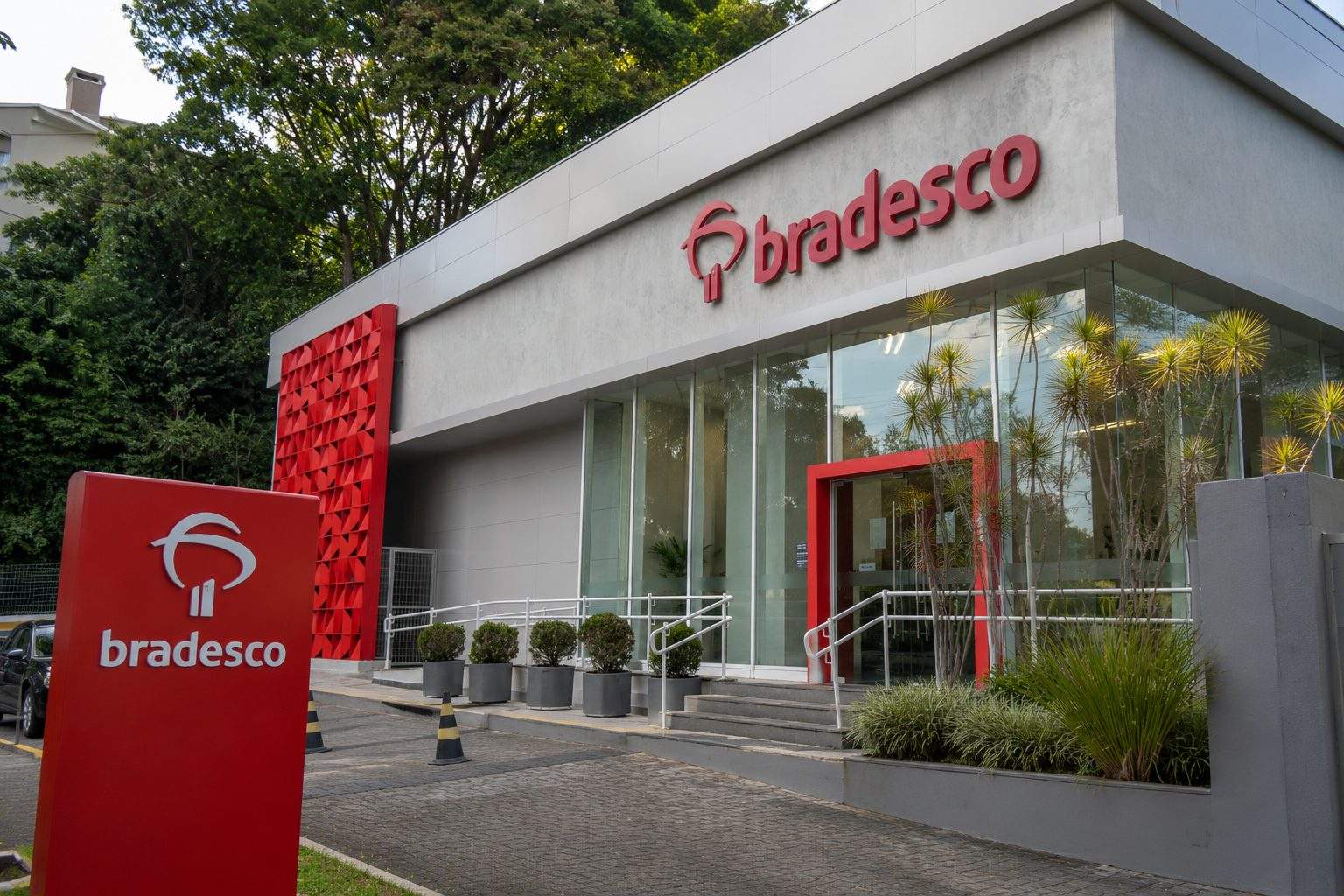
Banco Bradesco SA’s preferred shares dropped in São Paulo on Monday, tracking weakness across Brazilian lenders as investors balanced hopes for a profit rebound with concerns over higher loan-loss provisions and the bank’s renewed focus on tech-driven growth. At 12:17 p.m., InfoMoney’s live feed showed BBDC4 down 2.31%. Itaú Unibanco’s ITUB4 slipped 2.23%, Santander Brasil units were off 2.21%, and Banco do Brasil edged down 0.32%.
BBDC4 slipped to 18.12 reais on May 11, down from its prior close at 18.59 reais, according to Investing.com. Shares traded between 18.10 and 18.54 reais during the session. This drop followed Bradesco’s first-quarter report, which highlighted better earnings yet kept the spotlight on credit quality.
This is the crux of it. Bradesco wants to maintain its turnaround narrative after posting a 16.1% rise in recurring net income to 6.811 billion reais for the first quarter, with total revenue climbing 14.0% to 36.881 billion reais. But expanded loan-loss provisions jumped 26.5%, reaching 9.667 billion reais. Those provisions reflect money set aside for loans that could default.
The digital push is back on display at the bank. Bradesco’s investor-relations site on Monday highlighted a The Banker Technology Awards mention: Banco Bradesco picked up wins for both Global and Latin America. The Banker pointed to Bridge—Bradesco’s generative AI operating system—as the foundation behind AI initiatives throughout the company.
The Banker reports Bridge slashed AI integration cycles by a factor of ten, pushing customer service resolution rates up to 87%. Bradesco’s digital platform for small and medium-sized businesses, meanwhile, delivered an 83% reduction in cost-to-serve. Open-finance data? That helped generate 8 billion reais worth of qualified credit proposals.
Chief Executive Marcelo Noronha pointed to the bank’s AI, analytics, cybersecurity, and app modernization push as “redefining banking.” For chief technology officer Cíntia Scovine Barcelos, the message was blunt: “technology is the business,” she wrote in a Bradesco note—underscoring the bank’s drive to make digital capabilities central to profit and risk, not just a side project. The Banker
Bradesco’s first-quarter performance left it with a bit of breathing space. Net interest income climbed 16.4% year-on-year to 20.051 billion reais. Insurance, pension plans and capitalization bonds income grew 20.4%, reaching 6.384 billion reais. The bank’s expanded loan portfolio was 1.09 trillion reais.
The risk picture isn’t so straightforward. In a Valor Econômico piece posted by the company, investor relations director André Carvalho noted Bradesco had adjusted its tone on risk appetite a bit, citing a more challenging macro environment. Noronha described it as not exactly “pulling the handbrake”—but the caution stood out. Growth is still the aim, just with a tighter grip on risk.
Carvalho pointed to certain wholesale exposures and aging rural credit portfolios as reasons for increased provisions, noting that short-term delinquencies reflected seasonal trends. Even so, loans overdue by more than 90 days ticked up to 4.2%, compared to 4.1% in the previous quarter. Investor focus remains fixed on stress from small and mid-sized companies.
Genial’s analysts—Eduardo Nishio, Alan Frydman, and Vitor Sousa—reiterated their buy call on BBDC4, sticking to a 25 reais price target. They pointed to Bradesco’s story hinging on a steady return to profitability, improvements in credit quality, and possible capital upside from the BradSaúde shake-up.
Capital plays a role here. On April 30, Bradesco disclosed it had wrapped up the merger of Bradesco Gestão de Saúde shares into BradSaúde, bumping its ownership in BradSaúde up to 91.35% of the total and voting capital. Genial noted the deal could give capital a lift of roughly 2.5 percentage points on a pro forma basis. The bank’s Common Equity Tier 1 ratio stood at 10.2% at quarter’s end; pro forma, that number would hit 12.7%, based on Bradesco’s own data.
At this point, the stock’s story is less about accolades, more about execution. Bradesco brings heft on revenue, a sizable insurance business, and its AI push is getting noticed. The challenge? Keeping those positives ahead of provisioning, elevated rates, and any new cracks in corporate or consumer credit.
Related articles: Artificial Intelligence