
Hong Kong, February 2, 2026, 17:48 HKT — The market has closed.
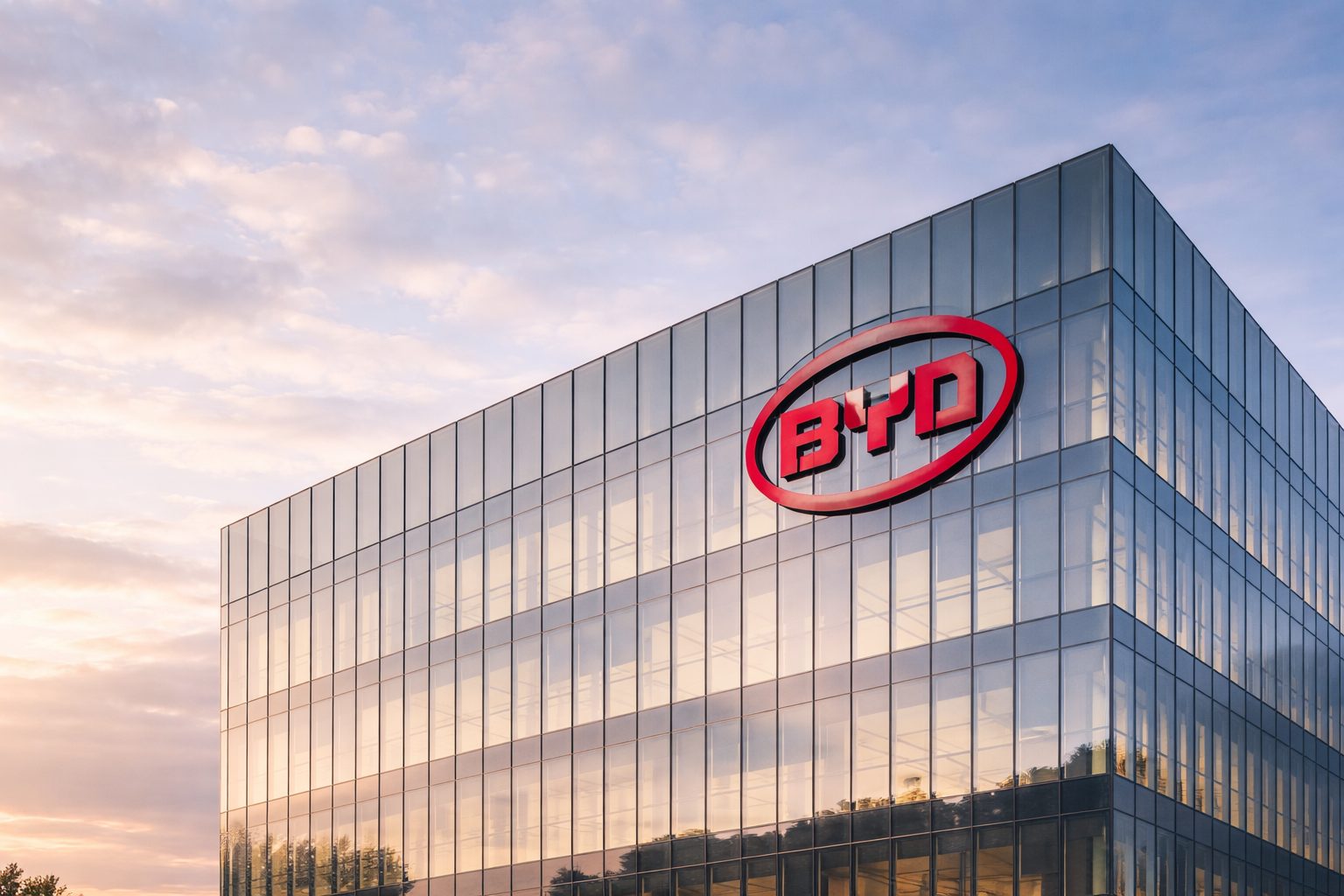
- BYD’s shares listed in Hong Kong dropped 6.9% following a warning of a steep year-on-year decline in January sales from the automaker.
- January exports hit 100,482 new energy vehicles, according to a Hong Kong exchange filing, with installed battery capacity reaching roughly 20.187 GWh.
- Investors will be closely eyeing February deliveries and any policy hints on China’s consumer incentives in the coming weeks.
BYD’s Hong Kong-listed shares (1211.HK) slid 6.9% to HK$91 on Monday, hitting their lowest point in at least a year as January sales disappointed and changes to subsidies hit lower-priced models. On the mainland, its Shenzhen-listed shares (002594.SZ) declined 4.2% to 87.05 yuan. Other automakers like Geely Auto, Leapmotor, Xiaomi, and XPeng also fell, dropping between 1.2% and 6.8%. “Investors were likely surprised by the large degree of the domestic decline,” noted Eugene Hsiao of Macquarie Capital. Reuters
This matters because BYD now serves as a key indicator for the pace at which demand is slipping for mass-market electric cars in China. A drop to new lows can turn a routine monthly delivery report into a broader gauge—checking if confidence is truly faltering or just shaky.
January often proves tricky, tangled with discounts, model rollovers, and buyers holding off after holiday deals. But the market’s angle has shifted—from “how much can they sell?” to “what are they willing to give up to do it?”
BYD reported in a Hong Kong exchange filing that it sold 210,051 “new energy vehicles” in January, marking a 30.11% drop from the same month last year. Production also slid 29.13% to 232,358 units. Battery electric vehicle sales took a 33.60% hit, falling to 83,249, while plug-in hybrid electric vehicle sales declined 28.53% to 122,269. (Plug-in hybrids combine an engine with a battery charged from the grid.) January exports totaled 100,482 vehicles, and installed battery capacity stood at roughly 20.187 gigawatt-hours. The filing cautioned these numbers are unaudited and could be revised.
The split stands out clearly. Battery-only sales dropped more sharply than plug-in hybrids, with both declining year-on-year, despite BYD’s efforts to shore up volumes through a broader product range.
Exports seem to offer some relief, for now, but they’re far from a simple solution. Pushing more cars abroad often racks up costs in marketing, logistics, and distribution. Plus, it leaves the company vulnerable to sudden policy changes and tariff risks.
Company data reveal January’s drop continued a downturn starting mid-2025, even as exports soared 150.7% that year. This surge helped BYD surpass Tesla in global EV sales. For 2026, BYD aims to ship 1.3 million vehicles overseas, a 24% jump from 2025, seeking to counter weaker demand at home.
BYD’s operations extend beyond cars to include rechargeable batteries and electronics, according to its company profile. Its passenger vehicles come under the Dynasty and Ocean series.
Investors remain uncertain whether January’s slump is just seasonal noise or a real hit to market share. If the price war intensifies, margins will stay squeezed—even if sales volumes level off.
Attention is shifting to February delivery numbers and potential price shifts, while policy signals draw scrutiny ahead of the National People’s Congress kicking off March 5.
Related articles: Electric Vehicles