Browse Category

Astronomy News 10 August 2025 - 13 August 2025

Memory Loss Reversed, ‘Coral’ on Mars, and a Tiny Killer Whale: Science News Roundup (Aug 12–13, 2025)

Memory Loss Reversed, ‘Coral’ on Mars, and a Tiny Killer Whale: Science News Roundup (Aug 12–13, 2025)

On its 4,608th Martian sol, NASA’s Curiosity rover captured a 5-cm coral-shaped rock nicknamed Paposo in Gale Crater, suggesting ancient liquid water in Mars’ history. A global river study radiocarbon-dating CO2 from over 700 rivers found that about 60% of river-emitted carbon comes from ancient carbon stores. The same study estimates plants and soils may be absorbing roughly 1 gigaton of CO2 per year to offset these ancient carbon releases. By 2080, rising seas could inundate Easter Island’s Moai at Ahu Tongariki and up to 51 other cultural sites, risking UNESCO World Heritage status. Janjucetus dullardi, a 2-meter-long, sharp-toothed Oligocene
13 August 2025
Don’t Miss the Cosmic Show: Perseid Meteors, Planetary Duet & Auroras (Aug 13–14, 2025)

Don’t Miss the Cosmic Show: Perseid Meteors, Planetary Duet & Auroras (Aug 13–14, 2025)

The Perseid meteor shower peaks around August 12–13, 2025, with a bright Moon at about 84% full that reduces typical rates from 50–75 meteors per hour to about 10–20 per hour or fewer. The best Perseid viewing is after dark, especially between midnight and dawn around 2:00–4:00 a.m. local time when the Perseus radiant is highest, per NASA. The Perseids are debris from Comet 109P/Swift-Tuttle, whose last near-Earth approach was in 1992. On August 13–14 the Moon is waning gibbous at about 75–80% illumination, rises in mid-evening, and its brightness washes out fainter stars and meteors. On August 8–9 a
Spectacular Sky Show on Aug 12–13, 2025: Perseid Meteors, Planetary “Kiss” & More

Spectacular Sky Show on Aug 12–13, 2025: Perseid Meteors, Planetary “Kiss” & More

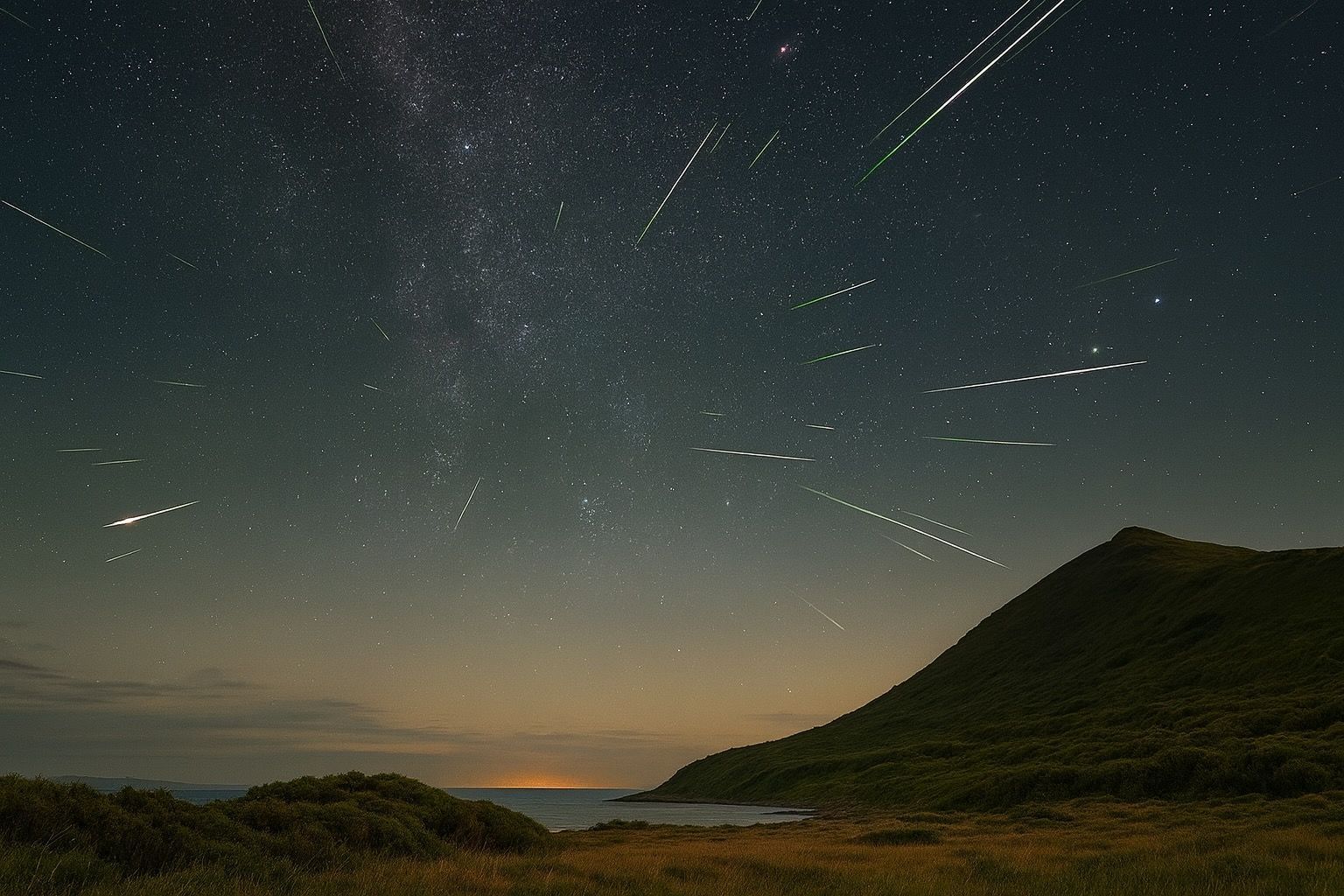
The Perseid meteor shower peaks on the night of August 12 into the early hours of August 13, 2025, with an expected rate of 10–20 meteors per hour under an 84% full moon. Even with the bright Moon, the brightest Perseid fireballs and colorful streaks are expected to punch through the moonlight. The best viewing window is after midnight, with the peak around 2–3 AM local time as the Perseus radiant climbs higher. Venus and Jupiter will appear about 1° apart in the pre-dawn sky on August 12, 2025, with their closest approach on August 11–12. A planetary parade will
12 August 2025
Historic Vulcan Launch, Artemis Moon Hardware & Perseid Meteor Spectacle – Space News Roundup (Aug 11–12, 2025)

Historic Vulcan Launch, Artemis Moon Hardware & Perseid Meteor Spectacle – Space News Roundup (Aug 11–12, 2025)

The Orion Stage Adapter for Artemis II was completed at NASA’s Marshall Space Flight Center and will ship to Kennedy Space Center, with Artemis II planned as a 10-day crewed lunar trip around the Moon by April 2026. NASA announced Phase 2 of its LunaRecycle challenge offering up to $2 million in prizes to prototype recycling systems for a lunar base, with finalists demonstrating their tech in August 2026. NASA awarded a $3.6 billion contract to KBR Wyle Services LLC to support astronaut health and performance research through 2035, covering programs at Johnson Space Center from the ISS to Artemis.
12 August 2025
Dazzling Meteor Shower Peaks Tonight – Your Skywatch Guide for August 11–12, 2025

Dazzling Meteor Shower Peaks Tonight – Your Skywatch Guide for August 11–12, 2025

Perseid meteor shower peaks August 11–12 (into the pre-dawn hours) with an 84% full Moon washing out fainter meteors, so expected rates drop to about 10–20 per hour instead of the usual 50–100. The best viewing window is midnight to dawn, with a peak surge around 2–3 a.m. local time as the Perseid radiant in Perseus climbs high. Fireballs may still appear, and occasional long-lasting earthgrazers could skim the atmosphere early in the night even under moonlight. Venus and Jupiter form a close dawn conjunction on August 11–12, about 1 degree apart, visible to the naked eye about 1–2 hours
How to Watch the Perseid Meteor Shower 2025 – Peak Dates, Best Viewing Times, and Tips

How to Watch the Perseid Meteor Shower 2025 – Peak Dates, Best Viewing Times, and Tips

The Perseids peak on August 12–13, 2025, as Earth passes through the densest part of Swift-Tuttle’s debris, with the official peak around 02:30–03:00 UTC on August 13. The Moon will be a bright waning gibbous at about 83–84% illumination during peak, severely reducing counts from the typical 50–100 meteors per hour to about 10–20 per hour. The best viewing times are after midnight local time, with NASA noting a prime window around 2–3 a.m. local time. The radiant lies in the constellation Perseus, near the Perseus–Cassiopeia border, so many meteors appear to radiate from that area. The shower’s material comes
Battle of the Telescopes: StellaLyra 8″ & Apertura AD8 Dobsonians vs. Vaonis Vespera II Smart Scope (2025 Comparison)

Battle of the Telescopes: StellaLyra 8″ & Apertura AD8 Dobsonians vs. Vaonis Vespera II Smart Scope (2025 Comparison)

StellaLyra 8″ f/6 and Apertura AD8 are both 203 mm (8″) parabolic-mirror Dobsonians with a 1200 mm focal length (≈ f/6). Vaonis Vespera II uses a 50 mm f/5 quadruplet apochromatic refractor with a built‑in camera and a Sony IMX585 sensor (8.3 MP). The StellaLyra and Apertura are manual Dobsonians on wooden alt-az mounts, while the Vespera II is a motorized GoTo system with auto‑initialization and tracking. The Vespera II offers a native field of view around 1.6° × 0.9°, enabling large targets to be captured on its screen. Visual observing with the 8″ Dobs delivers real-time eyepiece views, whereas
10 August 2025
The Best Telescopes of 2025: What the Pros Are Using and What You Should Buy

The Best Telescopes of 2025: What the Pros Are Using and What You Should Buy

The Celestron NexStar 8SE is a 203 mm Schmidt-Cassegrain with a GoTo computerized fork mount and f/10 optics, delivering bright, detailed views but at a high price for beginners. The Sky-Watcher 8-inch Dobsonian is a 203 mm reflector on a manual alt-azimuth mount with f/6, offering a large light bucket at low cost but no tracking. The Celestron NexStar Evolution 9.25 has a 235 mm aperture, premium Go-To fork mount with built-in battery and WiFi app, but is heavy (~28 kg) and expensive. The Sky-Watcher SkyMax 150 Maksutov-Cassegrain delivers high-power planetary detail with a 150 mm aperture and f/12, but
10 August 2025
Epic Skywatch Alert (Aug 10–11, 2025): Perseid Meteor Shower Peaks under Bright Moon – Plus Venus & Jupiter’s Dazzling Conjunction

Epic Skywatch Alert (Aug 10–11, 2025): Perseid Meteor Shower Peaks under Bright Moon – Plus Venus & Jupiter’s Dazzling Conjunction

The Perseid Meteor Shower peaks on the night of August 11–12, 2025, under a waning gibbous Moon about 84% illuminated, with expected meteor rates of 10–20 per hour in bright conditions despite the usual 50–100 per hour under dark skies. Venus–Jupiter conjunction occurs August 11–12, 2025, with the two planets separated by about 0.5°–1°, Venus at magnitude −4 and Jupiter at magnitude −2, rising in the eastern pre-dawn sky around 4:30–5:00 a.m. Saturn rises around 10:30 p.m. in early August and by mid-August is up by about 8:30 p.m., shining in Aquarius with its rings visible in a small telescope.
10 August 2025
Spectacular Venus–Jupiter “Cosmic Kiss” Dazzles Early Morning Skies (Don’t Miss It!)

Spectacular Venus–Jupiter “Cosmic Kiss” Dazzles Early Morning Skies (Don’t Miss It!)

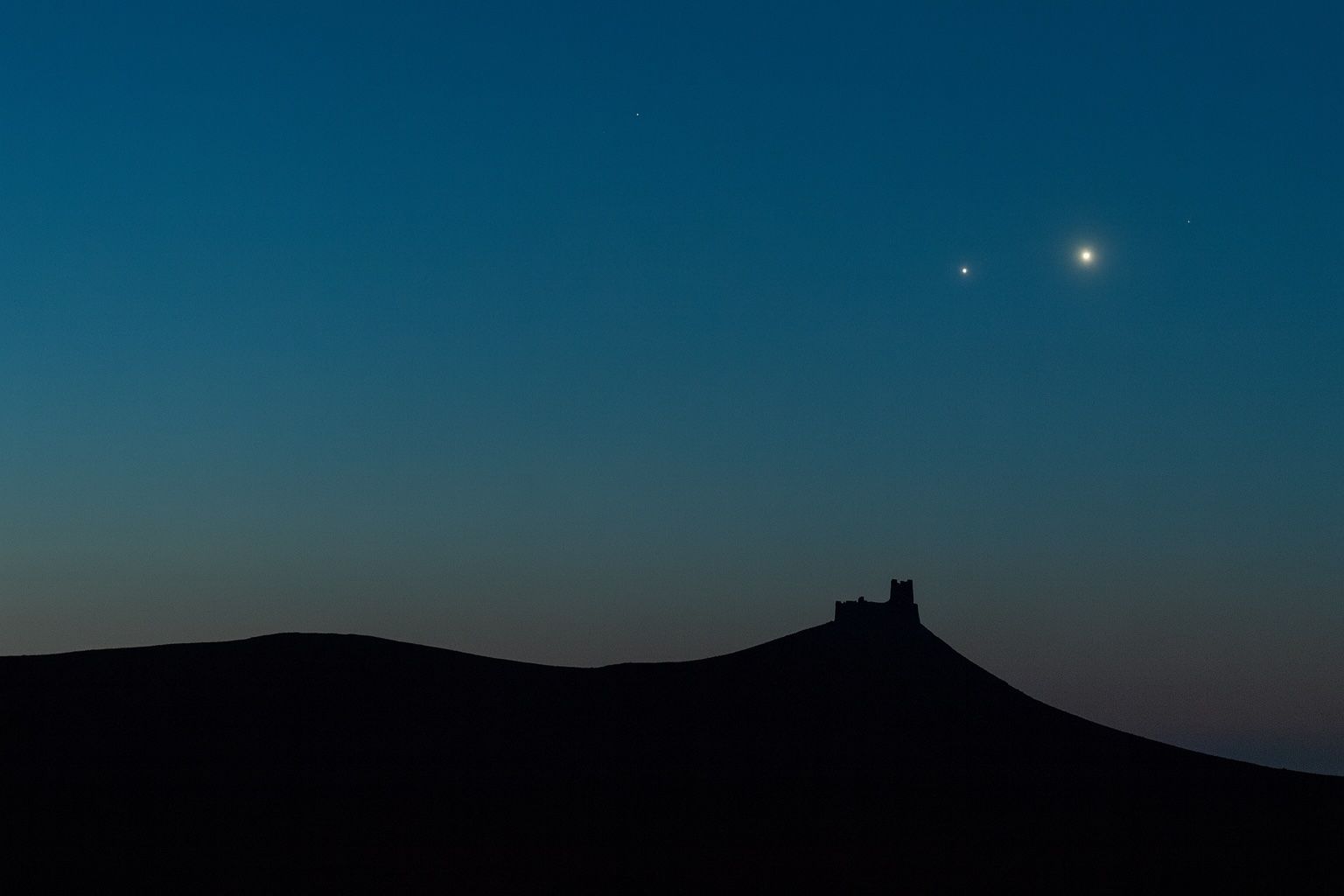
The Venus–Jupiter conjunction occurs August 11–13, 2025, with its closest approach on August 12 at about 0.86° apart. Venus will shine around magnitude -4.0 and Jupiter around -1.8 to -2 during the pairing. The pair sits about 35° from the Sun, enabling viewing in a dark dawn sky. Observers should view about 45 minutes to an hour before sunrise, when the planets are 5–10° above the horizon and will rise to 15–20° as dawn progresses. In the dawn sky, Venus appears lower and brighter, with Jupiter above, forming a striking naked-eye close pair. With binoculars or a telescope, both planets
10 August 2025
August 2025 Night Sky Spectacles: Rare Black Moon, Nebula Treasure, Mars in Virgo & Saturn’s Shadow Show

August 2025 Night Sky Spectacles: Rare Black Moon, Nebula Treasure, Mars in Virgo & Saturn’s Shadow Show

On August 23, 2025, the Moon undergoes a seasonal Black Moon New Moon in Virgo at 06:06 UTC, the third New Moon in a season with four. The Dumbbell Nebula, M27, in Vulpecula is a bright planetary nebula visible throughout August 2025 and was first discovered by Charles Messier in 1764. Mars in August 2025 has a brightness of about magnitude 1.6 and a disk roughly 5 arcseconds across. Mars makes a close approach to Beta Virginis (Zavijava) on August 2, 2025, passing about 8 arcminutes to the southeast. By August 24, 2025, Mars will be about 2.7° south of
10 August 2025
Six Planets Will Align in the Sky This Month—Here’s When and How to Watch the Rare “Planet Parade”

Six Planets Will Align in the Sky This Month—Here’s When and How to Watch the Rare “Planet Parade”

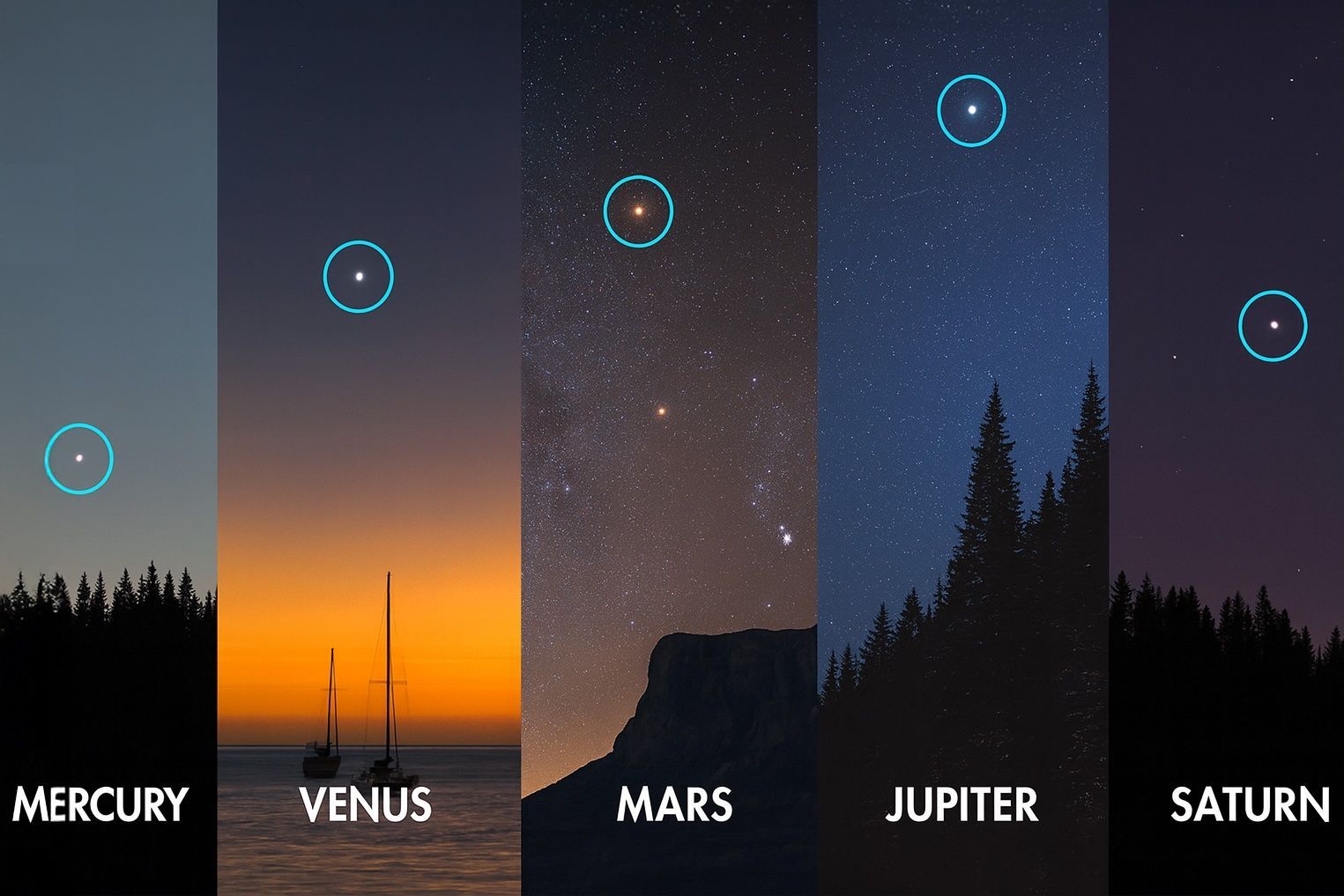
On August 10, six planets—Mercury, Venus, Jupiter, Saturn, Uranus, and Neptune—will line up in a broad arc in the pre-dawn sky. Four of these planets (Mercury, Venus, Jupiter, Saturn) are visible to the naked eye, while Uranus and Neptune require binoculars or a small telescope. NASA notes that planetary parades of this kind occur only every few years, and become rarer as more planets join the lineup. The best viewing period is in mid-to-late August, with the prime nights around August 23 when the Moon is near new and does not wash out the view. Venus and Jupiter come very
10 August 2025
1 23 24 25 26 27 31

Stock Market Today

Go toTop