Browse Category

Astronomy News 31 July 2025 - 5 August 2025

Skywatch Alert: Meteors, Auroras & a Planetary Spectacle on Aug 5–6, 2025

Skywatch Alert: Meteors, Auroras & a Planetary Spectacle on Aug 5–6, 2025

The Perseid meteor shower is already ramping up for Aug 5–6, 2025, with an expected 10–20 meteors per hour under dark skies after midnight. Perseids are famous for fireballs, producing bright meteors that can blaze through moonlight despite lunar glare. The full Sturgeon Moon occurs on Aug 9, and the peak nights Aug 11–13 will have 84–90% moonlight, washing out…
You Won’t Believe Where the Next Total Solar Eclipse Will Happen – Upcoming Solar Eclipses from 2025 Onward

You Won’t Believe Where the Next Total Solar Eclipse Will Happen – Upcoming Solar Eclipses from 2025 Onward

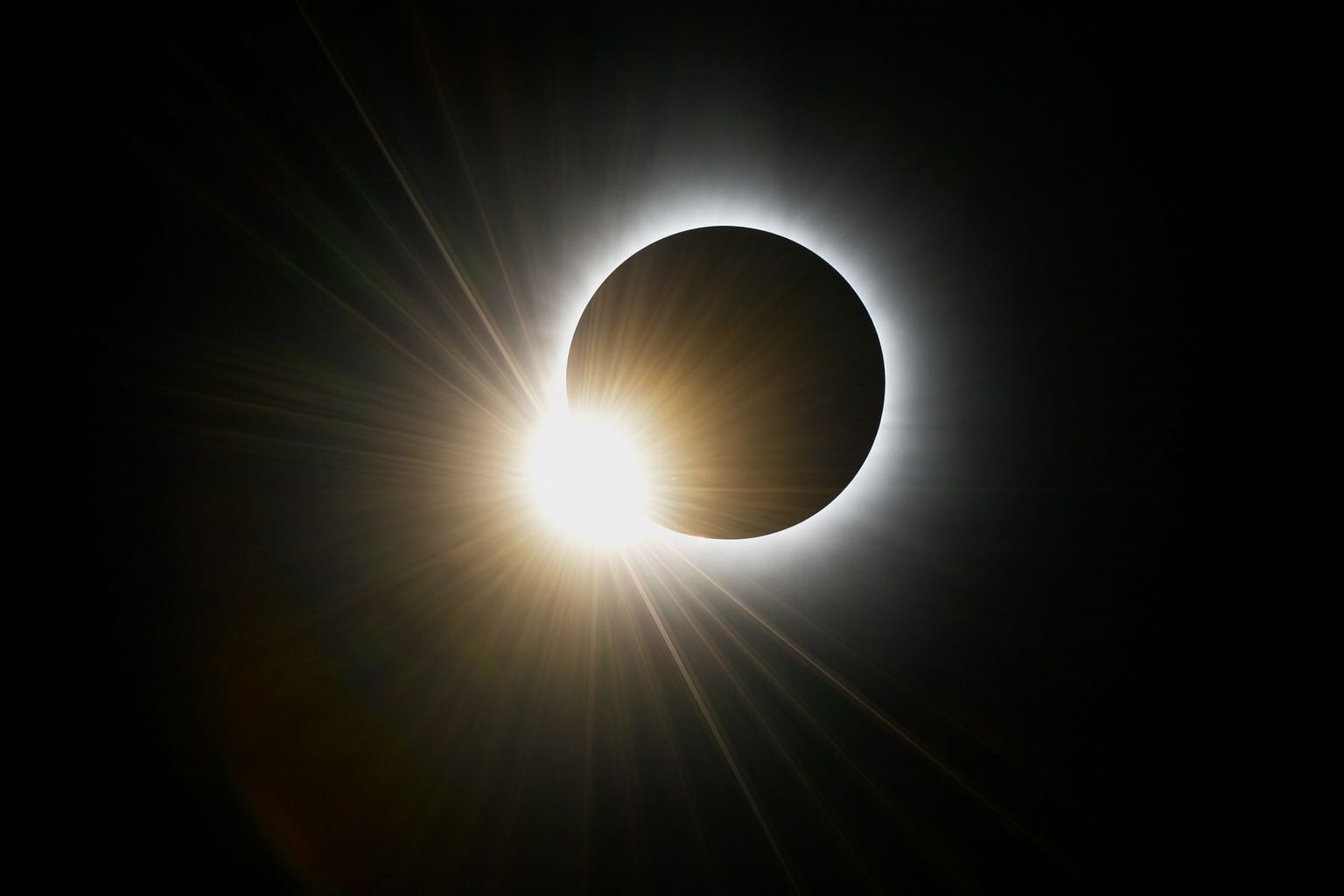
September 21, 2025 – Partial Solar Eclipse visible mainly from the Southern Hemisphere, with up to 80% Sun obscured over the South Pacific, including Fiji, Tahiti, New Zealand, and parts of Antarctica. February 17, 2026 – Annular “ring of fire” over Antarctica, with annularity lasting about 2 minutes at maximum, while a partial eclipse will be visible across southern South…
2 August 2025
Eyes to the Skies August 2–3, 2025: Meteor Showers, Auroras, and Planets Put on a Show

Eyes to the Skies August 2–3, 2025: Meteor Showers, Auroras, and Planets Put on a Show

During the Aug 2–3 predawn hours under dark skies at mid-northern latitudes, observers could see about 20 meteors per hour as the Perseids rise. The Moon is in first-quarter and will set in the early morning, washing out fainter Perseids and potentially reducing observed rates by about 75% near the maximum. Delta Aquariids are tapering after their July 30 peak…
Skywatchers’ Delight: Meteor Showers, Auroras & Planet Parade Light Up This Weekend (Aug 1–2, 2025)

Skywatchers’ Delight: Meteor Showers, Auroras & Planet Parade Light Up This Weekend (Aug 1–2, 2025)

The Perseids are active now and ramp toward their mid-August peak, with up to 50 to 100 meteors per hour at best, though moonlight will reduce counts. The Southern Delta Aquariids are active, producing about 3–4 meteors per hour in early August as they radiate from Aquarius and originate from Comet 96P/Machholz. Alpha Capricornids peaked on July 30 and typically…
1 August 2025
Space Drama: Astronaut Launch Scrub, Secret Satellites & Surprise Alliances (July 31–Aug 1, 2025)

Space Drama: Astronaut Launch Scrub, Secret Satellites & Surprise Alliances (July 31–Aug 1, 2025)

On July 31, 2025, NASA’s Crew-11 mission to the ISS was scrubbed due to weather, with liftoff canceled just over a minute before launch and the crew—Zena Cardman, Mike Fincke, Kimiya Yui, and Oleg Platonov—set to retry on Aug. 1 at 11:43 a.m. ET. SpaceX Falcon 9 booster B1094 landed at Cape Canaveral’s Landing Zone 1 after the Crew-11 attempt,…
1 August 2025
Sky Show Spectacular: Twin Meteor Showers, Planet Parade & Aurora Hints (July 31–Aug 1, 2025)

Sky Show Spectacular: Twin Meteor Showers, Planet Parade & Aurora Hints (July 31–Aug 1, 2025)

Delta Aquariids peak on the nights of July 30–31 with rates up to 15–20 meteors per hour in the Southern Hemisphere and fewer than 10 per hour from mid-northern latitudes, under a slender 25–30% lit Moon that sets early. Alpha Capricornids peak around July 30–31, averaging 2–5 meteors per hour, but delivering slow, bright fireballs that can rival Venus in…
31 July 2025
The Telescope Revolution of 2025–2026: From Backyard Stargazing to Giant Cosmic Eyes

The Telescope Revolution of 2025–2026: From Backyard Stargazing to Giant Cosmic Eyes

Celestron Origin Intelligent Home Observatory, introduced in 2024 and shipping through 2025, uses a 6-inch Rowe-Ackermann Schmidt Astrograph (RASA) at f/2.2 with an integrated 8.3-megapixel Sony STARVIS IMX178 color sensor, has no eyepiece, a fully motorized one-arm alt-azimuth mount with StarSense plate solving, built-in autofocus and dew control, and about 6 hours of cordless operation. The ZWO SeeStar S50, launched…
1 25 26 27 28 29 31

Stock Market Today

  • LSE Plans to Ease Public Holding Rules for Overseas Companies in FTSE Indexes
    January 27, 2026, 9:13 AM EST. The London Stock Exchange Group (LSE) announced plans to relax rules requiring the minimum number of shares held by the public for overseas companies to join key indexes like the FTSE 100. This move aims to attract more international firms to British benchmark indexes, potentially boosting market diversity and liquidity. Currently, strict rules limit index inclusion, but easing these could open doors for more foreign businesses. The LSE's strategy reflects growing competition among global stock markets to attract listings and expand investor options. Observers note this could reshape dynamics in London's equity markets amid shifting global investment trends.
Go toTop