Browse Category

Astronomy News 20 June 2025 - 3 July 2025

Space News Roundup: July 2025 / Updated: 2025, July 3rd, 00:00 CET

Space News Roundup: July 2025 / Updated: 2025, July 3rd, 00:00 CET

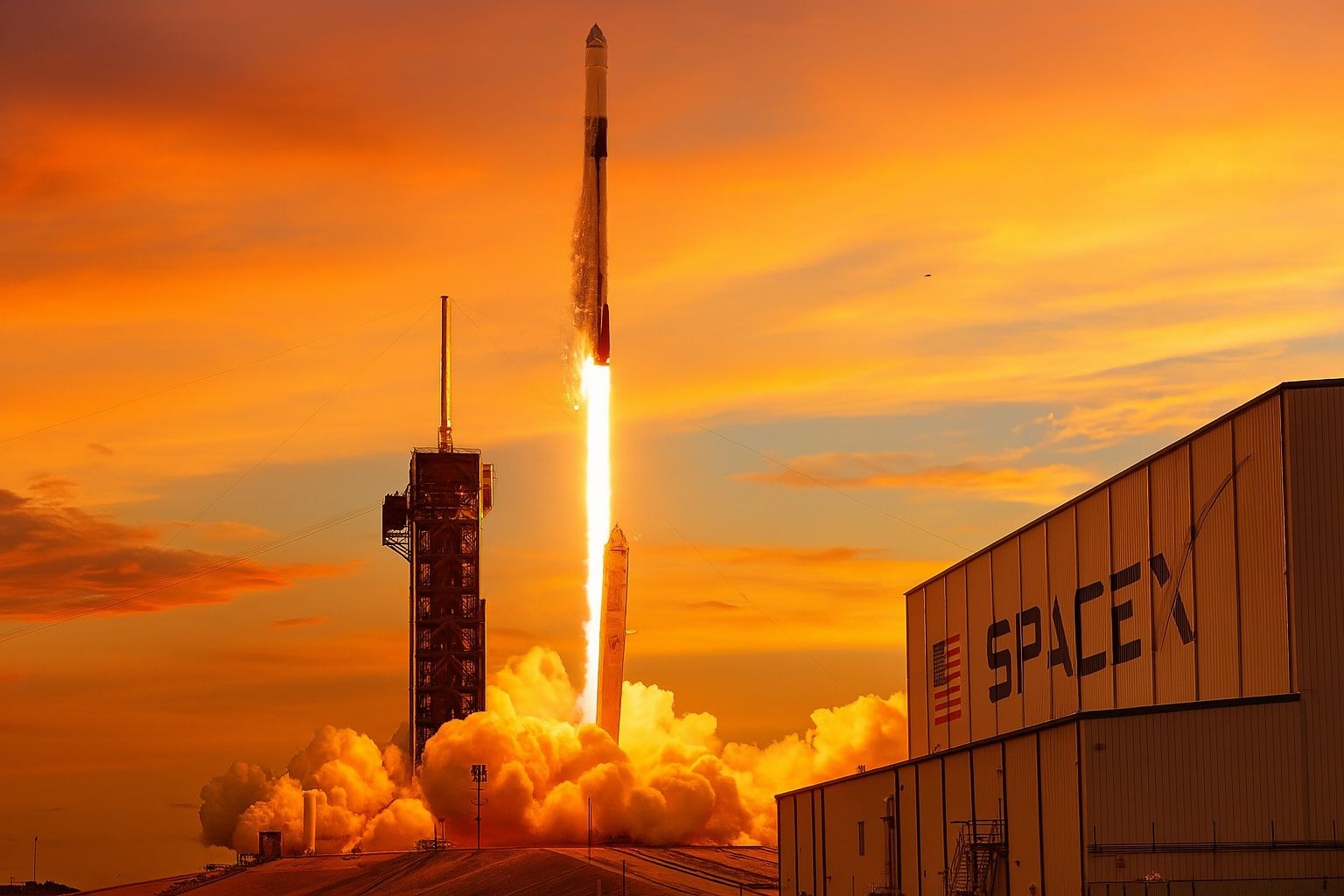
SpaceX marked its 500th Falcon 9 launch with the deployment of 27 Starlink satellites and the 29th booster reuse. MTG-S1, Europe’s first geostationary hyperspectral infrared atmospheric sounder, launched July 1, 2025 on a SpaceX Falcon 9 alongside the Sentinel-4 instrument for hourly air-quality data over Europe and North Africa. MethaneSAT, an $88 million climate satellite funded by Jeff Bezos and EDF and launched in March 2024, was declared lost after losing contact on June 20, 2025. James Webb Space Telescope directly imaged TWA 7b, a Saturn-mass exoplanet about 110 light-years away, with a surface temperature around 120°F. James Webb mapped

Space News Roundup: July 2025 / Updated: 2025, July 2nd, 12:01 CET

Space News Roundup: July 2025 / Updated: 2025, July 2nd, 12:01 CET

MTG-S1, launched July 1, 2025 on a SpaceX Falcon 9 carrying Sentinel-4, will provide continuous 3D atmospheric profiles from geostationary orbit and hourly high‑resolution air‑quality data. MethaneSAT, funded by Jeff Bezos and the Environmental Defense Fund and launched in March 2024, stopped responding in June 2025 and is considered irrecoverable, despite revealing methane leaks up to ten times higher than official estimates in some regions. Starlink 10-25 mission from Cape Canaveral deployed 27 satellites, marking SpaceX’s 500th Falcon 9 mission and booster B1067’s 29th flight. ESA’s Biomass satellite, launched in April 2025, uses a P-band radar to penetrate forests and
2 July 2025
SpaceX Wins $81.6 Million U.S. Space Force Deal to Launch WSF-M2 Weather Satellite in 2027

Space News Roundup – June 29, 2025

Japan’s H-2A rocket completed its 50th and final mission on June 28 (US time), launching the GOSAT-GW (“Ibuki”) greenhouse gases and water-cycle satellite into a sun-synchronous orbit with an official 98% reliability rate for the H-2A family. Blue Origin’s New Shepard NS-33 flight from Launch Site One in West Texas on June 29 carried six space tourists, including a husband-and-wife team, with Carl Kuehner becoming the 750th person in space. SpaceX conducted a rapid-fire Falcon 9 doubleheader—one launch from Cape Canaveral just after midnight on June 28 and a second from Vandenberg 13 hours later—deploying dozens of Starlink satellites and
Space News Digest: June 2025 / Updated: 2025, June 29th, 07:59 CET

Space News Digest: June 2025 / Updated: 2025, June 29th, 07:59 CET

Space Coast launches set records with 93 launches in 2024 and up to 156 projected for 2025, driven by SpaceX, ULA, and Blue Origin. SpaceX’s Starlink megaconstellation has surpassed 7,900 satellites in orbit. Two Falcon 9 missions deployed 53 Starlink satellites within 13 hours, marking SpaceX’s 81st launch of 2025 and the 468th booster recovery. Amazon’s Project Kuiper has 54 satellites in orbit toward a planned 3,200-satellite constellation, with AWS data processing integration. Japan’s H-2A rocket completed its 50th and final mission, deploying the greenhouse gas monitoring satellite GOSAT-GW, as the H3 rocket begins to replace H-2A. The Vera C.
29 June 2025
Space News Digest: June 2025 / Updated: 2025, June 29th, 00:31 CET

Space News Digest: June 2025 / Updated: 2025, June 29th, 00:31 CET

Rocket Lab completed two Electron launches within 48 hours at Launch Complex 1 in New Zealand, including the Get the Hawk Outta Here mission that deployed four satellites: three Hawkeye 360 RF geolocation microsatellites and the Kestrel-0A experimental satellite. Amazon expanded Project Kuiper by launching 27 new satellites into low Earth orbit, while SpaceX’s Starlink added 80 satellites in a single week, pushing its active constellation past 7,900. Japan marked the 50th and final H-2A launch by deploying the GOSAT-GW greenhouse gas and water-cycle satellite, part of a fleet that achieved 66 launches (63 successful) over 31 years. South Korea’s
29 June 2025
June 2025 Space News: Breakthroughs, Missions, and the Expanding Frontier / Updated: 2025, June 28th, 16:00 CET

June 2025 Space News: Breakthroughs, Missions, and the Expanding Frontier / Updated: 2025, June 28th, 16:00 CET

Shubhanshu Shukla became India’s 634th person in space, traveling to the ISS on the Axiom-4 mission after a 28-hour journey and a 41-year hiatus. NASA and Roscosmos are conducting investigations as four astronauts arrive at the ISS amid a mysterious air leak detected in the Russian Zvezda module. The Vera C. Rubin Observatory achieved first light with a 3,200-megapixel camera, discovering over 2,000 asteroids in 10 hours and planning to image the entire sky every few nights for a decade. The James Webb Space Telescope directly imaged its first exoplanet, TWA 7b, a Saturn-mass world about 111 light-years away. Japan’s
Major Astronomy News in June 2025: Webb’s Exoplanet Discovery, Rubin’s First Images, Space Missions & More

Major Astronomy News in June 2025: Webb’s Exoplanet Discovery, Rubin’s First Images, Space Missions & More

The James Webb Space Telescope directly imaged a Saturn-mass exoplanet, TWA 7 b, about 0.3 Jupiter masses at 50 AU from its star, marking Webb’s first direct exoplanet discovery. The missing baryon problem was resolved using 69 fast radio bursts, showing about 76% of ordinary matter lies in hot intergalactic gas, ~15% in halos around galaxies, and ~9% in galaxies. Comet C/2014 UN271 (Bernardinelli–Bernstein), the largest Oort Cloud comet, showed CO outgassing jets at 16.6 AU with a nucleus about 140 km across, observed by ALMA. Solar Orbiter delivered the first views of the Sun’s south pole from an inclination
This Week in Space: New Frontiers, Private Astronauts, and the Next Era of Observation / Updated: 2025-06-28 08:00

This Week in Space: New Frontiers, Private Astronauts, and the Next Era of Observation / Updated: 2025-06-28 08:00

China’s Zhongxing-9C satellite was launched on June 20, 2025, atop a Long March 3B from Xichang, marking the full localization of Chinese broadcast satellites in the 582nd Long March flight. SpaceX launched the Starlink 10-34 mission from Cape Canaveral Space Force Station, deploying 27 Starlink satellites and bringing the active constellation to nearly 8,000, with the booster marking its fifth flight. Rocket Lab’s Get The Hawk Outta Here mission placed four HawkEye 360 satellites into orbit, including three microsats for RF geolocation and the experimental Kestrel-0A. EarthDaily launched its first satellite to begin a ten-satellite constellation delivering AI-powered daily global
28 June 2025
Today in Space / June 28, 2025 0:00

Today in Space / June 28, 2025 0:00

SpaceX’s Starship suffered a further explosion during a static-fire test at Starbase, Texas, as the company has now completed nine Starship test flights with a record launch cadence in 2024–2025. SpaceX’s Axiom-4 mission docked with the International Space Station, marking India’s return to human spaceflight after 41 years as Group Captain Shubhanshu Shukla became the first Indian to reach the ISS, with Peggy Whitson leading a two-week, 60+ experiment research phase. NASA and Northrop Grumman conducted the Booster Obsolescence Life Extension (BOLE) solid rocket motor test for the Artemis program, which ended with a nozzle explosion but yielded data for
28 June 2025
June Bootids 2025: How to Watch the Rare Meteor Shower Peaking on 27 June

June Bootids 2025: How to Watch the Rare Meteor Shower Peaking on 27 June

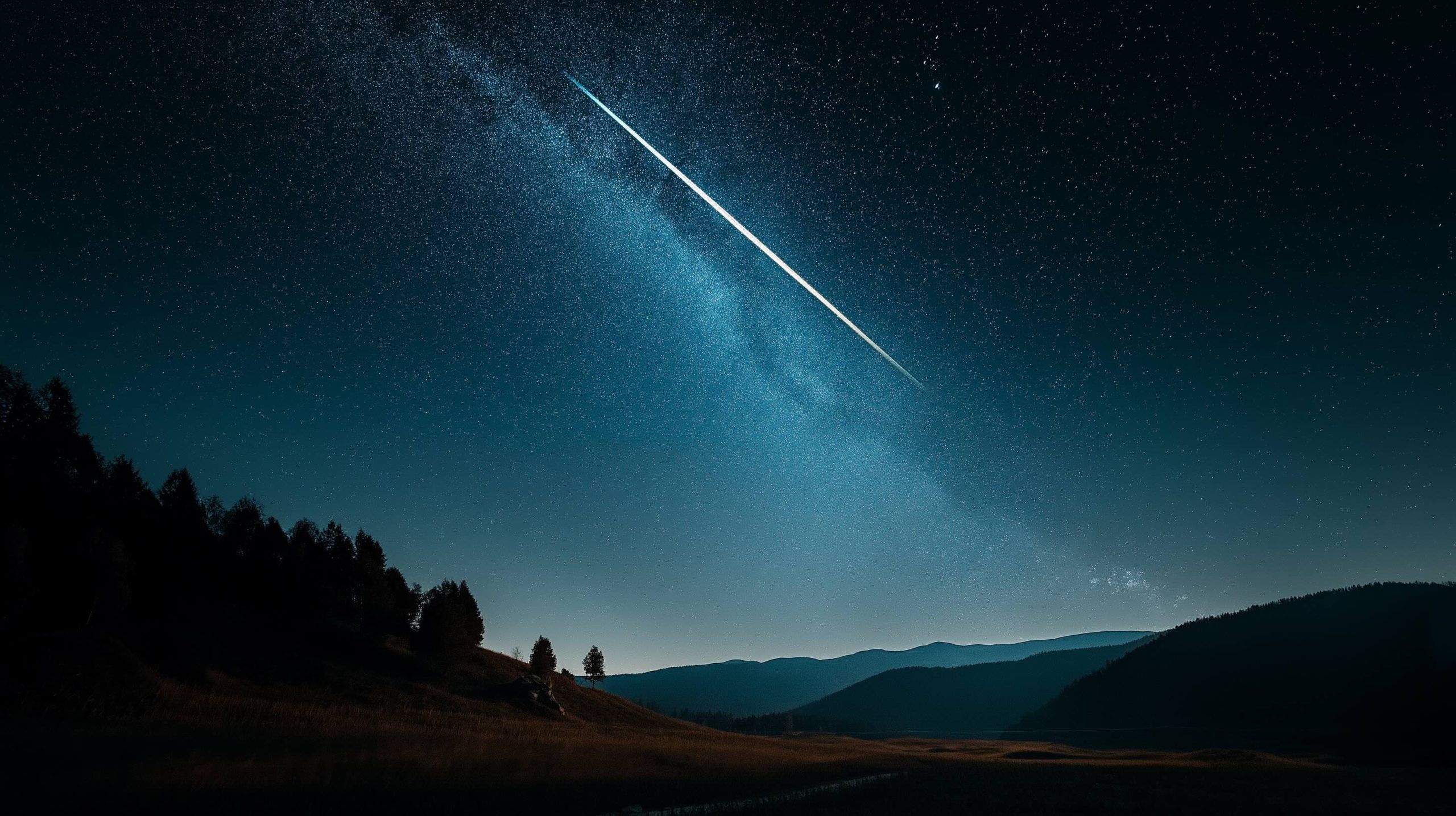
The June Bootids peak occurs on the night of 27 June 2025 at about 04:00 PDT / 11:00 UTC as Earth intersects the dust trail of periodic comet 7P/Pons-Winnecke. The parent body is periodic comet 7P/Pons-Winnecke with a 6.3-year orbit and a nucleus about 5 km in diameter. Meteor speeds are slow for Bootids, about 18 km/s, producing long, graceful streaks. The typical Zenithal Hourly Rate (ZHR) is 0–10 meteors per hour, but historical outbursts reached 100+ meteors per hour in 1916, 1921, 1927, and 1998. The Moon on 27 June 2025 is a 9% illuminated waxing crescent with moonset
26 June 2025
Sky‑Spectacle Alert: Rare Northern Lights Could Paint U.S. Skies Tonight—Here’s the Science, the Map and the Expert Warnings You Need

Sky‑Spectacle Alert: Rare Northern Lights Could Paint U.S. Skies Tonight—Here’s the Science, the Map and the Expert Warnings You Need

A coronal-hole high-speed stream traveling at about 750 km/s is slamming Earth’s magnetosphere and has prompted NOAA to issue a G2 (Moderate) geomagnetic-storm watch for 24–25 June 2025. The storm could push aurora visibility as far south as Illinois, Ohio, and New York on the night of 24–25 June 2025. The disturbance already produced vivid green and magenta curtains seen from Texas to Alberta earlier this month. NOAA SWPC reported K-index values of 4 late Monday, indicating active conditions likely to produce auroras in the northern tier of the United States. Updated view-line maps show the aurora oval dipping into
24 June 2025
Jupiter Unveiled: Surprising Secrets of the Giant Planet and Its 95 Moons

Jupiter Unveiled: Surprising Secrets of the Giant Planet and Its 95 Moons

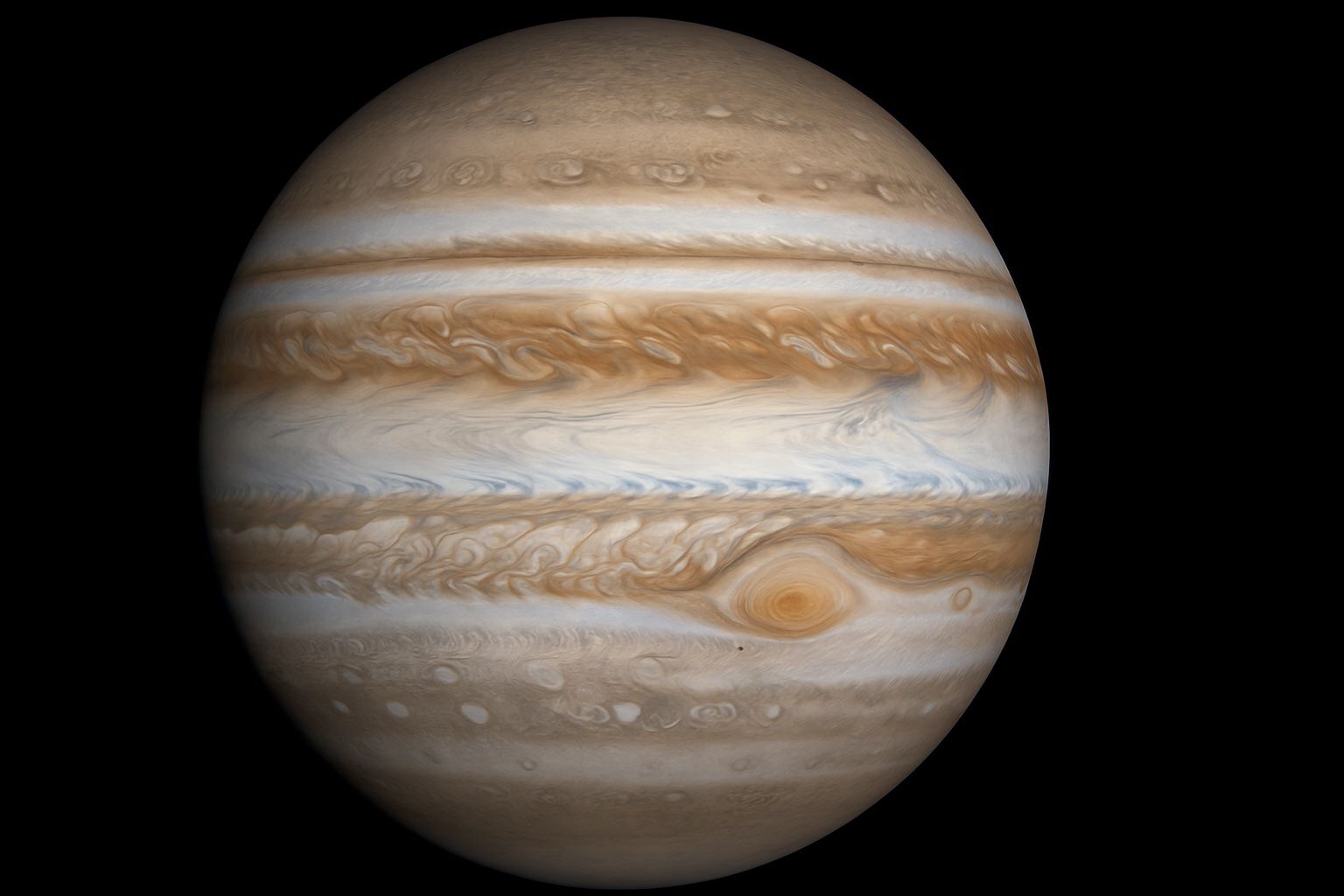
Jupiter is the Solar System’s largest planet, about 318 Earth masses, with a rotation period of roughly 9.9 hours per day. It is composed mainly of hydrogen and helium, with a metallic hydrogen layer that powers a strong magnetic field via a dynamo. The Great Red Spot is a storm at least 300–350 years old, about twice Earth’s diameter, whose roots extend roughly 300 miles (500 km) into the atmosphere. Jupiter’s magnetosphere extends 1–3 million kilometers toward the Sun and a tail over 600 million kilometers long, with a field 14–54 times stronger than Earth’s and new radiation zones near
20 June 2025

Stock Market Today

Nebius (NBIS) stock jumps 16% into weekend as AI trade whipsaws; earnings next week in focus

Nebius (NBIS) stock jumps 16% into weekend as AI trade whipsaws; earnings next week in focus

7 February 2026
Nebius shares jumped 16.6% to $86.10 on Friday, rebounding from a 10.3% drop Thursday. The company will report fourth-quarter and full-year 2025 results before the market opens on Feb. 12. U.S. jobs and inflation data are due next week after a delay from a government shutdown. Recent swings in Nebius stock followed volatility in AI-linked tech names after Alphabet’s spending update.
Go toTop