Bathla liabilities
A$3.2bn
At 30 Jun 2025 · regulatory filings
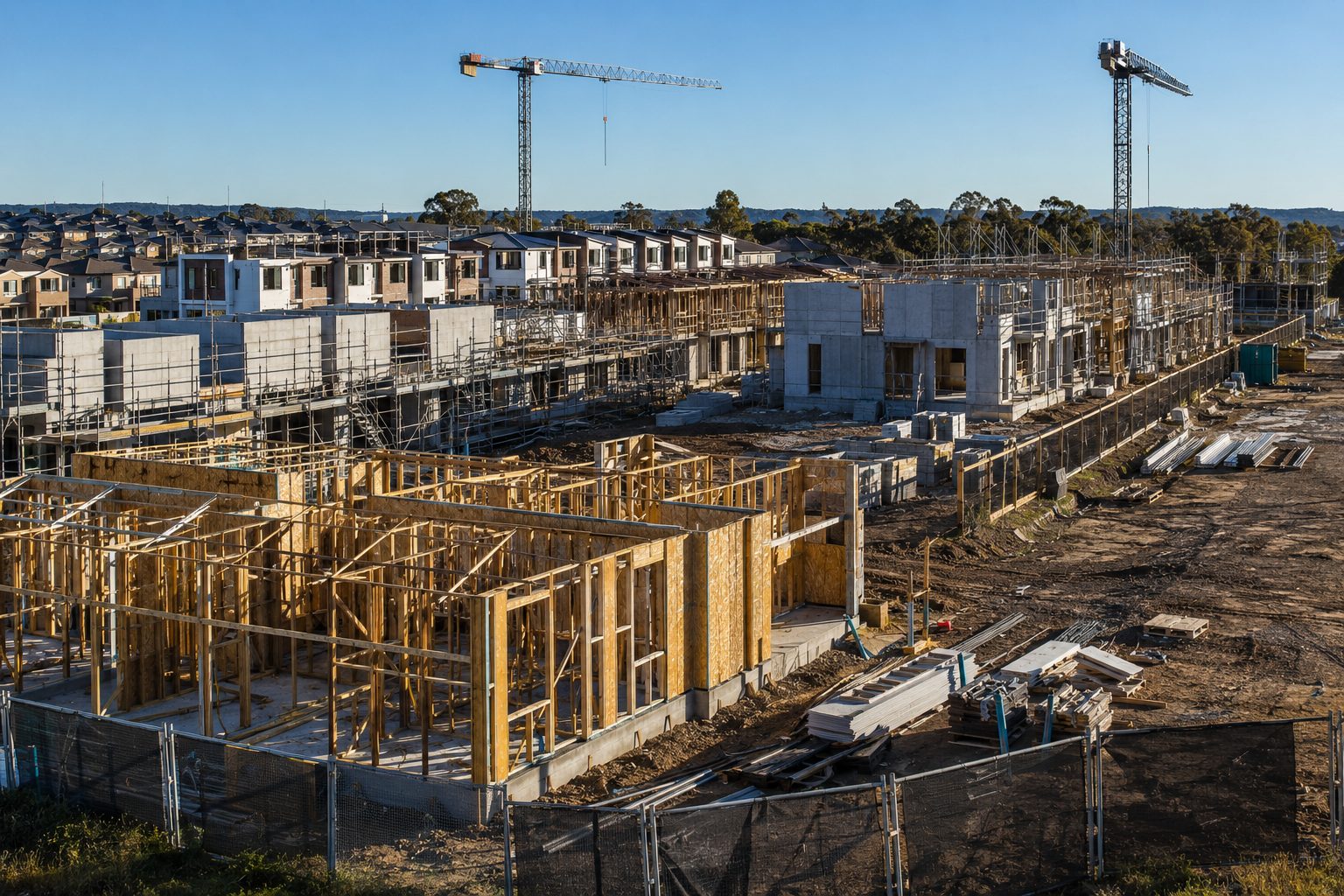
Bathla Group’s entry into voluntary administration puts a major private borrower at the forefront of Australia’s rapidly expanding private-credit sector. Regulatory filings referenced by ABC News show the privately held developer had A$3.2 billion in liabilities as of June 2025.
The administration is larger than one listed lender’s balance-sheet exposure. The key variables are fund-level loan concentration, project completion and the time required to turn first-mortgage security into cash.
Bars use separate scales: the first two compare borrower liabilities and CNI’s direct loan; the ASIC bar is a market snapshot, not Bathla exposure.
| Item | Current reading | Investor implication |
|---|---|---|
| Administrator | Teneo; Universal Property Group and Raj & Jai Construction | Control shifts to project stabilisation and creditor recovery |
| Bathla pipeline | 5,000+ homes on company website | Completion delays can tighten western Sydney supply |
| Centuria security | First mortgages; partial cross-collateralisation | Recovery depends on asset values and timing |
| ASIC private-credit survey | 22 managers, 52 funds, ~A$76bn AUM | Valuation and concentration are active enforcement themes |
| RBA system view | Private credit below 2% of financial-system assets | Systemic risk appears contained; fund-level risk can still be material |
| Next catalyst | First creditors’ meeting reported for 4 Sep 2026 | Watch secured debt, cash needs and project-by-project recovery |