Browse Category

Future Trends News 7 June 2025 - 12 June 2025

Artificial Intelligence in Satellite and Space Systems

Artificial Intelligence in Satellite and Space Systems

In May 1999, NASA’s Deep Space 1 operated for three days with the Remote Agent AI, planning activities and diagnosing simulated faults autonomously. From 2001 to 2004, NASA’s EO-1 carried the Autonomous Sciencecraft Experiment (ASE), using onboard machine learning and the CASPER planner to re-task after events like volcanic eruptions. In 2013, JAXA’s Epsilon rocket became the first AI-enabled launch vehicle, reducing launch prep time from months to days. In 2015, NASA’s Curiosity rover implemented the AEGIS onboard targeting system to autonomously select rock targets for the ChemCam laser. In 2018, CIMON (Crew Interactive MObile CompanioN) became the first AI-powered
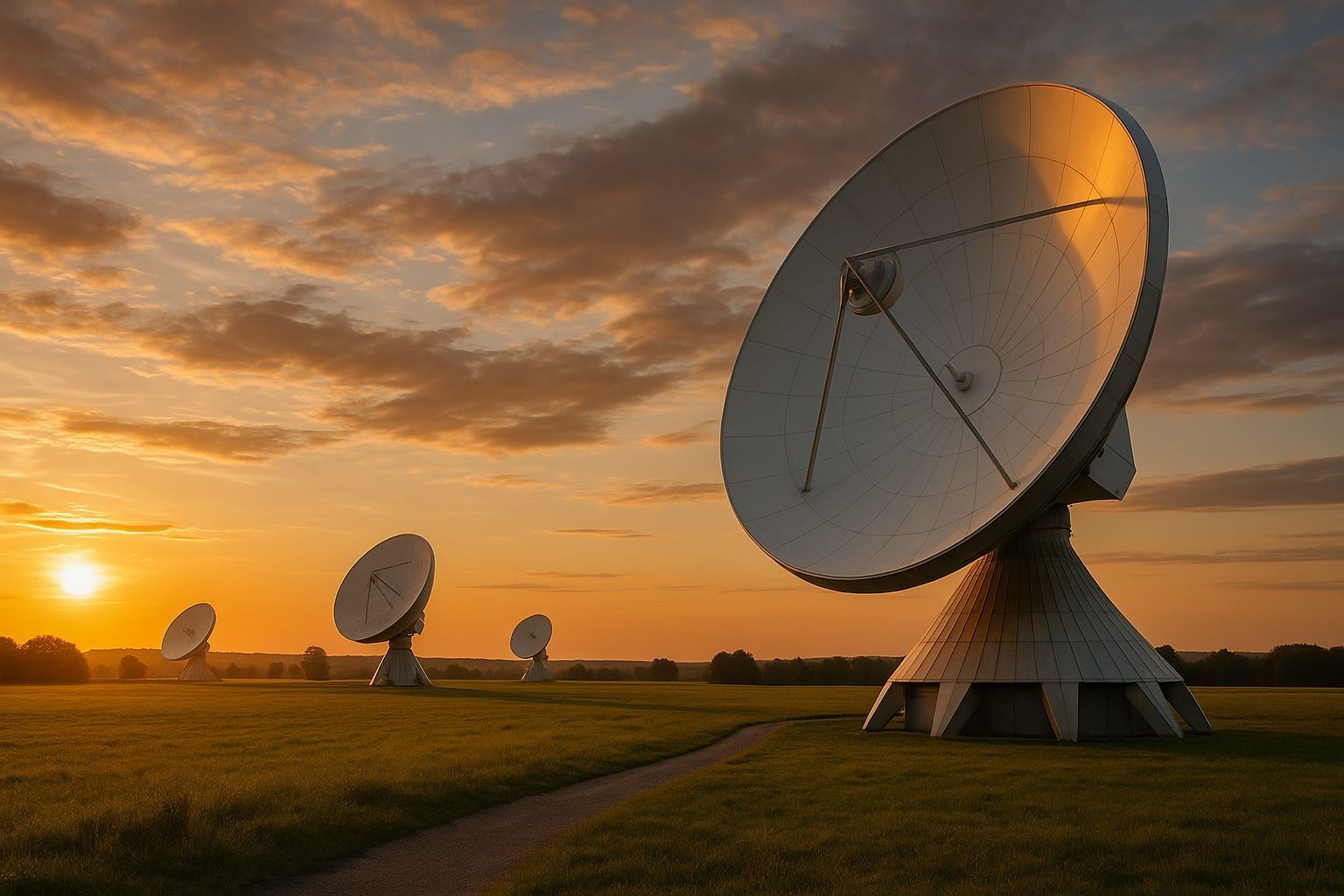
Ground Control Goes Cloud: The Digital Overhaul of Satellite Operations (2025–2030)

Ground Control Goes Cloud: The Digital Overhaul of Satellite Operations (2025–2030)

From 2025 to 2030, ground control shifts from hardware-centric architectures to cloud-enabled, software-defined infrastructure via Ground-Station-as-a-Service (GSaaS). The global satellite ground station market is projected to grow from about $56 billion in 2022 to $125 billion by 2030. AWS Ground Station and Microsoft Azure Orbital provide pay-per-use, cloud-connected antennas that deliver downlinks directly into cloud storage and analytics pipelines. Digital Intermediate Frequency (DIF) technology enables digitizing RF signals at the antenna and transporting RF over IP to cloud data centers. Digital twins are expanding into operations by 2025, with AWS Ground Station offering a digital twin environment and NASA JPL
The State of Internet Access in Denmark: From Fiber to Satellite in 2025

The State of Internet Access in Denmark: From Fiber to Satellite in 2025

Fiber-to-the-premises reach about 88% of Danish households as of early 2024, up from just over 84% in mid-2023. DSL coverage has declined to around 87–89% as copper networks are retired, with full decommission planned by 2030. Hybrid fiber-coaxial cable networks upgraded to DOCSIS 3.1 now cover roughly two-thirds of households, with rural fiber reach around 90.3% of rural homes by mid-2023. 5G coverage reached 98% of populated areas by 2023, with high-band 3.5 GHz reaching about 85% of the population by mid-2023, and a 5G Standalone core activated in 2023. Denmark has 151% mobile penetration with over 9 million mobile
Sky Is No Limit: Global Satcom Market Set to Soar Through 2035

Sky Is No Limit: Global Satcom Market Set to Soar Through 2035

In 2024 the global space economy reached $415 billion, with commercial satellite activities totaling about $293 billion (71%). The number of active satellites rose from about 3,300 in 2020 to over 11,500 by end-2024 due to mega-constellations. SpaceX and OneWeb have joined traditional players like Airbus, Boeing, Lockheed Martin, Thales Alenia, Intelsat, SES, Eutelsat, and Inmarsat, intensifying competition. By 2035 the global satcom market could exceed $500 billion, more than 5× its 2024 size. The satellite internet access market is forecast to grow from $14.6 billion in 2024 to $312.3 billion by 2035, a ~32% CAGR, driven by Starlink and
Satellite Imagery: Principles, Applications, and Future Trends

Satellite Imagery: Principles, Applications, and Future Trends

The first space images were captured in 1946 from a sub-orbital U.S. V-2 rocket at about 105 km altitude. The first actual satellite photograph of Earth was taken on August 14, 1959 by the U.S. Explorer 6 satellite. In 1960, TIROS-1 transmitted the first television image of Earth from orbit, a milestone for weather observation. Landsat 1, launched in 1972, began the longest-running civilian Earth-observation program with a 50-year archive, and Landsat 9 was launched in 2021 to continue it. The KH-11 KENNEN program began near-real-time digital imaging in 1977, eliminating the need for film return. IKONOS, launched in 1999,
1 7 8 9

Stock Market Today

Liberty Global stock price climbs as LBTYA pops and rare Class B spike rattles weekend watchlists

7 February 2026
New York, Feb 7, 2026, 04:55 EST — Market closed Liberty Global’s Class A shares ended Friday at $11.75, up about 4.3%, after a sharp swing in the group’s less-traded Class B stock drew late-week attention on Nasdaq. Class C shares rose about 3.5%, while Class B jumped as much as 139% early in the session and touched a 52-week high of $29.01. (Seeking Alpha) The weekend setup matters because investors head into the new week looking for follow-through ahead of Liberty Global’s next results and after a new push into artificial intelligence tools. On Feb. 3, Liberty Global and
Ashtead share price in focus as buyback rolls on and NYSE switch clocks closer

Ashtead share price in focus as buyback rolls on and NYSE switch clocks closer

7 February 2026
Ashtead shares closed Friday at 4,936p, up 1.09%, after the company bought 88,872 shares under its repurchase program. The group is set to shift its primary listing to New York on March 2, pending court approval, and will be removed from the FTSE UK index the same day. Ashtead paid a half-year dividend of 37.5 U.S. cents per share on Friday.
Beazley share price: big funds reshuffle stakes as Zurich bid deadline nears

Beazley share price: big funds reshuffle stakes as Zurich bid deadline nears

7 February 2026
Beazley shares closed flat at 1,236 pence Friday as BlackRock disclosed a 6.55% stake and Vanguard reported 5.02%. Wellington Management cut its holding below 5%. The disclosures follow Zurich Insurance’s possible takeover offer of up to 1,335 pence per share, with a Feb. 16 deadline for a firm bid.
Go toTop