Today: 2 July 2026
Browse Category

NASDAQ:ASTS 13 June 2025 - 16 October 2025

SpaceX’s Starship Launch Sends Space Stocks Soaring – Historic Test Closes Block 2 Chapter

SpaceX’s Starship Launch Sends Space Stocks Soaring – Historic Test Closes Block 2 Chapter

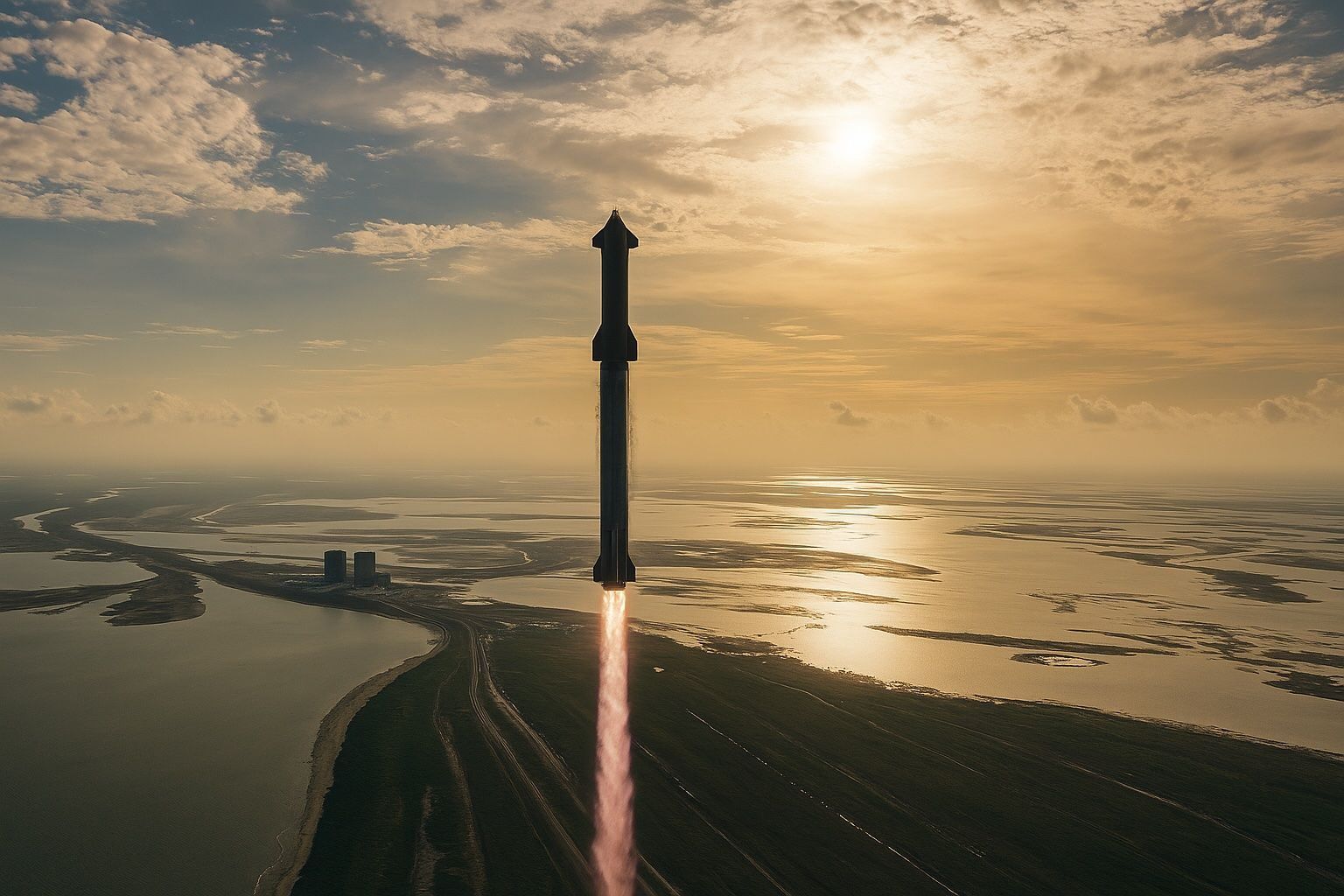
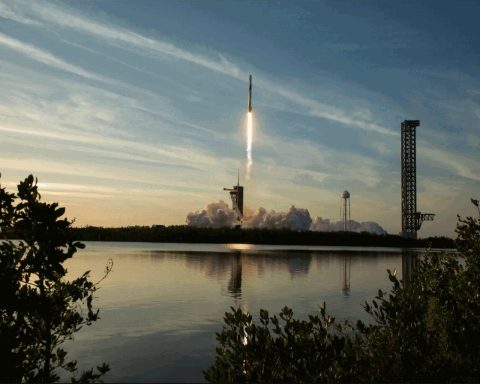
On Oct 13 SpaceX executed the 11th test flight of its fully-reusable Starship rocket from its Starbase launch facility. The 400‑ft tall rocket roared to life under 33 Raptor engines, lifting its upper-stage above the pad ts2.tech. Two and a half minutes after liftoff the Super Heavy booster separated and began a carefully controlled descent. SpaceX ran a sophisticated landing burn and the booster made a soft splashdown in the Gulf of Mexico about 8½ minutes after launch ts2.tech. This marked SpaceX’s third successful Super Heavy recovery and only the second reuse of the booster ts2.tech. The orbiter stage continued into space, deployed its payload, then returned. About 20 minutes into the flight Ship 38 opened its bay and released eight flat panels simulating Starlink satellites ts2.tech. It then reignited one Raptor for a de-orbit burn – proving it can relight in space for future missions. During reentry the Ship’s heat shield was tested and the vehicle performed a banking turn to orient itself. Approximately 66½ minutes after launch, Ship 38 hit the ocean off Western Australia right on target ts2.tech. SpaceX’s live webcast erupted in cheers; on-camera announcer Dan Huot shouted “Let ’em hear it, Starbase – what a
AST SpaceMobile Stock Skyrockets on Verizon Deal and Satellite Breakthroughs – What to Know

AST SpaceMobile Stock Skyrockets on Verizon Deal and Satellite Breakthroughs – What to Know

AST SpaceMobile’s stock has been on a tear, more than tripling in 2025 amid excitement around its satellite-to-cellphone technology. The rally hit overdrive in early October: on October 1–2, ASTS leapt about 16% per day, breaking out from the $40s to close above $66. By October 7, shares hit the mid-$70s – a fresh 52-week high around $74.77. The momentum continued into this week as ASTS nearly touched $99 on October 14. As of midday Oct. 14, the stock hovered just under $97, valuing the company near $30 billion market cap. For context, ASTS traded around $30 late last year, so it has gained roughly 200% year-to-date. Such torrid gains have attracted swarms of retail traders – ASTS became a trending ticker on stock forums as it climbed, with “extremely bullish” sentiment driving high volume buying ts2.tech. At the same time, short sellers have piled in: roughly 18% of ASTS’s float is sold short, a sign of skepticism about the company’s lofty valuation. This dynamic sets the stage for volatility, as evidenced by massive trading volumes and big intraday swings. Overall, ASTS’s stock has been highly volatile, with daily moves often exceeding 10%. In fact, over the past week the
14 October 2025
AST SpaceMobile (ASTS) Stock Skyrockets on Verizon Deal – Is Satellite-to-Phone Broadband the Next Big Thing?

AST SpaceMobile, Inc. (ASTS) – Key Facts

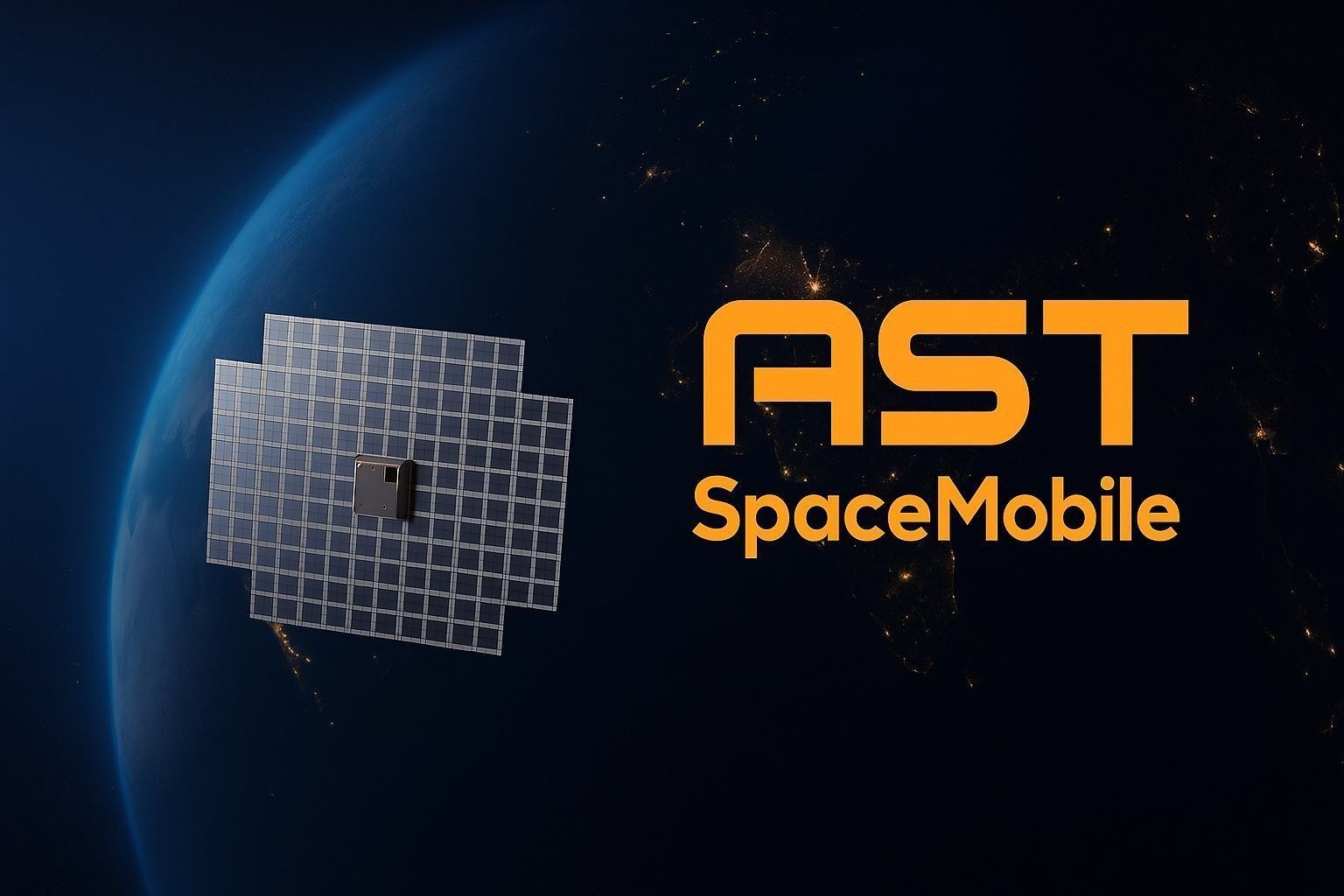
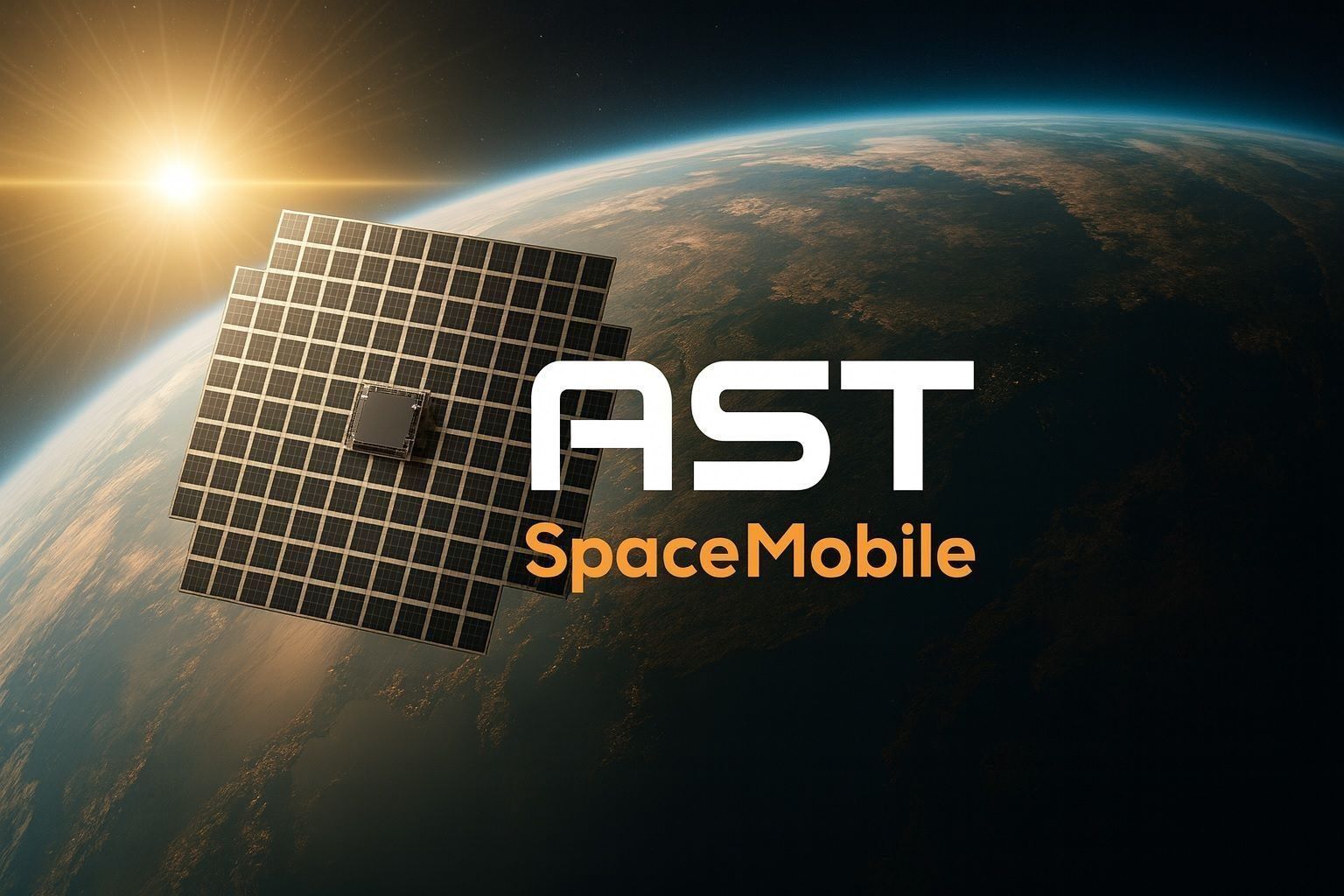
AST SpaceMobile is an American satellite communications company founded by Abel Avellan, who had previously sold his last venture for $550 M in 2016en.wikipedia.org. The company’s mission is to eliminate terrestrial coverage gaps by deploying the first space-based cellular broadband network accessible by ordinary smartphonesen.wikipedia.org. In practice, AST builds very large low-orbit satellites that unfold into massive antenna arrays. These satellites operate on standard cellular bands and connect directly to unmodified 4G/5G phones. In contrast to legacy satellite-to-phone services, AST aims to offer full voice, messaging and broadband data in real timets2.techts2.tech. This “cell tower in space” approach has attracted major carrier backing and thousands of patents on its technologyts2.tech. Artist’s impression of AST SpaceMobile’s next-generation “BlueBird” satellites in LEO, beaming connectivity to Earth. AST’s BlueBird satellites each carry gigantic phased-array antenna panels to steer thousands of beams simultaneously. These arrays enable high-data-rate links: AST engineers target peak downlink speeds on the order of 120 Mbps per satts2.techts2.tech. Importantly, no special handset or adapter is required – the signal goes directly to a normal smartphone on familiar cellular frequenciests2.tech.
14 October 2025
AST SpaceMobile (ASTS) Stock Skyrockets on Verizon Deal – Is Satellite-to-Phone Broadband the Next Big Thing?

AST SpaceMobile (ASTS) Stock Skyrockets on Verizon Deal – Is Satellite-to-Phone Broadband the Next Big Thing?

AST SpaceMobile, Inc. is a publicly traded satellite telecommunications company founded in 2017 with the ambitious mission to eliminate cellular “dead zones” worldwide. In simple terms, AST is building a network of satellites that function like cell phone towers in space, beaming broadband coverage directly to standard mobile phones on Earth. The company touts this as the “first and only space-based cellular broadband network” accessible by everyday handsetsts2.tech. If successful, this technology could enable anyone to get a phone signal and internet access from virtually anywhere on the planet – from remote rural villages and oceans to disaster zones – without any special satellite phone or hardware. At the core of AST’s approach is its proprietary satellite design, the BlueBird platform. Each BlueBird satellite is equipped with an enormous phased-array antenna that unfolds in orbitts2.tech. In fact, AST’s BlueBirds are believed to carry the largest commercial communications arrays ever deployed in low Earth orbitts2.tech. These massive antennas are what make direct-to-phone links possible – their size allows the satellite to transmit and receive signals to the tiny antennas in our smartphones over long distances. According to AST, a single BlueBird can generate multiple beams covering broad regions and support roughly
8 October 2025
Verizon Goes to Space: AST SpaceMobile Deal Signals End of Dead Zones – Stock Rockets on Breakthroughs

Verizon Goes to Space: AST SpaceMobile Deal Signals End of Dead Zones – Stock Rockets on Breakthroughs

In a move that could eliminate mobile dead zones, Verizon has struck a definitive agreement with AST SpaceMobile to beam cellular service from space across the U.S. starting in 2026 businesswire.com. Announced on October 8, this partnership will integrate AST’s satellite network with Verizon’s terrestrial 4G/5G network, effectively allowing Verizon customers’ phones to connect via satellite when they venture beyond cell tower range businesswire.com businesswire.com. “Through our definitive commercial agreement with Verizon, we are working to deliver space-based cellular broadband coverage from space across the continental United States,” said AST SpaceMobile CEO Abel Avellan, calling it an extension of Verizon’s premium 850 MHz spectrum into hard-to-reach areas businesswire.com. In plain terms, that means in a few years Verizon users could get a signal anywhere – from wilderness trails to remote highways – by seamlessly hopping onto AST’s satellites. Verizon first teamed up with AST SpaceMobile in 2024 on preliminary trials, and this new commercial deal cements their alliance investing.com. It comes on the heels of successful experiments that demonstrated AST’s satellites can directly communicate with everyday smartphones on Verizon’s network. In one recent test, engineers placed a crystal-clear VoLTE call from a Verizon phone in Texas to another in New
AST SpaceMobile Stock Skyrockets on Satellite Breakthroughs and Big-Name Backing

AST SpaceMobile’s ASTS Stock Rockets on Satellite Breakthroughs – What Investors Need to Know

AST SpaceMobile has been one of 2025’s hottest stocks, more than tripling in value year-to-dateamid excitement around its satellite-phone technologytipranks.com. The stock’s momentum hit a crescendo in early October. On October 1, 2025, ASTS leapt 16% in a single day, breaking out from the $40s to close at $56.94ts2.tech. It then soared another ~16% on October 2, ending at $66.16 per sharets2.tech. These back-to-back rallies – accompanied by heavy trading volume about 3× the three-month average – propelled ASTS to fresh all-time highs, with a market cap roughly $20–24 billion by early Octoberts2.techts2.tech. By October 3, ASTS hovered in the mid-$60s, representing a 5-day surge of nearly 50%ainvest.com. The exuberance was driven by concrete news that validated AST’s space-based cellular network plans. Retail traders on social media took notice – ASTS became a trending ticker on Stocktwits as it hit new peakseconomictimes.indiatimes.com, reflecting “extremely bullish” sentiment among individual investors.
AST SpaceMobile Stock Skyrockets on Satellite Breakthroughs and Big-Name Backing

AST SpaceMobile (ASTS) Skyrockets on Satellite Breakthroughs – SpaceX & AT&T Partnerships Fuel Rally

AST SpaceMobile’s stock skyrocketed in early October 2025, making it one of the market’s top performers. Shares climbed from the high-$40s into the mid-$60s within days on massive trading volumests2.tech. In fact, ASTS more than tripled since mid-2025ts2.tech, reflecting growing optimism around the company’s progress. By October 6, the stock was hovering near its 52-week high with a market cap around $24 billionmarketbeat.com. This meteoric rise followed back-to-back rally days: +16% on October 1 and +16% on October 2ts2.tech. Such explosive momentum indicates that investors have eagerly embraced AST SpaceMobile’s recent news and see significant upside – at least in the short term. However, the rapid ascent also raises questions about sustainability. ASTS shares are now far above their 50-day average pricemarketbeat.com, suggesting the rally may have overshot near-term fundamentals. The volatility has been high – the stock dipped notably in early September before this latest surgets2.tech – so investors should brace for potential swings. Still, the overarching trend has been positive, fueled by concrete milestones that the company achieved heading into October.
AST SpaceMobile Stock Skyrockets on Satellite Breakthroughs and Big-Name Backing

AST SpaceMobile Soars on Satellite Breakthrough: What’s Behind $ASTS’s 16% Rally?

ASTS has been on a tear. On Oct 1, 2025 the stock surged 16.0% to close at $56.94 stockanalysis.com. On Oct 2, 2025, it again rallied 16.2%, closing at $66.16 stockanalysis.com. These gains came on heavy volume stockanalysis.com stockanalysis.com, far above its three-month average, reflecting strong buyer interest. As of early trading on Oct 3, ASTS was around $65–66 stockanalysis.com. The stock’s market capitalization is roughly $20–24 billion stockanalysis.com reuters.com. For context, ASTS has more than tripled since mid-2025, buoyed by its satellite developments. AST SpaceMobile continues to ramp up its Block-II “BlueBird” satellites. In early October, the company announced BlueBird-6 has finished assembly and testing and will be shipped for launch by mid-October advanced-television.com tipranks.com. AST plans to launch BlueBird-6 before Christmas 2025, followed shortly by BlueBird-7 tipranks.com. In all, AST now has 40 phased-array modules built and targets 45–60 satellites in orbit by end-2026 advanced-television.com tipranks.com. The company emphasized these will be the largest LEO telecom satellites ever, each with a 2,400 sq ft antenna array and bandwidth up to 10,000 MHz advanced-television.com.
3 October 2025
Sky Is No Limit: Global Satcom Market Set to Soar Through 2035

AST SpaceMobile (ASTS) Stock Skyrockets on New Satellite and Carrier Milestones – Record Highs and $60+ Targets

Sources: AST SpaceMobile filings and press releases businesswire.com businesswire.com; Yahoo/BusinessWire news newswire.ca newswire.ca; Investing/Benzinga reports investing.com investing.com; stock market data webull.com stockanalysis.com; Reuters reuters.com reuters.com; and industry media/analyst coverage t-mobile.com webull.com.
AST SpaceMobile Stock Skyrockets on Satellite Breakthroughs and Big-Name Backing

AST SpaceMobile Stock Skyrockets on Satellite Breakthroughs and Big-Name Backing

AST SpaceMobile’s stock has been on a meteoric rise in 2025, turning heads on Wall Street. On September 23, 2025, ASTS jumped about 10% during the trading day, hovering in the mid-$50s per share investing.com. This spike brought the stock near its all-time highs and represented a dramatic climb from roughly $18 a year ago. By comparison, the S&P 500’s performance over the same period has been far more subdued, underlining ASTS’s outsized gains. Year-to-date, ASTS has more than doubled in value amid a wave of optimistic news investing.com. Such explosive growth has propelled AST SpaceMobile’s market capitalization to roughly $20 billion investing.com, a hefty valuation for a pre-revenue company. However, the rapid ascent hasn’t been a smooth straight line. ASTS has experienced major swings – including a nearly 9–10% plunge on September 8–9 after competitive fears spooked investors gurufocus.com. In that episode, ASTS sank when SpaceX announced new spectrum plans and UBS issued a downgrade. These oscillations reflect AST SpaceMobile’s status as a high-volatility, sentiment-driven stock. Traders have piled in on bullish catalysts but have just as quickly cashed out on any perceived setbacks. The stock’s 52-week low of about $17.50 and high near $61 illustrate the wide trading
23 September 2025
Japan’s Space and Satellite Industry: A Comprehensive 2025 Market Report

Japan’s Space and Satellite Industry: A Comprehensive 2025 Market Report

Japan’s journey in space began in the 1950s and has grown from university research rockets to a major national endeavor. In 1955, Professor Hideo Itokawa’s team launched the first pencil rocket as a rudimentary experiment en.wikipedia.org. By the 1960s, Japan developed larger sounding rockets leading up to its first satellite launch. In February 1970, Japan successfully launched the Ohsumi satellite on a Lambda-4S rocket, making Japan the world’s fourth spacefaring nation to launch an indigenous satellite into orbit u-tokyo.ac.jp. Throughout the 1970s and 1980s, Japan built out its launch sites at Tanegashima and Uchinoura, and developed new rockets often with technology licensed or adapted from the U.S. nasaspaceflight.com. In the 1990s, Japan progressed to the H-II rocket – its first fully home-grown liquid-fuel launcher nasaspaceflight.com. The H-II’s early flights faced some costly failures, exposing the need for greater reliability and cost-efficiency nasaspaceflight.com. This led to the H-IIA rocket which became a workhorse with a 98% success rate over 50 launches nasaspaceflight.com. Notable scientific missions in this era included Kaguya, Hayabusa, and Akatsuki. Japan also sent its first astronauts into space: beginning with payload specialist Toyohiro Akiyama in 1990 and multiple JAXA astronauts on NASA Space Shuttles through the 1990s–2000s. In
No Signal? No Problem – Starlink’s Direct-to-Cell Satellites Are Eliminating Dead Zones

Direct-to-Cell Revolution: What It Is and When It Will Work in Your Country

Direct-to-Cell satellite connectivity is an emerging technology that lets ordinary mobile phones connect directly to satellites – effectively creating “cell towers in space.” Unlike traditional satellite phones, D2C aims to use the phone already in your pocket to get a signal virtually anywhere on Earth. In essence, satellites outfitted with advanced cellular base stations beam signals directly to standard smartphones far outside normal coverage reuters.com starlink.com. The goal is to eliminate mobile dead zones, so that even in remote deserts, mountains, oceans or disaster areas – anywhere you can see the sky – you could still send a text or make a call using your regular phone and phone number t-mobile.com starlink.com. Why is this a big deal? Today, over half a million square miles in the U.S. have no cell coverage t-mobile.com. Traditionally, if you traveled or lived in such areas, you’d be completely disconnected or forced to carry an expensive satellite phone. D2C technology changes that by extending standard mobile networks via satellite. As SpaceX CEO Elon Musk put it, “The important thing about this is that it means there are no dead zones anywhere in the world for your cell phone.” t-mobile.com In other words, D2C promises
Satellite-to-Cell Showdown: Apple vs Starlink vs AST in the Race to Connect Your Phone Anywhere

Satellite-to-Cell Showdown: Apple vs Starlink vs AST in the Race to Connect Your Phone Anywhere

Introduction: A new space race is underway – not to put the next person on the Moon, but to eliminate cellphone “dead zones” by connecting ordinary phones directly to satellites. Tech giants and start-ups alike are vying to beam connectivity from orbit to your handset under open skies. Apple’s iPhone Emergency SOS kicked off this trend in 2022, and now SpaceX’s Starlink and AST SpaceMobile are rushing to follow ts2.tech ts2.tech. This report provides an in-depth comparison of three leading satellite-to-cell technologies – Apple’s Globalstar-powered SOS service, SpaceX Starlink’s direct-to-cell initiative, and AST SpaceMobile’s BlueBird satellites – covering their current status, technology, partnerships, regulatory hurdles, use cases, and future roadmaps. Apple’s iPhone 14 introduced “Emergency Text via Satellite” for off-grid 911 messaging ts2.tech. The phone guides you to point at a Globalstar satellite when no cell signal is available.
Smartphones vs. Satellite Phones: Are Off-Grid Cell Phones Killing the Satellite Phone?

Smartphones vs. Satellite Phones: Are Off-Grid Cell Phones Killing the Satellite Phone?

Staying connected “anywhere under the sky” is no longer just the promise of bulky satellite phones carried by explorers and mariners. Today, mainstream smartphones are gaining satellite links, letting users send SOS texts from remote mountains or even make calls from the middle of the ocean. This report dives deep into the battle between traditional satellite phones and the new wave of satellite-connected smartphones, exploring current capabilities, upcoming models, and what industry experts predict for the future of off-grid communication. Dedicated satellite phones are standalone handsets designed to communicate directly with satellites for voice calls and messaging. They often have large antennae and specialized hardware to maintain a link outside cellular coverage. In contrast, satellite-enabled smartphones are ordinary mobile phones that include satellite connectivity features – typically limited to emergency texting for now – integrated via special antennas and chipsets.
Space News Digest: July 1, 2025 / Updated: 2025, July 1st, 12:02 CET

Space News Digest: July 1, 2025 / Updated: 2025, July 1st, 12:02 CET

The Vera Rubin Observatory began its Legacy Survey of Space and Time (LSST) with first light and a 3.2-gigapixel camera, aiming to image the southern sky every few days and catalog over 40 billion objects. Perseverance completed its 30th Martian rock analysis on a sample named Kenmore, using the gaseous Dust Removal Tool to study its interior mineralogy. Perseverance detected clay-bearing bedrock on Jezero Crater’s rim, suggesting ancient water activity about 4 billion years ago. Curiosity captured a 360-degree panorama of Gale Crater, providing detailed context for ongoing geological investigations. FireSat plans deployment of over 50 satellites by 2029; FIRENET
1 July 2025
Starlink’s Sky‑High Cell Service—How T‑Mobile’s October Data Launch Could Obliterate Dead Zones and Rewrite Mobile Internet Forever

Starlink’s Sky‑High Cell Service—How T‑Mobile’s October Data Launch Could Obliterate Dead Zones and Rewrite Mobile Internet Forever

SpaceX’s Starlink constellation and T‑Mobile’s “T‑Satellite” network are racing toward a milestone moment: on 1 October 2025 the service will graduate from today’s SMS‑only beta to full third‑party app data, letting ordinary smartphones send WhatsApp messages, refresh AllTrails maps, and even check AccuWeather forecasts in places where no terrestrial tower exists. The upgrade follows FCC clearance, months of beta testing, and the quiet launch of more than 650 direct‑to‑cell satellites. Below is a deep‑dive report on the facts, the tech, the business, and what comes next. T‑Mobile CEO Mike Sievert and SpaceX Chief Engineer Elon Musk first promised to “end mobile dead zones” at Starbase in Aug 2022, explaining that Starlink satellites would act “like a cell tower in the sky.” t-mobile.comtechcrunch.com SpaceX began launching DTC‑capable “V2 mini” satellites in Jan 2024 and has since placed more than 650 in orbit. reuters.comen.wikipedia.org
10,000 Satellites and 5 Million Users: Inside the Satellite Internet Revolution of 2025

10,000 Satellites and 5 Million Users: Inside the Satellite Internet Revolution of 2025

A revolution is underway above our heads. In the past year alone, companies and governments worldwide have turbocharged efforts to beam high-speed internet from space down to Earth. SpaceX’s Starlink constellation has surpassed 8,000 satellites launched since 2019, amassing over 5 million users across 125+ countries reuters.com. In April 2025, Amazon’s Project Kuiper entered the fray by launching its first 27 satellites, kicking off a $10 billion program to rival Starlink reuters.com reuters.com. Not to be left behind, Europe has greenlit a €10.6 billion satellite network to secure “digital sovereignty,” spurred by Starlink’s rapid expansion reuters.com. Even China has begun lofting the first of 13,000 planned “Guowang” satellites to create its own space-based internet space.com space.com. These developments, all hitting headlines in the last 12–18 months, signal an intense new space race for global broadband. Behind the flashy rocket launches are profound implications. Satellite internet is quickly shifting from a niche service of last resort to a cornerstone of global connectivity. In remote villages and rural farmlands, satellite links are bridging the digital divide, bringing online education and telehealth to places once left offline. In war zones and disaster areas, they’re providing lifelines when terrestrial networks fail. And as geopolitical
Beyond Cell Coverage: The Ultimate 2025 Guide to Satellite Texting Services

Beyond Cell Coverage: The Ultimate 2025 Guide to Satellite Texting Services

Satellite texting services are revolutionizing off-grid communication, allowing people to send text messages via satellites when cellular networks are out of reach. From hikers using handheld satellite messengers to military units relying on secure satcom links, these services keep us connected virtually anywhere on the planet. In this comprehensive guide, we’ll explore consumer offerings, enterprise and government applications, the technologies and networks behind them, and compare features, pricing, coverage, and more. We’ll also delve into legal/regulatory issues, security considerations, emerging innovations, as well as the challenges and limitations facing satellite texting. In areas with no cell reception – deep wilderness, offshore waters, disaster zones, or high-altitude regions – satellite texting services enable essential communication when it would otherwise be impossible. Unlike traditional satellite phones that focus on voice calls, these services specialize in SMS-style messaging and short data transmissions via satellites. They have become essential safety tools for adventurers, sailors, and pilots, allowing users to “get out a message nearly anywhere” when needed gearjunkie.com. Satellite messengers often include SOS emergency features, sending distress signals to rescue coordination centers even when off the grid. Increasingly, everyday smartphones are gaining satellite texting abilities as well – a trend kicked off by Apple’s
D2D Gold Rush: The Race to Own the Sky-to-Phone Future (2025–2033)

D2D Gold Rush: The Race to Own the Sky-to-Phone Future (2025–2033)

Direct-to-Device satellite-cellular convergence refers to the emerging capability for ordinary consumer devices – like smartphones, IoT gadgets, even cars – to connect directly with satellites for voice, messaging, and data, without specialized satellite phones or ground infrastructure viasat.com telecom.economictimes.indiatimes.com. In essence, low Earth orbit satellites function as “cell towers in the sky,” communicating with standard mobile chipsets via advanced antennas and beamforming spacecapital.com. Early demonstrations have proven basic connectivity: for example, AST SpaceMobile’s BlueWalker 3 satellite facilitated the first-ever two-way voice calls using an off-the-shelf smartphone in April 2023 ast-science.com. Similarly, Lynk Global has shown that unmodified phones can exchange text messages via a small LEO satellite, leading to the first FCC license for a commercial satellite-to-phone service in 2022 fierce-network.com fierce-network.com. Apple’s iPhone 14 introduced Emergency SOS messaging via satellite in late 2022, bringing direct satellite texting to millions of consumers in the US, Canada, and Europe apple.com apple.com. These early capabilities are relatively narrow, but they validate the core concept of seamless satellite-to-phone links on everyday devices. How It Works: Most D2D implementations rely on LEO satellite constellations that stay in low orbits to reduce latency and path loss. The satellites carry cellular-compatible payloads that emit standard wireless
5G From Space: How Satellite Internet is Revolutionizing Global Connectivity

5G From Space: How Satellite Internet is Revolutionizing Global Connectivity

Imagine getting ultra-fast internet in the middle of the ocean or deep in a remote village, all thanks to satellites orbiting above. 5G satellite internet is an emerging paradigm that fuses next-generation 5G wireless technology with satellite networks to deliver broadband connectivity virtually anywhere on Earth. By leveraging constellations of low Earth orbit satellites and 5G New Radio standards, this approach extends high-speed, low-latency internet coverage far beyond the reach of fiber lines or cell towers highspeedinternet.com highspeedinternet.com. In this report, we dive deep into what 5G satellite internet is, the technologies that power it, its benefits and challenges, how it stacks up against fiber and terrestrial mobile networks, and the major companies and projects leading the charge. We’ll also explore real-world use cases, the current state of deployments worldwide, and what the future holds for this space-based internet revolution. 5G satellite internet refers to the integration of 5G wireless network technology with satellite communication systems to provide broadband internet access. In simple terms, it means using satellites to beam internet data directly to 5G-enabled devices or to 5G network infrastructure on the ground. Unlike traditional satellite internet, modern LEO satellites orbit just a few hundred kilometers up. This proximity
1 8 9 10 11

Stock Market Today

  • Ant Group Puts $73.6 Million Into Robotics Startup Zeroth
    July 2, 2026, 12:43 AM EDT. Alibaba affiliate Ant Group led a 500 million yuan ($73.6 million) funding round in Zeroth, a humanoid robotics startup, bringing its total deals in the space to 12 since early 2025. Ant has also launched a robotics arm called RobbyAnt and rolled out an AI version of its Alipay app. Zeroth started in late 2024, making robots for elderly and pet care and looking to launch educational robots. The company said first-half 2025 revenue jumped 600%. Zeroth wants to move into North America and Europe this fall. Monolith, Geely Capital and others also joined the round, taking Zeroth's total funding to 1 billion yuan. Robotics investments in China are picking up as tech activity rises.
Go toTop