Browse Category

Night Sky News 24 June 2025 - 10 August 2025

December 2025’s Dazzling Cold Moon – A Final Supermoon Lighting Up the Long Winter Night

December 2025’s Dazzling Cold Moon – A Final Supermoon Lighting Up the Long Winter Night

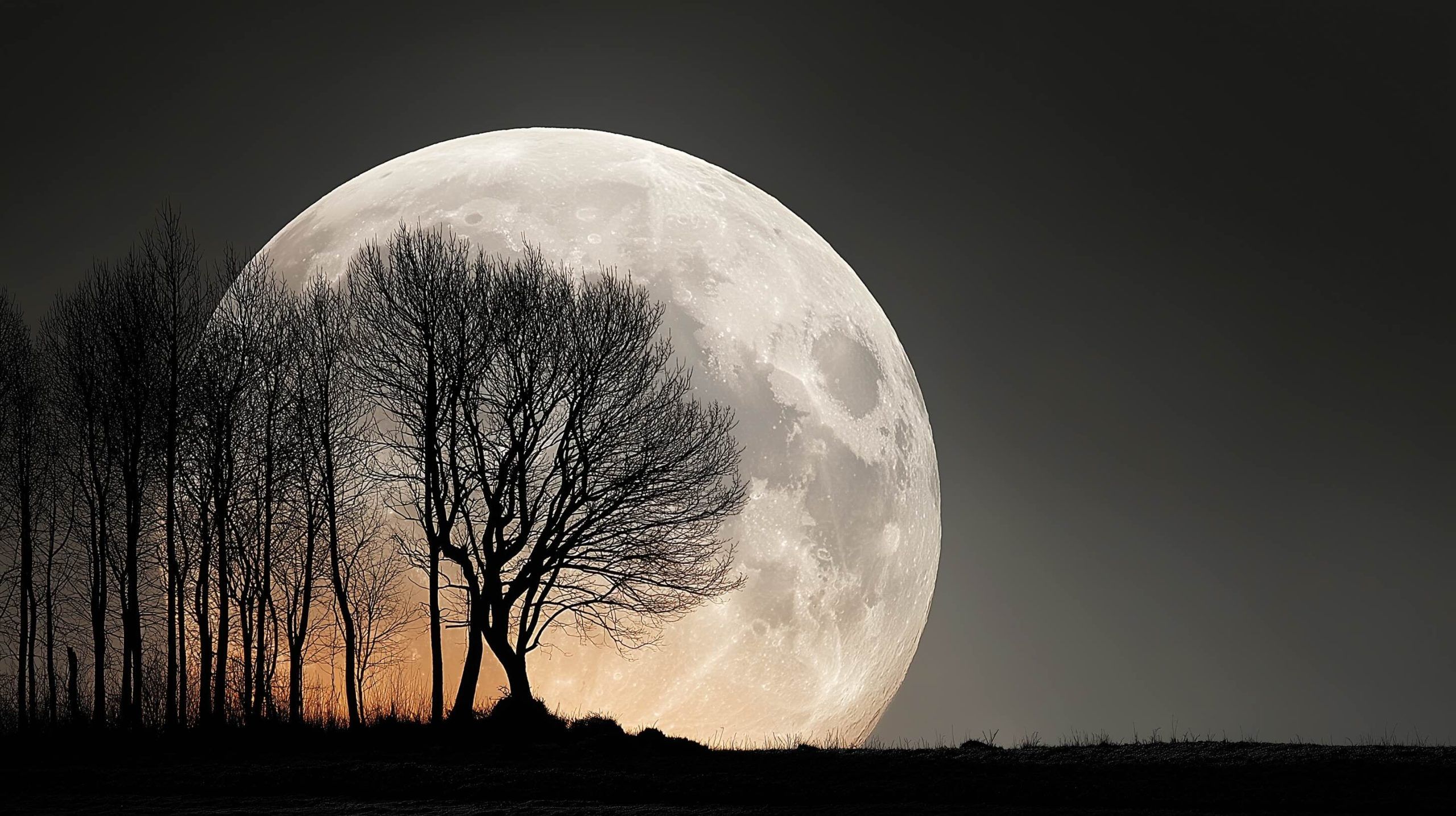
The December 4, 2025 full Moon, known as the Cold Moon, peaks at 23:15 UTC (6:15 p.m. EST; 3:15 p.m. PST in Los Angeles). This full Moon is a supermoon, about 7–8% larger in apparent size and roughly 15% brighter than a typical full Moon. It is the final in a series of three back-to-back 2025 supermoons, following October and November events. It is the closest full Moon to the winter solstice in 2025, though it occurs a couple weeks before the solstice and is also called the Long Night Moon. Because the Moon is at perigee, tides around the
10 August 2025
Beaver Moon 2025: November’s Supermoon Spectacle Illuminates Sky and Storytelling

Beaver Moon 2025: November’s Supermoon Spectacle Illuminates Sky and Storytelling

The Beaver Moon occurs on November 5, 2025, with peak illumination at 13:19 GMT (8:19 a.m. EST). At peak, the Moon will be about 356,980 km (221,818 miles) from Earth, roughly 7.9% closer and about 16% brighter than an average full Moon. It’s a supermoon—the biggest and brightest full Moon of 2025, and the closest full Moon since 2019. The full Moon is traditionally Beaver Moon, but in 2025 it can also be regarded as the Hunter’s Moon because the Harvest Moon fell on October 6; this overlap last occurred in 2020 and won’t recur until 2028. The Moon sits
10 August 2025
Don’t Miss October 2025’s Super Hunter’s Moon – A Dazzling Full Moon Spectacle

Don’t Miss October 2025’s Super Hunter’s Moon – A Dazzling Full Moon Spectacle

The October 6, 2025 full Moon peaks at 11:48 p.m. Eastern Time (03:48 UTC on October 7). It is a supermoon near perigee, about 6–7% larger and 13% brighter than a typical full Moon, and the first full supermoon of 2025. The Moon will be visible from anywhere it’s nighttime, with no special location required for viewing. The Moon’s disk will be 100% illuminated, appearing as a perfect luminous circle, with a near-full phase from October 5–7. Saturn will lie about 3°–4° from the Moon around October 6–7, with magnitude 0.6, visible near Pisces. This October 2025 full Moon is
10 August 2025
July 10 2025’s ‘Buck Moon’ Will Be the Farthest‑From‑the‑Sun, Low‑Riding Full Moon of the Decade—Here’s the Exact Time, Best Viewing Tricks & Pro Photo Hacks You Need

Don’t Miss the August 9, 2025 “Sturgeon Moon” – Two Nights of Lunar Spectacle, Cosmic Meaning & Global Traditions

Peak illumination occurs on Saturday, August 9, 2025 at 3:55 a.m. EDT (07:55 GMT), with the Moon opposite the Sun in Capricornus near Deneb Algedi and fully illuminated toward Earth. The full Moon will be visible for two nights, rising near sunset on August 8 and August 9, with New York City at about 8:03 p.m. on Aug 8 and 8:32 p.m. on Aug 9. It is not a supermoon; the 2025 supermoons are Harvest Moon on October 7, Beaver Moon on November 5, and Cold Moon on December 4. On August 12 the Moon will pass within about 3.5°
9 August 2025
Skywatch Alert: Meteors, Auroras & a Planetary Spectacle on Aug 5–6, 2025

Skywatch Alert: Meteors, Auroras & a Planetary Spectacle on Aug 5–6, 2025

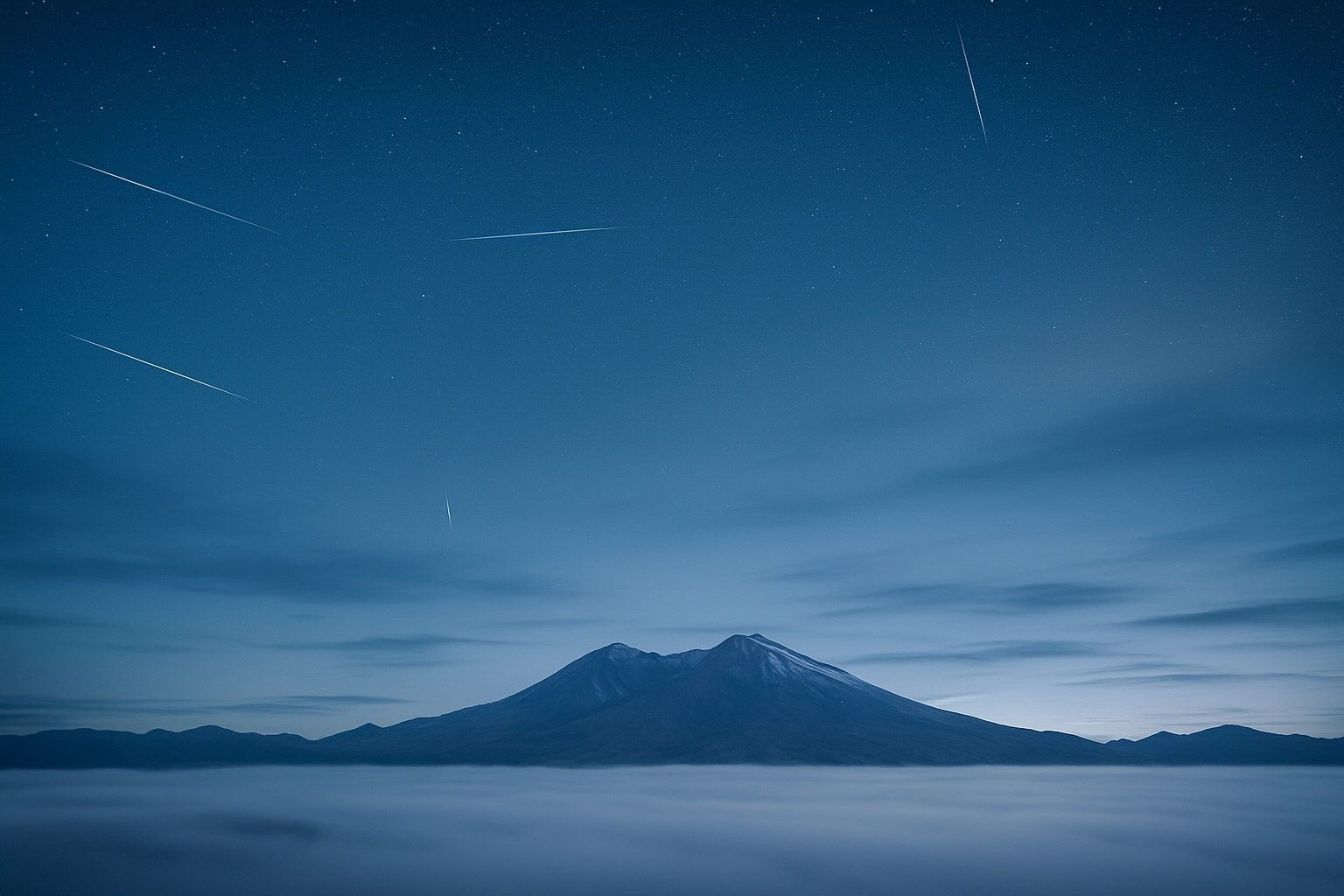
The Perseid meteor shower is already ramping up for Aug 5–6, 2025, with an expected 10–20 meteors per hour under dark skies after midnight. Perseids are famous for fireballs, producing bright meteors that can blaze through moonlight despite lunar glare. The full Sturgeon Moon occurs on Aug 9, and the peak nights Aug 11–13 will have 84–90% moonlight, washing out dimmer meteors. Venus and Jupiter form a dawn pair before sunrise on Aug 5–6, with Venus at magnitude -4.0 and Jupiter at about -1.9, about 7–8° apart. The Venus–Jupiter pair will reach its closest approach around Aug 11–12, when they’re
5 August 2025
Cosmic Light Show Alert: Meteors, Auroras & Planetary Surprises Dazzle Aug 3–4, 2025

Cosmic Light Show Alert: Meteors, Auroras & Planetary Surprises Dazzle Aug 3–4, 2025

On Aug 3–4, 2025, the Perseid meteor shower is active with after-midnight rates of about a dozen meteors per hour under dark skies, though the peak on Aug 12–13 could reach about 100 meteors per hour in ideal conditions. The Southern Delta Aquariids, peaked July 29–30 and active until Aug 12, produce about 25 meteors per hour at best, with observers in the Southern Hemisphere seeing them best. The Alpha Capricornids are active until Aug 12, typically yielding up to 5 meteors per hour but famed for slow, bright fireballs. NOAA forecasters expect quiet to unsettled geomagnetic conditions Aug 3,
3 August 2025
Eyes to the Skies August 2–3, 2025: Meteor Showers, Auroras, and Planets Put on a Show

Eyes to the Skies August 2–3, 2025: Meteor Showers, Auroras, and Planets Put on a Show

During the Aug 2–3 predawn hours under dark skies at mid-northern latitudes, observers could see about 20 meteors per hour as the Perseids rise. The Moon is in first-quarter and will set in the early morning, washing out fainter Perseids and potentially reducing observed rates by about 75% near the maximum. Delta Aquariids are tapering after their July 30 peak and may contribute only a few meteors per hour on Aug 2–3, while Alpha Capricornids are sparse but known for bright fireballs. Saturn and Neptune are in conjunction on Aug 6, and during Aug 2–3 they rise together; Saturn is
2 August 2025
All Eyes on the Skies: September 2025 Celestial Spectacles (Meteor Showers, Eclipses & More)

All Eyes on the Skies: September 2025 Celestial Spectacles (Meteor Showers, Eclipses & More)

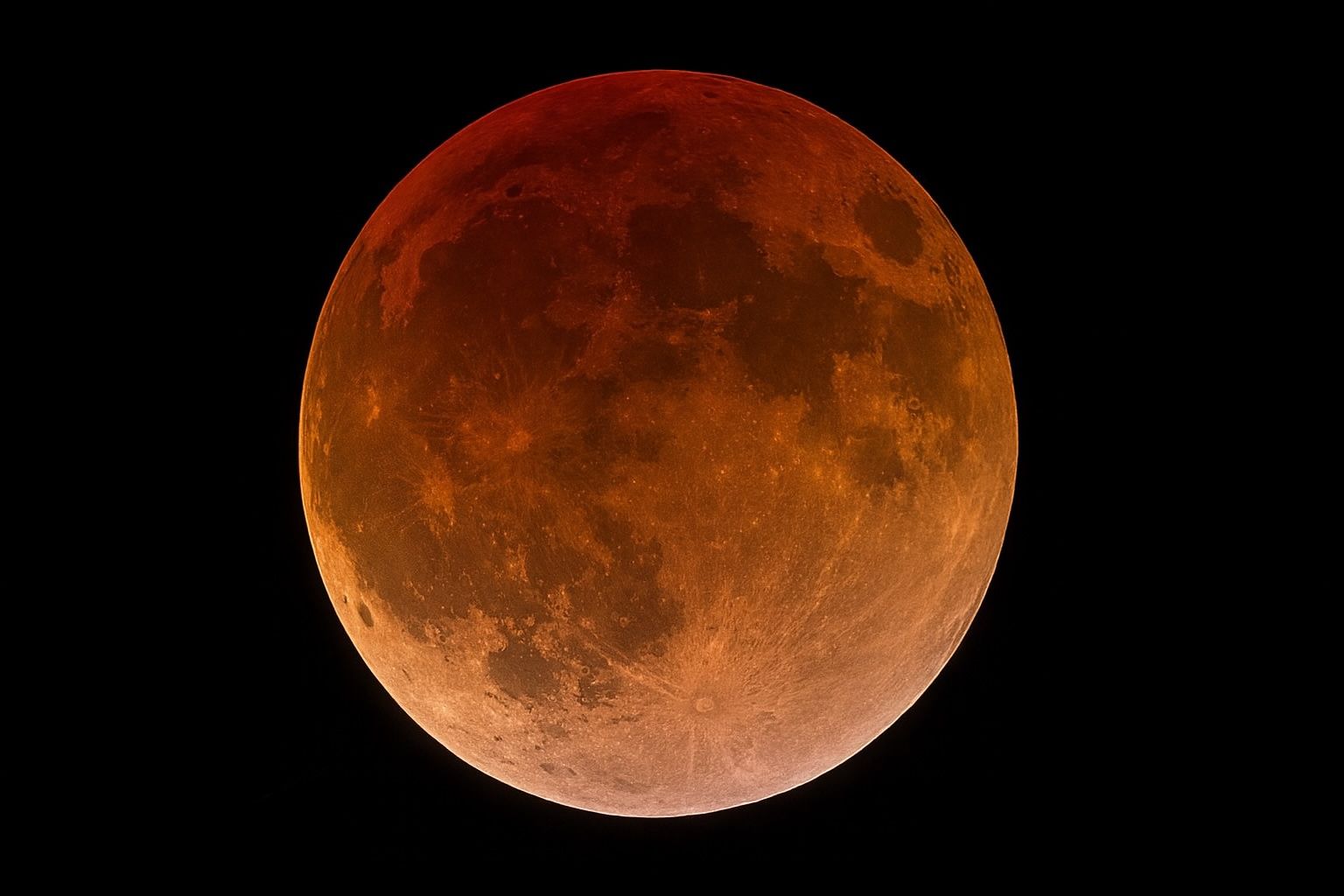
September 7, 2025 features a total lunar eclipse (Blood Moon) with about 83 minutes of totality, visible across Antarctica, Australia, Asia, the western Pacific and Africa, peaking around 18:11 UTC. A deep partial solar eclipse on September 21, 2025 reaches about 85% coverage, with maximum at 19:41 UTC and best views from New Zealand and nearby open-ocean regions between NZ and Antarctica. Saturn at opposition on September 21, 2025 appears near magnitude 0.6 with its rings tilted about 2° toward Earth, though the ring-plane is almost edge-on this year. Venus is occulted by the Moon on September 19, 2025, visible
30 July 2025
Spectacular Skywatching Alert: Twin Meteor Showers, Dazzling Planets & More on July 30–31, 2025

Spectacular Skywatching Alert: Twin Meteor Showers, Dazzling Planets & More on July 30–31, 2025

Two meteor showers—Southern Delta Aquariids and Alpha Capricornids—are near peak around July 30, 2025, with the best viewing on the nights of July 29–31 under dark skies. Southern Delta Aquariids originate from debris of comet 96P/Machholz and run roughly July 18–August 12, with ideal conditions producing about 15–20 meteors per hour. Alpha Capricornids peak around July 30 and are known for slow, bright fireballs with long-lasting trails, linked to the parent body 169P/NEAT. The Moon will be about 27% illuminated at the peak, reducing moonlight interference with meteor visibility. Venus (magnitude −4.1) and Jupiter (magnitude −1.9) are visible in the
30 July 2025
Sky‑Spectacle Tonight: 15 U.S. States Could Witness a Rare Aurora Outburst—Everything You Must Know Before Sunset

Sky‑Spectacle Tonight: 15 U.S. States Could Witness a Rare Aurora Outburst—Everything You Must Know Before Sunset

A large negative-polarity coronal-hole high-speed stream (CH HSS) has been rotating into Earth’s line of sight since 23 June, prompting NOAA SWPC to issue a G2 geomagnetic-storm outlook for 25–26 June UTC. Solar wind gusts exceeding 600 km/s are expected, with the planetary K-index (Kp) peaking near 5–6. Solar Cycle 25 is nearing its predicted maximum in mid-2025, following multiple strong flares including an X-class event captured by NASA’s Solar Dynamics Observatory on 17 June. Forbes identifies a 15-state ‘Aurora Alert’ zone spanning Alaska, Washington, Oregon, Minnesota, North Dakota, Montana, Maine, Michigan, Wisconsin, Vermont, New Hampshire, New York, Idaho, South
24 June 2025
1 4 5 6

Stock Market Today

Broadcom Stock Gets a Google AI Spend Lift as Jefferies Sees 60% Upside

Broadcom Stock Gets a Google AI Spend Lift as Jefferies Sees 60% Upside

7 February 2026
Google raised its 2026 capital expenditure forecast to $175 billion–$185 billion, with most spending expected on data-center chips. Broadcom shares rose about 2% after the announcement, while Nvidia and AMD slipped. Jefferies reiterated a buy rating on Broadcom, maintaining a $500 price target, implying a 62% upside from Wednesday’s close.
No $2,000 IRS stimulus check is coming in February 2026 — but Trump’s tariff-check talk keeps the rumors alive

No $2,000 IRS stimulus check is coming in February 2026 — but Trump’s tariff-check talk keeps the rumors alive

7 February 2026
The IRS has not announced new federal stimulus payments for February 2026, and Congress has not approved fresh checks. Trump told NBC he is considering $2,000 tariff rebate checks but has not committed, saying any payout would likely come later in 2026. The IRS warns taxpayers to ignore texts and emails about “stimulus payments” and verify notices through official channels.
Go toTop