
VERNON HILLS, Ill., May 6, 2026, 13:35 (CDT)
- CDW shares dropped roughly 19.5% at one point this day after the company’s first-quarter gross margin came in lower.
- Net sales climbed 9.2% to $5.68 billion, driven by demand in AI, cloud, and infrastructure.
- Management stuck with its full-year goal to outpace the U.S. IT market, yet investors zeroed in on the product mix.
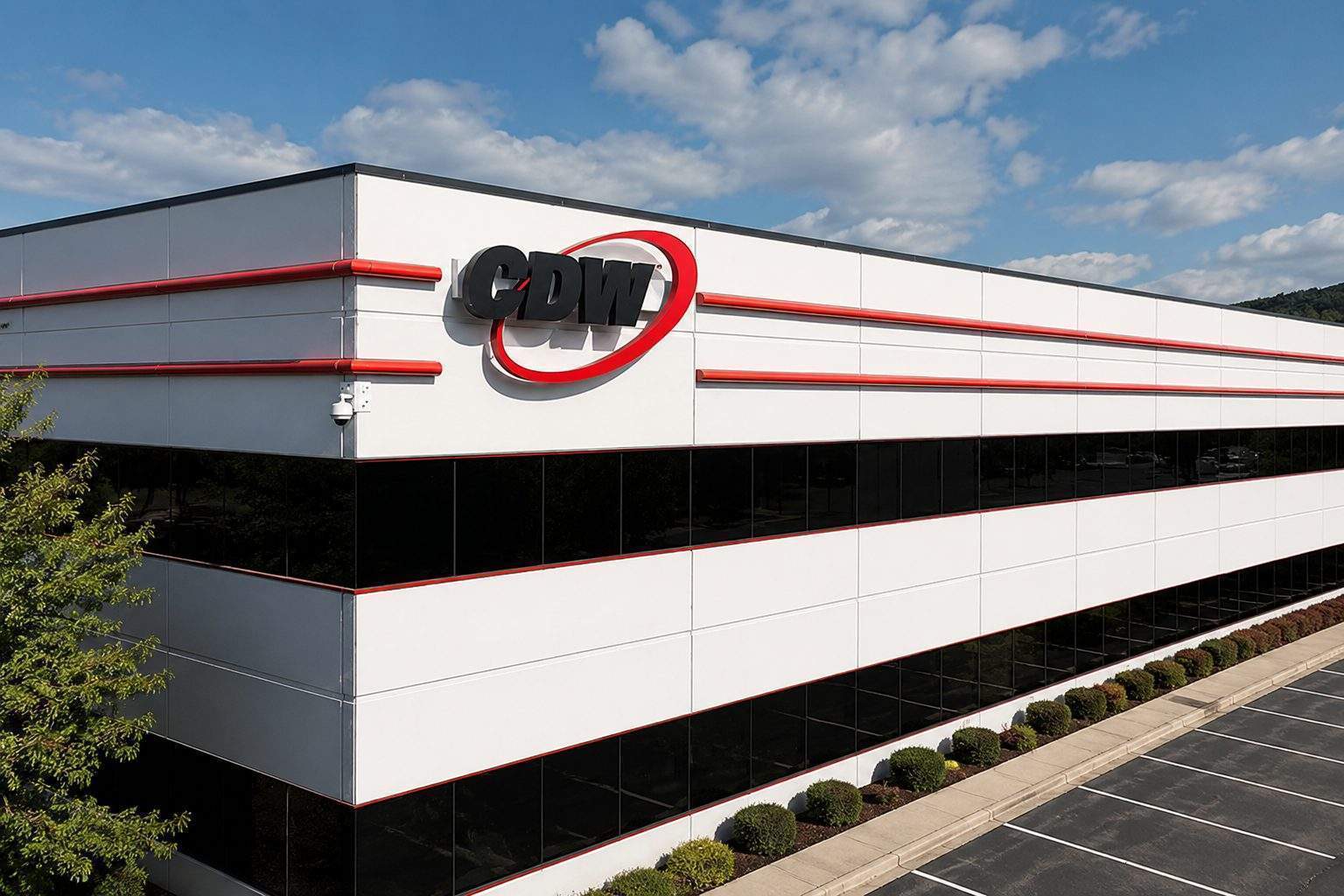
CDW Corporation tumbled Wednesday, with shares off $26.69 at $110.11 early in the afternoon. The company posted higher first-quarter sales, but narrowing margins raised questions. Demand for AI hardware is picking up, but it’s not translating into gains for higher-margin software and services just yet.
That’s what caught investors’ attention. CDW reported $5.68 billion in net sales for the first quarter, beating the Street’s $5.48 billion consensus, per LSEG figures cited by Reuters. Still, adjusted earnings landed at $2.28 per share—one cent shy of analysts’ $2.29 forecast.
Sales climbed 9.2% in the quarter ended March 31, the company reported, with gross profit up 6.0% to $1.19 billion. Gross margin slipped—down to 21.0% from 21.6%, a 60 basis-point drop, or 0.6 percentage point.
The shortfall emerged despite firm demand across the board. Commercial sales climbed 9.6% to $3.57 billion; government sales picked up 4.6%, landing at $633 million. Education revenue improved 2.5% to $675 million. CDW’s UK and Canada branches jumped 17.9%, reaching $803 million.
Chief Executive Christine Leahy noted customers are shifting from “AI exploration into real, production environments.” Chief Financial Officer Albert Miralles cited robust infrastructure hardware demand and disciplined execution. Net sales got a lift from increased appetite for data storage, servers, network communications gear, as well as software and notebooks/mobile devices, the company said. CDW Investor Relations
The mix tripped things up. During the earnings call, Miralles pointed out that most of the margin drop traced back to a lower proportion of “netted down” revenue — that’s revenue booked minus the related costs, which shows up a lot with software, cloud, and warranty deals. Customers steered more spending toward hardware as pricing and supply stayed choppy. The Motley Fool
Hardware revenue climbed 10%, the call transcript shows. Networking, servers, and enterprise storage all posted gains above 20%. Leahy pointed to tight memory supply and higher prices as factors redirecting budgets—customers shifted spending toward infrastructure like networking, storage, servers, plus power and cooling.
CDW tightened its focus on cost discipline. According to CRN, Leahy told analysts the new “Geared for Growth” strategy will push AI integration through the company’s core operations. Miralles projects the move could lift run-rate by $100 million to $200 million across 2027 and 2028. CRN
Shares of peers tied to the same IT-channel spending cycle barely budged. Insight Enterprises slipped roughly 3.0% during intraday trading, TD Synnex gave up just 0.2%, and PC Connection edged down 0.6%. CDW, though, tumbled more sharply. In its own filings, CDW points to a crowded field: resellers, direct-selling manufacturers, big service players, systems integrators, cloud outfits, e-commerce names, plus a host of smaller value-added resellers.
Management reiterated its 2026 outlook, calling for low-single-digit growth in the U.S. IT addressable market. The company is still targeting outperformance of that market by 200 to 300 basis points on a constant-currency basis, which ignores currency fluctuations. CDW continues to project full-year gross profit growth in the low- to mid-single-digit range. Non-GAAP earnings per diluted share are seen at the high end of mid-single digits; non-GAAP figures back out certain costs.
The board signed off on a quarterly cash dividend of 63 cents per share, set for payout on June 10 to investors holding stock at the close on May 25, according to an SEC filing.
The concern: hardware demand might cool off before spending on software assurance, cloud, and services catches up. CDW flagged a full plate of risks—supplier hiccups, AI-driven capacity shortfalls, pricier costs, shifting government outlays, more competition, plus shrinking tech budgets—all potential drags on performance. Margins could get squeezed if buyers keep scrambling for supply and those headwinds stick around.
Related articles: Artificial Intelligence






![Australia Stock Market Today 26/08/2026 [UPDATE: 10:37 AEST] [Woolworths and Lovisa Lift ASX Before CPI]](https://ts2.tech/wp-content/uploads/2026/08/AU-market-dashboard-2026-08-26-1037-480x384.jpg "Australia Stock Market Today 26/08/2026 [UPDATE: 10:37 AEST] [Woolworths and Lovisa Lift ASX Before CPI]")