
Today: 13 April 2026
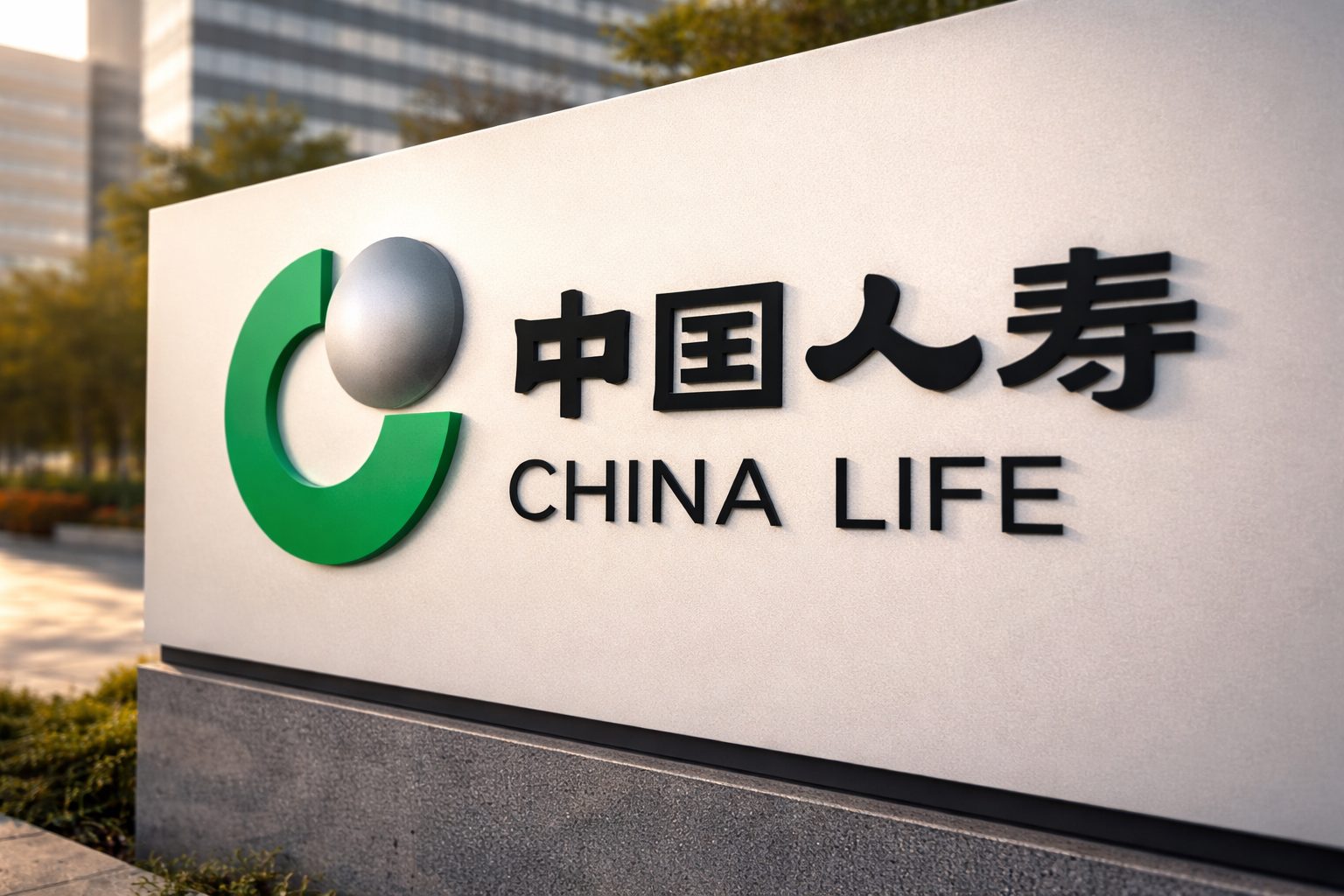
China Life Insurance A-shares (601628.SS) brace for Monday open after PMI slips below 50
1 February 2026
2 mins read

China Life Insurance A-shares (601628.SS) brace for Monday open after PMI slips below 50

Shanghai, Feb 2, 2026, 06:19 (GMT+8) — Premarket

  • China Life A-shares closed Friday slightly higher, rising 0.2% to 49.72 yuan.
  • Weekend data revealed the official manufacturing PMI dropped to 49.3, slipping back into contraction territory.
  • Investors are eyeing Monday’s follow-through alongside a private-sector PMI report set for release later today.

China Life Insurance Co Ltd’s A-shares (601628.SS) ended the session up 0.2% at 49.72 yuan on the Shanghai Stock Exchange. Investors are weighing weekend data suggesting a sluggish start to the year for the economy ahead of Monday’s open. The stock traded between 49.00 and 50.70 yuan during the session, still shy of its 52-week peak at 51.92 yuan.

Timing is crucial for insurers. Activity surveys and property reports quickly shape expectations around policy support, often moving financial stocks well before any company-specific news emerges.

China Life’s challenge lies in rates. Changes to the easing trajectory affect the value of its bond-heavy portfolio and the yields available on fresh investments—two factors that often work against each other.

China’s official manufacturing purchasing managers’ index (PMI) dropped to 49.3 in January, down 0.8 points from December, according to data released Saturday by the National Bureau of Statistics. The survey, where a reading above 50 signals expansion, showed production holding above that mark at 50.6. But new orders fell to 49.2, and small firms continued to struggle.

The official survey revealed a drop in services and construction activity, with the non-manufacturing PMI sliding to 49.4—its lowest level since December 2022. Ting Lu, Nomura’s chief China economist, warned Beijing will need to “do much more” to sustain annual growth above 4.5% this year, cautioning about limited options for swift policy moves. Meanwhile, Reuters’ poll of analysts expects the private-sector Caixin PMI to tick up slightly to 50.3 from 50.1, with the data set for release on Feb. 2. Reuters

Property data released Sunday showed a mixed picture. Average new home prices in 100 cities inched up 0.18% in January from December, slowing from the previous month. Meanwhile, resale prices dropped 0.85%, a less steep fall than before, according to the China Index Academy. The group highlighted higher-end launches in cities like Chengdu, Shanghai, and Hangzhou, while smaller cities still faced inventory pressure.

For insurers, that mix is crucial. Real estate has dragged on the economy for a long time, dampening sentiment, increasing credit risk, and making households hesitant to lock into long-term savings products.

Traders have been watching policy developments in the sector closely. Late last week, Bloomberg News reported — via Reuters — that authorities are weighing about 200 billion yuan ($28.8 billion) in special government bonds to recapitalise some of the largest state insurers, including China Life and People’s Insurance Co Group of China Ltd (PICC). Reuters noted the announcement could come as soon as this quarter. The National Financial Regulatory Administration did not immediately respond to requests for comment.

The trade-off this week is clear—and uneasy: softer demand may support easier policy and push bond prices higher, but continuously low yields could crimp reinvestment returns and strain solvency down the line.

There’s a clear downside risk. Should activity data continue to slide and policymakers respond with steep cuts, insurers might see spreads tighten on new business. On top of that, a fresh stumble in property could weigh on risk appetite across the entire financial sector.

Monday’s mainland open and the private-sector PMI release on Feb. 2 are the next key triggers. Traders are also awaiting new guidance on capital and investment rules for insurers, alongside data on whether February property sales stay steady through the Spring Festival.

Stock Market Today

  • Sensex and Nifty Plunge as US-Iran Talks Collapse Raises Oil Price Concerns
    April 13, 2026, 12:52 AM EDT. The Sensex dropped 1,613 points to 75,937 and the Nifty fell 495 points to 23,555 following the failure of US-Iran negotiations. The talks, aimed at peace, collapsed after 21 hours in Pakistan, raising fears of a prolonged conflict that spiked Brent crude oil prices by 7.33% to $102.20 a barrel. Key Sensex stocks including Titan and Sun Pharma fell sharply. Experts linked rising oil prices and geopolitical tensions to heightened market uncertainty and risk aversion. Asian markets broadly declined, while US markets closed mixed on Friday. Despite the turmoil, Foreign Institutional Investors bought stocks worth Rs 672 crore recently, signaling selective buying amid volatility.

Latest article

Wall Street Feels the Heat (and Thrill): Fed Cuts, Tariffs & Mega-Mergers Set NYSE Buzz

US Stock Market Today: Live Updates 13.04.2026

13 April 2026
LIVEMarkets rolling coverageStarted: April 13, 2026, 12:00 AM EDTUpdated: April 13, 2026, 12:52 AM EDT Sensex and Nifty Plunge as US-Iran Talks Collapse Raises Oil Price Concerns April 13, 2026, 12:52 AM EDT. The Sensex dropped 1,613 points to 75,937 and the Nifty fell 495 points to 23,555 following the failure of US-Iran negotiations. The talks, aimed at peace, collapsed after 21 hours in Pakistan, raising fears of a prolonged conflict that spiked Brent crude oil prices by 7.33% to $102.20 a barrel. Key Sensex stocks including Titan and Sun Pharma fell sharply. Experts linked rising oil prices and geopolitical
Bitcoin Price Today Slips After Iran Talks End Without Deal, but ETF Buyers Keep Showing Up

Bitcoin Price Today Slips After Iran Talks End Without Deal, but ETF Buyers Keep Showing Up

12 April 2026
Bitcoin fell 1.4% to $71,707 on Sunday after U.S.-Iran talks in Islamabad ended without a deal. Spot bitcoin ETFs logged net inflows last week, with BlackRock and Fidelity leading Friday’s buying. Morgan Stanley launched its MSBT fund on April 8, the first Wall Street bank to debut a bitcoin ETF. U.S. inflation data showed headline CPI up 3.3% in March, while core CPI rose 2.6%.
XRP Price Today: XRP Slips to $1.33 After Failed U.S.-Iran Talks Hit Crypto

XRP Price Today: XRP Slips to $1.33 After Failed U.S.-Iran Talks Hit Crypto

12 April 2026
XRP slipped about 1% to $1.33 on Sunday after U.S.-Iran peace talks in Islamabad ended without a deal, pressuring crypto markets. The token traded in a narrow range, with bitcoin and ether also weaker. XRP’s market cap stands at $81.7 billion, with $1.96 billion in daily volume. The token remains 63.5% below its all-time high.
Gold Price Today: Bullion Near $4,762 After Weekly Gain, but Failed Iran Talks Cloud Outlook

Gold Price Today: Bullion Near $4,762 After Weekly Gain, but Failed Iran Talks Cloud Outlook

12 April 2026
Spot gold steadied at $4,761.79 an ounce Friday after a third weekly gain, with U.S. futures at $4,787.40. The dollar posted its biggest weekly drop since January, making gold cheaper for non-U.S. buyers. U.S.-Iran talks ended without a deal, keeping geopolitical risks high. China’s central bank increased gold reserves for a 17th month, reaching 74.38 million ounces.
Wall Street Feels the Heat (and Thrill): Fed Cuts, Tariffs & Mega-Mergers Set NYSE Buzz

US Stock Market Today: Live Updates 12.04.2026

12 April 2026
Futu Holdings (FUTU) rose 10.2% in the past week but trades 13.4% below its January level. Shares closed at $154.50, while analysts estimate intrinsic value at $245.48. The company posted a 92.2% return over 12 months. Valuation models indicate earnings exceed risk costs, supporting long-term growth projections.
Banco Santander share price (SAN.MC, NYSE:SAN) hits 52-week high ahead of Feb. 4 results
Previous Story

Banco Santander share price (SAN.MC, NYSE:SAN) hits 52-week high ahead of Feb. 4 results

TSMC stock faces Monday test after Nvidia boss Jensen Huang says he needs “a lot of wafers”
Next Story

TSMC stock faces Monday test after Nvidia boss Jensen Huang says he needs “a lot of wafers”

Go toTop