
New York, May 21, 2026, 13:12 (EDT)
- Micron stock climbed $14.82 to $746.81. The SMH semiconductor ETF and QQQ traded down.
- Samsung has put a halt to an 18-day walkout that would have included 48,000 union workers after coming to a tentative agreement on pay.
- Micron’s operations chief told a J.P. Morgan conference Wednesday that industry supply hasn’t caught up to demand yet.
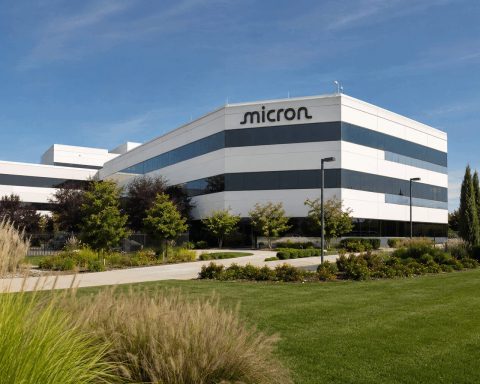
Micron Technology shares traded higher on Thursday, outperforming as buyers stayed with the memory-chip stock. This came after Samsung Electronics struck a late labor agreement that helped ease worries over another supply disruption.
The stock last changed hands at $746.81, a gain of $14.82 for the day. That stood out with the VanEck Semiconductor ETF and the Invesco QQQ Trust both trading down.
This is important because memory supply is tight and AI server demand keeps eating up capacity. Micron is one of the few suppliers for advanced DRAM, NAND and high-bandwidth memory. DRAM is used as working memory in servers and PCs, NAND is flash storage, and high-bandwidth memory—HBM—stacks memory close to processors to help AI systems move data faster.
Samsung paused its 18-day strike after nearly 48,000 union members reached a government-brokered agreement. The vote runs from May 22 to May 27. The union leader expects ratification.
That means Samsung is still making chips, though the supply squeeze for memory is not going away. This week Reuters quoted KB Securities analyst Jeff Kim, who said an 18-day strike could have hit global DRAM supply by 3% to 4% and NAND output by 2% to 3%.
Samsung, SK Hynix and Micron are the main names in play here. Samsung’s union agreement landed just as SK Hynix made headway with AI memory supply to Nvidia, and now some read the Samsung deal as evidence the AI wave is pushing up labor costs.
Samsung’s move to settle with the union eased investor worries about a strike, according to NH Investment & Securities senior analyst Ryu Young-ho. But he noted labor costs are set to jump. Ryu also said the company’s plan to pay most special bonuses in shares “avoids direct cash outflows,” and that could help its share price. Reuters
Micron delivered its update to the market. Manish Bhatia, the company’s executive vice president of global operations, told a J.P. Morgan technology event Wednesday that Micron’s “financial outlook has strengthened.” Bhatia said demand was still running ahead of what Micron and the broader industry could supply. Seeking Alpha
Micron’s most recent numbers support the trade. The company reported fiscal second-quarter revenue of $23.86 billion, up from $8.05 billion the year before. Looking ahead, Micron guided fiscal third-quarter revenue to $33.5 billion, give or take $750 million. CEO Sanjay Mehrotra called memory “a strategic asset” for customers in the AI era. Micron Technology
Nvidia shares fell after earnings, but the company is still pushing demand. The AI chip firm posted $81.62 billion in revenue, up 85%, and guided for around $91 billion this quarter. CEO Jensen Huang said the AI rollout is the “largest infrastructure expansion in human history.” AP News
Stocks slipped across Wall Street. The major indexes traded down Thursday morning as oil moved higher and Treasury yields climbed, with the Nasdaq Composite off 0.33%. Nvidia shares dropped, too, even after the company posted a positive outlook.
Micron isn’t clear of risk yet. Samsung’s labor deal will go to a union vote, and bigger paychecks could hit cost controls in the whole sector. Memory prices turning down would shake the bullish story fast. High-growth tech also has to deal with rising yields, which cut into the value of future earnings.
Micron isn’t getting the usual treatment from investors as a typical commodity chip name right now. Instead, it’s seen as one of the few suppliers with enough capacity for AI infrastructure. As long as supply stays tight, that view holds. But if Samsung, SK Hynix, or even Micron itself boost capacity too quickly for demand to keep up, that story could get harder to stick with.
Related articles: NASDAQ:MU