
New York, June 11, 2026, 04:28 ET
- Oracle shares slipped after the bell. Investors zeroed in on the price tag for its AI data center expansion, even with the company beating on earnings.
- Oracle posted record revenue for the quarter. Cloud infrastructure jumped 93%. The contracted future revenue backlog hit $638 billion.
- Cash is in focus. Oracle plans a big new financing round as it ramps up capital spending for AI demand.
Oracle shares slipped after the company’s earnings, with investors reacting as the cost of Oracle’s AI plans came into focus. The stock ended the day at $201.26, then dropped 8.9% after hours as Oracle said it plans to keep taking on big debt and issuing equity to fund more data centers for AI work.
Oracle posted a solid quarter, with fiscal Q4 revenue up 21% to $19.2 billion. Total cloud revenue was $9.9 billion, up 47%. Oracle Cloud Infrastructure, its IaaS business, brought in $5.8 billion, up 93%. Cloud applications, or SaaS, rose 10% to $4.1 billion.
The selloff is about more than just AI demand at Oracle. Investors aren’t doubting that the demand exists. The question is how much money Oracle will need to spend before profits show up. Remaining performance obligations—RPO, or signed revenue yet to be recognized—jumped $85 billion in the quarter to $638 billion.
Funding is the main issue now. Reuters said Oracle is targeting as much as $95 billion in fiscal 2027 capital spending, with $20 billion to $25 billion of that expected to be repaid by customers. Oracle plans to raise about $40 billion with debt and equity next year, including a $20 billion at-the-market equity plan it had already announced.
Free cash flow is what matters now. This is the money left over after capex, and Oracle reported it at negative $23.7 billion for fiscal 2026 as it put big money into cloud infrastructure. The size of the AI backlog is big, but so is the upfront spend.
eMarketer analyst Jacob Bourne told Reuters, “the demand is real,” though he cautioned that “the funding question is getting harder.” That summed up the reaction: shares got a bump from the growth story but gave up gains once concerns about the balance sheet set in. Reuters
Oracle addressed those worries, saying its biggest AI customers are taking on part of the cost. The company said AI contracts that involve prepaid or customer-supplied hardware have added up to $75 billion. Oracle said this cuts the amount of capital it needs to raise for building AI data centers.
Software revenue dipped 2% to $6.8 billion as customers kept switching from on-premise software to cloud. The move is important for Oracle’s long-term strategy, but it’s changing the makeup of earnings. Cloud infrastructure may outpace old-line software growth, though it needs much heavier spending on chips, power, land, leases and network.
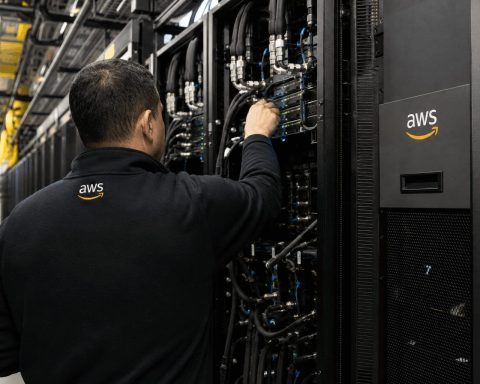
Oracle picked up more AI support this week. OpenAI said Wednesday it will let Oracle customers use certain Oracle Universal Credits to tap OpenAI models and Codex via Oracle Cloud Infrastructure in the next few weeks. Reuters reported Oracle is now building out heavy data center space for OpenAI and others, as it tries to take on Amazon and Microsoft in the cloud.
Oracle kept up a bullish near-term outlook. The company sees fiscal first-quarter 2027 revenue growing 27% to 29% and cloud revenue jumping between 58% and 64%. Full-year fiscal 2027 revenue guidance stays at $90 billion. Oracle also bumped its full-year non-GAAP earnings outlook to $8.05 a share. Non-GAAP earnings exclude certain accounting charges.
Oracle faces the risk its AI expansion could outpace the cash it brings in. The company’s returns could take a hit from delays on data center projects, GPU shortages or rising prices, power limits, slow uptake from customers, share dilution, or higher debt costs. In its own guidance, Oracle lists data center capacity, tech sourcing, cyber threats, market conditions and regulatory changes as possible risks to its results.
Oracle faces a test on how fast it can turn its $638 billion backlog into revenue, given its current pace of spending. Reuters said Oracle projects 12% of its remaining performance obligations, or around $76.56 billion, will convert to revenue in the next year. Now, each update on that conversion rate and any signals on fiscal 2027 capital spending are as key as the headline cloud growth figures.
Related articles: Cloud Computing