
Dubai, June 14, 2026, 19:04 (GST)
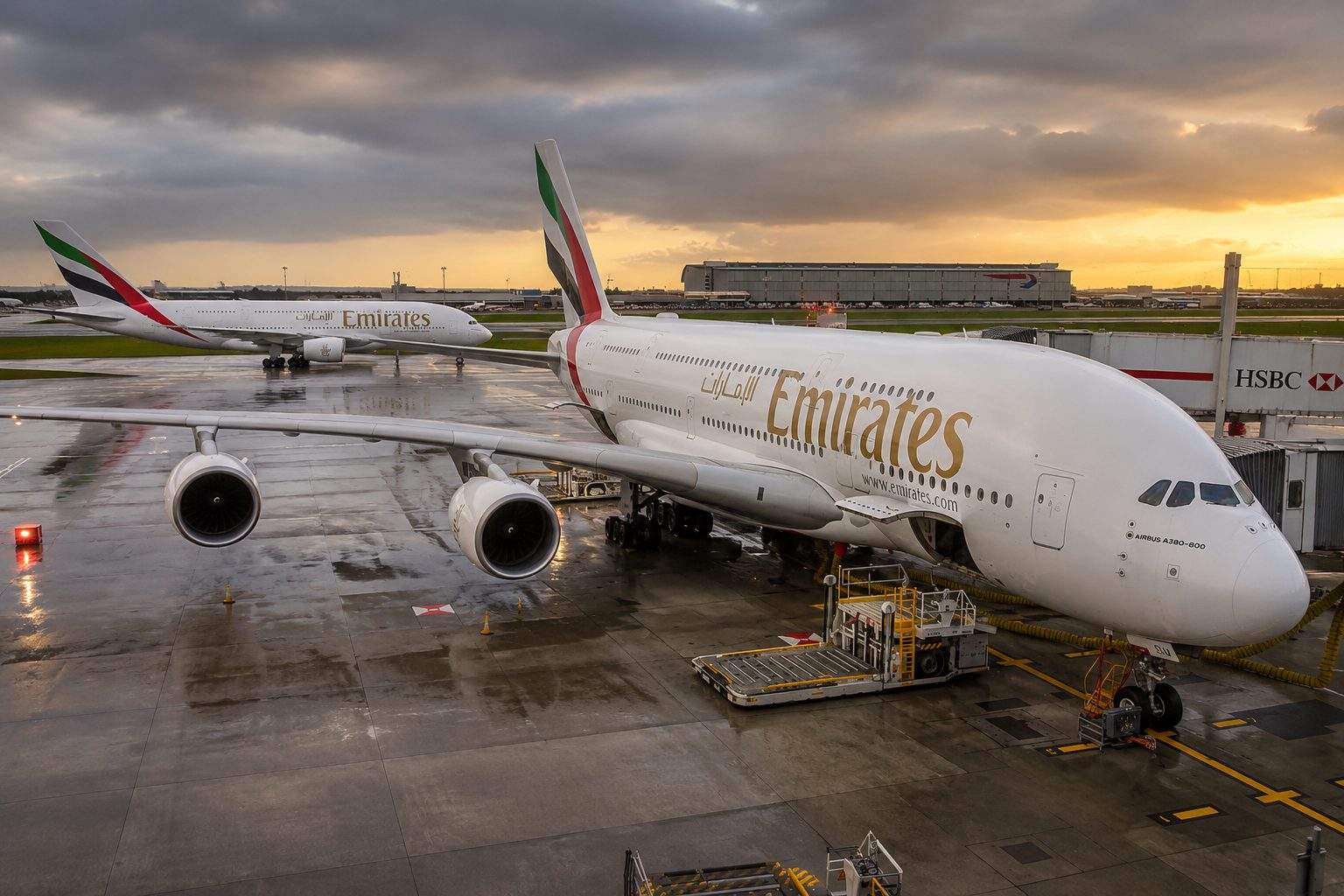
- Emirates is set to operate the Airbus A380 on routes to 48 cities in July. That’s up by four destinations from June.
- The July update brings back A380s on some routes. Barcelona, Glasgow and Osaka still use the Boeing 777-300ER.
- The changes come after airlines cut back their June schedules and wider disruption from the Iran conflict.
Emirates plans to bring its Airbus A380 back to 48 routes in July after June disruptions cut frequencies and forced aircraft swaps. The July schedule adds four more destinations for the A380 compared to June, with Simple Flying calling it a return to 48 routes in their latest industry roundup.
Emirates isn’t going back to its old schedule yet. AeroRoutes data as of June 9 shows the airline dropped three A380 routes planned for July. Glasgow and Osaka Kansai are sticking with the Boeing 777-300ER, and the Barcelona EK185/186 flights are also switching from the A380 to the 777-300ER.
The July schedule will see the A380 return on key long-haul routes with tight slots. Copenhagen gets a daily A380. Düsseldorf restarts A380 service from June 26. Manchester and Munich both see a daily A380 back on their schedules. Perth and Washington Dulles will also have the A380 daily again.
Emirates is adding back some premium capacity but is stopping short of putting its A380s on every route like before. London Heathrow, usually a big A380 market for the airline, is getting five daily A380 flights, not the six it had before. Amsterdam, Singapore, and Zurich are also still below their old A380 schedule.
Emirates is set for a July rebuild after June cuts that, according to Connecting Travel citing Cirium data, wiped out nearly 500,000 seats and trimmed the airline’s June schedule by 14% from a year ago. The outlet reported Emirates flew about 200 departures a day in June, down from 237 daily last year. Routes to London Heathrow, Gatwick, Stansted, Amsterdam, Vienna, Beijing, and Brisbane saw reduced service.
AeroRoutes posted wide-ranging updates for June covering aircraft and schedule shifts. The changes include dropping A380s on routes from Copenhagen, Düsseldorf, Frankfurt, Glasgow, London Gatwick, Manchester, Munich, Osaka Kansai, Perth and Washington Dulles. In the same June update, Auckland will move to daily A380 flights from June 19, and Los Angeles will again see seven weekly A380 departures starting June 1.
For passengers, aircraft type is still the key issue, not route options. Emirates’ flight schedule lists a cut number of flights and tells customers to check its latest updates because other online times may not match. Its advisory puts Emirates at 138 destinations across 73 countries and says the carrier is still watching how things develop.
Emirates is still betting on the A380 to anchor its brand and capacity, despite moving flights between the A380, 777, and A350. The airline puts the seat count on its A380s anywhere from 484 in a four-class set-up to 615 for its two-class long-haul versions. AeroRoutes said a newer three-class 569-seat A380 will go to Birmingham and Copenhagen in July.
Related articles: Airlines