
San Jose, California, May 13, 2026, 14:04 PDT
Cisco Systems surged 14% in after-hours trading Wednesday as the company boosted its full-year revenue outlook and revealed plans to eliminate close to 4,000 jobs—around 5% of its staff—to shift more resources into artificial intelligence. Reuters has the story.
This shift is crucial for Cisco as it aims to show that AI infrastructure—those networking tools and systems powering artificial-intelligence applications—can drive real growth rather than sit off to the side. So far this fiscal year, the company has booked $5.3 billion in AI infrastructure orders. It’s also bumped up its AI order goal for fiscal 2026 to $9 billion, up from its earlier $5 billion projection.
The report arrived with investors on edge for a big move. According to Barchart, options set to expire May 15 had a bullish tilt heading into earnings, while Investopedia noted that traders were expecting Cisco to swing almost 8% in either direction this week, as the stock hovered near all-time highs.
Cisco posted $15.8 billion in revenue for its fiscal third quarter, an increase of 12% compared to the same period last year. GAAP net income landed at $3.4 billion, or 85 cents per share. Adjusted earnings came in at $1.06 a share, up 10%, as the company excluded certain expenses.
Cisco put out a revenue outlook for the quarter at $16.7 billion to $16.9 billion, with adjusted EPS landing between $1.16 and $1.18. That’s a stretch above what Bloomberg’s analyst survey had penciled in—$15.8 billion in sales and $1.07 per share profit, based on its data.
Cisco lifted its full-year forecast, now projecting fiscal 2026 revenue in the $62.8 billion to $63.0 billion range, up from its previous estimate of $61.2 billion to $61.7 billion.
This restructuring marks the tougher side of Cisco’s pivot. The company is bracing for as much as $1 billion in pre-tax charges, linked to severance, termination benefits, and related expenses — roughly $450 million of that will hit in the fourth quarter, with the balance landing in fiscal 2027. Cisco maintains the move backs its push into silicon, optics, security, and AI.
Cisco’s CEO Chuck Robbins described demand as “very strong, broad-based,” positioning the company as “critical infrastructure for the AI era.” On the numbers side, CFO Mark Patterson highlighted “double-digit growth” and financial discipline, with Cisco sharing cash with investors even as it chases fresh avenues for expansion. Cisco Newsroom
Networking did the heavy lifting again. Product revenue jumped 17%. Networking sales? Up 25% to $8.82 billion. Security held steady, collaboration dipped 1%, while observability managed a 3% uptick. Cisco reported total product orders surged 35%, with networking product orders leaping more than 50%.
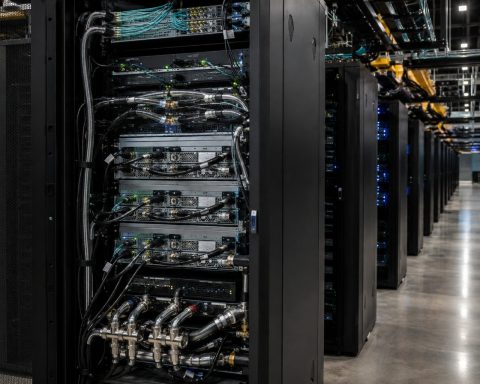
Cisco’s AI drive is thrusting it into sharper competition with Broadcom and Nvidia in the high-end networking chip space. Back in February, the company rolled out its Silicon One G300 chip along with a new router, both designed to boost data throughput in sprawling AI data centers—a segment that, according to Reuters, is fast emerging as a major battleground.
Still, the bullish scenario faces pressure. Cisco’s adjusted gross margin slipped to 66.0%, down from 68.6% a year ago. The company noted that its margin and earnings outlook reflect estimated tariff impacts given the current trade setup. Before earnings, JPMorgan analysts flagged that investors would be looking to see if Cisco could keep sales momentum while facing high memory prices and ongoing supply constraints.
The July quarter shapes up as a more decisive gauge of the AI narrative. Cisco’s upgraded outlook sets a higher hurdle; now it faces the task of accelerating order growth, holding margins steady, and managing layoffs—all while ensuring the core businesses, those meant to bankroll its next growth phase, stay on track.
Related articles: NASDAQ:CSCO