
San Francisco, May 13, 2026, 13:29 (PDT)
- Ouster shares surged roughly 26% to $34.17, putting the lidar company’s market cap near $2.1 billion.
- Ouster announced its Rev8 OS digital lidar sensors have been certified for NVIDIA’s DRIVE Hyperion platform, targeting Level 4 autonomous-vehicle development.
- Ouster’s latest May 8 prospectus points to the potential sale of as much as $100 million in common stock via an at-the-market program, raising the possibility of dilution for shareholders.
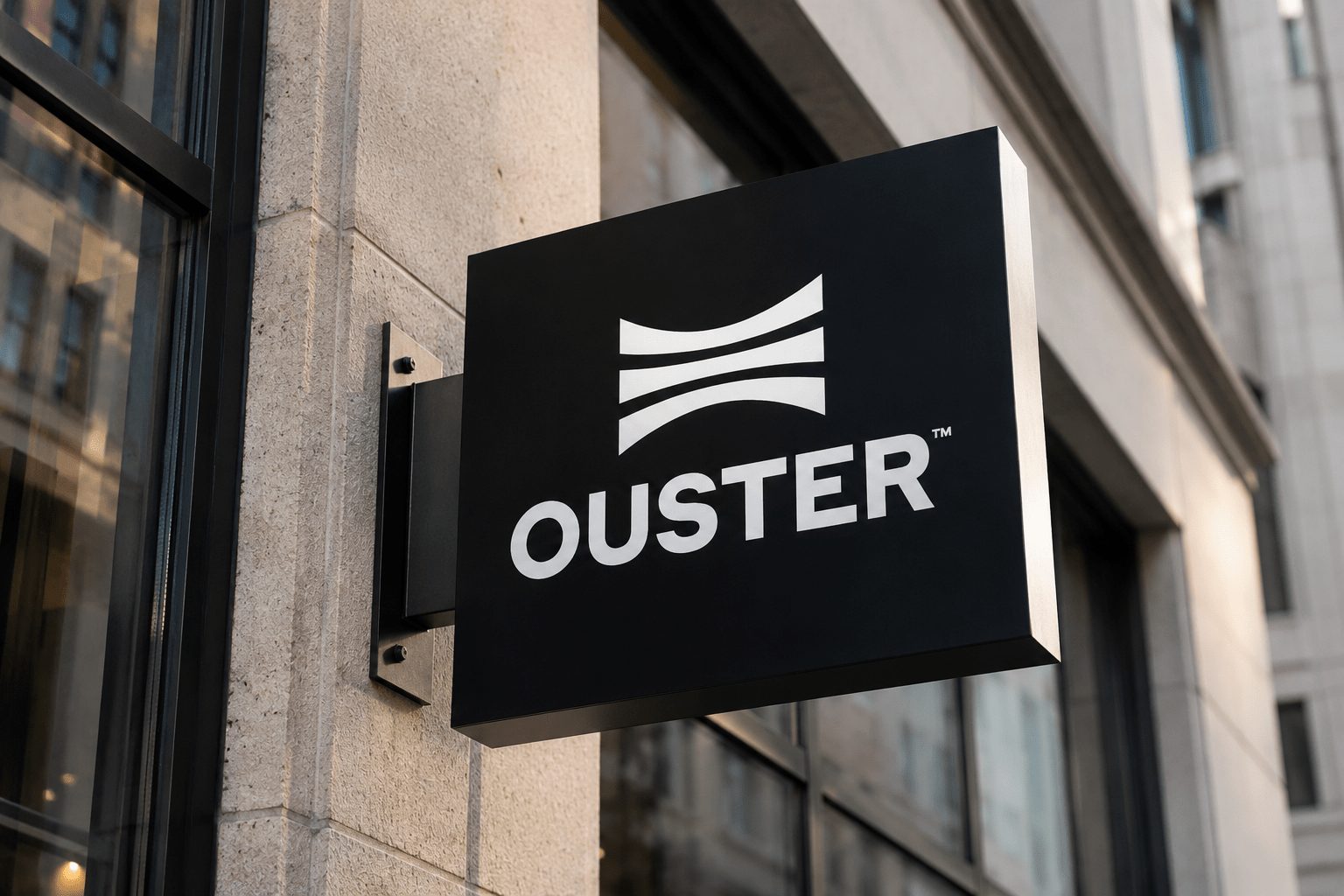
Ouster Inc. shares shot higher Wednesday afternoon following news that its fresh Rev8 OS lineup of digital lidar sensors secured qualification for NVIDIA’s DRIVE Hyperion platform for autonomous vehicles.
Shares jumped roughly 26% to $34.17, with more than 14 million changing hands so far, per market data. That run-up pushed the San Francisco company’s market cap to around $2.1 billion.
This is notable: NVIDIA’s DRIVE Hyperion acts as a reference platform for cars aiming at Level 4 autonomy—vehicles capable of handling themselves, no driver input needed, so long as conditions are right. The company touts pre-validated sensors, computing hardware and software as part of the package, aiming to cut down on the grunt work automakers and AV developers face when putting together foundational systems.
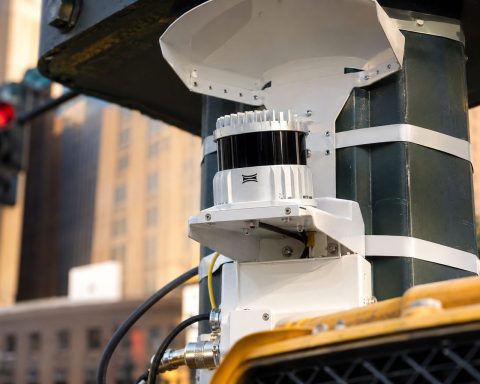
Ouster announced its Rev8 sensors have passed NVIDIA’s sensor qualification process, clearing them for use with NVIDIA DriveWorks software. Lidar—light detection and ranging—relies on lasers to create 3D maps of roads, factory floors, or other real-world environments.
Ouster CEO Angus Pacala described the company’s collaboration with NVIDIA DRIVE as focused on “high-performance sensing” for upcoming autonomous vehicles. The lidar maker highlighted its Rev8 sensors’ capability to generate native color data, while its OS1 Max sensor delivers 256 sensing channels and covers distances up to 500 meters. Ouster, Inc.
There’s been keen attention on whether Rev8 might help Ouster move past sporadic hardware news toward bigger production gigs. Last week, the company posted first-quarter revenue of $49 million, a 49% jump year over year. Product revenue hit $48 million, up 55%. Ouster shipped over 12,600 lidar and camera sensors this quarter.
Pacala described the quarter as one of “strong execution,” with demand showing up in smart infrastructure, industrial automation, and robotics. For the second quarter, Ouster is targeting revenue between $49.5 million and $52.5 million, factoring in a full quarter from Stereolabs—the camera and perception outfit it acquired earlier this year. Ouster, Inc.
NVIDIA’s qualification announcement stops short of revealing details like order size, customer contracts, or production deals. With no numbers on the table, investors are left to gauge the value of a technical step forward while commercial uptake remains in its infancy.
Rivals continue to move. Back in January, Aeva announced its 4D lidar tech would be used on the NVIDIA DRIVE Hyperion reference platform, which is aimed at production cars starting in 2028. NVIDIA’s Hyperion ecosystem, meanwhile, lists both Aeva and Hesai as partners, along with other names across the automotive and mobility space.
Ouster is still under financial pressure. The company reported a GAAP net loss of $17 million for the first quarter, even with higher revenue. Gross margin came in at 43%. That’s an improvement from last year, but a steep drop from the fourth quarter, which had been boosted by roughly $21 million in mostly one-off royalty revenue.
Dilution is another concern here. In a May 8 prospectus supplement, Ouster outlined plans to potentially sell as much as $100 million in common stock through Oppenheimer, Northland, Rosenblatt, and Roth Capital Partners. The company said it intends to use the money for general corporate purposes, such as working capital, warning investors of the likelihood of immediate and significant dilution.
Right now, traders see NVIDIA’s nod as evidence that Ouster’s Rev8 isn’t just vapor — it fits inside a headline-grabbing autonomous driving stack. But the next hurdle is steeper: converting that compatibility into actual design wins, ramping up shipments, and eking out margins that shrink losses, all while avoiding an overreliance on fresh stock offerings.

![Australia Stock Market Today 28/08/2026 [UPDATE: 13:36 AEST] [Banks and BHP Lift ASX as WAM, PEXA Sink 18%]](https://ts2.tech/wp-content/uploads/2026/08/AU-market-dashboard-2026-08-28-1334-480x384.jpg "Australia Stock Market Today 28/08/2026 [UPDATE: 13:36 AEST] [Banks and BHP Lift ASX as WAM, PEXA Sink 18%]")