
NEW YORK, May 13, 2026, 15:13 (EDT)
- Nvidia picked up roughly 2.7% in the afternoon session. The PHLX Semiconductor Index advanced 2.8%.
- Producer prices in the U.S. surged 1.4% in April—the steepest increase the gauge has posted since March 2022.
- Prediction markets weren’t budging on a June Fed cut—Polymarket had odds at 98% for rates staying put.
On Wednesday, U.S. AI stocks climbed, with Nvidia leading the charge as chipmakers bounced back. Investors continued piling into firms most exposed to artificial-intelligence infrastructure, shrugging off a hotter-than-expected inflation reading that put a dent in hopes for imminent Fed rate cuts. The S&P 500 added 0.57%; the Nasdaq Composite was up 1.12%. The Dow went the other way, according to Reuters.
This is what’s fueling the market right now: Big-name stocks with AI ties keep pulling their weight, helped along by strong earnings and hefty capital outlays—even as rates bite harder. The Bureau of Labor Statistics reported that the Producer Price Index climbed 1.4% in April, up 6.0% compared to the same month last year.
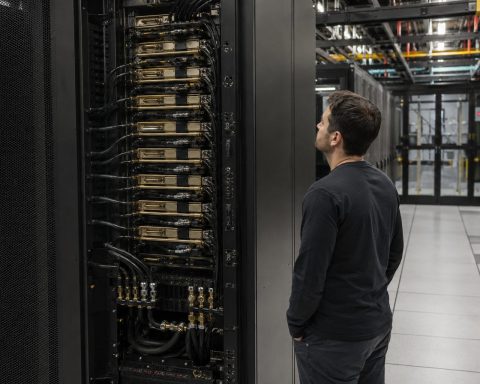
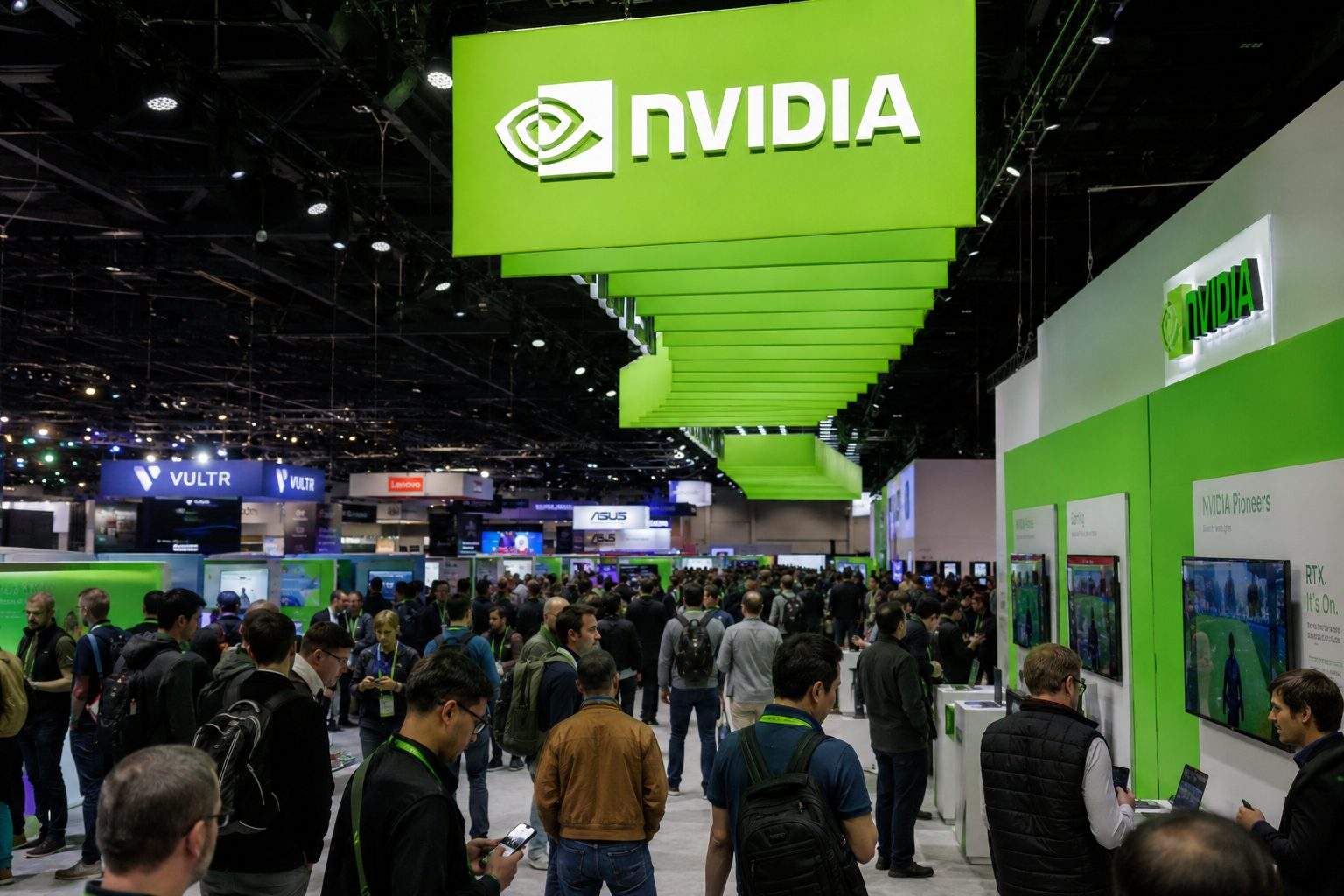
Nvidia shares climbed about 2.7% to $226.81, pushing its market cap past $5.5 trillion. The company’s GPUs — the backbone chips for AI model training and inference — are still the go-to public barometer for AI data center investment. Nvidia will deliver its first-quarter fiscal 2027 results after the bell on May 20.
The rally picked up new backing from analysts. Bank of America hiked its Nvidia price target to $320, up from $300, while Wells Fargo bumped its own target to $315 from $265, according to Business Insider, pointing to robust AI data-center demand and Nvidia’s next earnings as drivers. BofA analysts highlighted several potential catalysts: earnings, Computex, and the upcoming Vera Rubin launch.
Not all chip stocks joined the rally. Advanced Micro Devices dropped roughly 0.4%, Broadcom lost 0.7%. Nvidia, though, managed a gain. The gap highlights investor preference—money continues to chase companies with the most direct AI spending upside, while other semiconductor names aren’t drawing the same level of enthusiasm.
Nebius stood out among non-mega-caps. Shares of the AI cloud firm shot up roughly 19.7%, fueled by first-quarter revenue that came in at $399 million—a 684% surge from last year. The company also announced it’s locked in up to 1.2 gigawatts of electricity and land for an upcoming AI factory in Pennsylvania.
“We typically see several customers competing for every GPU we bring online,” Arkady Volozh, Nebius’ founder and chief executive, told Reuters. The company bumped its yearly capital spending target to a range of $20 billion to $25 billion, capturing just how much the AI expansion is eating into its cash. Reuters
Still, the risks are increasingly difficult to brush off. Rising wholesale prices threaten to crimp margins, push up data-center buildout expenses, and maintain elevated borrowing costs for companies leaning on debt to fuel their AI ambitions. Ben Ayers, senior economist at Nationwide, called the uptick in input costs a signal of “further increases for consumer prices in May.” John Ryding at Brean Capital noted that energy prices are seeping into other expense categories. Reuters
Jim Baird, chief investment officer at Plante Moran Financial Advisors, summed up the situation as a battle: “the strong earnings story and inflation risks.” For the time being, he said, markets are siding with earnings. Still, he cautioned, ignoring the potential for an extended spell of elevated rates would be unwise. Reuters
Prediction markets didn’t budge from their cautious stance. Over at Polymarket’s Fed dashboard, traders put a 98% probability on rates staying put at the June 17 Federal Reserve meeting, with just a 1% chance assigned to a 25-basis-point trim. DeFiRate’s board, which keeps tabs on Kalshi and Polymarket, reflected Kalshi users favoring “maintain rate” at 97% for the June Fed decision contract. Polymarket odds further out had the likelihood of no Fed cuts in 2026 at 70%. Polymarket
China is also in play. According to Reuters, Nvidia CEO Jensen Huang was in Beijing alongside President Donald Trump, meeting with China’s President Xi Jinping. They covered chip policy, trade, and business access. Shares of Nvidia and Tesla climbed as traders tried to gauge how the talks might shape U.S. companies’ reach in China’s tech sector.
Morgan Stanley pushed its S&P 500 year-end target up to 8,000, from 7,800. The new forecast, the bank said, hinges on earnings growth rather than multiple expansion, with AI and productivity improvements factoring into the profit call. But the note flagged inflation as a risk for valuations.
All eyes shift to Nvidia’s results next week. The company needs to prove that AI data-center demand keeps outpacing supply—not just topping last year’s figures. That’s what investors are banking on for now.
Related articles: NASDAQ:NVDA