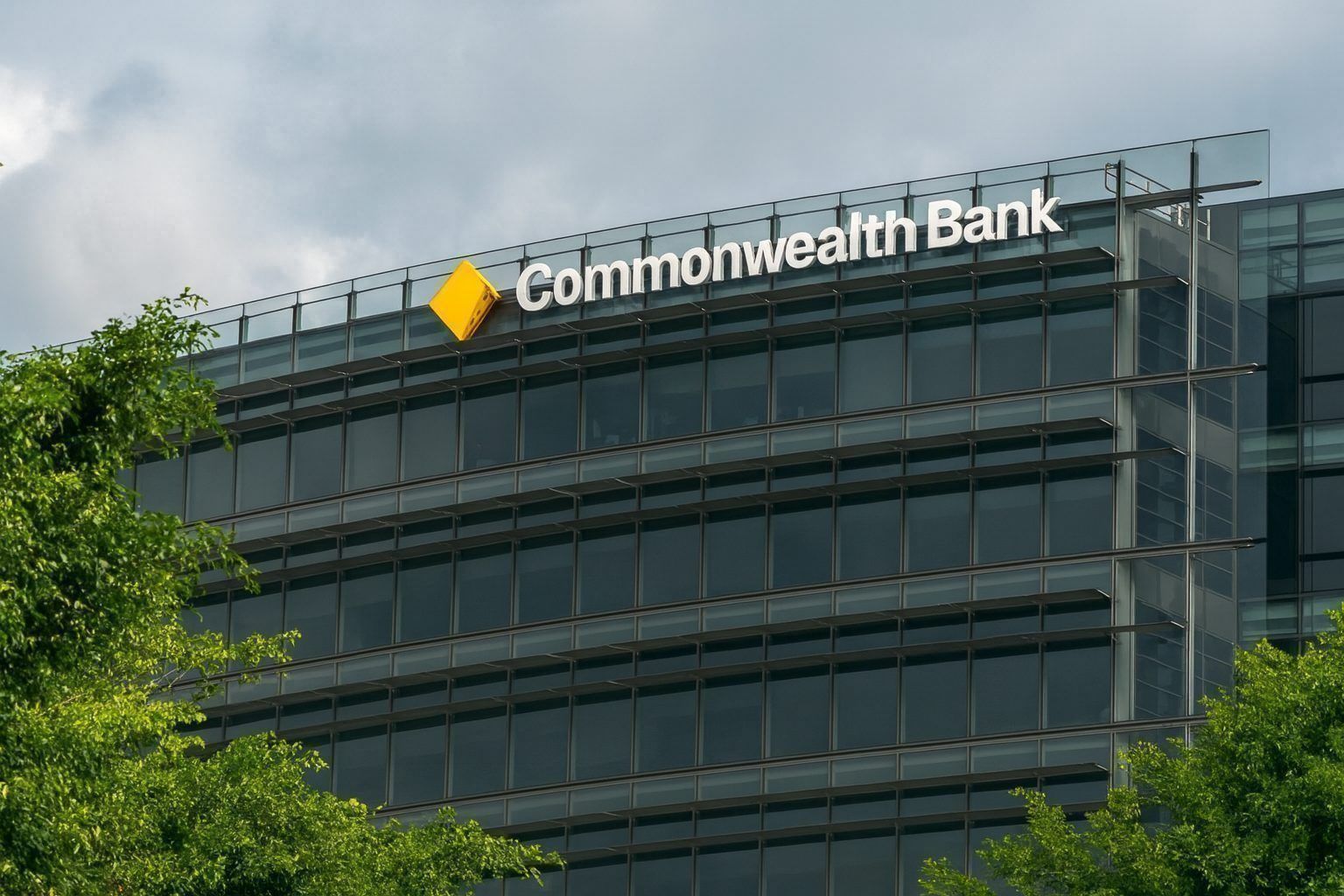
SYDNEY, Jan 5, 2026, 19:40 AEDT — After-hours
- CBA said it led Bloomberg’s 2025 Australian bonds and syndicated loans league tables, after helping clients raise more than A$120 billion in bonds.
- Shares closed down 0.34% at A$160.58, underperforming a flat broader market.
- Focus turns to Australia’s December CPI on Jan. 28 and CBA’s half-year results on Feb. 11.
Commonwealth Bank of Australia (CBA.AX) said on Monday it topped Bloomberg’s 2025 Australian Bonds and Loans league tables, pointing to a strong year for its debt capital markets franchise. The stock finished the session down 0.34% at A$160.58. Commbank
The update matters because investors are looking for evidence the big banks can keep fee income resilient as loan growth normalises and funding costs remain sensitive to interest-rate expectations. Debt markets activity is watched closely because it can signal how readily companies are willing to borrow and invest. Commbank
For CBA in particular, the timing puts the spotlight on market-facing businesses ahead of next month’s earnings and dividend update, when management will field questions on margins and credit trends. The bank’s half-year results and interim dividend announcement is scheduled for Feb. 11, according to its financial calendar. Commbank
CBA said it supported clients to raise more than A$120 billion across 139 bond issues in 2025 and “in excess of” A$62 billion in syndicated loans — large loans underwritten by a group of banks. It said total Australian bond issuance reached A$320.07 billion, near the record A$324.66 billion set in 2024. Commbank
The bank also highlighted growth in so-called kangaroo bonds — Australian-dollar debt issued by foreign borrowers — which it said accounted for A$66.71 billion, or 21% of 2025’s new issuance. “We’ve been trusted to assist more issuers and investors in accessing Australia’s debt capital markets in 2025 than ever before,” said Chris McLachlan, CBA’s executive general manager for global markets. Commbank
In the market, CBA shares ended at A$160.58 after trading between A$160.30 and A$161.55, while the S&P/ASX 200 closed nearly flat. Investing.com Australia
Technically, CBA is still sitting well above its 52-week low of A$140.21 but remains about 16% below its 52-week high of A$192.00, based on published trading ranges. Traders will be watching whether the stock holds the A$160 handle after Monday’s intraday test. Investing
The next macro swing factor for bank stocks is inflation. Australia’s December CPI is due on Jan. 28 at 11:30am AEDT, a release that can shift expectations for how long borrowing costs stay elevated. Australian Bureau of Statistics
Attention then shifts to the Reserve Bank of Australia’s next policy meeting on Feb. 2–3, with the decision statement scheduled for 2:30pm AEDT on Feb. 3. Any change in the rate outlook can flow quickly into bank valuations because it affects loan pricing, deposit competition and credit demand. Reserve Bank of Australia
There are risks on the other side of the ledger. League-table leadership does not guarantee a repeat of 2025 fee pools if market volatility curbs issuance, and investors remain alert to any earnings-season signs of higher bad debts if household stress picks up. Commbank
The next concrete catalysts are the Jan. 28 CPI print, the RBA’s Feb. 3 decision statement, and CBA’s half-year results on Feb. 11. Australian Bureau of Statistics