
NEW YORK, Dec. 27, 2025, 6:40 p.m. ET — Market closed
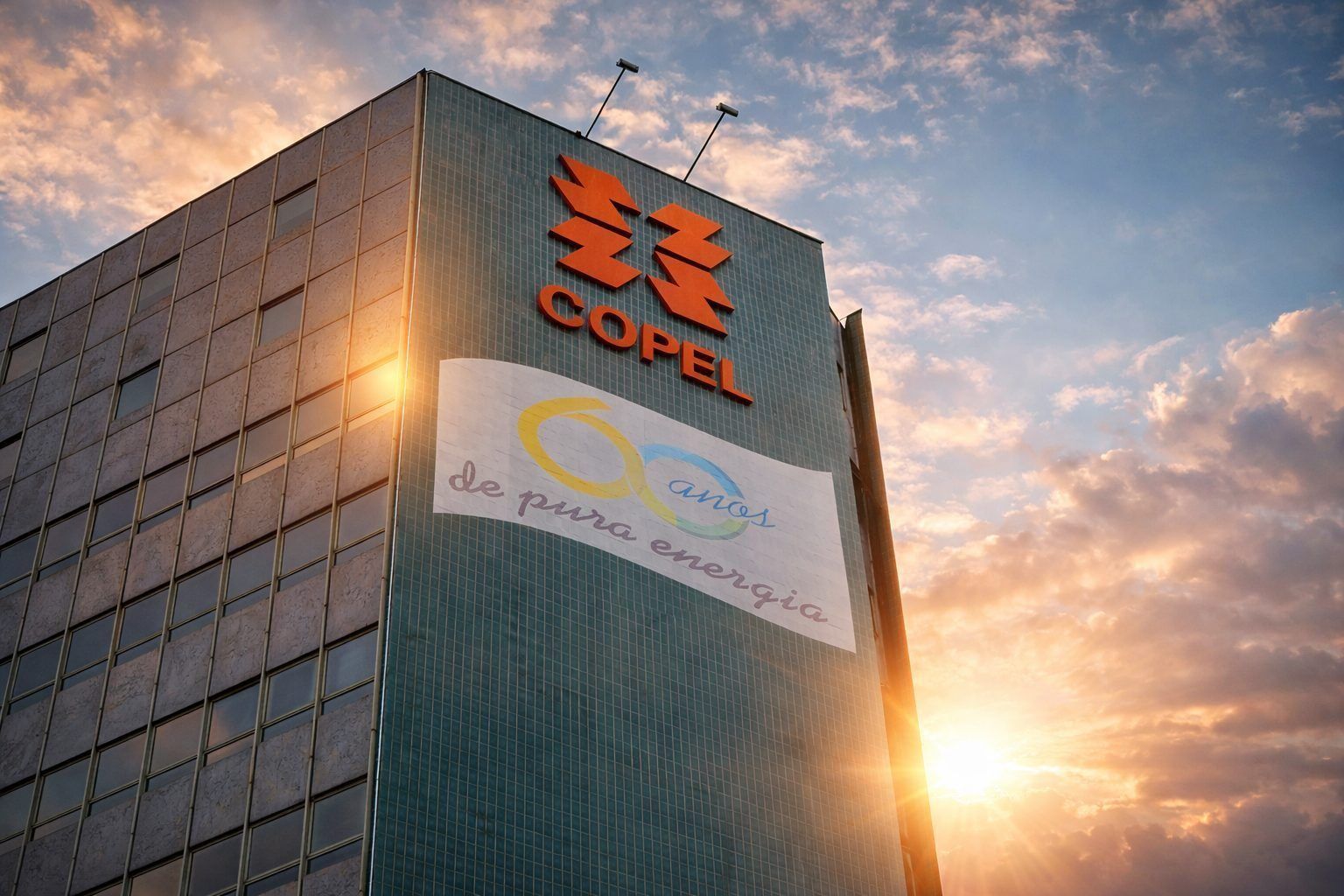
Companhia Paranaense de Energia (Copel) has entered a new trading phase in the U.S. after a corporate action that reshaped how the Brazilian utility is represented on the New York Stock Exchange. The company’s former preferred American Depositary Shares (ADS) under NYSE: ELP were subject to a mandatory conversion tied to Copel’s broader governance and capital-structure overhaul in Brazil, and U.S. trading attention has now shifted to NYSE: ELPC.
With U.S. markets closed for the weekend, the most important near-term focus for investors is straightforward: confirm which ticker you now hold (ELP vs. ELPC), understand the cash component tied to the conversion, and be ready for potentially choppy price discovery when trading resumes Monday—especially for accounts holding options or positions that were open through the conversion window.
ELPC price action: the first session after the conversion
On Friday, ELPC closed at $9.65, up 8.92% versus the prior close of $8.86, according to historical pricing data tracking the new U.S. line. Volume was 39,728 shares, a level that can amplify volatility in either direction when liquidity is thin.
Market coverage of the Friday session emphasized the abrupt reset in trading behavior, noting the stock gapped up premarket and traded on light early volume—a pattern that often follows complex ADR events where brokers and market makers are still normalizing settlement and inventory.
What happened to ELP—and why investors are now seeing ELPC
Copel’s U.S. transition is not a simple “ticker rename.” It stems from a mandatory conversion of Copel’s Class A Preferred ADS (ELP) into a structure that results in ELPC common ADS as the continuing U.S.-traded instrument.
In an OCC information memo describing the event, the Options Clearing Corporation stated that the mandatory conversion means each existing ELP Preferred ADS converts into the right to receive 1.0 ELPC Common ADS.
Separately, the OCC also detailed a special cash dividend connected to the event: approximately $0.57315 per ELP ADS, with a record date of Dec. 24, 2025 and a payable date of Jan. 9, 2026 (subject to fees/withholdings).
Copel’s depositary documentation also framed the process as an exchange tied to the company’s preferred ADS program and termination mechanics, reinforcing that this was a structured conversion event rather than a routine corporate action.
One practical consequence for many investors is that ELP is effectively no longer the “live” U.S. line going forward. Market data services tracking ELP have explicitly flagged it as delisted following the conversion process. StockAnalysis
Why this conversion happened: Copel’s Novo Mercado shift in Brazil
The U.S. ADR conversion is part of a broader governance and market-structure change in Brazil.
Copel disclosed that it completed its migration to B3’s Novo Mercado—a listing segment that is generally associated with stricter governance standards—and that, after the migration, Copel’s shares are now traded exclusively as common shares under ticker CPLE3 in Brazil.
For U.S. investors, this matters because Novo Mercado migration and share-class simplification can influence:
- Liquidity (more investors can hold a single, common share class)
- Index eligibility and positioning
- Corporate governance expectations, including voting rights and minority protections in the Brazilian market
Those changes can take time to reflect in valuation, but the U.S. conversion makes the shift visible immediately because it changes the traded line and, often, the shareholder base that can access it.
News in the last 24–48 hours: what actually moved the Copel conversation
Because today is Saturday, the most actionable “fresh” developments for Copel stock are tightly centered on the conversion’s market plumbing and Friday’s initial ELPC trading behavior.
1) ELPC’s first major post-conversion trading session (Friday).
Market coverage highlighted the gap-up and the thin early prints typical of a newly adjusted ADR line.
2) Options and settlement mechanics updated for the conversion.
The OCC confirmed that adjusted ELP1 options were further adjusted effective Dec. 26, 2025: option symbol ELP1 changed to ELPC1, and the deliverable was updated to reflect 100 ELPC ADS plus approximately $57.32 cash per contract (before fees/withholding).
In another OCC memo focused on settlement risk, the OCC stated that NSCC would no longer accept ELP exercise and assignment activity for settlement effective Dec. 24, 2025, and therefore certain related activity would be subject to broker-to-broker settlement procedures. This kind of settlement friction can temporarily affect spreads and execution quality.
3) Index-provider operational changes.
Solactive published a mandatory conversion notice indicating that the preferred ADR line would be removed from an index and that shares of ELPC would be increased per transaction terms, effective at the open on Dec. 26, 2025. This is the kind of behind-the-scenes change that can affect passive flows around corporate actions.
A notable near-term signal: shareholder repositioning
In addition to conversion mechanics, Copel also disclosed a shareholder movement earlier this week that investors may still be digesting.
In a market communication dated Dec. 24, 2025, Copel said it received notice from SPX Gestão de Recursos Ltda. that it had sold part of its stake and now held, in aggregate, 104,528,334 common shares, representing approximately 3.50% of Copel’s total share capital. The filing was signed by Copel’s Vice President of Finance and Investor Relations, Felipe Gutterres.
While a single holder trimming does not automatically imply a thesis shift, these disclosures can matter around periods of liquidity transition—especially when a company is consolidating share classes and changing the main traded line in the U.S.
Dividend and payout calendar: what investors should watch next
Copel’s corporate action is intersecting with multiple payout items and record dates that can influence both valuation and near-term trading behavior.
Special cash amount tied to the ADR event (U.S. mechanics):
As noted in OCC documentation, Copel announced a special cash dividend of approximately $0.57315 per ELP ADS, with the record date Dec. 24, 2025 and payable date Jan. 9, 2026 (net of fees and withholdings, if any).
Brazil-facing dividend proposal (company distribution policy event):
Market documentation citing S&P Capital IQ reported that Copel’s board presented a proposal for BRL 1.35 billion in dividends, with a record date of Dec. 30, 2025, shares trading ex-provento from Jan. 2, 2026, and payment no later than June 30, 2026 (with per-share amounts to be disclosed through official channels).
Why this matters for Monday:
Even though the U.S. market is closed right now, investors positioning into Monday often re-evaluate:
- Whether the cash component is already reflected in price
- How broker platforms are displaying new tickers and cost basis
- Whether spreads widen due to settlement uncertainty, especially for options
Forecasts and analyst-style expectations: what the available consensus data shows
Copel’s U.S. ADR line is not one of the most heavily covered names on Wall Street, and the conversion may temporarily reduce the usefulness of older ELP-specific analyst targets. Still, several widely used market-data platforms provide directional benchmarks:
- Investing.com’s consensus snapshot for ELP (the pre-conversion preferred ADR line) shows an overall “Strong Buy” consensus and an average 12‑month price target of 10.900 (as displayed on its forecast page). Investors should treat this as a backward-looking reference point, because ELP’s trading line has been overtaken by the mandatory conversion mechanics. Investing.com+1
- Fintel’s target set for ELPC (the continuing common ADR line) shows an average one-year price target of $10.19, with a forecast range of $9.82 to $10.87 and a projection date shown as Nov. 9, 2026. Relative to Friday’s $9.65 close, that implies mid-single-digit upside in that dataset.
Because the security line in the U.S. has changed, investors should expect that ratings/targets may update as brokers and data vendors reconcile historical mappings between ELP and ELPC.
What investors should know before the next session
With trading closed until Monday, the highest-value preparation is operational—not speculative. Here are the practical checks that can prevent unpleasant surprises at the open:
1) Verify what you actually hold now (ELP vs. ELPC).
The corporate action is designed to transition holders into ELPC and a cash component, but broker processing timelines vary. Official event documentation describes the exchange/termination mechanics for the preferred ADS line.
2) Don’t treat “price” as the full picture—include the cash component.
OCC documentation ties the event to a cash amount of approximately $0.57315 per ADS, payable Jan. 9, 2026 (net of fees/withholding). Depending on how your broker displays pending cash, your account may temporarily appear “down” or “up” versus expectations. InfoMemo+1
3) If you traded options, read the adjustment terms carefully.
OCC memos set out the symbol changes (ELP → ELP1 → ELPC1) and the updated deliverables (including cash), and they also flag settlement considerations involving NSCC and broker-to-broker settlement processes. This can affect assignment/exercise timing and how quickly positions settle.
4) Expect wider spreads and sharper moves if liquidity stays thin.
ELPC’s Friday volume (tens of thousands of shares) is not huge for a NYSE-listed line. Thin liquidity can amplify volatility, especially in early sessions after a major conversion event.
5) Keep the Brazil angle in view: governance shift is the structural story.
Copel’s completion of its Novo Mercado migration and the move to trade as common shares in Brazil is a longer-term corporate governance and market access development that can influence valuation beyond the immediate conversion noise.
Bottom line
Copel stock is effectively being “reintroduced” to U.S. investors through ELPC, and Friday’s jump is best understood in the context of a mandatory ADR conversion, a cash component payable in early January, and a set of settlement and options adjustments that can temporarily distort liquidity and pricing. StockAnalysis+2InfoMemo+2
Heading into Monday’s session, the key investor task is not guessing the next tick—it’s ensuring positions, cash entitlements, and any options exposures are correctly understood under the post-conversion rules. Once the market fully digests the new trading line, attention is likely to rotate back toward Copel’s fundamentals as a Paraná-focused electric utility with generation, transmission, distribution, and related segments, now operating under a Novo Mercado governance framework.
Related articles: Energy Sector