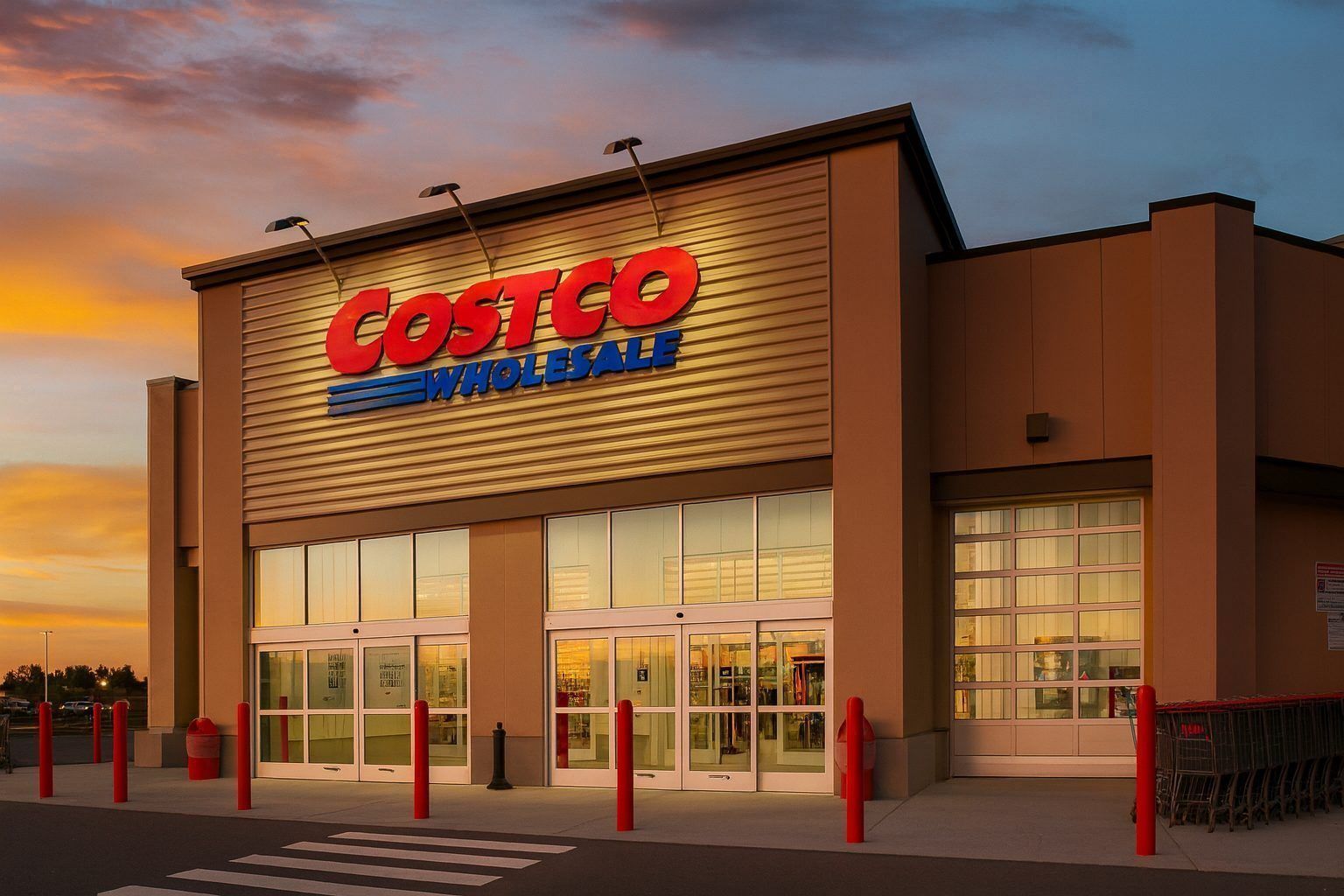
Costco stock (NASDAQ: COST) is in focus after a fiscal Q1 FY2026 earnings beat. Here’s the latest news, analyst forecasts, price targets, catalysts, and risks as of Dec. 14, 2025.
Costco Wholesale Corporation (NASDAQ: COST) heads into Sunday, December 14, 2025 with investors still digesting a busy December stretch: first-quarter fiscal 2026 results, fresh commentary on digital momentum, renewed debate about valuation, and a closely watched tariff-related lawsuit that has added a macro headline to an otherwise fundamentals-driven story. Costco Investor Relations+2Reuters+2
Because markets are closed on Sundays, the most recent trading snapshot reflects Friday, Dec. 12, 2025. COST last closed around the mid-$880s, after a volatile week that included an earnings beat but a muted share response—an outcome that’s become familiar for “high-expectations” compounders when the bar is set exceptionally high. StockAnalysis+1
Costco stock price today (Dec. 14, 2025): the latest snapshot
- Last close (Fri., Dec. 12): about $884 per share (data providers vary slightly on the exact close and after-hours print) StockAnalysis+1
- Recent trading range: the week included lows in the high-$860s and highs near the high-$880s StockAnalysis
- 52-week context: COST has been trading well below its 2025 highs and near the lower end of its one-year range, a key reason valuation is being discussed as much as the quarter itself Investing.com+1
The timeline investors are focused on right now
Dec. 3, 2025: Costco reported November sales with retail-month net sales up 8.1% year over year, and reiterated first-quarter net sales growth of 8.2%. Costco Investor Relations
Dec. 11, 2025: Costco reported Q1 FY2026 results (quarter ended Nov. 23, 2025), including 8.2% net sales growth and $4.50 diluted EPS. Costco Investor Relations+1
Dec. 12–13, 2025: multiple outlets emphasized a common theme: results were strong, but the stock reaction was restrained amid valuation and “what’s next” expectations (special dividend/stock split chatter included). Barron’s+2MarketWatch+2
Costco Q1 FY2026 earnings: what the company reported
Costco’s first quarter of fiscal 2026 (12 weeks ended Nov. 23, 2025) delivered another clean set of numbers that reinforced the company’s core investment case: steady traffic, resilient value perception, and a membership engine that continues to scale. Costco Investor Relations
Headline results (Q1 FY2026)
Costco reported:
- Net sales:$65.98B (up 8.2% year over year) Costco Investor Relations
- Membership fees:$1.329B (up from $1.166B a year earlier) Costco Investor Relations
- Total revenue:$67.307B Costco Investor Relations+1
- Net income:$2.001B Costco Investor Relations
- Diluted EPS:$4.50 (vs. $4.04 a year earlier) Costco Investor Relations+1
The release also noted the quarter included a stock-based compensation tax benefit (a factor some analysts strip out when comparing “clean” profitability across periods). Costco Investor Relations
Comparable sales and the “digital” headline
Comparable sales remained solid, but what stood out most in the reporting was the gap between overall comps and digital acceleration:
- Total company comparable sales:+6.4% Costco Investor Relations
- Digitally-enabled comparable sales:+20.5% Costco Investor Relations+1
Reuters and other coverage framed Costco’s quarter as another example of value-oriented retailers benefiting as shoppers seek deals across essentials and select discretionary categories heading into the holiday season. Reuters
The “pizza and pies” quarter: why the anecdotes mattered to Wall Street
Several reports highlighted Costco’s eye-catching seasonal stats—less because pizza is a meaningful segment by itself, and more because it can signal traffic, basket size, and member engagement going into peak holiday weeks.
- Costco cited record food-court and bakery moments, including 358,000 pizzas sold on Halloween and 4.5 million pies in the lead-up to Thanksgiving. Barron’s+2MarketWatch+2
- MarketWatch also pointed to a strong Black Friday online performance, including over $250 million in online non-food sales in that period. MarketWatch
For COST shareholders, these details helped reinforce a key point: Costco’s model isn’t just “cheap stuff in bulk.” It’s a habit—and habit is what supports renewal rates and long-term compounding.
Why Costco stock didn’t surge after an earnings beat
A recurring storyline across post-earnings coverage was straightforward: Costco delivered, but investors debated whether it delivered enough to justify a premium multiple—especially after years of exceptional outperformance. Barron’s+1
Valuation remains the center of gravity
Barron’s emphasized COST’s premium valuation, citing a forward earnings multiple in the low-40s—a level that can leave little room for “good-but-not-shocking” quarters to drive the stock higher. Barron’s
Yahoo Finance’s key statistics similarly showed Costco trading at elevated P/E levels (both trailing and forward), consistent with the “priced for quality” framing seen across analyst notes. Yahoo Finance
A few incremental concerns investors are watching
- Membership renewal rate: Barron’s noted a modest dip in renewal rates, attributing part of the change to lower renewal among online sign-ups—a detail that matters because renewals are foundational to Costco’s economics. Barron’s
- Guidance expectations: Investopedia reported that Costco did not issue a full-year outlook, which can sometimes limit the market’s willingness to rerate a stock immediately after earnings—even when the quarter is strong. Investopedia
- Tariff uncertainty: multiple stories referenced tariffs as a potential swing factor for costs and sourcing decisions, tying into the company’s ongoing legal posture. MarketWatch+1
Analyst forecasts for Costco stock: price targets and what changed this week
The “forecast” picture for COST is best described as: still broadly bullish, but not unanimous on upside from here.
Where consensus targets sit (as of mid-Dec. 2025)
Across widely followed consensus trackers, average 12-month targets cluster around ~$1,070 per share, implying meaningful upside from the mid-$880s level—though the exact average and analyst count vary by platform:
- TipRanks listed an average target around $1,069–$1,092, with a high forecast above $1,200 and a low forecast in the low-$900s. TipRanks
- StockAnalysis similarly showed a consensus rating leaning “Buy” and an average target around $1,071, with a range roughly $907 to $1,225. StockAnalysis
Notable analyst moves highlighted in coverage
Several reports summarized target changes after the Q1 print:
- Bernstein raised its Costco price target to $1,146, with commentary tied to warehouse growth and ongoing execution. Investing.com
- The same Investing.com write-up noted Goldman Sachs reiterated a Buy rating with a price target of $1,171 (per the article’s recap). Investing.com
- Baird maintained an Outperform rating while lowering its target to $1,000 (a reminder that analysts can like the business while debating near-term upside). Benzinga+1
- UBS reiterated a Buy stance while discussing Costco’s multiple compressing from higher levels earlier in the year as market concerns centered on traffic, comps, and renewals. Investing.com
A key counterpoint: “Great business” doesn’t always mean “cheap stock”
Morningstar’s post-earnings note captured this tension well: it characterized Costco as a wide-moat company while signaling it expected to lift its fair value estimate modestly—yet the cited fair value level remained far below the current share price, underscoring that some valuation frameworks still see COST as expensive. Morningstar
The special dividend / stock split question: why it keeps resurfacing
Costco has a history of returning capital through regular dividends and, at times, special dividends—so it’s not surprising that speculation builds in years when cash generation is strong and the share price is high in absolute terms.
Recent coverage pointed to three facts:
- Some investors expected a special dividend announcement around the earnings window; when it didn’t appear, the narrative became part of the “why the stock slipped” story. TipRanks
- MarketWatch noted analysts floating potential catalysts like a special dividend or a stock split, even as investors weigh slower comps versus premium valuation. MarketWatch
- Barron’s also referenced this theme, framing it as a “nice-to-have” catalyst rather than a requirement for the core thesis. Barron’s
It’s important context for Google News readers: a stock split doesn’t change fundamentals, and a special dividend can be a one-time event. But both can influence short-term sentiment—especially for a widely held consumer-defensive name with a retail investor following.
The tariff lawsuit: the headline that isn’t about hot dogs, but could still matter
Beyond earnings, Costco has been in the spotlight for a tariff-related legal strategy that has introduced a political/macro overlay to the COST narrative.
Reuters reported that Costco filed a lawsuit in the U.S. Court of International Trade aimed at preserving its ability to claim tariff refunds if the U.S. Supreme Court ultimately rules against a legal basis used for certain tariffs imposed under emergency powers (IEEPA). Reuters
According to Reuters, Costco argued that U.S. Customs and Border Protection denied a request for more time to finalize tariff calculations—potentially jeopardizing the company’s ability to recover refunds. The report also noted other companies pursuing similar actions and referenced how Costco has been responding operationally, including sourcing adjustments and expanded use of its private label. Reuters
For shareholders, the practical takeaway is less about courtroom drama and more about uncertainty:
- If tariffs persist or expand, sourcing and pricing decisions can become more complex.
- If refunds are eventually available, the timing and mechanics can matter to cash flow and reported results.
Costco fundamentals: what the quarter says about the long-term model
Even in a week dominated by valuation talk, Costco’s results kept reinforcing why the company is often treated as a “quality compounder” in consumer retail.
Membership economics remain a differentiator
Membership fees were $1.329B in Q1 FY2026, up from $1.166B a year earlier, helping lift total revenue to $67.307B. That high-margin fee stream is central to why Costco can price aggressively on merchandise while still generating strong profitability. Costco Investor Relations
Scale and expansion continue
Costco reported it now operates 923 warehouses globally, including 633 in the U.S. and Puerto Rico, reinforcing that growth is still part of the story (not just optimization of a mature base). Costco Investor Relations+1
Balance sheet and cash flow details investors noted
From the earnings release:
- Cash and cash equivalents:$16.217B (as of Nov. 23, 2025) Costco Investor Relations
- Operating cash flow (12 weeks):$4.688B Costco Investor Relations
- Share repurchases (12 weeks):$210M and cash dividends paid:$577M Costco Investor Relations
Those figures help explain why the “special dividend” conversation never fully disappears—Costco has the financial flexibility to do more than one kind of shareholder return, even if it chooses not to in any particular quarter.
Key risks to watch for COST stock into 2026
For a stock priced at a premium, the risk list is less about “is the business broken?” and more about “what could interrupt the compounding or compress the multiple?”
- Valuation risk: premium multiples can magnify downside if growth decelerates or sentiment shifts. Barron’s+1
- Renewal rate sensitivity: even small shifts can matter when membership is the engine. Barron’s
- Tariffs and sourcing uncertainty: potential cost/margin impacts and headline risk. Reuters
- Macro variables the company itself flags repeatedly: inflation/deflation, FX, wage and healthcare costs, competition, and geopolitical factors (including tariffs). Costco Investor Relations
What’s next for Costco stock: upcoming catalysts and dates
Looking ahead, the most concrete “next date” on the calendar is Costco’s next major investor event:
Costco’s investor relations site lists “Q2 2026 Earnings and February Sales Results” scheduled for March 5, 2026 at 1:15 PM PT. Costco Investor Relations
Before then, investors will likely focus on:
- Monthly sales updates (especially holiday season read-throughs) Costco Investor Relations
- Any continued developments tied to tariffs and legal proceedings Reuters
- Whether Costco’s digitally-enabled comp strength persists beyond peak holiday shopping Costco Investor Relations
Bottom line (Dec. 14, 2025)
As of December 14, 2025, Costco stock sits at the intersection of two powerful narratives:
- The fundamentals narrative remains strong: earnings beat, membership fee growth, solid comps, and standout digital performance. Costco Investor Relations+1
- The market narrative is more nuanced: valuation remains elevated, investors keep scanning for “next catalysts,” and tariffs have introduced a macro headline that can influence sentiment even when operations are humming. Barron’s+2Reuters+2
For readers tracking COST into 2026, the question isn’t whether Costco is executing—it is. The question is whether the stock’s premium price can be justified by sustained growth and continued evidence that Costco’s membership-plus-scale machine remains one of retail’s most durable compounding models.