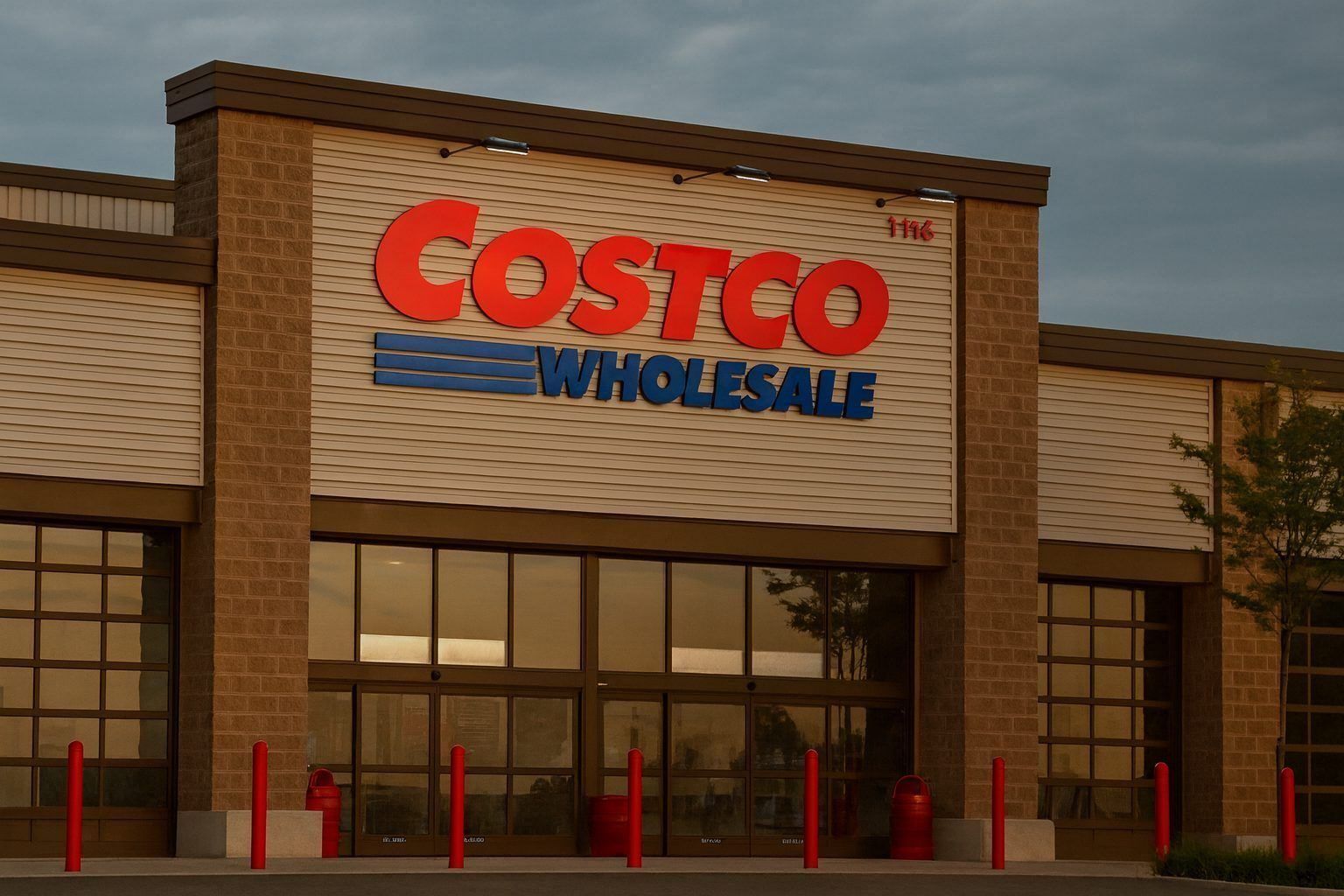
NEW YORK / WASHINGTON — Costco Wholesale has launched a high‑stakes lawsuit against the Trump administration, seeking to protect its right to reclaim hundreds of millions of dollars in import tariffs just as the U.S. Supreme Court considers whether President Donald Trump overstepped his emergency powers to reshape global trade.
The case positions one of America’s most influential retailers at the center of a constitutional showdown over who controls U.S. tariff policy — Congress or the White House — and whether businesses will ever see their money back if the president’s tariff program is struck down.
What Costco Is Asking the Court to Do
In a complaint filed November 28 in the U.S. Court of International Trade (CIT), Costco Wholesale Corporation sued the United States, U.S. Customs and Border Protection (CBP), CBP Commissioner Rodney Scott and the federal government as a whole.static.foxbusiness.com
Costco is asking the trade court for three core remedies:
- A declaration that Trump’s emergency tariffs are unlawful.
- An injunction blocking CBP from collecting further duties from Costco under those orders.
- A “full refund” of all tariffs the company says it has paid under the International Emergency Economic Powers Act (IEEPA)‑based duties, plus any it is forced to pay while the case proceeds.static.foxbusiness.com+1
The lawsuit does not ask the court to decide the broad legality of Trump’s tariff program for all importers — that question is already before the Supreme Court. Instead, Costco is effectively telling the trade court: even if the Supreme Court kills these tariffs, we could lose our refunds unless we sue on our own now.static.foxbusiness.com+1
Costco, based in Issaquah, Washington, is one of the largest retailers in the world. It reported $275.2 billion in revenue in its fiscal year ending August 31, 2025, highlighting the scale of imports potentially touched by the contested tariffs.Reuters+1
The Tariffs at the Center of the Fight
Costco’s lawsuit targets a sweeping series of tariffs President Trump launched earlier this year using IEEPA — a 1977 law that lets presidents restrict trade and financial flows during a national emergency.Wikipedia+1
According to the complaint, Trump did the following:static.foxbusiness.com
- February 2025: “Trafficking” tariffs
- Imposed an additional 25% duty on imports from Mexico, citing drug trafficking and illegal immigration at the southern border.
- Imposed another 25% tariff on imports from Canada, tied to opioid trafficking concerns at the northern border.
- Added a 10% surcharge — later raised to 20% — on imports from China, framed as a response to synthetic opioid precursors coming from Chinese suppliers.
- April 2025: “Reciprocal” global tariffs
- Created a 10% baseline tariff on nearly all imports into the United States.
- Layered on extra “reciprocal” tariffs ranging from 11% to 50% on 57 countries with which the U.S. runs large goods‑trade deficits.
- After tit‑for‑tat measures with Beijing, raised China’s reciprocal tariff to 125%, on top of the 20% “trafficking” tariff — leaving many Chinese imports facing an effective IEEPA duty of about 145%, according to Costco’s filing.
Taken together, the complaint argues, these orders effectively turned IEEPA into a catch‑all tariff statute — even though the word “tariff” never appears in the law and the U.S. Constitution assigns taxing and duty‑setting powers to Congress.static.foxbusiness.com+1
Why Costco Filed Now: A Looming December 15 Deadline
Costco’s urgency hinges on a technical but crucial customs concept: liquidation.
For each shipment, CBP eventually “liquidates” the entry — finalizing the amount of duty owed. Once liquidation happens, an importer’s ability to challenge the duty or seek a refund becomes tightly constrained and subject to strict deadlines and protest procedures.Business Insider+1
In its lawsuit, Costco says:
- It has already paid IEEPA duties on imports from countries covered by Trump’s orders.
- At least one of its entries has already liquidated, and many more are scheduled to start liquidating on or after December 15, 2025.static.foxbusiness.com
- CBP denied the company’s request to extend the liquidation deadline for these entries.Reuters+1
If those liquidations go forward, Costco fears that even a Supreme Court victory striking down the tariffs might not automatically entitle it to refunds for duties already locked in. The complaint says importers are “not guaranteed” repayment without their own judgments and court orders.static.foxbusiness.com+1
Costco plans to seek a preliminary injunction to halt liquidation of its entries while the litigation plays out, arguing that otherwise its refund rights will suffer “imminent and irreparable harm.”static.foxbusiness.com
The Supreme Court Case That Could Redefine Presidential Trade Power
Running in parallel to Costco’s lawsuit is a blockbuster Supreme Court case: Learning Resources, Inc. v. Trump and the companion Trump v. V.O.S. Selections, Inc.Wikipedia+1
In that consolidated case, the justices are considering two key questions:
- Does IEEPA actually authorize Trump’s tariffs?
- If it does, is that an unconstitutional delegation of Congress’s power to lay and collect duties?Wikipedia
Lower courts — including the Court of International Trade and the Federal Circuit — have already ruled that IEEPA does not permit the type of broad revenue‑raising tariff program Trump launched, reasoning that Congress must clearly grant that kind of taxing authority.Business Insider+1
The Supreme Court heard oral arguments on November 5, 2025, fast‑tracking the case given its huge economic and constitutional stakes. Justices from across the ideological spectrum pressed the Trump administration’s lawyers on why a multibillion‑dollar tariff regime should be inferred from statutory silence, and how refunds would work if the tariffs are ultimately struck down.Reuters+1
No decision has been issued yet. Court watchers expect a ruling sometime in 2026, though the justices could move faster if they view the tariffs as an urgent question of national and economic security.Newsweek
A Wave of Companies Rushing to Preserve Refund Rights
Costco is far from alone. Since late October, dozens of companies have filed similar cases in the Court of International Trade, all seeking to preserve the right to refunds if Trump’s tariffs fall.Reuters+1
According to court records and news reports, companies that have sued or signaled plans to sue include:Reuters+2Newsweek+2
- Bumble Bee Foods
- EssilorLuxottica, maker of Ray‑Ban eyewear
- Kawasaki Motors
- Revlon
- Yokohama Tire
- Various small import‑heavy businesses in sectors ranging from toys to specialty food
Many of these companies were already plaintiffs in the earlier Learning Resources and V.O.S. Selections cases. Costco’s entry into the fray marks one of the largest and best‑known consumer brands to directly challenge the tariff scheme on refund grounds.Bloomberg+1
Legal analysts say the wave of suits reflects a simple calculation: even if the Supreme Court rules against Trump, importers generally won’t receive automatic refunds for past duties. They will need to rely on existing customs mechanisms — such as post‑summary corrections for unliquidated entries or formal protests under 19 U.S.C. §1514 for liquidated entries — or file separate lawsuits like Costco’s.Holland Knight
How the White House Is Responding
The Trump White House has defended the tariffs as both lawful and economically essential.
A White House spokesperson, responding to questions from Bloomberg and cited by The Independent, warned that overturning the tariffs could carry “enormous” economic consequences and argued that Costco’s lawsuit underscores how much money is at stake. The administration says it looks forward to a swift Supreme Court ruling upholding the president’s authority.The Independent+1
Trump himself has repeatedly framed the tariffs as a cornerstone of his second‑term economic agenda, claiming they have strengthened U.S. manufacturing, improved leverage in trade disputes and helped fund other priorities. Supporters argue that emergency powers must be broad enough to confront national‑security threats, including drug trafficking and unfair trade practices.AInvest+1
Critics, however, say the administration’s approach stretches IEEPA far beyond its original purpose — from targeted sanctions into what amounts to a shadow tax system on imports — and risks saddling consumers and businesses with higher costs.Holland Knight+1
What It Means for Costco, Retailers and Shoppers
Despite the legal fight, Costco remains financially strong. Analysts highlight robust sales — including roughly $78 billion in net sales for a recent quarter — and continued growth in its membership base and private‑label Kirkland Signature brand.AInvest+1
To blunt the tariffs’ impact, the company has:Reuters+1
- Reduced the number of foreign suppliers
- Shifted more sourcing to local or tariff‑free markets where possible
- Leaned more heavily on Kirkland Signature products, which give Costco greater control over its supply chain and pricing
For shoppers, the short‑term effects of the lawsuit are limited. Prices on Costco’s shelves are driven by many factors — from commodity costs to labor and logistics — and the company has not announced any immediate changes tied to the litigation.
However, the outcome could matter down the line:
- A win for Costco and other importers, coupled with a Supreme Court ruling against the tariffs, could lead to large one‑time refunds, strengthening retailers’ balance sheets and potentially easing some cost pressures.
- A loss for businesses, or a narrow Supreme Court decision that limits refunds, would cement the tariffs’ costs and could keep upward pressure on prices for imported goods and components.
Treasury Secretary Scott Bessent has warned in court filings that the government could theoretically face up to $1 trillion in refund claims if all contested tariffs are invalidated — a figure that underscores why the administration is fighting so hard to preserve its authority.Business Insider+1
The Bigger Picture: Who Sets U.S. Tariff Policy?
Beyond Costco’s balance sheet, the litigation raises a fundamental question about the separation of powers in U.S. economic policy.
If the Supreme Court agrees with the lower courts that IEEPA doesn’t clearly authorize Trump’s tariffs, it would mark one of the most significant modern checks on presidential control over trade — especially when tariffs are used primarily to raise revenue or pressure trading partners, rather than to cut off flows to hostile regimes.Wikipedia+1
Such a ruling could force this and future administrations to rely on narrower tariff tools that require more explicit congressional approval, or to seek new legislation from Congress to support broad trade actions.
If the Court instead sides with the administration, presidents could retain wide latitude to reshape global trade policy through emergency declarations, with importers bearing the immediate financial risk and needing to navigate complex refund processes if policies change or are later withdrawn.
Either way, Costco’s new lawsuit shows that large companies are not waiting on the sidelines. They are heading to court now to make sure that if the legal tide turns, their own refund rights are protected.
What Happens Next
- In the Supreme Court: The justices have heard arguments in Learning Resources / V.O.S. Selections v. Trump but have not yet set a decision date. A ruling could arrive as early as 2026, potentially transforming both presidential emergency powers and the tariff landscape.Wikipedia+1
- In the Court of International Trade: Costco is expected to ask for an injunction stopping CBP from liquidating its entries after December 15. If granted, that would freeze the status of its tariffs while the court weighs whether the IEEPA‑based duties are unlawful as applied to the company.static.foxbusiness.com+1
Until then, import‑heavy businesses across the country will be watching closely — and many are likely to follow Costco’s example, filing their own lawsuits to ensure they are not left empty‑handed if Trump’s tariffs ultimately fall.