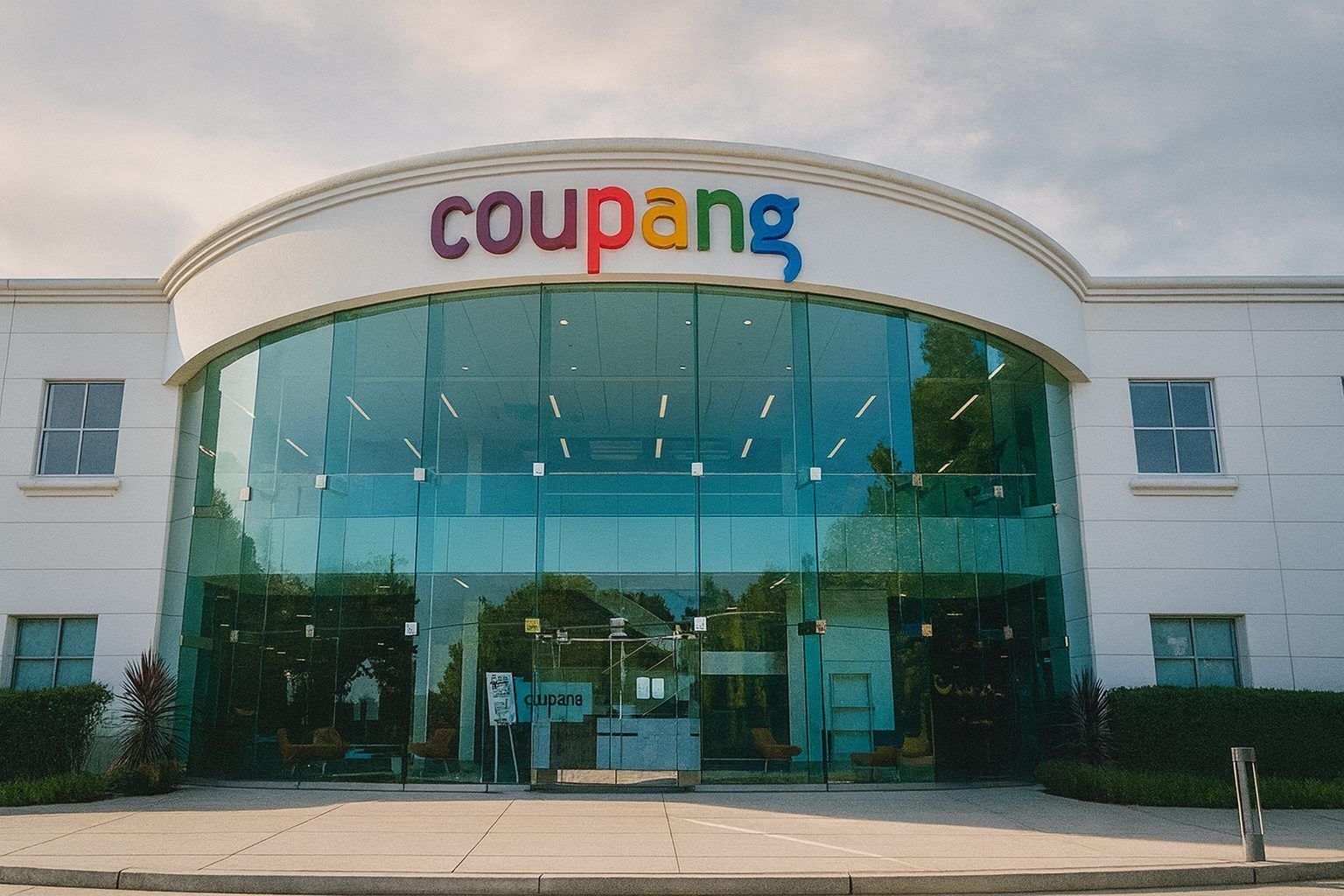
New York — As of 4:00 a.m. ET on Saturday, December 27, 2025, U.S. stock markets are closed for the weekend, leaving investors to digest a fast-moving, headline-driven story around Coupang, Inc. (NYSE: CPNG) before the next regular session.
Where Coupang stock stands right now (and why timing matters)
Coupang shares were last indicated around $24.27, up about 6.5% from the prior close, after trading between $23.89 and $25.34 on roughly 30.3 million shares. The last recorded trade time in the data was Friday evening (after the regular session), a reminder that after-hours prints can shift on thinner liquidity—and that Monday’s open can look meaningfully different once full volume returns.
Because it’s Saturday, investors can’t act on new developments until markets reopen—so weekend headlines carry extra “gap risk” (the stock can open materially higher or lower than Friday’s close if major news breaks).
For reference, NYSE core trading hours are 9:30 a.m. to 4:00 p.m. ET, with pre-opening activity earlier in the morning. NYSE
The catalyst: Coupang’s “better-than-feared” cybersecurity update
The big driver behind Friday’s rally was a detailed company update that helped narrow investor fears around the scope of Coupang’s Korea cybersecurity incident.
In its update, Coupang said investigators identified the perpetrator (a former employee), retrieved devices used in the leak, and found that—while 33 million accounts were accessed—data was retained only from roughly 3,000 accounts and later deleted. The company also said the data included 2,609 building entrance codes, and that no payment data, login data, or individual customs numbers were accessed. Coupang, Inc.+1
Coupang’s update also included unusually vivid operational detail: the company described how the perpetrator used a stolen internal security key and claimed to have attempted to destroy a laptop (later recovered) to cover tracks—details that, for markets, often signal a company is trying to project investigative control and evidentiary clarity. Coupang, Inc.
Just as importantly for investor confidence, Coupang said it commissioned Mandiant, Palo Alto Networks, and Ernst & Young to conduct forensic investigation work—recognizable names that can carry credibility with regulators, enterprise customers, and shareholders. Coupang, Inc.
Investors clearly took the update as a “less bad” scenario: Investopedia reported Coupang shares jumped about 9% on Friday on the news, after the breach’s earlier disclosure pressured the stock to its lowest levels since April. Investopedia
The reality check: regulators haven’t signed off—and scrutiny is intensifying
Here’s where the story gets more complex (and more market-relevant): Coupang’s conclusions are not the final word.
Reuters reported that South Korea’s science ministry said the incident remains under investigation and that Coupang’s allegations have not been confirmed by authorities, while also criticizing what it described as Coupang’s “unilateral disclosure” during an ongoing probe. Reuters
Reuters also noted that South Korea’s president has called for tougher penalties tied to corporate negligence in what was described as one of the country’s worst data breaches—adding political heat to an already sensitive consumer-trust issue. Reuters
In other words: Friday’s rally was about the breach looking containable—Monday and beyond may be about whether outside authorities agree.
Legal overhang: U.S. securities class action adds a second front
Another live wire for the stock is the legal aftermath in the U.S.
Reuters reported a U.S. investor class action filed in federal court in California alleging that Coupang, CEO/Chairman Bom Kim, and CFO Gaurav Anand misled investors about cybersecurity practices and failed to disclose the breach in a timely way. The suit seeks damages for investors who purchased Coupang securities between August 6 and December 16 (per Reuters’ reporting). Reuters
Whether or not the claims ultimately hold up, these cases can create an extended period of headline risk, incremental legal expense, and discovery-driven disclosures that occasionally surface uncomfortable internal facts.
Tax audit headline risk in South Korea
As if cybersecurity probes and U.S. litigation weren’t enough, Reuters also reported that South Korea’s National Tax Service launched a special audit of Coupang following the data leak, including examination of the Korean unit’s transactions with the New York–listed parent company, according to Yonhap (as cited by Reuters). Reuters
This matters to equity investors because tax audits can introduce:
- potential fines or back taxes (worst case),
- management distraction (almost guaranteed), and
- lingering uncertainty that weighs on valuation multiples.
What Coupang told the SEC: operations “not materially disrupted,” but risks remain
The most “official” U.S.-market framing of the incident sits in Coupang’s SEC disclosure.
In an SEC filing dated December 15, Coupang said its operations have not been materially disrupted, but it remains subject to risks including management distraction, potential financial losses, remediation costs, regulatory penalties, litigation, customer compensation, and reputational harm. SEC
The same filing notes that the former CEO of Coupang’s Korean subsidiary resigned on December 10, and that Harold L. Rogers (General Counsel and Chief Administrative Officer of Coupang, Inc.) is serving as interim CEO of the Korean subsidiary. SEC+1
This is the key investor takeaway: even if the breach scope is ultimately confirmed as “limited,” the second-order effects (regulatory, legal, reputational, remediation spend) can still be material.
Fundamentals: Coupang entered this storm with real operating momentum
One reason CPNG could rally hard on “less severe than feared” news is that the company’s underlying operating picture—at least as of its last reported quarter—has looked meaningfully stronger than in earlier years.
In its Q3 2025 results, Coupang reported:
- Net revenues of $9.3 billion (up 18% YoY; 20% constant currency)
- Gross profit of $2.7 billion (up 20% YoY) with 29.4% gross margin
- Operating income of $162 million
- Net income attributable to Coupang stockholders of $95 million and $0.05 diluted EPS
- 24.7 million Product Commerce Active Customers (up 10% YoY)
- Free cash flow of $1.3 billion over the trailing twelve months
- And $81 million of share repurchases in the quarter ir.aboutcoupang.com
Notably, Coupang’s “Developing Offerings” segment (which includes newer bets beyond core commerce) posted $1.3 billion in net revenues, up 32% YoY, though with an adjusted EBITDA loss—an explicit tradeoff of growth investments versus near-term profitability. ir.aboutcoupang.com
So the bull case many investors keep coming back to is simple: a scaled logistics platform + improving profitability + growing customer base. The bear case is equally simple: headline risk and regulatory backlash can kneecap trust, increase costs, and compress the multiple. Both can be true in the same year. The universe enjoys multitasking.
Analyst forecasts and price targets: still broadly bullish, but not unanimous
Wall Street target prices are not reality—they’re opinions with math—but they influence flows, sentiment, and media narratives (especially in volatile, news-driven weeks like this one).
Here’s what major aggregators are showing around year-end:
- MarketBeat: average target $33.25 (high $40, low $27), implying meaningful upside versus ~$24. MarketBeat+1
- TradingView: target around $35.43 (max $40, min $29). TradingView
- TipRanks: average target $36.20 (high $40, low $31) and a “Strong Buy” consensus (per its dataset). TipRanks+1
- Benzinga: consensus price target shown around $31.45 (high $40, low $21), citing recent notes from firms including Barclays and Mizuho. Benzinga
Recent target changes tied to the breach narrative
One widely-circulated example: Investing.com reported Morgan Stanley lowered its price target to $31 from $35 while keeping an Overweight rating, explicitly reflecting expected breach-related costs and higher cybersecurity spending—while still expecting “minimal impact on operations,” in its view. Investing.com
TipRanks also highlighted an analyst note from Ahyung Cho, who maintained a Buy view with a $38 objective while emphasizing that regulatory outcomes remain worth close monitoring given the breach scale versus Coupang’s customer base. TipRanks
The broader market backdrop: why a relief rally can “stick” (or fade)
Friday’s Coupang move happened against a broader tape that was calm but constructive. Reuters described a light-volume, post-holiday session with major indexes nearly flat and markets still in the early days of the seasonal “Santa Claus rally” window. Reuters
Carson Group chief market strategist Ryan Detrick told Reuters the market was essentially “catching its breath” after a strong run, while still expecting some upward bias during the seasonal period. Reuters
That matters because when the overall market is stable-to-risk-on, single-stock relief rallies (like CPNG’s) can travel farther than they would during a risk-off tape—at least until the next negative headline hits.
What investors should know before the next session
Since NYSE is closed right now, the near-term CPNG playbook is less about minute-to-minute price action and more about which facts become “confirmed” versus “contested” before Monday’s open.
Here are the key items most likely to move Coupang stock next:
- Official confirmation (or contradiction) from South Korean authorities regarding Coupang’s claims that data was deleted and not transferred externally. Reuters has already reported the ministry has not confirmed Coupang’s assertions yet. Reuters
- Updates on the U.S. securities class action—new filings, added plaintiffs, or statements by defendants can revive volatility. Reuters
- Any expansion of investigations or penalties (regulatory, consumer protection, or privacy enforcement), which could shift the market from “contained incident” to “structural cost increase.” Reuters+1
- Audit developments in South Korea, including any official comment from the National Tax Service or additional reporting on scope. Reuters
- Signals of consumer behavior: churn, reduced order frequency, or reputational fallout can matter more than the technical details of the breach if consumer trust erodes.
- Liquidity and positioning: after a sharp single-day move, the next session often tests whether buyers show up again—or whether the move was mostly short covering.
One more practical note: earnings date calendars are inconsistent
Several third-party calendars are projecting Coupang’s next earnings window in late February or early March 2026, but dates vary by provider and may not be confirmed by the company yet. Investors typically get the cleanest answer directly from Coupang’s Investor Relations site when the company posts the official announcement. Zacks+2MarketScreener+2
Bottom line
Coupang stock (CPNG) is trading like a classic event-driven name: strong underlying fundamentals, suddenly dominated by trust-and-regulation headlines. Friday’s bounce reflects a market that heard “the breach impact was narrower than feared” and immediately repriced the worst-case scenario downward. Coupang, Inc.+1
But the story’s next chapter is likely written by regulators, courts, and follow-on disclosures, not just by Coupang’s own investigation. That’s why the most important thing to watch into Monday isn’t just the price—it’s whether the “better-than-feared” narrative gets independently validated. Reuters+2Reuters+2