
NEW YORK, Dec. 27, 2025, 12:55 p.m. ET — Market closed (weekend)
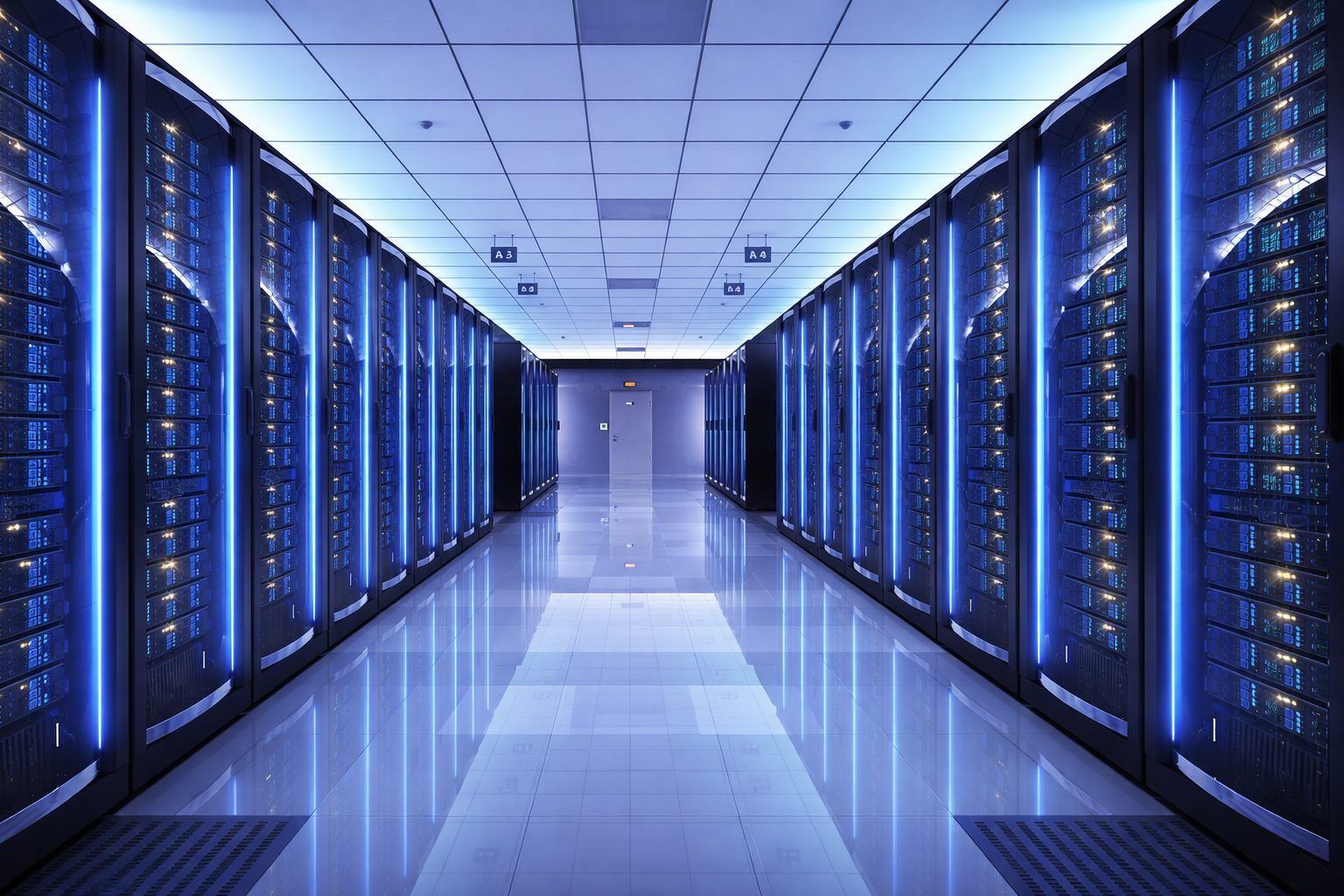
The U.S. stock market is closed for the weekend, but the “data center stocks” trade isn’t taking a holiday. In the final stretch of 2025, investors are still pricing a simple reality: AI growth is increasingly constrained not by software ambition, but by the physical stack—chips, servers, networking, cooling, and, most critically, electricity.
Friday’s thin, post-Christmas session ended with major indexes fractionally lower but still near all-time highs, leaving markets focused on year-end positioning and the next week’s catalysts. Data center-linked names remain in the spotlight after Nvidia’s high-profile inference move with Groq and fresh reporting that data center developers are turning to on-site “aircraft engine” turbines to bypass grid delays. Reuters+1
Below is what’s driving the data center stock complex right now—plus what to watch before the next regular U.S. session opens on Monday.
Market backdrop: records nearby, volumes light, and AI remains the main narrative
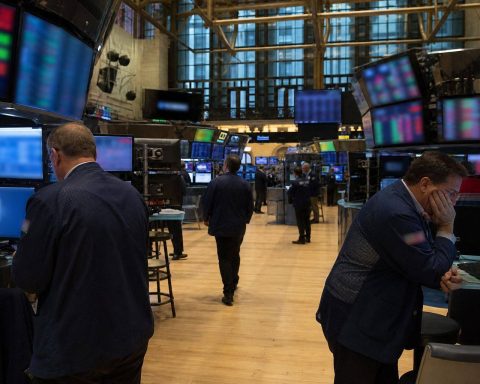
Wall Street closed slightly lower on Friday, Dec. 26, in a light-volume session that snapped a five-day winning streak but still delivered weekly gains. Reuters noted that the market remains in the “Santa Claus rally” window (the last five trading days of the year and first two of the next), a period closely watched by traders even if it’s not a fundamental signal by itself. Reuters
Ryan Detrick, chief market strategist at Carson Group, told Reuters the market was effectively “catching its breath” after the recent rally and that the Santa-rally period still leaves room for upward bias into early January. Reuters
For data center stocks, the broader market setup matters because the group spans both:
- High-multiple AI enablers (semiconductors, networking, cooling), which can be sensitive to risk-on/risk-off sentiment, and
- Rate-sensitive real estate (data center REITs), where financing costs and Treasury yields can drive day-to-day moves.
Reuters also pointed out a key crosscurrent: real estate is the only major S&P 500 sector expected to finish 2025 down, even as technology and communications services lead gains—an important context for data center REIT investors going into 2026.
The biggest data center headline: Nvidia’s Groq deal spotlights the inference arms race
A central theme for data center stocks heading into 2026 is the shift from training (building and refining foundation models) to inference (serving real-time AI responses at scale). That shift can reshape demand across compute, memory, networking, and power efficiency.
This week, Nvidia confirmed a non-exclusive licensing deal for Groq’s inference technology and is hiring Groq leadership—including founder/CEO Jonathan Ross and President Sunny Madra—while Groq continues operating independently under new CEO Simon Edwards, according to Reuters.
Groq’s own announcement also emphasized the non-exclusive nature of the agreement and confirmed the leadership transition.
Why it matters for “data center stocks,” not just Nvidia:
- Inference is a power-and-cost game. If the next wave of AI growth is dominated by inference workloads, data center operators and customers will increasingly optimize for latency, throughput-per-watt, and total cost of ownership—directly benefiting (or pressuring) different parts of the hardware stack.
- The stack may diversify. Barron’s framed Nvidia’s move as strategic and defensive, reflecting how hyperscalers and cloud providers have been investing in specialized inference chips; Barron’s also flagged a potential risk: as inference competition intensifies, margin dynamics could shift.
- Regulatory structure is part of the story. Reuters cited Bernstein analyst Stacy Rasgon highlighting antitrust risk as a key issue, with the non-exclusive structure potentially preserving the “appearance” of competition even as key talent moves. Reuters
In Friday’s session, Nvidia shares rose after the Groq news, reinforcing how closely the market is tracking inference-related signals into year-end.
The other headline investors can’t ignore: data centers are bringing their own power
The fastest-growing constraint on new data center capacity isn’t just chips—it’s grid access and power availability.
A Financial Times report published Saturday described how data center developers facing multi-year delays for grid connections are increasingly turning to on-site power, including aeroderivative turbines adapted from jet engines and diesel generators, to accelerate project timelines.
Key takeaways for data center-related stocks:
- “Behind-the-meter” power is becoming a competitive advantage. If a developer can bring megawatts online without waiting years for interconnection, they may win more AI leases—particularly as demand concentrates in power-constrained hubs.
- Industrial beneficiaries expand beyond “pure” data center names. The FT highlighted increased demand for turbines and generators, referencing companies such as GE Vernova and Cummins amid the power crunch narrative. Financial Times
- There’s an ESG and regulatory wrinkle. Expanded reliance on diesel and gas generation raises emissions and permitting questions—issues that can affect project economics, timelines, and local community opposition.
For investors, this is a critical reframing: “data center stocks” aren’t just REITs and server suppliers anymore. Increasingly, they include power equipment, grid solutions, and energy infrastructure companies that sit upstream of capacity expansion.
The forecast picture: AI data centers are a structural electricity demand story
While the last 24–48 hours brought fresh headlines, the longer-range forecasts are what keep institutional money engaged in the theme.
The International Energy Agency projects that global electricity consumption for data centres is expected to roughly double to around 945 TWh by 2030 in its base case—growing far faster than total electricity demand overall.
On the supply side, the IEA also projects electricity generation to supply data centres rising from about 460 TWh in 2024 to over 1,000 TWh in 2030 (and further by 2035), with renewables meeting a large share of incremental demand, but with natural gas, coal, and nuclear also playing roles in different regions.
BloombergNEF’s grid-focused analysis adds a U.S.-specific bottleneck lens: in PJM, BNEF forecasts data center capacity could reach 31 GW by 2030, a scale that begins to rival expected additions of new generation over the same period.
This is the core investment logic behind many data center stock theses going into 2026: AI demand is real, but power is the gating factor—so winners will be the firms that can deliver compute per watt and megawatts per project.
Where the opportunities (and risks) sit inside “data center stocks”
Because the theme is broad, investors are increasingly segmenting exposure rather than treating “data center stocks” as one trade.
1) AI compute and inference: chips and platforms
Nvidia remains a bellwether, and the Groq deal is the latest sign that inference economics are becoming a front-line battleground.
What to watch next:
- Whether inference optimizations increase overall accelerator demand (more AI usage expands the market) or compress pricing (more competition and specialization).
- Whether regulatory scrutiny escalates around “license + talent” structures rather than full acquisitions. Reuters
2) Power, cooling, and electrical gear: the picks-and-shovels layer
The FT’s reporting on on-site turbines is a reminder that power gear may be the near-term bottleneck release valve.
What to watch next:
- Evidence that grid delays push more projects into “bring-your-own-power” designs.
- Any policy moves or permitting shifts affecting generator usage and emissions compliance.
3) Data center REITs: real estate tied to AI, but sensitive to rates and capex
Data center REITs often benefit from long-term leases and AI-driven demand, but they can lag when the market focuses on rates, funding costs, and development capex. That context is amplified by Reuters’ note that real estate is the only major sector likely to finish 2025 in the red.
If you’re investing before the next session: what to know for Monday and the final week of 2025
With the market closed today, the next actionable window is Monday’s regular session.
Key timing and calendar notes:
- U.S. equities trade during the NYSE core session from 9:30 a.m. to 4:00 p.m. ET.
- The Nasdaq holiday schedule confirms Christmas has passed (Dec. 25 closure), and the market is open for the remaining weekdays of 2025.
- Investopedia reports New Year’s Eve (Dec. 31) is a full trading day for stocks, while bond trading closes early at 2 p.m. ET, and both stock and bond markets are closed on New Year’s Day (Jan. 1, 2026).
The two biggest “before Monday” considerations for data center stocks:
- Year-end liquidity can exaggerate moves
Reuters’ week-ahead outlook warned that light trading volume and year-end portfolio adjustments can increase volatility. That matters for data center-linked stocks—many of which are widely held and have had significant 2025 runs (or, in REITs’ case, notable lag). - Rates and Fed expectations remain the swing factor for 2026 narratives
Reuters noted investors are focused on when the Fed might cut rates further; the report also highlighted that minutes from the Fed’s latest meeting are expected next week and could be market-moving.
Paul Nolte, senior wealth adviser and market strategist at Murphy & Sylvest Wealth Management, told Reuters that momentum remains with the bulls absent a shock, while Michael Reynolds of Glenmede pointed to how Fed minutes could clarify internal debates around the rate outlook.
For data center stocks specifically, the rate channel matters because:
- REIT valuation math is directly impacted by yields and credit spreads, and
- AI infrastructure capex cycles can accelerate or slow depending on funding costs.
Bottom line: the “data center stocks” trade is shifting from “AI demand” to “AI delivery”
Going into the final trading days of 2025, the market is no longer debating whether AI demand exists. The more urgent question is who can deliver AI capacity at scale—with the best mix of inference performance, energy efficiency, and power availability.
That’s why the week’s two defining stories—Nvidia’s inference push with Groq and developers turning to on-site turbine power—matter far beyond a single ticker. Together, they underscore the 2026 reality for data center stocks: the next leg of upside (and the next surprises) will be determined by the physical constraints of compute and electricity, not just AI hype.
Related articles: NASDAQ:NVDA