
NEW YORK, July 15, 2026, 08:11 EDT
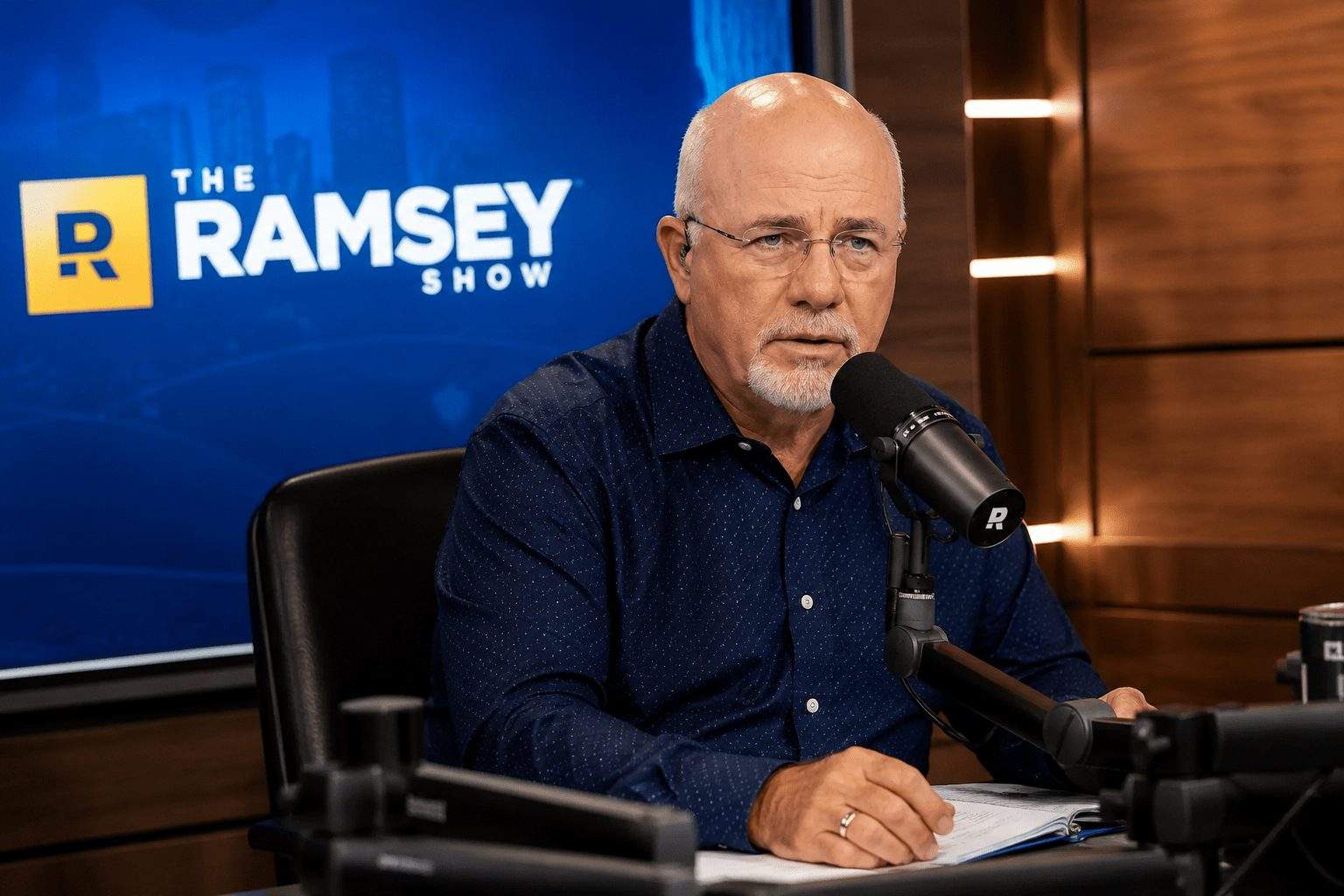
Dave Ramsey told a 66-year-old Pittsburgh caller with only $10,000 in a 401(k) that her retirement plan would hinge on shifting how she uses her money, rather than building up a big nest egg. She and her husband wiped out $80,000 in car debt over five years. If they take that $16,000 a year and put it toward retirement, that’s about 85% of what Ramsey recommended she start saving.
Americans say they need $1.46 million to retire, up $200,000 from last year, according to Northwestern Mutual’s 2026 study. The survey found 46% don’t think they’ll be financially ready for retirement, and 48% are worried they could outlive their savings. John Roberts, chief field officer, called the higher target the result of “a convergence of factors.” The company said retirement needs will vary by household. Newsroom | Northwestern Mutual
Mary and her husband have a combined annual income of $125,000 and pay $1,900 in monthly rent. They have no pension. She said they keep about $10,000 in an emergency fund. Her husband does not have a retirement account. Ramsey told her, “You’ll be okay,” while also saying, “We’re behind.” Mary said she’ll keep working full time, ending the call with “There’s hope.” International Business Times UK
The debt payment is close to the planned savings amount. This assumes the $80,000 principal was repaid in equal amounts. The stories didn’t say how much interest was charged or the couple’s exact payment timing.
| Annual cash-flow comparison | Annual amount | Monthly amount | Share of 15% target |
|---|---|---|---|
| 15% of stated $125,000 income | $18,750 | $1,563 | 100% |
| Level car loan principal | $16,000 | $1,333 | 85% |
| Gap to target | $2,750 | $229 | 15% |
The case here is less about making $10,000 into a big win, and more about keeping the old car payment from turning into new outlays. For a household that can keep up the same payment habits, most of the cash flow effort is already done.
The programme’s target of about $350,000 by age 76 is a tougher goal. If you start with $10,000, put in $1,562.50 at the end of each month for 10 years, and don’t get an employer match, see fees, or get any wage growth, the results vary widely.
| Effective annual return | Estimated balance at 76 | 4% first-year withdrawal |
|---|---|---|
| 4% | $244,000 | $9,800 |
| 6% | $272,000 | $10,900 |
| 8% | $303,000 | $12,100 |
| About 10.6% | $350,000 | $14,000 |
The 4% rule says retirees start by taking out 4% of their savings the first year, then increase withdrawals with inflation each year. For someone to get to $350,000, it takes about a 10.6% annual return with these numbers, which is about six points above the 4.58% yield on the 10-year U.S. Treasury as of July 14. That means investors still face sequence risk—losses early on can hurt the plan.
Social Security is the main offset here. Starting in the month a worker hits full retirement age, job income stops cutting into benefits. Mary says she hits that mark in August, so her wages and Social Security can both count from then. For months before August, the 2026 earnings cap is $65,160 for anyone turning full retirement age that year.
In June, the average retired-worker benefit was $2,084.40 a month, Social Security data show. Spouses of retired workers got an average of $986.35. Two retired-worker payments at that rate add up to about $50,026 a year, while a retired worker with a spouse would get about $36,849 a year. Social Security didn’t disclose Mary’s actual benefits; these amounts are just for illustration.
$1.46 million at a 4% draw gives $58,400 in the first year, compared to $14,000 from a $350,000 account. That’s a $44,400 difference. Two average retired-worker Social Security benefits would cover the gap pre-tax, but the average worker-plus-spouse benefit would not. So the real unknowns are the couple’s benefit record and how much they spend, not just the national average for savings.
But the housing piece could end up squeezing out the savings plan. With the average 15-year fixed mortgage at 6.20% as of July 14, a $200,000 loan would mean about $1,709 a month for principal and interest—before property tax, insurance, repairs or condo fees. That monthly cost tops the $1,333 in car-debt payments that get paid down every month and is close to the rent payment now. Plans also assume working to age 76, good health, regular contributions and market returns—none of which are guaranteed.
This doesn’t mean $10,000 is enough for retirement. The case points out that someone starting late but earning well, with extra cash and Social Security, can set up a modest safety net—as long as a new mortgage doesn’t eat up what they can save. The cash-flow setup works, but the $350,000 target still has major market risk.





![Australia Stock Market Today 28/08/2026 [UPDATE: 11:35 AEST] [Xero Surges 8% as PEXA Crashes on FY27 Outlook]](https://ts2.tech/wp-content/uploads/2026/08/AU-market-dashboard-2026-08-28-1133-480x384.jpg "Australia Stock Market Today 28/08/2026 [UPDATE: 11:35 AEST] [Xero Surges 8% as PEXA Crashes on FY27 Outlook]")