
New York, April 14, 2026, 16:03 EDT
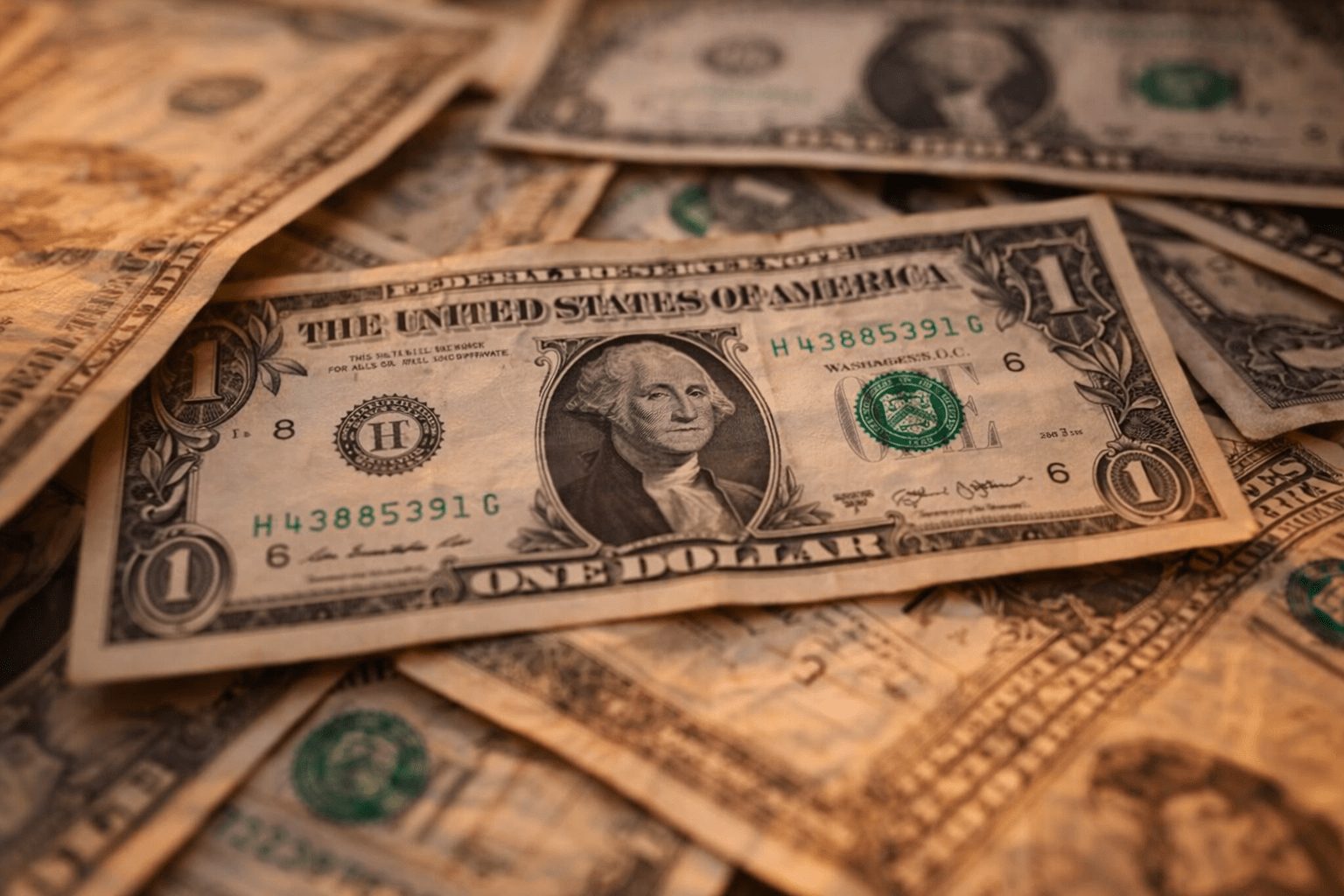
The dollar notched a seventh straight decline on Tuesday, while the Cboe Volatility Index (VIX) slipped back near levels seen before the war, as traders eyed potential U.S.-Iran negotiations that might blunt the latest oil shock and curb appetite for safe-haven assets. The dollar index dropped to 98.08, after briefly hitting 97.968—its lowest mark since March 2. Over at Cboe, the VIX hovered near 18.4, retreating from last month’s spike.
The market’s balance has clearly moved. According to the IMF, barring the conflict, it was ready to boost its 2026 growth forecast—helped by milder U.S. tariffs. But the most recent U.S. producer-price data out Tuesday pointed to some relief on tariff pass-through, even as conflict-driven fuel prices climb. So investors are circling oil, watching the Strait of Hormuz, and scrutinizing central-bank moves.
Stocks jumped as the dollar slipped. The S&P 500 closed up 1.11% at 6,962.85, while the Nasdaq climbed 1.84%. BNY’s Bob Savage noted that markets were reacting to a “shift from missiles to words,” with investors now pricing in what he called “a beginning to the end of the war.” Reuters
Oil prices took a sharp turn lower. Brent slid 4.37% to settle at $95.02 a barrel, while U.S. crude slumped 7.27% to $91.88. That move followed signals from Washington about possible renewed talks with Tehran in Pakistan, despite a continuing blockade of Iranian ports.
Safe-haven flows eased in currency markets. The euro edged up to $1.1796, sterling reached $1.3569, and the yen gained ground at 158.72 per dollar. Canada’s loonie, meanwhile, climbed to a three-week high, with traders moving back into risk.
Karl Schamotta, chief market strategist at Corpay, sees the White House offering “very clear guidance” about seeking an “exit ramp.” Last week, he flagged the dollar’s crowded positioning and said it looked ripe for a pullback should market stress lighten. Reuters
According to ING strategist Francesco Pesole, EUR/USD can only hold above 1.180 if there’s “clear progress” in U.S.-Iran negotiations. Traders are factoring in a potentially tighter stance from the ECB—and in some areas, the Bank of England—versus the Fed, which feeds into the relative-rate dynamic. That gap has helped the dollar’s war premium fade more quickly versus European currencies. ING THINK
Inflation remains in focus. U.S. producer prices climbed 0.5% in March—not as high as analysts had expected. Energy prices, though, jumped 8.5%, with gasoline up a sharp 15.7%. Service prices didn’t budge. Some economists pointed to early signs that tariff impacts might be fading, but ongoing conflict involving Iran kept fuel prices elevated.
There’s a bigger worry: markets could be getting out in front of the numbers. The IMF trimmed its 2026 global growth outlook to 3.1%, warning of a shift toward an adverse path that leaves oil near $100 and growth down at 2.5%. Chief economist Pierre-Olivier Gourinchas said each additional day of turmoil brings the world “closer toward the adverse scenario.” Reuters
“Trading hope, not resolution” is how Charu Chanana, chief investment strategist at Saxo, put it. That assessment still stands. If talks collapse again or if energy assets take another blow—or if disruption ramps up in Hormuz—the dollar and VIX could snap back fast. Reuters
Related articles: US Economy