
NEW YORK, May 15, 2026, 16:01 (EDT)
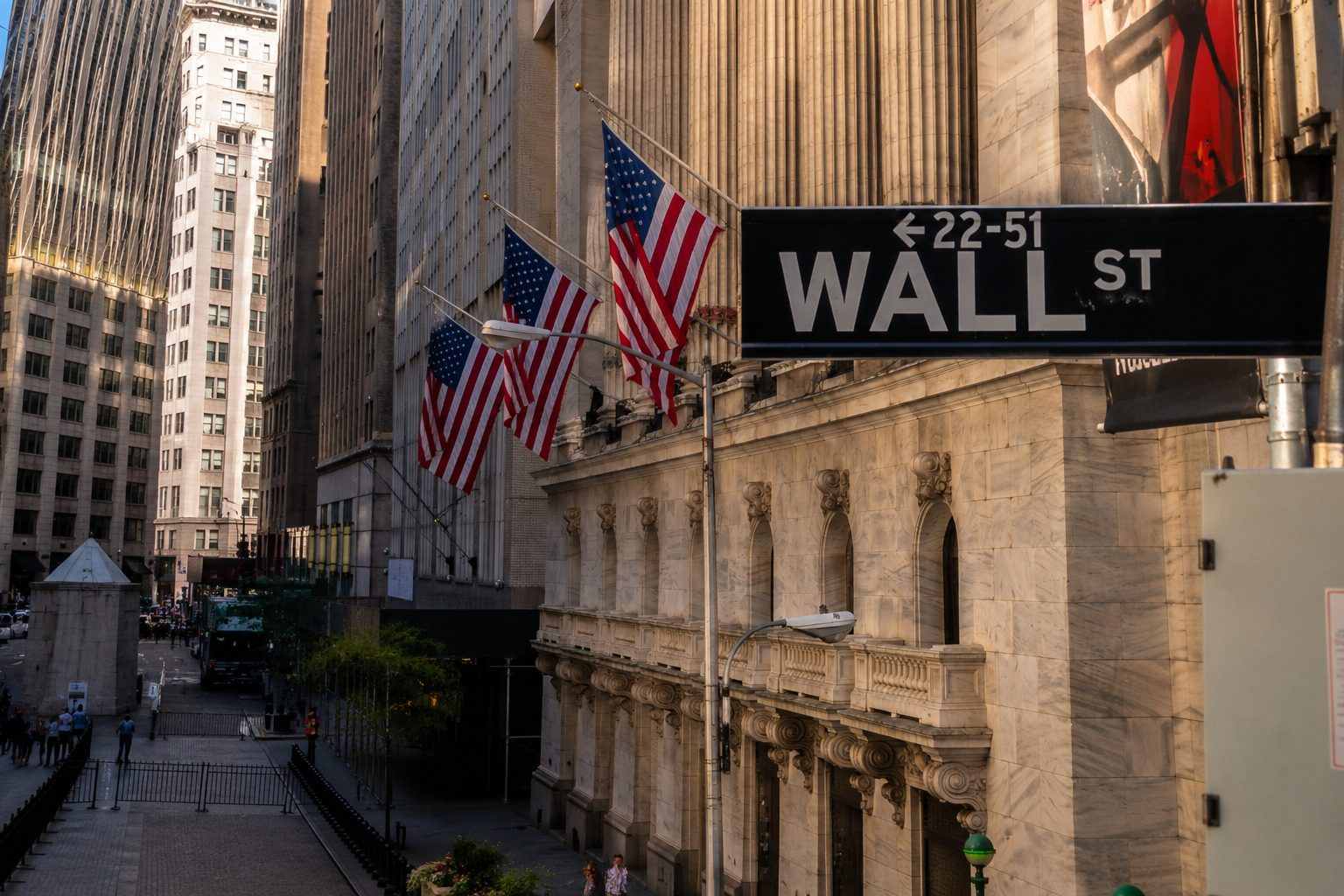
U.S. stocks slipped Friday, pulling back from record highs as a jump in oil prices revived inflation worries and set off selling in top AI names. The Dow Jones Industrial Average closed down 406.40 points, or 0.81%, at 49,657.06. The S&P 500 fell 50.23, or 0.67%, to 7,451.01, and the Nasdaq Composite dropped 195.89 points, or 0.73%, to finish at 26,439.34.
A narrow cluster of AI-fueled stocks had been doing much of the work to keep Wall Street’s indexes near record highs—until the selloff arrived. The S&P 500, after climbing roughly 18% from its late-March bottom, was up over 9% for 2026 just before Friday’s slide. Even so, LSEG data reported by Reuters showed that only about 20% of S&P 500 components had outperformed the index since that March low.
Oil shook off earlier losses and finished higher. Brent crude closed up 3.35% at $109.26 a barrel, while U.S. West Texas Intermediate settled 4.2% higher at $105.42, after comments from U.S. and Iranian officials undercut hopes for a quick agreement affecting the Strait of Hormuz. The narrow waterway typically carries about 20% of the world’s oil and LNG shipments, and when crude prices jump, inflation jitters usually follow.
Bond yields delivered the final blow. The 10-year Treasury yield—used as a barometer for U.S. government borrowing and a key reference for both mortgages and corporate loans—rose to about 4.58% as traders stepped up bets on a more hawkish Fed stance. Higher yields usually drain demand for equities, especially growth names that lean heavily on future earnings.
Kenny Polcari at Slatestone Wealth said the market “had gotten way ahead of itself,” pointing to what he called a “momentum AI trade.” Brian Jacobsen of Annex Wealth Management told AP the “path is unlikely to be smooth.” Jonathan Krinsky at BTIG was more direct, calling the move a “shot across the bow” for investors who had forgotten volatility works both ways. Reuters AP News
Energy was the only S&P 500 sector in the green, rising 1.6%. Materials and utilities were hit hardest. Chip stocks sold off, with the Philadelphia semiconductor index falling 2.3%; Nvidia lost 2%, AMD gave up 3.1%, and Intel sank 5.1%, reversing course after a previous runup helped drive Nasdaq gains. Microsoft climbed 4.4% after Bill Ackman’s Pershing Square disclosed a stake. Dexcom jumped 6.7% after the medical-device company said it would add two independent directors and revamp a board committee, steps linked to Elliott Investment Management.
Rate bets have turned. It’s no longer only a question of when the Fed might begin cutting. Friday was Jerome Powell’s last as chair, and Kevin Warsh is stepping in. Traders, according to CME Group’s FedWatch tool, now see nearly 40% odds of a 25-basis-point hike by December, up sharply from 13.6% a week earlier. (A basis point equals one-hundredth of a percentage point.) On Thursday, New York Fed President John Williams said there was “no reason at all to raise rates right now or lower rates right now,” while stressing that policymakers need to stay alert to inflation. Reuters Reuters
Prediction markets captured the uncertainty, though they’re not actual forecasts. On Kalshi, the December Fed decision market put the odds of “Above 3.50%” at 54%. On Polymarket, traders assigned a 34% chance to a U.S.-Iran permanent peace deal by June 30, rising to 67% for a Dec. 31 deadline. For the Strait of Hormuz, Polymarket priced the probability of normal traffic resuming by year-end at 79%. Kalshi Polymarket Polymarket
Caveat: Reuters said Friday that suspicious trading activity on Kalshi and Polymarket has increased this year as prediction-market volumes have grown. So the odds probably say more about real-time mood than they do about any kind of clean macro read.
Wednesday’s Nvidia report will put investors back on notice next week. Results from Walmart, Home Depot, Target, and TJX should also offer Wall Street another read on consumer spending. “Almost parallel tracks”—that’s how Allen Bond at Jensen Investment Management described the influence of AI and the energy shock. Patrick Ryan of Madison Investments pointed to concern about the narrowness of the rally, saying a market is “not necessarily a healthy market” when it is driven by just a handful of stocks. Reuters
Risk cuts both ways here. If Hormuz reopens, or the U.S. and Iran appear closer to a deal, crude prices could fall and take some pressure off yields. But if the disruption drags on, gas gets more expensive and business costs rise, forcing companies to defend their margins—while hopes for Fed rate cuts get shoved even farther out. Vandana Hari, who runs Vanda Insights, called renewed military escalation a “tail risk.” Reuters
There is less room for mistakes in this market. On the NYSE, losers beat winners by nearly 4-to-1—3.78, exactly. On the Nasdaq, it was 3-to-1. This wasn’t just a setback in a small cluster of overbought AI stocks—selling was broad. Equities are still ending the week close to recent highs, but this close turned on oil, yields, and geopolitics.
Related articles: US Economy