
New York, May 8, 2026, 12:08 (EDT)
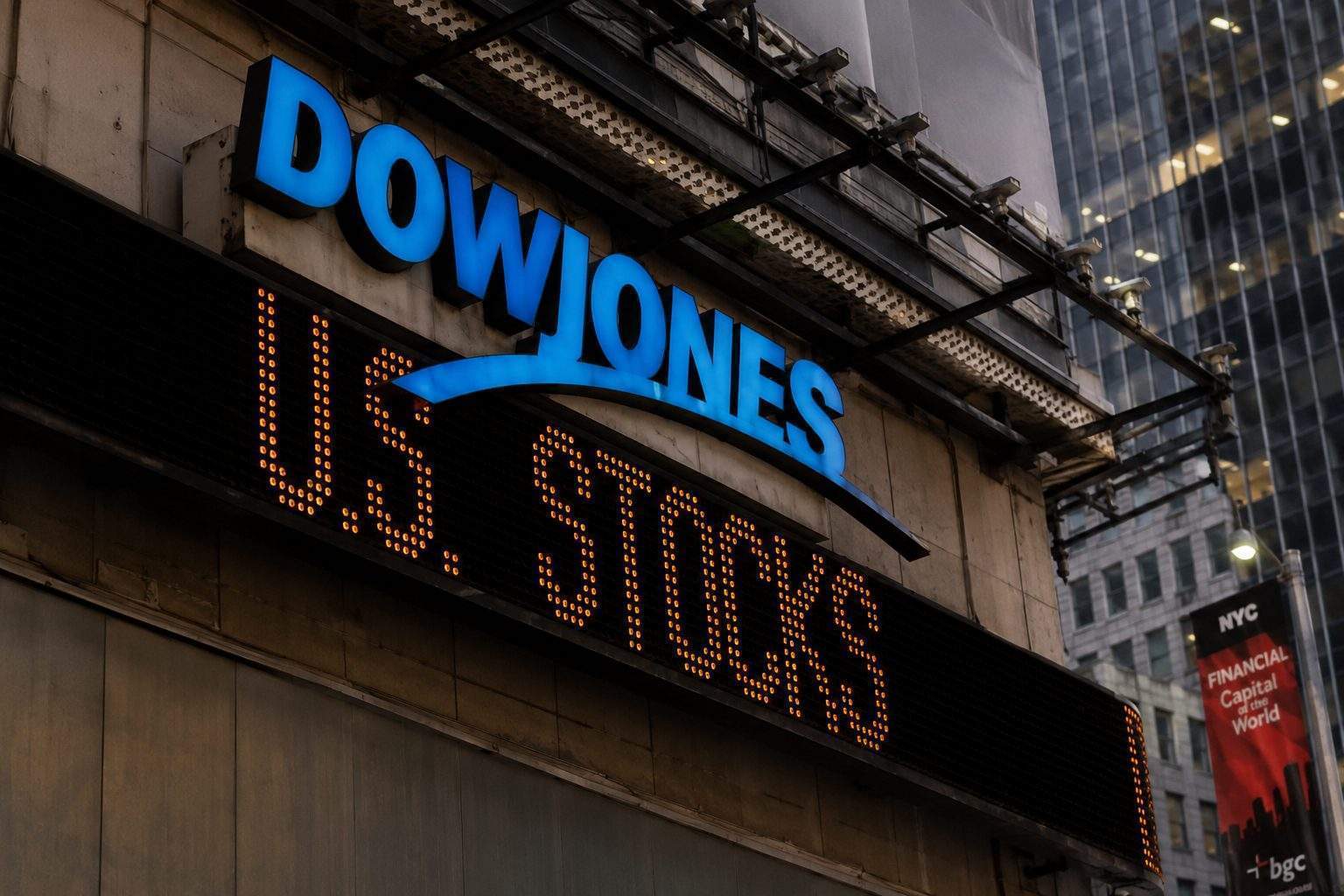
Late Friday morning, the Dow Jones Industrial Average hovered just below 49,600, lagging the S&P 500 and Nasdaq as tech stocks caught a bid following a solid U.S. jobs report. According to LSEG figures cited by Reuters, the Dow slipped 0.03% to 49,584.21, while the S&P 500 climbed 0.71% and the Nasdaq jumped 1.29%. Quotes are delayed by at least 15 minutes.
The jobs data dropped at a tricky time. The Bureau of Labor Statistics reported a 115,000 gain in nonfarm payrolls for April, with the unemployment rate holding steady at 4.3%.
For Wall Street, that lands as both tailwind and headwind. The Dow and its peers get a cleaner shot at growth, though hopes for a Federal Reserve rate cut, which would ease costs for companies and consumers, take a hit. Economists in a Reuters poll were looking for 62,000 jobs; Sung Won Sohn of Loyola Marymount University put it bluntly: “no evidence of a labor-market collapse.” Reuters
The Fed’s role muddied what might’ve seemed like a straightforward move. Reuters said robust hiring trimmed the already slim chances of rate cuts for later this year. Olu Sonola, head of U.S. economics at Fitch Ratings, called the labor market “not booming,” but said it’s been “harder to break” than many expected. Reuters
For the Dow, what hurt was its lineup. Lacking much of the heavyweight tech exposure that powers the Nasdaq, it missed out: Nvidia and Apple both gained over 2% as chip stocks notched another record on AI infrastructure bets. S&P 500 and Nasdaq looked likely to notch a sixth weekly win; the Dow, if it finishes up, would mark its second in a row.
Sam Stovall, CFRA Research’s chief investment strategist, pointed to the jobs numbers as evidence of a “solid labor market”—one likely to keep consumer spending afloat. Adam Sarhan, CEO at 50 Park Investments, summed up the initial response: the report was “not too hot and not too cold,” matching the market’s first read. Reuters
The trade’s messy. Brent crude was parked just under $100.65 a barrel. The 10-year Treasury yield slipped down to 4.35%. Iran’s conflict continued to drive up fuel costs and kept uncertainty hanging over companies and consumers.
Consumer sentiment is showing some cracks. The University of Michigan’s early May reading dropped to 48.2, down from April’s 49.8. Roughly a third of those polled brought up gas prices, while about 30% cited tariffs, the survey found.
If oil holds at elevated levels, even the Dow’s defensive names loaded with cash flows might not insulate the index from weaker consumer demand or lingering inflation. That’s the risk here: jobs numbers help prop up earnings, but they also give the Fed room to pause while energy prices squeeze.
Earnings are still pulling plenty of weight. According to LSEG IBES data cited by Reuters, S&P 500 earnings appear set for a 28% surge in the first quarter, boosted by corporate investment in AI. Cisco and Applied Materials will post results next week, while Nvidia and Walmart report later in the month.
Next week’s data takes center stage, likely eclipsing whatever the Dow does on Friday. Investors will be scanning consumer prices, producer prices and retail sales for any evidence that rising fuel costs are either stoking inflation or squeezing demand. President Donald Trump’s upcoming trip to China is also in focus, with questions swirling over trade and technology policy.
The Dow’s performance right now isn’t about a sharp breakout. The 30-stock blue-chip index is basically treading water, caught between stronger jobs numbers, a more defined Fed outlook, and the tech surge that’s propelled other benchmarks ahead.
Related articles: NASDAQ:NVDA