
BOSTON, August 30, 2026, 18:58 (EDT) — DraftKings reported a $67.6 million loss after handling $13.1 billion in wagers during the U.S. Open, highlighting the gap between betting volume and profitability for the sportsbook operator.
- DraftKings processed a record $13.1 billion in sports betting volume during the second quarter.
- Quarterly revenue declined 5%, with monetization impacted by customer-centric outcomes and promotional offers.
- U.S. Open sees a 9% increase in payers, though revenue per payer drops 13%.
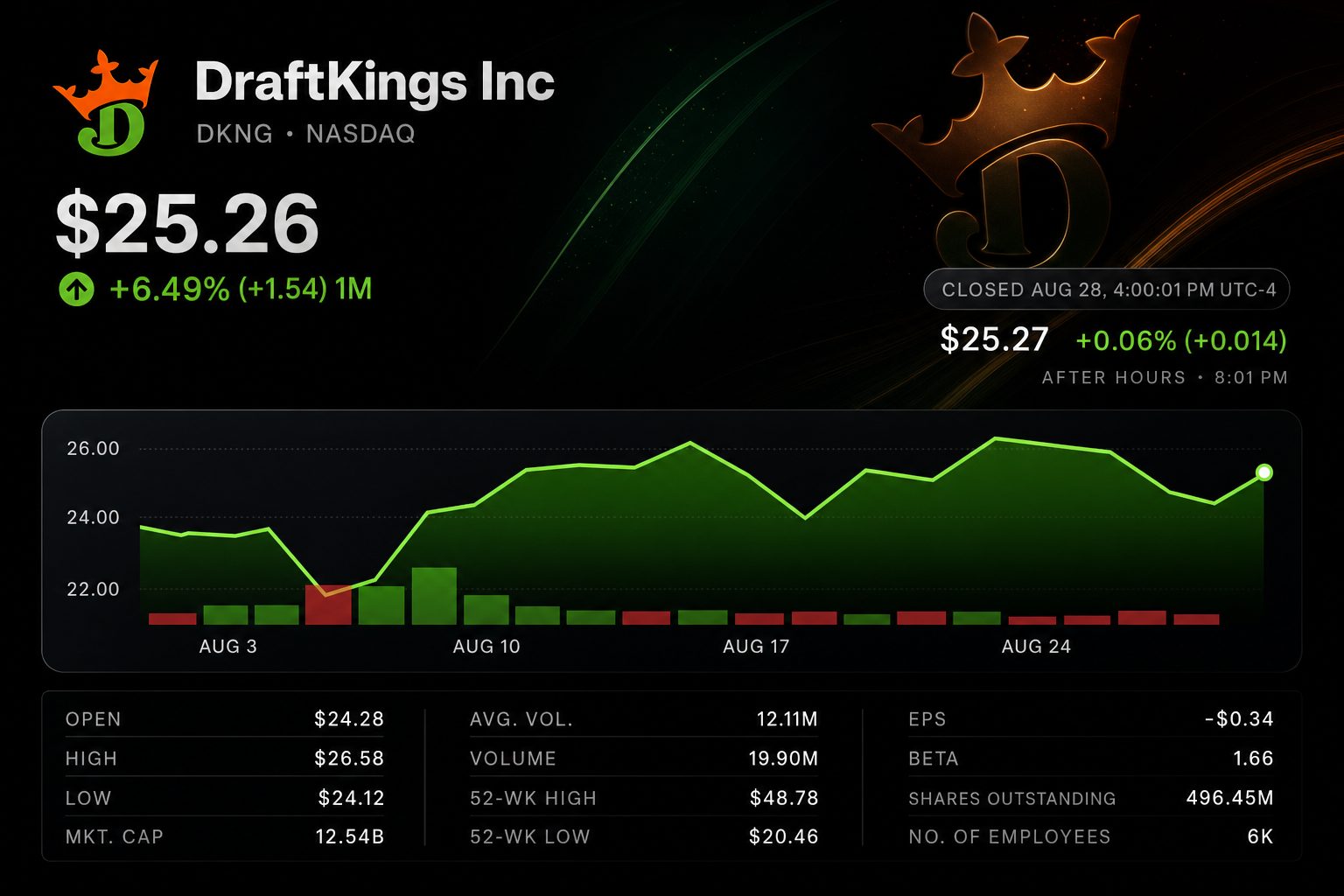
- The most recent trade saw shares at $25.26, with the consensus price target 38.5% above that level.
Interest in the term “draftkings odds” increased as the U.S. Open started on Sunday. Investors view the tournament as a real-time gauge of DraftKings Inc. (NASDAQ: DKNG)‘s ability to convert high betting volume into improved revenue per user.
The company handled $13.1 billion in sports volume during the last quarter, marking a 15% increase. However, revenue declined 5% to $1.44 billion, its second-quarter release showed.
This gap carries greater significance than the handle for a single event. Increased promotional spending and customer-favored outcomes caused average revenue per monthly payer to fall 13% to $132.
| DraftKings metric | Q2 2026 | Year-over-year signal |
|---|---|---|
| Sports wagering handle | $13.1 billion | Rose 15% |
| Revenue | $1.443 billion | Dropped 5% |
| Monthly unique payers | 3.6 million | Increased 9% |
| Average revenue per payer | $132 | Fell 13% |
| Adjusted EBITDA | $114.6 million | Plunged 62% |
| Net income attributable to common holders | -$67.6 million | From profit to loss |
The U.S. Open serves as a prompt for engagement. On Sunday, Carlos Alcaraz led as the men’s frontrunner at +175, followed by Alexander Zverev at +300 and Novak Djokovic at +800, according to odds posted that day. Odds are subject to rapid change.
The tournament opened with a record prize fund of $108 million. Daniil Medvedev and Jessica Pegula moved forward on the first day, as Djokovic aimed for his 25th major trophy, Reuters reported.
Such storylines can boost both app traffic and how often users place bets. DraftKings’ U.S. Open board features markets for individual matches as well as tournament futures, offering multiple opportunities for customer engagement over two weeks.
However, engagement by itself falls short. The second quarter demonstrated that outcomes involving winning favorites, parlays, and customer acquisition promotions can reduce the amount of revenue generated from every dollar bet.
DraftKings reported a net loss attributable to the company of $67.6 million. Adjusted EBITDA dropped to $114.6 million compared to $300.6 million in the prior year, despite growth in its payer base.
The company reaffirmed its 2026 revenue outlook at $6.5 billion to $6.9 billion. Management also kept its adjusted EBITDA forecast steady at $700 million to $900 million, according to details in its SEC filing.
The stock closed at $25.26 following a 4.2% gain on Friday. Trading volume hit 19.9 million shares. The most recent trade occurred at 20:15 EDT on August 28.
According to a consensus estimate from 36 analysts, the target stands at $34.98, indicating a potential upside of 38.5%, StockAnalysis data shows. This valuation discount allows for future performance, but also signals ongoing volatility in sports outcomes and persistent promotional expenses.
Risks: Results from U.S. Open bets could benefit customers. Increased gaming taxes, stricter advertising restrictions, and competition from prediction markets may further squeeze margins. Consequently, a robust handle figure might accompany disappointing profits.
The investor test is simple: if DraftKings maintains payer growth and brings revenue per payer back up, interest from the U.S. Open can help achieve the annual profit goal. Failing that, even peak volumes will not translate clearly into stronger cash flow.
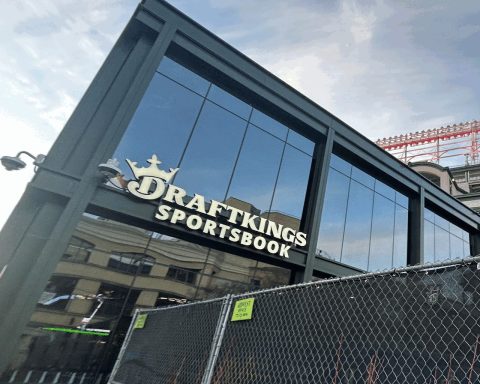
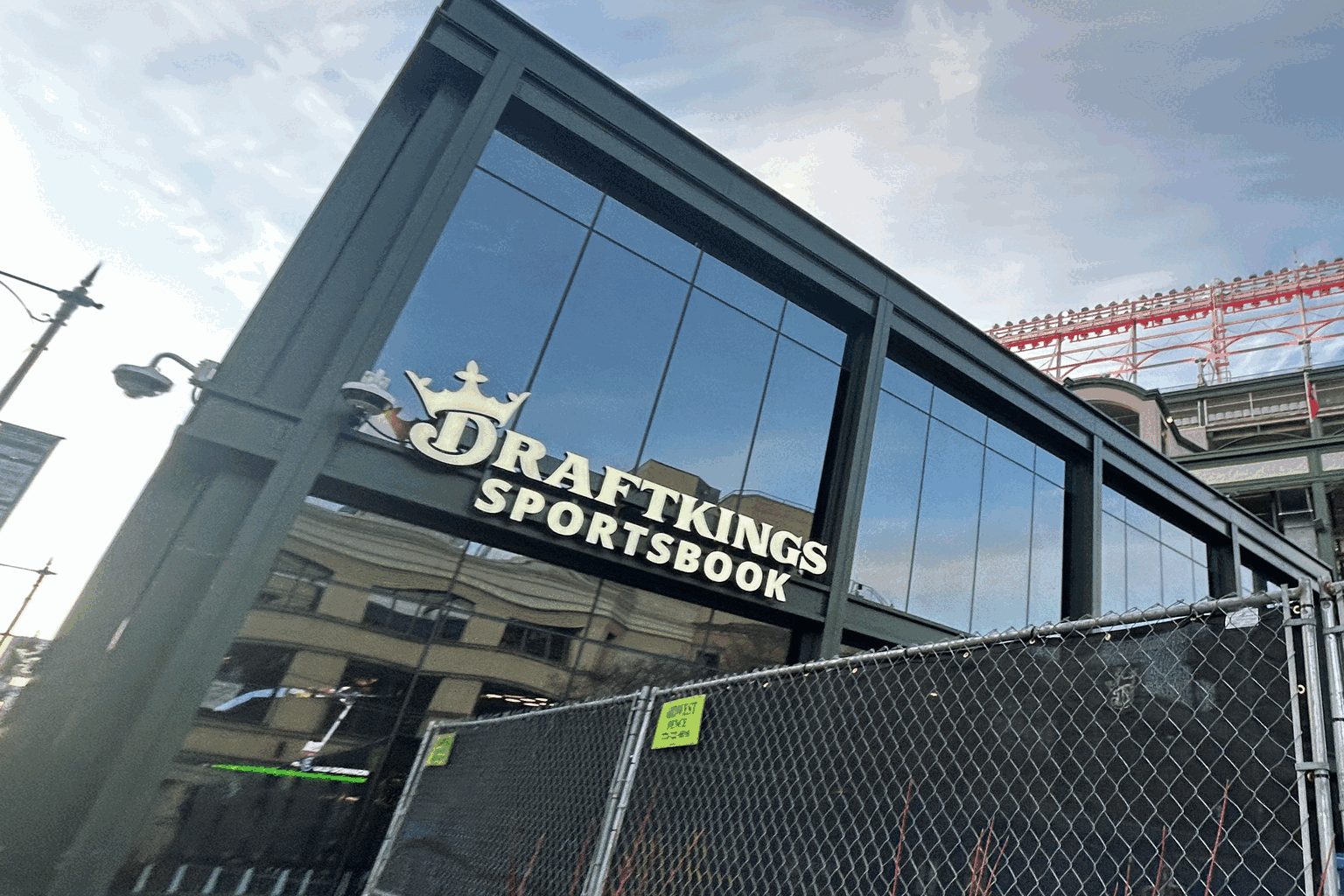
Image: SecretName101, CC BY 4.0, accessed via Wikimedia Commons. Image has been cropped and resized.
Related articles: NASDAQ:DKNG