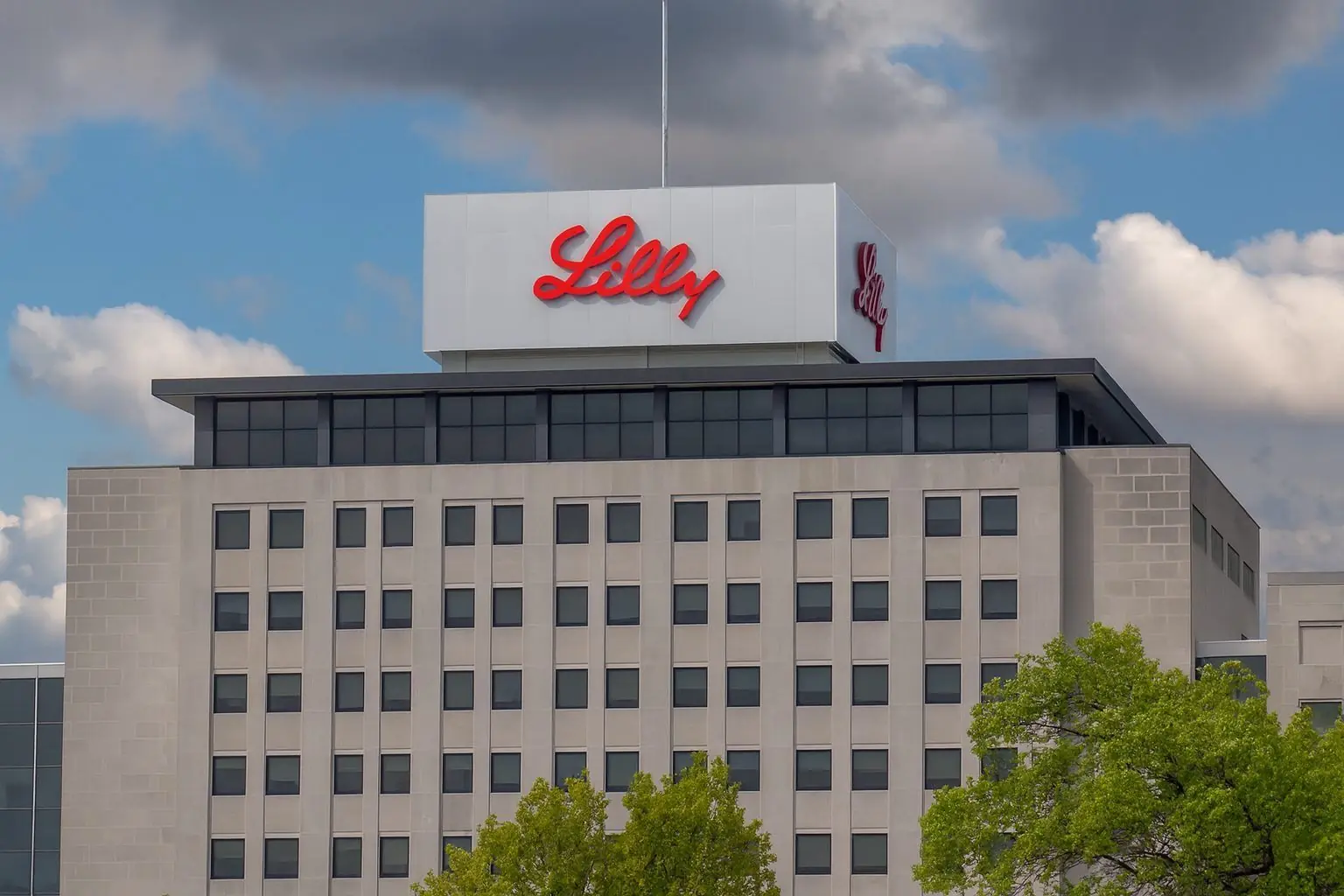
Eli Lilly’s stock is trading just below record highs after a historic run driven by obesity and diabetes drugs. Fresh price cuts, powerful earnings and evolving obesity guidelines are reshaping the outlook as of December 2, 2025.
Eli Lilly Stock Today: High Price, High Expectations
As of mid‑day on December 2, 2025, Eli Lilly and Company (NYSE: LLY) is trading around $1,057–$1,060 per share, down roughly 1–2% on the day but still close to its recent record highs.MarketBeat
At this level:
- Lilly’s market capitalization is just under $1 trillion, after briefly crossing that mark on November 21, becoming the first drugmaker and first healthcare company ever to join the trillion‑dollar club.Reuters+1
- The stock has climbed about one‑third over the past year, and more than 600% over five years, reflecting investor enthusiasm for its GLP‑1 obesity and diabetes franchise.Companies Market Cap+1
- The trailing price‑to‑earnings ratio sits around 51–52, well above the mid‑teens typical for many large pharma peers such as Merck, Johnson & Johnson and Novartis.Companies Market Cap+1
In short, LLY is priced as a hyper‑growth stock, not a traditional defensive pharma name. The rest of the story is whether its earnings trajectory can keep justifying that premium.
1. Zepbound Price Cuts: Affordability Push Meets Margin Risk
Fresh self‑pay discounts on December 1
On December 1, Lilly announced significant price cuts for self‑pay patients using single‑dose vials of its obesity drug Zepbound (tirzepatide) via the LillyDirect platform.Reuters+1
Under the Zepbound Self Pay Journey program in the U.S.:
- The 2.5 mg starting dose now costs $299 per month (down from $349)
- The 5 mg dose is $399 (down from $499)
- Higher doses are $449 (also reduced from $499)
These cuts follow earlier price reductions on Zepbound multi‑dose pens and are designed to expand access for patients paying out of pocket, especially those without robust insurance coverage for obesity drugs.Reuters+1
Linked to U.S. drug‑pricing deals
The move comes on the heels of a November agreement with the U.S. government in which both Lilly and rival Novo Nordisk agreed to lower GLP‑1 prices for Medicare and other programs in exchange for more predictable coverage and clearer rules on future price controls.Reuters+1
In practice, this trade‑off means:
- Lower net prices and margin pressure in the short term
- Potentially much higher volumes over time as reimbursement expands and out‑of‑pocket costs fall
WHO’s new GLP‑1 guideline adds demand tailwind
On December 1, the World Health Organization issued its first guideline on GLP‑1 therapies for obesity, conditionally recommending agents like semaglutide and tirzepatide (Lilly’s Mounjaro) as part of long‑term treatment for adults with a BMI ≥ 30.Reuters
However, WHO also warned that even with rapid scale‑up:
- Fewer than 10% of eligible patients globally are expected to have access by 2030, due to manufacturing limits, affordability and capacity constraints.Reuters
For Lilly, this combination of policy endorsement and access challenges underscores both the durability of GLP‑1 demand and ongoing political and pricing risk.
2. Q3 2025: A Blowout Quarter Re‑Sets the Earnings Bar
Lilly’s third‑quarter 2025 results, reported on October 30, are the backbone of today’s valuation.
Key numbers:
- Q3 revenue: $17.60 billion, up 54% year‑over‑year
- Adjusted EPS: $7.02, compared to $1.18 a year earlier
- Reported EPS: $6.21 vs. $1.07 last yearPR Newswire+2American Pharmaceutical Revie…
The engine is the tirzepatide franchise:
- Zepbound (obesity): ~$3.6 billion in Q3 sales, up 185% vs. Q3 2024
- Mounjaro (type 2 diabetes): ~$6.5 billion, up 109% year‑on‑year
- Combined tirzepatide sales: roughly $10.1 billion, now more than half of total company revenue and surpassing Merck’s Keytruda as the world’s best‑selling drug.Investors.com+3Fierce Pharma+3Reuters+3
On the back of this, Lilly raised its full‑year 2025 guidance:
- Revenue: $63.0–$63.5 billion
- Non‑GAAP EPS: $23.00–$23.70 per shareAlphaStreet+3PR Newswire+3TradingView+3
Consensus forecasts compiled by StockAnalysis and other providers now call for:StockAnalysis+1
- 2025 revenue around $63.2 billion, up ~40% from 2024
- 2026 revenue near $75.0 billion, another ~19% increase
- EPS doubling in 2025 (to ~23.5) and growing >30% in 2026
Analysts widely agree that Lilly’s GLP‑1 portfolio has become one of the fastest‑growing franchises in global healthcare. Novo Nordisk itself cited Lilly’s “far stronger results” when trimming its own outlook in November.Reuters+1
3. Kisunla: Building an Alzheimer’s Franchise Beyond GLP‑1
Lilly is not just an obesity story. Its Alzheimer’s drug Kisunla (donanemab) is emerging as a meaningful second pillar.
U.S. approval and efficacy
The U.S. FDA approved Kisunla in July 2024 for early symptomatic Alzheimer’s disease, including mild cognitive impairment and mild dementia with confirmed amyloid pathology.U.S. Food and Drug Administration+1
In Phase 3 studies:
- Donanemab slowed clinical decline by roughly 32–35% vs. placebo, depending on the endpoint
- Patients experienced about 40% less decline in daily living activities, highlighting preservation of function.The Guardian+3Lilly Investor Relations+3Sc…
Label update improves safety profile
In July 2025, the FDA approved an updated Kisunla label with a new titration schedule that uses gradually increasing doses to reduce the risk of amyloid‑related imaging abnormalities (ARIA‑E), a type of swelling seen with amyloid‑targeting antibodies.PR Newswire+2ACNR+2
Data from the TRAILBLAZER‑ALZ 6 study showed the new regimen:
- Lowered ARIA‑E incidence by around 35–40% versus the original schedule at 24–52 weeks
- Achieved similar amyloid plaque removal and biomarker improvements, suggesting efficacy is preserved.PR Newswire+2ACNR+2
Europe turns from rejection to approval
Europe has gone through a full regulatory arc:
- Earlier in 2025, the EMA’s CHMP initially rejected Kisunla over safety concerns such as brain swelling and bleeding.AP News
- After re‑examination, the European Commission granted EU‑wide marketing authorization on September 25, 2025, for early symptomatic Alzheimer’s in adults with mild cognitive impairment or mild dementia and confirmed amyloid pathology.PR Newswire+2Public Health+2
Kisunla’s launch is still in its early innings, and uptake will depend heavily on:
- MRI monitoring capacity and specialist access
- Payer willingness to reimburse a high‑cost infusion therapy
- Competition from Eisai/Biogen’s Leqembi and future Alzheimer’s agents
Nevertheless, Kisunla gives Lilly a second high‑profile growth driver beyond metabolic disease.
4. Orforglipron: The Oral GLP‑1 That Could Broaden the Market
If injectable GLP‑1s like Zepbound and Mounjaro defined the past two years, Lilly’s oral GLP‑1 candidate orforglipron is central to its future narrative.
In a key Phase 3 trial in patients with obesity and type 2 diabetes:
- The highest dose of orforglipron led to 9.6% weight loss over 72 weeks, versus 2.5% for placebo, when all participants were included regardless of discontinuation.
- Patients on the highest dose experienced a 1.7‑percentage‑point reduction in HbA1c, compared with 0.5 points on placebo.
- About 67% of treated patients achieved HbA1c below the 6.5% diabetes threshold, vs. 15% on placebo.STAT+1
Lilly has said it plans global regulatory filings in obesity and diabetes and is investing heavily in manufacturing, including more than $1.2 billion for plant upgrades in Puerto Rico to boost oral drug capacity.Fierce Pharma+2drugdiscoverytrends.com+2
If approved, an effective daily pill could:
- Extend GLP‑1 therapy to patients uncomfortable with injections
- Loosen the bottleneck created by limited injection‑pen manufacturing
- Potentially defend Lilly’s market share against next‑gen rivals such as Novo Nordisk’s oral agents and combination drugs
5. Analyst Ratings and LLY Stock Forecasts
Wall Street is still overwhelmingly bullish…
Across major data providers, the consensus rating on LLY is “Strong Buy”:
- StockAnalysis shows that most of the 18 analysts covering the stock rate it a Strong Buy or Buy, with only a handful of Holds and virtually no Sells.StockAnalysis
- MarketBeat similarly reports a consensus price target just above $1,050–$1,060, broadly in line with the current share price, with the highest targets stretching to $1,300.MarketBeat+1
Recent high‑profile moves include:
- Morgan Stanley boosting its target from $1,171 to $1,290, maintaining a Buy rating.StockAnalysis+1
- Bernstein lifting its target to $1,300, also with a Buy stance.StockAnalysis
- Bank of America raising its target to $1,286, citing the strength and durability of Lilly’s GLP‑1 franchise.Investing.com+1
On average, that leaves 20–25% upside to the top‑end targets from current levels.
…but valuation worries are getting louder
Not everyone is comfortable with paying more than 50x trailing earnings and roughly 35x forward earnings for a pharma stock:Companies Market Cap+2FullRatio+2
- Berenberg maintains a Hold with a $950 target, below the current share price.MarketScreener
- Freedom Capital Markets downgraded LLY from Buy to Hold in November, even as it raised its target to $950, citing stretched valuation and an overbought technical profile.Investing.com
- Some research notes argue that Lilly’s price already implies years of flawless GLP‑1 execution, making the stock vulnerable to any disappointment in growth, pricing, or safety.Seeking Alpha+1
In other words: fundamental momentum is outstanding, but expectations are equally extreme.
6. Technical Picture: Powerful Uptrend, Overbought Conditions
A detailed technical review from EBC Financial Group on December 2 highlights just how extended LLY’s move has become.EBC Financial Group
Key technical takeaways:
- LLY remains in a strong long‑term uptrend. The stock is well above its 50‑day moving average around $880–$900 and its 200‑day moving average near $800–$820.
- Over the past year, shares are up more than 30%, and over five years, they’ve risen more than six‑fold.EBC Financial Group+1
- The daily RSI sits above 70, a classic “overbought” reading, while trend strength (ADX) is above 50, indicating a powerful momentum phase.EBC Financial Group
EBC maps out important levels:
- Support:
- $1,000–$1,020: near the 20‑day moving average and recent breakout zone
- $880–$900: region of the 50‑day moving average
- $800–$820: 200‑day moving average and long‑term trend floor
- Resistance / upside targets:
- $1,110–$1,130: near recent highs
- $1,150–$1,200: potential extension if momentum resumes
Their base case: as long as LLY holds above roughly $1,000, the uptrend remains intact, but a decisive break below the 50‑day moving average would signal a more serious correction.EBC Financial Group
Other commentators note that the stock has pulled back modestly after a November surge, but remains close to all‑time highs and still trades on a “not cheap” multiple.TS2 Tech+1
7. Strategy, Payers and Competitive Landscape
Standing up to PBMs, leaning into LillyDirect
Lilly’s relationship with U.S. pharmacy benefit managers (PBMs) has grown more confrontational:
- On November 12, Reuters reported that Lilly will drop CVS Health’s drug‑benefit plan for its employees starting January 1, 2026, after CVS’s Caremark unit removed Zepbound from its preferred formulary in favor of Novo Nordisk’s Wegovy.Reuters+1
- Employees will instead be covered by PBM Rightway, which operates on a fee‑based model and, according to Lilly, offers competitive fees aligned with employees’ interests.Reuters
At the same time, LillyDirect — the company’s direct‑to‑consumer digital pharmacy channel — has become a crucial growth engine, enabling:
- Discounted self‑pay pricing for Zepbound
- A way to bypass restrictive formularies and bring patients into the GLP‑1 ecosystem directly
Analysts at Citi described Zepbound’s 185% Q3 growth as a sign of “increasing importance of LillyDirect” in offsetting PBM headwinds.Fierce Pharma+1
Competition with Novo Nordisk and next‑gen obesity drugs
Lilly’s GLP‑1 success has vaulted it ahead of Novo Nordisk in prescriptions, but the arms race is far from over:
- Novo continues to invest heavily in next‑gen molecules like amycretin and oral agents aiming for greater weight loss and cardiometabolic benefits.EBC Financial Group+1
- Both companies must navigate pricing pressure, supply constraints and government negotiations, potentially compressing margins even as volumes rise.Reuters+2Reuters+2
The WHO’s GLP‑1 guideline and the U.S. drug‑pricing deals underscore a central tension for investors: huge, government‑endorsed demand on one side, and intense political scrutiny on the other.
8. Key Risks to the LLY Stock Story
Even bullish analysts highlight several risks that could challenge Lilly’s premium valuation:
- Pricing & policy risk
- GLP‑1 therapies are now at the center of U.S. and international drug‑pricing debates. Further mandated discounts, reference pricing, or reimbursement caps could slow earnings growth.Reuters+2Reuters+2
- Concentration risk in GLP‑1
- A large share of Lilly’s revenue and profit is now tied to tirzepatide and related incretins. Any safety signal, supply failure, or more effective competitor could hit the stock hard.PR Newswire+2Reuters+2
- Safety & monitoring in Alzheimer’s
- Kisunla’s benefits come with real risks of ARIA and the need for MRI monitoring, which could limit uptake or trigger negative headlines.PR Newswire+2ACNR+2
- Execution on orforglipron and pipeline
- Oral GLP‑1 success is not guaranteed; regulators and payers may scrutinize long‑term safety and head‑to‑head competitiveness vs. injectable GLP‑1s and upcoming oral rivals.STAT+2drugdiscoverytrends.com+2
- Multiple compression
- With a P/E around 50, even a small downgrade in growth expectations or a shift in market sentiment away from high‑multiple growth names could trigger an outsized pullback.Companies Market Cap+2FullRatio+2
9. Bottom Line: A Market‑Defining Winner With a Market‑Defining Price
As of December 2, 2025, Eli Lilly is the reference stock for the global obesity boom:
- Its Zepbound and Mounjaro franchise is rewriting the playbook on how fast a pharma product can scale.
- Kisunla offers a foothold in disease‑modifying Alzheimer’s treatment.
- The orforglipron oral GLP‑1 program could broaden access and extend its metabolic dominance in the next decade.
But the market has noticed. LLY now:
- Trades near $1,050+ per share
- Carries a trillion‑dollar narrative
- Commands a valuation multiple more typical of elite tech stocks than pharmaceutical giants
For investors and traders, the core tension is simple:
Can Lilly grow into its multiple faster than policy, competition and gravity catch up?
That question — more than any single quarter — is what will drive LLY’s next major move.
This article is for informational purposes only and does not constitute financial, investment or trading advice. Always do your own research or consult a licensed financial advisor before making investment decisions.