
Dec. 20, 2025 — Eli Lilly and Company (NYSE: LLY) is closing out 2025 with momentum—and with fresh headlines that underscore why Eli Lilly stock has become one of the market’s most closely watched healthcare names. Shares last closed at $1,071.44 (Dec. 19) after trading between $1,059.01 and $1,075.38, keeping the stock within reach of its recent highs.
The bigger story isn’t just the price. Lilly entered the rarefied “$1 trillion market value” club this year—an inflection point for a pharmaceutical company—and it’s doing so on the back of a rapidly expanding obesity and cardiometabolic franchise, a pipeline packed with next-generation candidates, and a policy environment that is increasingly forcing drugmakers to prove they can grow volume even as prices face pressure. Reuters+1
Below is a complete, up-to-date look at the current news (Dec. 20, 2025), the most important forecasts and analyst views, and what investors are likely to watch next for LLY stock.
What’s driving Eli Lilly stock right now: the Dec. 20, 2025 news cycle
1) Oral weight-loss pill momentum: Orforglipron maintenance results add to the 2026 setup
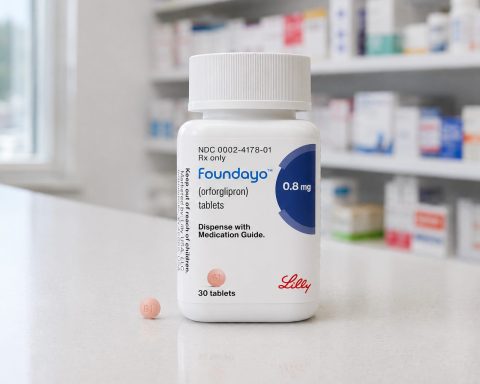
This week, Lilly reported new Phase 3 results showing that orforglipron, its once-daily oral GLP‑1 candidate, helped patients maintain weight loss after switching from injectable therapies (Wegovy and Lilly’s own Zepbound). In the ATTAIN‑MAINTAIN trial, Lilly said orforglipron hit the primary and key secondary endpoints versus placebo, with gastrointestinal side effects generally mild-to-moderate and no hepatic safety signal observed.
Why this matters for Eli Lilly stock forecast discussions: pills are widely seen as the next leg of GLP‑1 market expansion because they can be easier to distribute and scale than injectables—potentially broadening access globally and in cost-sensitive channels.
2) Pricing pressure—and pricing strategy—are now central to the bull case
Lilly has been unusually active on pricing in late 2025:
- United States: Reuters reported Lilly cut prices on certain Zepbound single-dose vials via LillyDirect, lowering the 2.5 mg starter dose and the 5 mg dose, alongside additional changes under a self-pay program.
- Canada: Reuters reported Lilly is cutting prices of Mounjaro and Zepbound by at least 20% in Canada, with new pharmacy pricing taking effect later this month.
This is a notable pivot: Lilly is increasingly leaning into access + affordability as a growth strategy, even if it means lower net pricing in some channels—an approach that can be stock-supportive if it expands the total treated population meaningfully.
3) Washington’s “TrumpRx” and MFN pricing framework is reshaping the drug-pricing narrative
A key overhang for large pharma valuations is always U.S. policy risk. In early November, the White House published details of an agreement involving Lilly and Novo Nordisk tied to Most-Favored-Nation (MFN) pricing and TrumpRx—including specific price points and potential Medicare/Medicaid implications.
Then, on Dec. 19, Reuters reported additional drugmakers struck pricing deals with the administration, expanding the scope of the initiative (even if Lilly wasn’t among the new signatories announced that day). The direction of travel is clear: policy is pushing toward lower prices, direct-to-consumer channels, and tariff/industrial-policy tradeoffs.
For LLY stock, the market question becomes: can Lilly’s portfolio and manufacturing scale keep growth strong even under more aggressive pricing frameworks?
4) Manufacturing expansion: a $6B+ Alabama facility underscores the scale race
Reuters reported Lilly plans to invest more than $6 billion in a new active pharmaceutical ingredient (API) manufacturing site in Huntsville, Alabama—a major domestic production push tied to supply chain resilience and future demand (including for medicines such as orforglipron).
Manufacturing is not a side story for GLP‑1 leaders; it’s a competitive moat. The company that can scale reliably tends to capture share—especially as payers and governments negotiate harder on price.
The 2026 catalyst investors keep circling: can Lilly’s pill platform break open the next wave of GLP‑1 demand?
Orforglipron’s key value proposition: maintenance, convenience, and scale
In Lilly’s ATTAIN‑MAINTAIN readout, participants who switched from Wegovy to orforglipron “maintained all but 0.9 kg” of prior weight loss on average (per Lilly’s topline summary), while those switching from Zepbound maintained weight loss with an average difference cited by the company in prespecified analyses. PR Newswire
Reuters noted that, in the market’s view, these results support a role for pills in chronic weight maintenance, potentially widening adoption for patients who prefer not to stay on injections long term.
FDA timing could become an accelerant (or a volatility trigger)
Reuters also reported that FDA leaders pushed internally for a faster review timeline for Lilly’s weight-loss pill submission—an unusual development that put attention on how quickly the U.S. could render a decision.
Investors tend to price “time-to-market” aggressively in obesity therapeutics. Any shift in expected approval timing can move the stock because it changes when revenue can start and how quickly competition intensifies.
Beyond the pill: Retatrutide raises the bar—and raises new questions
Lilly isn’t relying on one product cycle. In December, Reuters reported Lilly’s next-generation obesity candidate retatrutide delivered 28.7% average weight loss in a late-stage trial and beat results associated with Zepbound—while also highlighting investor focus on tolerability signals and the need for fuller datasets.
This matters for LLY stock forecast 2026–2030 narratives because retatrutide is part of Lilly’s bid to stay ahead of the efficacy curve as competitors launch new combinations and higher-dose regimens.
Regulatory expansion in Europe: Mounjaro recommended for pediatric type 2 diabetes
Lilly also picked up a regulatory tailwind in Europe. Reuters reported that the European Medicines Agency’s committee recommended extending Mounjaro (tirzepatide) for children and adolescents from age 10 with type 2 diabetes, and the EMA’s meeting highlights reflect the recommendation.
While pediatric diabetes is not the primary driver of the current valuation, label expansion supports the broader “lifecycle management” thesis: Lilly is steadily widening where tirzepatide can be used.
Eli Lilly earnings power: what the latest reported numbers say
Lilly’s 2025 narrative has been powered by financial execution as much as clinical wins. In the latest reported quarter highlighted by Reuters during the company’s $1 trillion valuation milestone, Lilly’s obesity and diabetes drugs generated over $10 billion in quarterly sales—more than half of total quarterly revenue of $17.6 billion, according to Reuters’ reporting.
That concentration is both the opportunity and the risk:
- It’s an enormous growth engine.
- It also means Lilly’s valuation is highly sensitive to any shift in GLP‑1 demand, pricing, supply, or competition.
Analyst forecasts for LLY stock: where Wall Street sees the next 12 months
Forecasts remain broadly constructive, though they vary depending on how analysts model pricing pressure versus market expansion.
- MarketBeat’s compiled analyst view shows an average price target around $1,141.73, with a stated range from roughly $900 to $1,300 (based on the set of analysts it tracks).
- Recent “target lift” notes have pointed to the expanding GLP‑1 market as a reason for higher valuation frameworks (examples include major-bank target increases reported in late November). Investing.com
Meanwhile, financial media analysis published today argues that—even after a multi-year run—some investors still see upside if 2026 brings two things: (1) pill launches and (2) broader coverage/affordability frameworks that expand the addressable market.
The biggest risks to watch for Eli Lilly stock in 2026
Even bulls generally agree that LLY stock is no longer priced for “good” outcomes—it’s priced for strong execution. The key risk categories that could create volatility:
- Drug pricing policy risk (U.S. and abroad)
Policy and payer dynamics are moving quickly. The Trump administration’s MFN pricing framework and TrumpRx initiatives—and the expanding set of pricing deals reported by Reuters—underscore that political pressure on pricing is not fading. - Competition: Novo Nordisk and the next wave of regimens
Novo continues to push dose innovation and new programs in obesity, with Reuters noting EMA support for a higher Wegovy dose and fast-tracked review expectations. Competitive intensity can change investor assumptions about long-term pricing and share. - Safety/tolerability perception
Even when efficacy is strong, markets react to tolerability details—especially for chronic-use drugs taken by broad populations. Reuters commentary around retatrutide highlights how closely investors are scrutinizing the complete profile. - Supply chain execution and capital intensity
Big manufacturing builds like the Alabama API site are strategic, but they also involve long timelines and execution risk.
Bottom line: the Eli Lilly stock thesis heading into 2026
As of Dec. 20, 2025, the near-term narrative for Eli Lilly and Company stock (LLY) is being shaped by three converging forces:
- Clinical momentum (orforglipron maintenance data and retatrutide efficacy signals) PR Newswire+1
- Affordability moves (U.S. self-pay pricing adjustments and reported Canadian price reductions) Reuters+1
- Policy + manufacturing (TrumpRx/MFN pricing frameworks and major domestic manufacturing investment) The White House+1
Related articles: NYSE:LLY