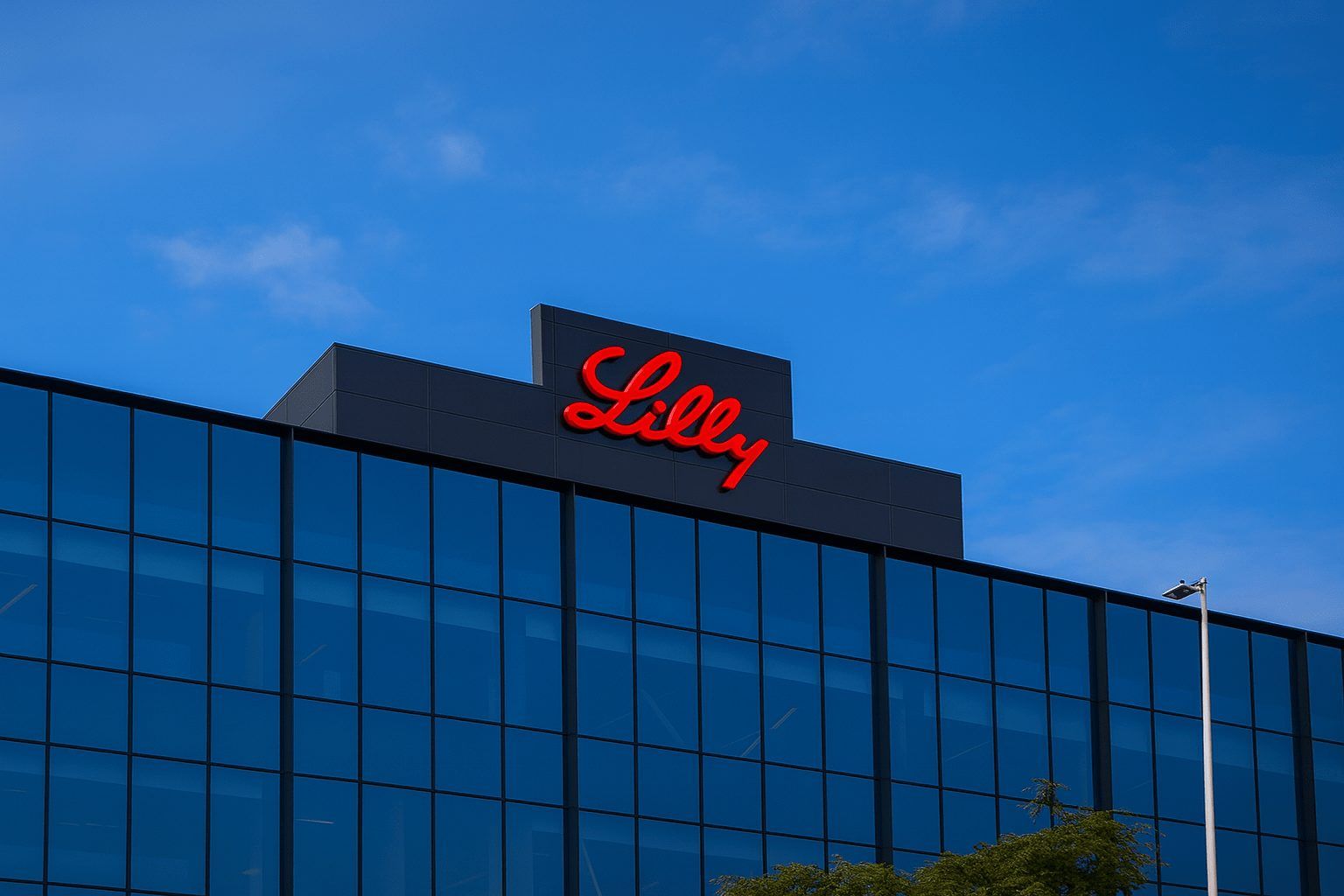

Eli Lilly’s stock is entering the new week as one of the most closely watched names on Wall Street. As of this weekend (Sunday, November 23, 2025), LLY is trading near $1,060 per share, valuing the company at roughly $1 trillion, after becoming the first drugmaker ever to join the trillion‑dollar market‑cap club.
At the same time, new headlines today highlight rising institutional ownership, aggressive analyst upgrades, and an emerging GLP‑1 price war that could reshape the economics of the obesity drug market Eli Lilly currently dominates.
1. LLY stock snapshot after the $1 trillion milestone
- Last close (Friday, Nov. 21, 2025): about $1,060 per share, up roughly 1.6% on the day, with intraday highs above $1,066 and a market capitalization near $1.0 trillion.
- Valuation: MarketBeat data show a trailing P/E of ~69, a PEG ratio near 1.2, and a beta around 0.43, underscoring both high growth expectations and relatively low volatility versus the broader market.
- 52‑week range: roughly $624 – $1,067, with the stock up more than 35% year‑to‑date as GLP‑1 obesity drugs continue to drive revenue and profits.
On November 21, Eli Lilly briefly crossed the $1 trillion mark, making it the first pharmaceutical and first healthcare company to reach that valuation. Reuters notes that the move reflects a 35%+ rally this year and the explosive growth of the weight‑loss drug market, particularly Lilly’s tirzepatide‑based medicines Mounjaro (type 2 diabetes) and Zepbound (obesity).
TipRanks similarly highlights that Lilly now sits in the rarified group of non‑tech $1T names (alongside Berkshire Hathaway and JPMorgan) and that the stock’s four‑digit price tag is fueling speculation about a potential stock split to make LLY more accessible to retail investors.
2. Fresh news today (Nov. 23, 2025): funds buying more LLY
While the weekend is quiet for official company announcements, several new institutional‑ownership filings hit the wires today, all pointing in the same direction: big money is still buying Eli Lilly.
2.1 Coldstream Capital Management boosts stake
A new MarketBeat alert this morning reports that Coldstream Capital Management Inc.:
- Increased its Eli Lilly position by 43.5% in Q2,
- To 33,759 shares, worth roughly $26.3 million at the time of the filing,
- After purchasing an additional 10,230 shares.
The same filing notes that institutional investors collectively own about 82.5% of Lilly’s outstanding shares, underscoring how crowded LLY has become in professional portfolios.
2.2 Charles Schwab Investment Management adds over 100,000 shares
In a separate November 23 article, MarketBeat reports that Charles Schwab Investment Management Inc.:
- Lifted its LLY holdings by 2% in Q2,
- To 5.36 million shares,
- A position worth roughly $4.18 billion, representing 0.57% of Eli Lilly and making it the 26th‑largest holding in Schwab’s portfolio.
The piece reiterates that analysts, in aggregate, rate LLY a “Moderate Buy” with an average 12‑month price target around $1,028, not far from where the stock currently trades. MarketBeat+1
2.3 Entropy Technologies LP initiates a new position
A third MarketBeat alert today highlights that Entropy Technologies LP:
- Initiated a new stake of 1,503 shares in Eli Lilly,
- Valued at roughly $1.17 million,
- Joining a long list of institutions — including the Swiss National Bank and ABN AMRO — that increased or initiated positions during Q2.
Once again, the article notes that institutional investors own about 82.5% of LLY, a level of ownership more typical of mega‑cap tech than of traditional pharma.
3. The trillion‑dollar story: GLP‑1 dominance and Q3 2025 blowout
Today’s fund‑flow headlines sit on top of a massive fundamental backdrop: Eli Lilly’s latest quarter and its GLP‑1 franchise.
3.1 Q3 2025 results: 54% revenue growth, EPS up almost 6×
In its Q3 2025 earnings release on October 30, Lilly reported: PR Newswire+1
- Revenue: $17.6 billion, up 54% year‑over‑year.
- Reported EPS:$6.21, versus $1.07 in Q3 2024.
- Non‑GAAP EPS:$7.02, versus $1.18 a year earlier.
- Key products revenue: $11.98 billion, led by Mounjaro and Zepbound.
Product‑level numbers underline just how central GLP‑1 drugs have become:
- Mounjaro: $6.52 billion in Q3 sales, up 109% year‑over‑year.
- Zepbound: $3.59 billion in Q3 sales, up 185% year‑over‑year.
- Verzenio (breast cancer): $1.47 billion, up 7%.
Combined, Lilly’s obesity and diabetes portfolio generated just over $10 billion in quarterly revenue, more than half of total company sales — a fact Reuters singled out in its $1T valuation coverage.
On the back of these results, Lilly raised its 2025 outlook, guiding for: PR Newswire+1
- Full‑year revenue of roughly $63.0–$63.5 billion, and
- Non‑GAAP EPS of $23.00–$23.70.
3.2 Pipeline & approvals: more than just weight loss
The same Q3 release also highlighted a series of regulatory wins and late‑stage pipeline updates, including: PR Newswire
- Omvoh (mirikizumab): U.S. FDA approval as a single‑injection maintenance regimen for ulcerative colitis.
- Kisunla (donanemab): European Commission marketing authorization for early symptomatic Alzheimer’s disease.
- Inluriyo (imlunestrant): U.S. approval for ER+, HER2‑, ESR1‑mutated advanced breast cancer.
- Olomorasib: U.S. FDA Breakthrough Therapy designation for certain KRAS G12C‑mutant lung cancers.
That breadth matters: it gives Lilly a diverse oncology and immunology pipeline — even as investor attention is overwhelmingly focused on GLP‑1s.
4. GLP‑1 price war and access: big November developments
4.1 Novo Nordisk slashes GLP‑1 prices — implications for Lilly
A major piece of news today, though focused on rival Novo Nordisk, could have real consequences for Eli Lilly: Novo has announced significant price cuts to its GLP‑1 drugs (including Wegovy) in the U.S., in part to respond to political pressure and expand access.
Motley Fool coverage of the move frames it as the start of a GLP‑1 price war, noting:
- Novo is cutting listed prices to defend and grow share in a market where Lilly’s Zepbound and Mounjaro have taken the lead in prescriptions.
- For Eli Lilly, lower competitor prices could mean some margin pressure, but also the potential for much higher overall category volume as payers and governments warm to more affordable options.
Earlier this month, Reuters also reported that both Novo Nordisk and Eli Lilly agreed with the U.S. government to lower prices on their blockbuster GLP‑1 drugs for certain patient groups, a deal that temporarily weighed on both stocks.
4.2 Lilly’s direct‑to‑employer model for Zepbound
Lilly is trying to stay ahead of the pricing and access debate. On November 21, the company announced a new direct‑to‑employer obesity‑care model in partnership with digital health company Waltz Health: Reuters+1
- Employers will be able to contract directly to offer Zepbound‑based weight‑management programs,
- With flexible cost‑sharing designs and integrated clinical support,
- Bypassing some traditional channels (like PBMs) that have limited GLP‑1 coverage.
This model aims to expand access while maintaining some control over net pricing, and it reinforces Lilly’s strategy of embedding Zepbound not only as a drug, but as part of a broader metabolic‑care ecosystem.
4.3 New data: Zepbound and Mounjaro produce fewer “minimal responders”
A November 19 Reuters Health feature adds more good news for Lilly’s GLP‑1 franchise. In a massive real‑world analysis of over 135,000 patients, researchers used AI to compare how different GLP‑1 drugs perform across a wide range of medical histories.
Key findings:
- Only 23–28% of patients on Zepbound or Mounjaro fell into the “minimal weight‑loss” group (less than 5% body‑weight loss over a year),
- Versus 30–43% for patients on Novo’s Wegovy/Ozempic, and 46–63% on older GLP‑1s like Trulicity, Saxenda, Victoza.
The study suggests that Lilly’s newer GLP‑1s not only sell more but appear to generate better clinical outcomes on average, strengthening the company’s case as pressure mounts to justify high spending on these medications.
5. Analyst sentiment: wall of Buy ratings and talk of a stock split
5.1 Consensus remains bullish, even at $1,000+ per share
Despite the huge run‑up and rich multiples, Wall Street sentiment on LLY is still overwhelmingly positive:
- TipRanks reports a “Strong Buy” consensus from 20 analysts, with 18 Buy and 2 Hold ratings and an average price target around $1,043 (slightly below current levels, reflecting the recent spike). TipRanks
- MarketBeat compiles ratings from a broader analyst universe and pegs the consensus at “Moderate Buy”, with 3 Strong Buys, 15 Buys and 7 Holds, and an average target near $1,028. MarketBeat+1
5.2 Big investment banks keep ratcheting targets higher
A round‑up of recent analyst actions shows targets moving sharply higher over the past two weeks: Somos Hermanos+2MarketBeat+2
- J.P. Morgan raised its LLY price target from $1,050 to $1,150 (Overweight) on November 18.
- Morgan Stanley moved its target to $1,171 (Overweight).
- Citigroup reiterated a Buy rating and lifted its target to a notably aggressive $1,500.
- Leerink Partners upgraded LLY from Market Perform to Outperform, raising its target from $886 to $1,104.
- Multiple other firms — including BMO, UBS, Truist and Cantor Fitzgerald — have either boosted targets or reiterated bullish ratings this month.
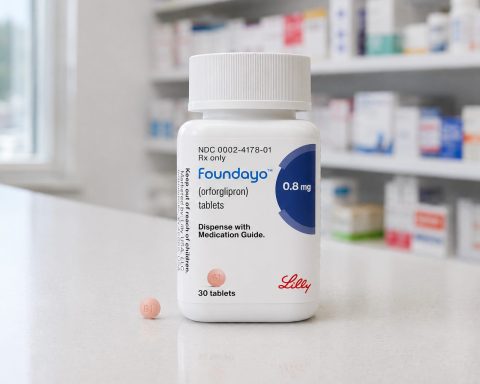
The main thread across these calls: analysts see continued upside in the GLP‑1 franchise, plus optionality from oral obesity drugs (like orforglipron) that are expected to ramp in 2026 and beyond.
5.3 Stock‑split chatter
As TipRanks points out, the new $1,000+ share price is fueling speculation that Lilly could eventually split the stock, much as mega‑cap tech names have done after big runs.
A split wouldn’t change fundamentals, but it could:
- Make lot sizes more accessible for smaller investors,
- Potentially boost liquidity, and
- Serve as a symbolic signal of management’s confidence in the durability of the franchise.
So far, though, Lilly has not made any public announcement about a split.
6. Is Eli Lilly stock still a buy after $1 trillion?
Whether LLY is attractive at these levels depends on your time horizon and risk tolerance, but the bull and bear cases are clearer than ever.
6.1 Bullish arguments
Supporters of the stock point to: Seeking Alpha+4PR Newswire+4Reuters+4
- Explosive GLP‑1 growth: Mounjaro and Zepbound together now generate over $10 billion in quarterly sales, with strong demand and expanding international launches.
- Pipeline depth: Alzheimer’s (Kisunla), oncology (Verzenio, Inluriyo, olomorasib), immunology (Omvoh, Ebglyss) and next‑generation obesity candidates (orforglipron, retatrutide) provide multiple future growth drivers beyond injectables.
- Earnings leverage: Q3 showed massive operating leverage, with EPS rising far faster than revenue and guidance implying high‑20s to low‑30s EPS growth into 2025.
- Strong institutional support: Ownership above 80% and continued buying by large managers like Charles Schwab and national banks underscore confidence from sophisticated investors.
6.2 Key risks investors are watching
On the other hand, skeptics highlight: MarketBeat+3Reuters+3Reuters+3
- Valuation risk: At ~70× trailing earnings and ~50× forward estimates, Lilly trades at one of the richest multiples in global pharma, leaving little room for disappointment.
- Pricing and political risk: U.S. and international authorities are increasingly targeting GLP‑1 pricing; new deals to lower prices and competitor cuts raise questions about long‑term margins.
- Competitive pressure: Novo Nordisk remains a formidable rival, and new entrants or oral GLP‑1 competitors could pressure share and pricing if the category becomes more crowded.
- Execution risk: Scaling manufacturing, managing safety and supply, and successfully launching new indications will all be under intense scrutiny at current valuations.
For long‑term investors, the core question is whether Lilly can sustain its GLP‑1 leadership while broadening the franchise and defending margins in a fast‑evolving regulatory and competitive environment.
7. What today’s news means for LLY shareholders
Putting together the November 23, 2025 headlines and the recent flow of information:
- Momentum remains strong: The stock is holding near all‑time highs after the $1T milestone, supported by blockbuster Q3 numbers and an upgraded 2025 outlook.
- Big money is still buying: New 13F‑based alerts today show additional institutional accumulation, from Coldstream and Charles Schwab to systematic players like Entropy Technologies.
- The GLP‑1 narrative is evolving, not fading: Novo’s price cuts and U.S. government deals suggest maturing market dynamics, but AI‑driven outcome data and new access models favor companies with the best data and infrastructure — a camp where Lilly still sits comfortably.
- Expect more volatility: With expectations sky‑high and valuations stretched, even small surprises on pricing, safety, or uptake could produce outsized stock moves, in both directions.
For existing shareholders, today’s news flow generally reinforces the bull case — but also underscores how tightly Lilly’s share price is now tethered to the GLP‑1 story, regulatory outcomes, and macro sentiment.
8. Key takeaways for Eli Lilly stock on November 23, 2025
- LLY is trading around $1,060 with a market cap near $1 trillion, after becoming the first pharma/healthcare company to reach that milestone.
- Q3 2025 results smashed expectations, with 54% revenue growth and EPS more than quintupling, driven largely by Mounjaro and Zepbound.
- Institutional investors continued to add to positions in Q2, with new filings today from funds like Coldstream, Charles Schwab IM and Entropy Technologies.
- A developing GLP‑1 price war — including U.S. government deals and Novo Nordisk’s price cuts — is a double‑edged sword for Lilly, potentially expanding access while testing margins.
- Wall Street remains decidedly bullish, with multiple recent price‑target hikes (some above $1,100–$1,500) and consensus ratings in the Buy/Strong Buy range, even as valuation risk grows.
Disclaimer: This article is for informational and educational purposes only and does not constitute financial, investment, legal, or tax advice. Always do your own research and consider consulting a licensed financial adviser before buying or selling any securities.
Related articles: NYSE:LLY