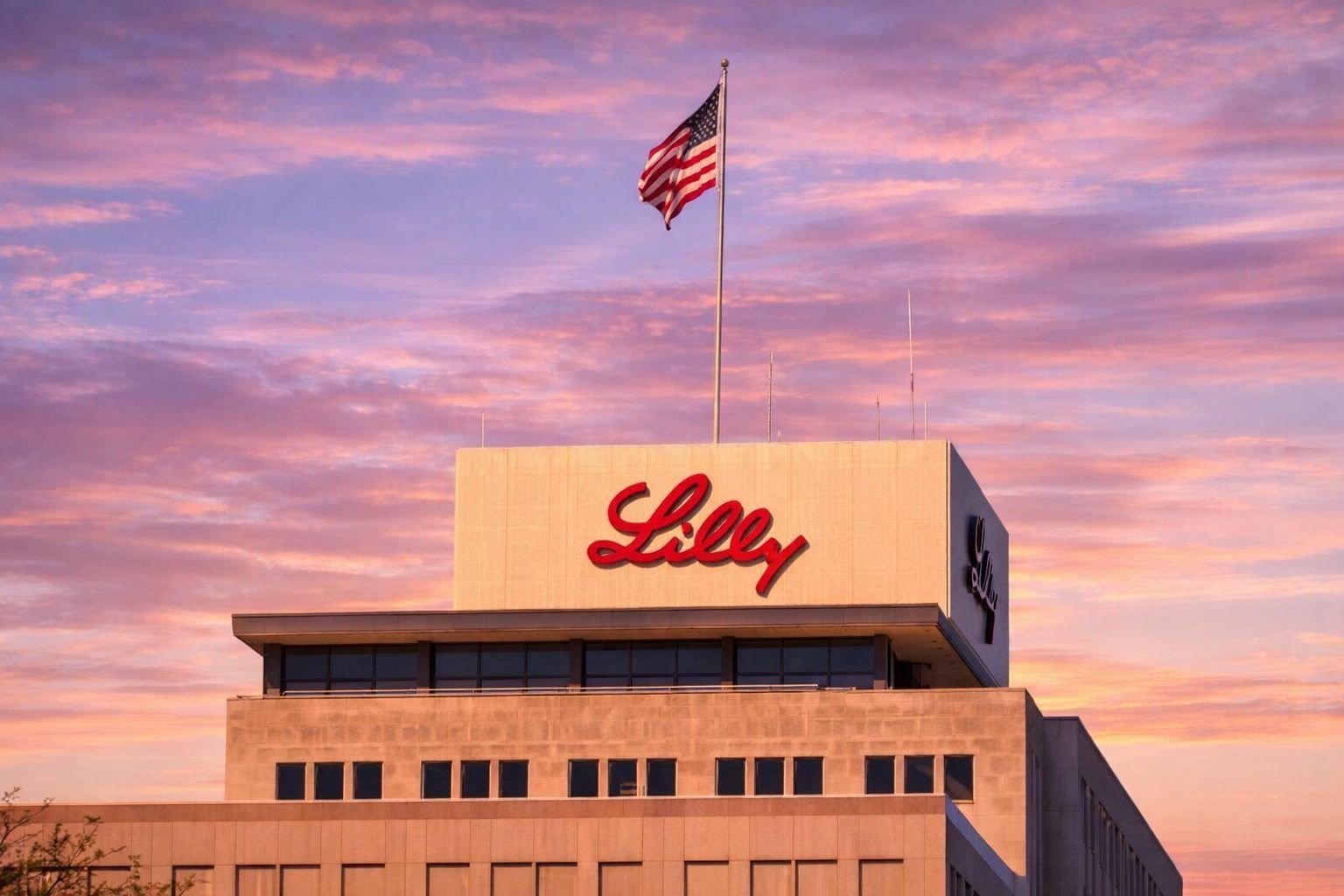
Eli Lilly and Company stock (NYSE: LLY) remains one of the market’s most closely watched healthcare names as 2025 winds down—powered by blockbuster demand for obesity and diabetes medicines, and increasingly driven by what comes next: faster, deeper weight loss therapies, an oral GLP-1 pipeline, and a manufacturing expansion designed to keep up with demand.
In early trading on Tuesday, Dec. 16, Eli Lilly shares hovered around the $1,050 area, after a year that included the company becoming the first drugmaker to reach a $1 trillion market value—a milestone that underscored how central Lilly’s metabolic franchise has become to investors.
Below is a detailed roundup of the current news, forecasts, and key analyses shaping Eli Lilly stock as of 16.12.2025, plus the catalysts investors are watching into 2026.
Eli Lilly stock price today: where LLY is trading on Dec. 16, 2025
LLY opened Tuesday near the $1,050–$1,060 range, reflecting a market that has already priced in enormous success—but is still actively repricing the “next chapter” (retatrutide, orforglipron, and broader access strategies). StockAnalysis
That “priced-in success” narrative matters because Reuters has highlighted that Lilly trades at one of the richest valuation multiples in big pharma—reflecting investor expectations that obesity-drug demand remains durable and that Lilly can continue to scale supply while navigating pricing pressure. Reuters
What’s moving Eli Lilly stock on Dec. 16: upgrades, pricing, and the next wave of GLP-1s
1) Analyst action: Daiwa upgrade puts a fresh price target on the table
A notable Wall Street development on Dec. 16: Daiwa upgraded Eli Lilly to Buy from Neutral and raised its price target to $1,230 from $940, according to reports carried by MarketScreener/MT Newswires and other market trackers.
Why it matters: in a stock already valued like a “mega-winner,” upgrades can be less about near-term pops and more about reinforcing confidence that Lilly’s growth is not a one-product cycle—especially with multiple high-impact catalysts landing in 2026.
2) Zepbound price cuts: a volume-and-access strategy (with margin questions)
One of the most consequential “stock narrative” threads right now is access—and Lilly has been using pricing moves to broaden it.
Reuters reported earlier this month that Lilly lowered the price of single-dose Zepbound vials through LillyDirect:
- 2.5 mg: $299/month (down from $349)
- 5 mg: $399/month (down from $499)
- Higher doses: $449/month (down from $499 under a self-pay program)
This is the strategic tradeoff investors keep debating:
- Bull case: lower out-of-pocket cost can expand the treatable population and sustain growth through higher volume.
- Bear case: repeated price actions (and broader policy dynamics) increase the risk of margin compression over time—especially as competition intensifies.
Reuters also tied these moves to a broader U.S. policy context: Lilly struck a deal with the Trump administration to slash prices of its GLP-1 drugs for Medicare/Medicaid and cash payers, adding another layer of “access vs. profitability” analysis around LLY. Reuters
Retatrutide: the Phase 3 readout that keeps raising the bar
If you’re trying to understand why “next-gen” obesity drugs are central to LLY valuation, start with retatrutide—Lilly’s “triple agonist” (GLP-1, GIP, and glucagon receptor activity).
The headline result
Reuters reported that Lilly’s late-stage data showed retatrutide helped patients lose an average of 28.7% of body weight, outperforming Lilly’s current blockbuster Zepbound in the same broad therapeutic category.
Lilly’s own press-release details from the Phase 3 TRIUMPH-4 trial add important texture:
- The 12 mg dose delivered up to ~28.7% average weight loss (~71.2 lbs) at 68 weeks in adults with obesity/overweight and knee osteoarthritis (without diabetes).
- The trial also showed substantial osteoarthritis pain relief (WOMAC pain score improvement) and physical-function gains, highlighting a potentially differentiated “weight + pain/function” story. PR Newswire
The tolerability debate (and why it matters to LLY stock)
The market’s enthusiasm isn’t just about “more weight loss.” It’s about how many patients can stay on therapy.
Reuters noted that discontinuations were higher in the trial—about 18.2% on the highest dose discontinued, versus 4% on placebo—and flagged “dysesthesia” (abnormal skin sensation) occurring in 20.9% of patients on the highest dose. Reuters
STAT also emphasized that while the weight loss appears industry-leading, discontinuations and side effects are a core investor question—because tolerability will influence real-world uptake, payer acceptance, and how large the addressable market truly becomes.
What’s next for retatrutide in 2026
Lilly has seven additional Phase 3 trials for retatrutide in obesity and type 2 diabetes expected to complete in 2026, setting up a steady cadence of potential catalysts.
Orforglipron: the FDA timeline that could reshape the obesity market
If retatrutide represents “best-in-class injectable potential,” orforglipron is a different kind of catalyst: a once-daily oral option that could dramatically expand access if approved (and manufactured at scale).
Why this is a “timing” story right now
A Reuters report on Dec. 12 said FDA leadership pushed internally for an accelerated review of Lilly’s experimental weight-loss pill orforglipron after Lilly pressed for a faster timeline—documents reviewed by Reuters suggest the original review timeline pointed to a May 20, 2026 decision date, while Lilly sought something faster (as early as March).
Reuters reported that under a newer “Commissioner’s National Priority Voucher” framework, internal proposals even contemplated sharply shortening parts of the filing review window—though the story also described internal concern about speed, safety, and political pressure. Reuters
Stock implication: even without an approval decision today, the market is actively discounting the probability of an earlier-than-expected timeline—and what an earlier launch would mean for 2026 revenue growth.
Europe update: EMA committee backs pediatric use for Mounjaro
Another underappreciated demand driver is indication expansion—especially internationally.
Reuters reported that the European Medicines Agency’s committee recommended extending Mounjaro (tirzepatide) to children and adolescents aged 10 and older with type 2 diabetes, where treatment options have historically been limited.
The EMA’s public variation page for Mounjaro also reflects the CHMP’s December 2025 meeting action around extending use to age 10+, reinforcing that this isn’t just “market chatter”—it’s a formal regulatory step in Europe. European Medicines Agency (EMA)
Why LLY investors care: pediatric expansion is not just incremental volume—it’s another signal that incretin-based medicines are moving toward earlier, broader, and longer-duration use across age groups.
Manufacturing expansion: the $6B Alabama plant and Lilly’s supply strategy
Lilly’s valuation depends not only on breakthrough science—but on the ability to manufacture at scale.
Reuters reported that Lilly plans to invest more than $6 billion in a new active pharmaceutical ingredient (API) plant in Huntsville, Alabama, a major U.S. manufacturing push that includes planned production for synthetic small molecules and therapeutic peptides, including orforglipron.
Construction is expected to begin in 2026 and run through 2032, with thousands of construction jobs and hundreds of permanent roles planned—an unusually long-dated but strategically important capacity buildout for a company facing extraordinary demand.
Beyond obesity: Lilly’s oncology pipeline adds another growth lever
Although obesity/diabetes dominates headlines, Lilly continues to build a second pillar in oncology.
A Dec. 12 Lilly press release highlighted updated Phase 3 EMBER-3 results for Inluriyo (imlunestrant) in ER+, HER2- advanced/metastatic breast cancer—reporting improved progression-free survival in ESR1-mutated disease and encouraging combination data with Verzenio (abemaciclib), with the company noting that data were published and presented at the San Antonio Breast Cancer Symposium.
Stock implication: diversification matters. When investors worry about GLP-1 pricing pressure long-term, credible oncology growth can help support the premium multiple.
LLY stock forecasts: price targets, earnings expectations, and what the Street is modeling
Analyst price targets
Aggregated analyst data compiled by StockAnalysis shows:
- Consensus rating: “Strong Buy”
- Average 12-month price target:$1,084
- Range:$700 (low) to $1,500 (high)
This is notable because, at Tuesday’s trading levels, the consensus implies modest upside—a sign that many analysts already view the stock as priced for strong execution, with future upside hinging on successful launches and sustained growth, not just incremental beats.
Revenue and EPS forecasts
StockAnalysis also summarizes Street estimates pointing to:
- FY2025 revenue: about $64.23B
- FY2026 revenue: about $76.83B
- FY2025 EPS: about 24.04
- FY2026 EPS: about 32.53
Investors should treat these as consensus models, not guarantees, but they frame the debate: Lilly is being valued like a company that can keep compounding at scale, even as it widens access.
The big-picture LLY stock outlook: what bulls and bears are debating right now
The bull case for Eli Lilly stock
The bullish thesis largely rests on four pillars:
- Sustained obesity/diabetes leadership
Lilly’s tirzepatide franchise (Mounjaro/Zepbound) remains a centerpiece of the global obesity boom. Reuters has noted that demand has propelled Lilly to historic heights, including the $1 trillion market-cap milestone. - A “pipeline behind the pipeline”
Retatrutide’s Phase 3 data suggests the next wave could raise the efficacy ceiling again. Reuters+1 - Oral GLP-1s could expand the market
Orforglipron’s regulatory timeline—and the potential for accelerated review—creates a major optionality component in the stock. - Manufacturing scale as a competitive moat
A multi-year U.S. production buildout is meant to keep supply from becoming the bottleneck.
The bear case and key risks
Even with powerful tailwinds, risks remain material:
- Valuation risk: Reuters has pointed out Lilly trades at premium valuation levels for big pharma, reflecting very high expectations.
- Pricing pressure: lowering prices can accelerate volume, but investors will keep scrutinizing gross margin and net pricing trends.
- Tolerability/safety scrutiny: retatrutide’s discontinuation rates and certain side effects are exactly the kind of details that can shift sentiment quickly once full datasets are presented.
- Competitive intensity: Novo Nordisk and multiple challengers are pursuing higher-dose, next-generation, and combination therapies—raising the bar for differentiation over time.
Key dates and catalysts to watch next
J.P. Morgan Healthcare Conference (January 2026)
On Dec. 16, Lilly announced it will participate in the 44th Annual J.P. Morgan Healthcare Conference and that CEO David Ricks is scheduled for a fireside chat (webcast details in the release).
J.P. Morgan’s official conference page lists the 44th Annual Healthcare Conference as taking place Jan. 12–15, 2026 in San Francisco.
Why it matters for LLY stock: JPM week is often where large-cap biopharma resets expectations—investors listen for tone on pricing, supply, and the next 12–18 months of pipeline milestones.
2026 clinical and regulatory catalysts
- Multiple retatrutide Phase 3 trials expected to complete in 2026
- Potentially accelerated FDA timing dynamics around orforglipron (watch for official updates)
Bottom line: As of Dec. 16, 2025, Eli Lilly stock sits at the center of three converging narratives—breakthrough efficacy, mass-market access, and manufacturing scale. The market’s next big decision is whether Lilly’s premium valuation is justified not only by today’s GLP-1 cash flows, but by the probability that retatrutide and orforglipron extend (and expand) Lilly’s leadership into 2026 and beyond.
Latest key headlines referenced