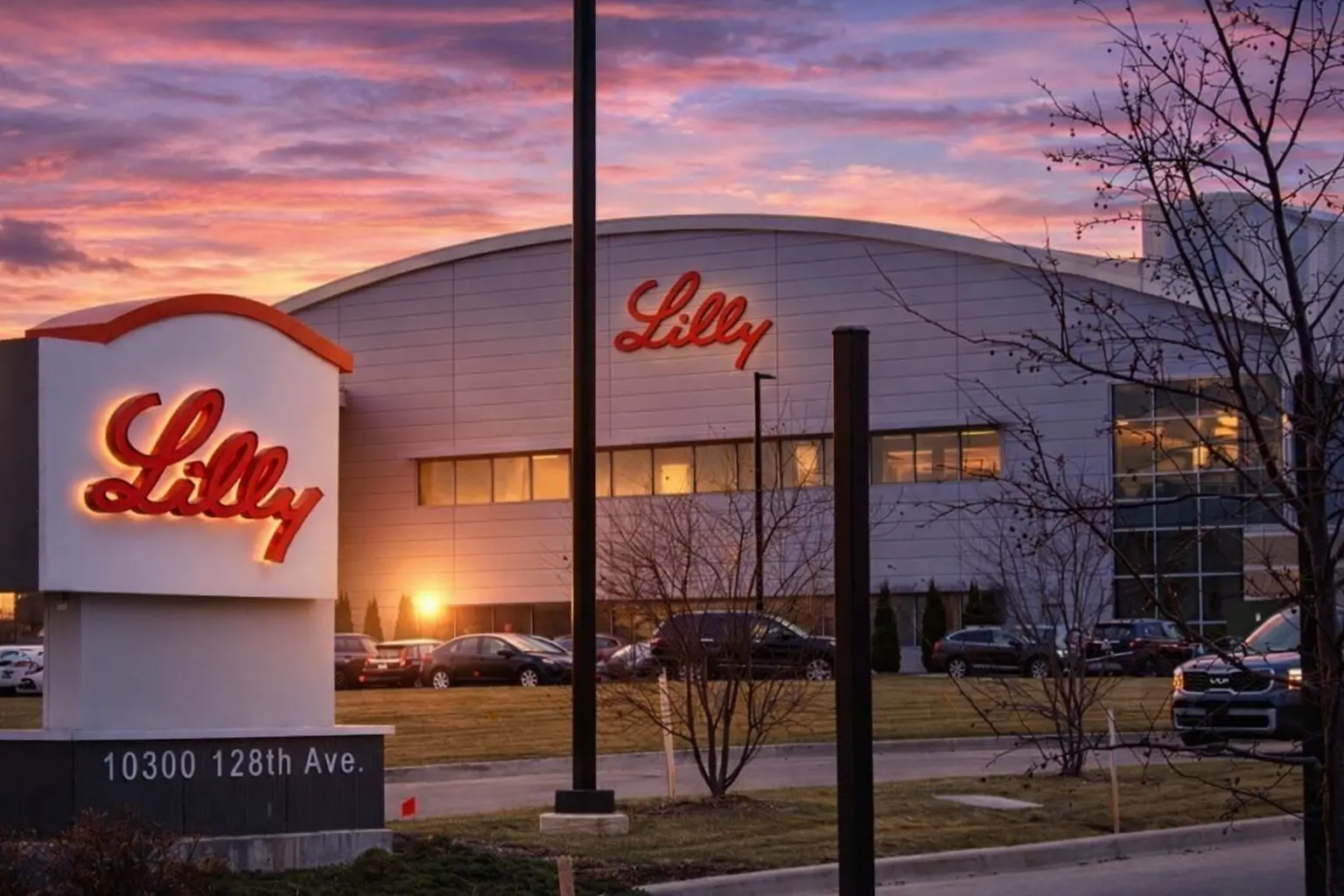
Eli Lilly and Company (NYSE: LLY) stock traded in the mid-$1,050s in U.S. session Wednesday, December 17, 2025, hovering near recent highs as investors weighed fresh analyst commentary and new partnership headlines against an already-strong run for the pharma giant. In early trading, LLY was modestly higher, with the session range spanning roughly $1,051 to $1,064.
The near-term story for Eli Lilly stock remains dominated by one theme: sustained demand for its GLP-1/“incretin” portfolio (Mounjaro and Zepbound today, and a growing next-generation pipeline for tomorrow). But the market is also increasingly focused on what comes next—especially the oral obesity candidate orforglipron and the next-wave injectable retatrutide—because those products are central to whether Lilly can justify (and extend) a valuation that has pushed toward the trillion-dollar milestone. Reuters+2Reuters+2
Eli Lilly (LLY) stock price snapshot: where shares stand on Dec. 17
- Latest trade (mid-session, Dec. 17): about $1,054–$1,057 per share, slightly up on the day in early trading.
- 52-week range: roughly $624 to $1,112, highlighting just how far the stock has run in the past year.
- Market cap / valuation context: MarketBeat’s snapshot places Lilly’s market capitalization around ~$1.0 trillion with a P/E near the low-50s, underscoring why every incremental obesity catalyst matters to sentiment.
What’s moving Eli Lilly stock today: the Dec. 17 headlines investors are watching
1) A major bank lifts its target: Deutsche Bank moves to $1,200
One of the most market-relevant items on December 17 is an analyst target increase: Deutsche Bank raised its price target on Eli Lilly to $1,200 from $1,000 and maintained a Buy rating, per MT Newswires coverage.
Why this matters for LLY stock: at today’s mid-$1,050s price level, a $1,200 target implies a double-digit upside case even after Lilly’s outsized rally—suggesting at least some Wall Street desks are still underwriting durable growth from GLP-1 scale-up and next-gen launches.
2) A new obesity R&D partnership: MEDI&GENE joins Lilly’s Catalyze ecosystem
Another fresh catalyst dated December 17: South Korea-based MEDI&GENE announced a Catalyze agreement with Eli Lilly to help advance a “next-generation” obesity therapeutic. The company said Lilly ExploR&D will contribute molecule engineering and development expertise with the goal of advancing a MEDI&GENE asset to clinical trial readiness, and framed the effort as part of Lilly Catalyze360, which offers access to R&D capabilities (and potentially capital, lab space, and technology) to accelerate biotech innovation. PR Newswire+1
For Eli Lilly stock, the immediate financial impact of an early enablement deal is usually less important than the strategic signal: Lilly is continuing to widen its obesity “surface area” beyond internal programs—seeding optionality in a market where leadership will likely be determined by who can deliver more efficacy, better tolerability, scalable supply, and broader indications over time.
3) Institutional flow: filings show more large holders adding shares (Q3 updates hitting today)
While not always a day-to-day driver of price, “smart money” positioning can influence narrative. Two MarketBeat items published December 17 highlight Q3 13F updates:
- Overbrook Management Corp reported boosting its Lilly stake by 53% in Q3, adding 14,518 shares and ending with 41,886 shares valued around $32 million.
- TruWealth Advisors LLC reported increasing its stake by 4.3% in Q3, adding 1,437 shares and ending with 34,898 shares valued around $26.6 million.
These are backward-looking filings—not breaking fundamental news—but they reinforce a recurring theme in LLY: institutional ownership remains heavy, and incremental demand for shares can persist when the growth narrative stays intact.
The bigger catalysts still shaping Eli Lilly stock into year-end
Today’s headlines sit on top of several high-impact developments from earlier in December that are still very much “current” for investors modeling 2026–2027 growth.
Retatrutide’s late-stage data raised the ceiling for next-gen weight loss
On December 11, Reuters reported that Lilly’s next-generation obesity candidate retatrutide delivered 28.7% average weight loss at the highest dose in a late-stage trial in patients with obesity and knee osteoarthritis—beating results associated with Lilly’s own Zepbound and setting a new bar for efficacy in the category. Reuters also noted seven additional Phase 3 trials for retatrutide in obesity and type 2 diabetes are expected to complete in 2026.
That matters for Eli Lilly stock because markets are increasingly forward-looking: if retatrutide can maintain strong efficacy with a manageable tolerability profile across broader populations, it could expand Lilly’s addressable market and protect share even as competition intensifies.
Orforglipron: the oral obesity “wildcard” that could change the growth curve
The other key pipeline question is timing—and the regulatory process itself has become part of the story.
- On December 12, Reuters reported FDA leadership pushed internally for a speedier review of Lilly’s experimental oral obesity pill orforglipron, after Lilly sought a faster timeline than the standard schedule. Documents described internal discussions about compressing parts of the review process under the FDA’s newer voucher program framework, though Reuters also reported internal concern and resistance around safety and process integrity.
- Reuters separately reported in November that Lilly’s CEO said the company expects FDA approval for orforglipron by March 2026.
For LLY stock forecasting, the implication is straightforward: if orforglipron reaches market earlier (or with clearer visibility on timing), it could accelerate the transition from injectable-only dominance to a broader obesity franchise—including patients who prefer pills and payers that may push for lower-cost administration.
Global access and pricing strategy: growth tailwind, margin debate
Several late-2025 developments show Lilly’s push to broaden access—often with a pricing trade-off investors will continue debating.
- China market access: Reuters reported Lilly’s diabetes drug Mounjaro will be added to China’s state-run health insurance list starting January 1, 2026, which should expand access but typically comes with price concessions after national negotiations.
- EU pediatric expansion: Reuters reported the EMA’s committee recommended extending Mounjaro use to children and adolescents aged 10+ with type 2 diabetes, a move that could expand the treated population over time (pending final regulatory steps).
- U.S. affordability push: Reuters reported Lilly cut some Zepbound prices via its self-pay program (including vial pricing adjustments) in early December as it tried to widen access for obesity patients amid intense demand.
These headlines are important to Eli Lilly stock analysis because they create a tension investors must price in: broader access can expand volume and entrench leadership, but price reductions and reimbursement negotiations can pressure per-unit economics.
Manufacturing and capacity: a key constraint Lilly is racing to remove
Eli Lilly stock’s premium valuation has long assumed the company can meet demand at scale. A notable December item: Investopedia reported Lilly plans to build a $6 billion manufacturing facility in Huntsville, Alabama, aimed at boosting domestic production and supporting programs including orforglipron—part of a broader push to expand supply amid soaring GLP-1 demand.
LLY stock forecast: where analysts see Eli Lilly shares heading next
Analyst forecasts remain broadly constructive—but the dispersion between targets reveals how divided the Street is on valuation versus growth durability.
Consensus targets (and why they differ)
- MarketBeat (updated Dec. 17): consensus rating Buy, with an average price target around $1,141.73 (high $1,300, low $900).
- Investing.com (visible on its analyst targets panel):27 analysts with an average target around $1,075.07 (high $1,500, low $770).
Different platforms can show different averages depending on which analysts are included and how recently targets are refreshed—so investors often treat these as a range rather than a single point forecast.
Notable bank moves around mid-December
- Deutsche Bank: target raised to $1,200 on Dec. 17.
- Daiwa: upgraded Lilly to Buy from Neutral and raised its target to $1,230 from $940 (reported Dec. 16).
A more aggressive bull-case model
Trefis published an analysis on December 16 titled “Eli Lilly Stock To $1383?” arguing that, despite high valuation, the stock could still have room to run given strong operating performance and financial condition. Trefis
Fundamentals investors keep returning to: growth vs. valuation
The core Eli Lilly stock debate in late 2025 can be summarized in one sentence: Is the company’s obesity-led growth durable enough to justify a premium multiple—and potentially expand it further?
The bullish case for Eli Lilly stock
Investors who remain constructive on LLY typically point to:
- Category leadership in obesity and diabetes driven by tirzepatide (Mounjaro/Zepbound), with continued expansion of indications and geographies.
- A credible “next wave” pipeline—particularly retatrutide, which posted standout late-stage results and has more Phase 3 readouts expected in 2026. Reuters
- Optionality in oral obesity if orforglipron’s regulatory path stays on track (and especially if review timing accelerates).
- Manufacturing investment intended to reduce supply constraints—an often-underappreciated driver of GLP-1 revenue realization.
- Capital return signals like the declared $1.73/share first-quarter 2026 dividend, payable March 10, 2026 (record date Feb. 13, 2026).
The bear case and key risks for LLY stock
Skeptics (or valuation-sensitive investors) focus on:
- Valuation risk: With LLY trading at a premium P/E (MarketBeat shows low-50s), the stock may be vulnerable to any growth disappointment, safety concern, or payer pushback.
- Pricing and reimbursement pressure: Expanded access in China’s state insurance system and U.S. affordability initiatives can support volumes but may pressure realized pricing and margins.
- Regulatory/process uncertainty: Reuters’ reporting on internal FDA pressure to accelerate parts of orforglipron’s review shows that timeline expectations can become politicized—and could shift again depending on process outcomes.
- Competition tightening: Novo Nordisk continues to evolve Wegovy (including higher-dose discussions in Europe), and multiple biopharma players are chasing next-gen incretins—meaning Lilly must keep innovating to defend share.
What to watch next for Eli Lilly (LLY) stock
Heading into 2026, the market is likely to keep rewarding (or penalizing) Lilly stock based on a short list of measurable milestones:
- Orforglipron regulatory timeline clarity—and whether March 2026 remains the realistic approval window.
- Retatrutide Phase 3 cadence as multiple trials complete in 2026, which could define Lilly’s next leadership phase in obesity.
- China reimbursement impact once Mounjaro enters the state insurance scheme on Jan. 1, 2026—watch for volume uptake and pricing/margin commentary.
- Evidence that manufacturing capacity is catching up to demand as new investments come online and supply constraints ease.
Bottom line: Eli Lilly stock remains a headline-driven leader—now priced for execution
On December 17, Eli Lilly stock is trading near historic highs while the news cycle adds incremental support: a raised bank target, a new obesity R&D partnership through the Catalyze ecosystem, and continued signs that large holders remain engaged.
But at today’s valuation, LLY’s next leg higher likely depends on execution—not just optimism. Investors will be watching whether Lilly can (1) keep expanding access without sacrificing too much pricing power, (2) scale supply fast enough to meet demand, and (3) deliver the next wave of clinical and regulatory wins—especially for retatrutide and orforglipron.