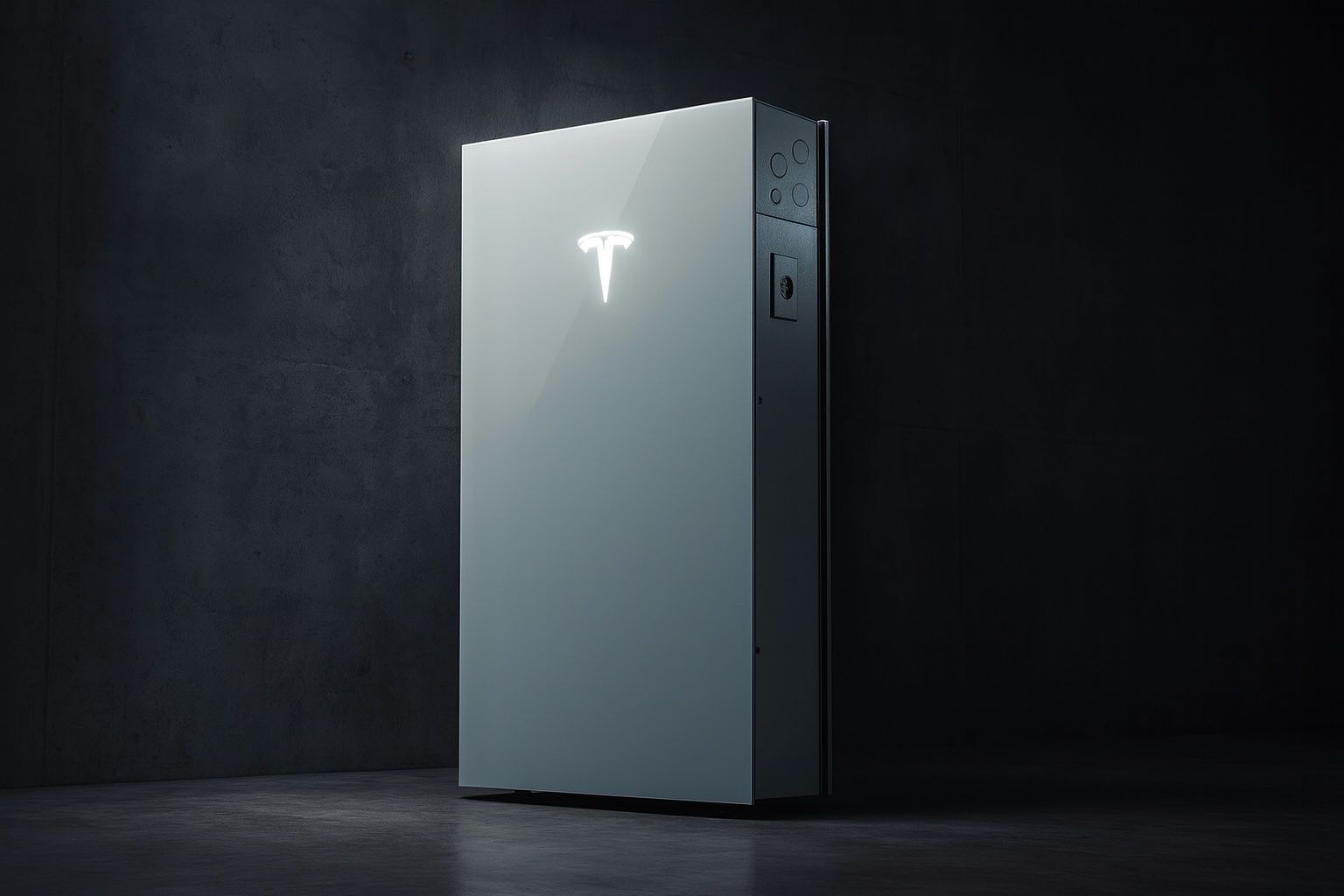
NEW YORK — Tuesday, Dec. 16, 2025 (early afternoon ET). Energy storage stocks are back in the spotlight on the U.S. stock market today, driven by three forces that rarely hit at the same time: (1) a fast-moving surge in electricity demand tied to AI data centers, (2) shifting incentives and supply-chain rules that are reshaping solar-plus-storage and grid batteries, and (3) a new round of lithium demand forecasts that explicitly prioritize energy storage system (ESS) shipments—not just installations.
That mix is creating unusually sharp differentiation inside the “energy storage” theme. Some names are moving on customer wins, partnerships and project pipelines; others are trading on policy risk, margins, and the cost curve of batteries.
Below is what matters today—the key stock moves, the biggest Dec. 16 headlines, and the forecasts analysts are using to frame 2026–2029 demand.
Energy storage stock prices today: early-afternoon snapshot (U.S.-listed)
Quotes below reflect early-afternoon trading on Dec. 16 (intraday prices can change quickly).
- Tesla (TSLA): ~$479, up ~0.9% (energy storage remains a key “second engine” narrative alongside AI/robotics/EVs).
- Fluence (FLNC): ~$20.38, down ~5.3% (volatile after recent valuation and analyst debates).
- Enphase (ENPH): ~$31.53, up ~0.5% (policy/tax-credit positioning is a near-term driver).
- Sunrun (RUN): ~$17.11, down ~1.4% (despite major Texas distributed-energy partnership headlines).
- NRG Energy (NRG): ~$159.74, down ~0.2% (in focus via virtual power plant and Texas grid demand).
- Albemarle (ALB): ~$131.02, down ~0.9% (lithium outlook increasingly tied to ESS shipment growth).
- Stem (STEM): ~$17.50, down ~1.1% (storage software + C&I exposure remains high-beta).
- Eos Energy (EOSE): ~$12.96, down ~4.9% (LDES sentiment strong overall, but small-cap volatility persists).
- ADS-TEC Energy (ADSE): ~$12.13, roughly flat (benefiting from project-win headlines).
- QuantumScape (QS): ~$10.69, down ~1.3% (battery tech names still trade sentiment-to-sentiment).
Takeaway: the tape is sending a clear message—“energy storage” is not one trade today. It’s a collection of sub-themes: grid-scale integrators, residential battery ecosystems, lithium/materials, and long-duration challengers.
The biggest energy-storage headline today: Ford’s EV pivot puts stationary batteries in the center of the AI power story
One of the most important “energy storage” catalysts today isn’t a pure-play battery company—it’s Ford.
Ford’s decision to take a $19.5 billion writedown tied to its EV strategy reset has a direct storage angle: the company is pushing into energy-storage services as demand rises from AI-linked data centers, and described a plan to invest $2 billion over two years to launch the business. Reuters+2Reuters+2
Why that matters for U.S.-listed energy storage stocks:
- Data centers are becoming the dominant “new buyer” class for grid flexibility, backup power and battery capacity—whether deployed behind-the-meter, at substations, or as part of utility-scale projects.
- Ford’s move is being interpreted as validation that stationary storage demand can outgrow portions of EV battery demand when policy support and consumer demand soften on the vehicle side. Reuters+1
- It also reinforces a narrative already supporting the sector: AI infrastructure is pulling forward spending on power generation, grid equipment, and storage, not just semiconductors. Investing.com+1
This is also why investors keep anchoring the “auto-to-storage” playbook to Tesla: Tesla’s utility-scale products (like Megapack) are widely viewed as a benchmark for how large the stationary opportunity can become when manufacturing, software and deployment scale together. MarketWatch
Tesla and the storage supply chain: cell investments in Europe keep vertical integration on the table
Tesla is trading today with broader mega-cap currents, but the storage angle is real: Reuters reported Tesla has invested $204 million to optimize operations in Germany, including battery cell production work and expansion of a battery lab. Reuters
For energy storage investors, the signal isn’t that Tesla is “becoming a battery supplier” overnight—it’s that:
- Cell availability and cost remain strategic levers for grid storage margins.
- Scaling storage in a high-demand world (data centers, electrification, grid congestion) pushes the industry toward more localized production and more control of the battery stack, especially as tariff and “foreign entity of concern” (FEOC) rules tighten. Renewables Now+1
Residential storage stocks get a policy jolt: Enphase’s safe-harbor move highlights tax-credit timing risk
Residential solar-plus-storage names are trading today with a major undercurrent: policy timing.
Enphase disclosed an expanded “safe harbor” agreement with a third-party ownership (TPO) provider, with reporting indicating ~$55 million of expected revenue across Q4 2025 and Q1 2026 (with the majority expected in Q1 2026). Stock Titan+1
Why safe harbor matters now:
- The U.S. has been moving through a period of significant clean-energy tax credit change under the One Big Beautiful Bill Act (OBBBA) framework.
- Several industry summaries and legal/industry analyses note that the Residential Clean Energy Credit (Section 25D) has faced an approaching end-of-2025 deadline, creating incentives to lock in eligibility and accelerate installations. Renewables Now
Market implication: even if long-term residential demand stays intact, the sector can experience pull-forward quarters(strong installs ahead of deadlines) followed by air pockets—and stocks can react well before the installations show up in financials.
Sunrun and NRG put virtual power plants back on the front page in Texas
Another major U.S.-market storage headline today: Sunrun (RUN) and NRG Energy (NRG) announced a multi-year Texas partnership to expand distributed energy, including home battery storage, with the aggregated capacity intended to support the ERCOT market. Business Wire+1
Reuters coverage highlighted Sunrun shares rising on the news in early trading and framed the partnership as a meaningful step for home batteries as “grid assets,” not just homeowner backup. TradingView
Why this matters for energy storage stocks broadly:
- VPPs (virtual power plants) turn thousands of small batteries into dispatchable capacity—one of the most important “software + storage” wedges in the market.
- The Texas market is increasingly a proving ground for storage economics because of load growth and the speed at which new flexible capacity is needed. San Antonio Express-News+1
For investors, this type of partnership is also a reminder that the storage winners may not be “battery-only” companies—retail power providers, aggregators, and grid-edge platforms can capture meaningful economics.
U.S. energy storage installations are still growing fast—Wood Mackenzie sees 93 GW added in five years, but flags a 2026–2027 dip
If you want the single most important market forecast shaping storage sentiment today, it’s this: a new report cited by Renewables Now says the U.S. installed 5.3 GW of energy storage in Q3 2025, up 31% year-over-year, and Wood Mackenzie projects nearly 93 GW of storage additions over the next five years. Renewables Now
Key details investors are trading around:
- Q3 installations were down 6% from the prior quarter’s record, but year-to-date installations surpassed the 2024 total. Renewables Now
- Utility-scale storage rose 27% year-over-year to 4.6 GW, with Texas and California representing 82% of added capacity. Renewables Now
- Residential storage jumped 70% year-over-year to 647 MW, led by California, Arizona and Illinois—plus a Q4 “rush” dynamic ahead of Section 25D changes. Renewables Now
But here’s the nuance markets care about: Wood Mackenzie also expects declines in 2026 and 2027 (down 11% and 8%, respectively, for U.S. utility-scale storage) due to near-term supply-chain adjustments and constraints as domestic manufacturing ramps to meet tariffs and FEOC requirements. Renewables Now
Translation for stock pickers: growth is real, but the path is lumpy—and companies with strong procurement, domestic content strategies, and contracting discipline may outperform in a choppy two-year window.
Lithium-linked storage stocks: Morgan Stanley upgrades Albemarle as “ESS shipments” reshape demand math
The other big “forecast meets stocks” moment today is in the lithium complex.
A Reuters/Refinitiv note carried by TradingView reports Morgan Stanley upgraded Albemarle (ALB) to equal-weightfrom under-weight, sharply lifting its price target to $147 from $58, citing a lithium rally driven by energy storage system shipments and expecting lithium demand to rise 15% in 2026 under that framework. TradingView
Two reasons this matters beyond Albemarle:
- ESS shipments vs. installations: Installing a project and shipping cells/modules do not always line up in the same quarter. When analysts shift their demand model to shipments, it can change how they forecast prices—and which parts of the supply chain look tight. TradingView+1
- Storage is no longer “the secondary driver”: In many demand outlooks, grid and behind-the-meter storage is increasingly treated as a primary demand engine, alongside EVs—especially when EV growth is less linear. Reuters+1
A widening bottleneck risk: the U.S. still relies heavily on China for battery and grid equipment
Even as U.S. policymakers push for domestic manufacturing, the global supply chain reality is still a market-moving issue for energy storage stocks.
A Financial Times report today described how Chinese power equipment and energy storage companies are benefiting from AI-driven infrastructure buildouts, while also underscoring that the U.S. continues to import critical components at scale—reporting that 60% of U.S. lithium-ion battery imports came from China in 2025, with additional tariff increases and tighter rules expected in 2026. Financial Times
For U.S.-listed storage stocks, the near-term investment questions become:
- Who can source cells competitively if trade friction increases?
- Who has pricing power (or contracting structures) to pass through cost swings?
- Which developers and integrators are best positioned if domestic manufacturing constraints slow deployments in 2026–2027? Renewables Now+1
Long-duration energy storage (LDES): today’s analysis argues “hours aren’t enough” for the next grid cycle
Not all storage is four-hour lithium.
A Utility Dive opinion piece published today argues the U.S. needs to coordinate short-duration storage (like LFP batteries) with multi-day storage to build a reliable grid—especially as data centers scale. The piece cites an expectation that data centers could pull 130 GW by 2030 and notes that typical LFP systems average around four hours of duration, making them less suited to multi-day weather events on their own. Utility Dive+1
Whether investors agree or not, this is important because:
- It supports the “next leg” narrative for storage after lithium: iron flow, thermal, compressed air, hydrogen-adjacent solutions, and other LDES approaches.
- It also frames a risk to traditional battery-only stacks in certain applications: duration requirements may increase, pushing procurement toward different chemistries or architectures.
New projects (and new opposition): Texas and municipal procurement show storage demand is real—but siting risk is rising
Two Texas-centric developments today highlight the balance between buildout speed and community friction:
- CPS Energy (San Antonio) has issued an RFP seeking 500 MW of battery storage—part of a broader generation plan as it retires older plants and plans for rising demand, including from data centers. San Antonio Express-News
- In the Texas Hill Country, Gillespie County joined a lawsuit seeking to stop construction of a 145 MW battery storage facility, citing safety and environmental concerns—part of a broader trend of local scrutiny around BESS siting. San Antonio Express-News
For energy storage stocks, this isn’t just “local news.” It points to a real market variable for 2026: permitting timelines, fire-safety standards, and community acceptance can all affect project cadence.
A smaller but notable stock-specific win: ADS-TEC Energy lands a municipal BESS contract
Among U.S.-listed smaller caps tied to storage hardware, ADS-TEC Energy (ADSE) announced today it won a contract from a German municipal utility to supply a 5 MWh battery energy storage system for integration with a biomass CHP plant, positioned as a reference for decentralized storage in regulated European distribution grids. Mynewsdesk
These smaller project wins rarely move the whole sector—but they matter because they show how storage revenue models are evolving toward grid services, ancillary services, and recurring revenues tied to operation.
What to watch next for energy storage stocks
1) The “AI power buildout” trade is broadening
AI infrastructure spending is increasingly pulling in power generation, grid equipment, storage, and fuel-flexible solutions—not just chips. The question for storage stocks is whether demand shows up as high-margin contracted backlog or lower-margin scramble for cells and EPC capacity. Reuters+2Utility Dive+2
2) 2026–2027 could be a digestion period for U.S. utility-scale storage
Wood Mackenzie’s expectation of an 11% and 8% decline in utility-scale storage in 2026–2027 is a reminder that policy and supply-chain shifts can temporarily slow deployments even in a structurally growing market. Renewables Now
3) Residential storage faces a “pull-forward then pause” setup
With Section 25D timing and safe-harbor strategies in focus, residential names may see strong near-term activity—but investors should watch for demand gaps after deadline-driven surges. Stock Titan+1
4) Lithium price sensitivity is back—because storage is back
When a major bank upgrades a top lithium name explicitly on ESS shipments, that’s a signal the market is reweighting storage as a demand pillar. TradingView
Bottom line
Energy storage stocks today are being driven by real-world load growth (AI data centers), real-world policy constraints (tariffs/FEOC rules and shifting tax credits), and real-world deployment momentum (5.3 GW installed in Q3 and nearly 93 GW projected over five years). Renewables Now+1
But the market is also making something else clear on Dec. 16: the winners may be those who can execute through a messy 2026–2027 transition period—securing supply, protecting margins, and navigating siting and regulatory friction—while still capturing the long-term battery buildout.
This article is for informational purposes only and is not investment advice.