
FREMONT, California, April 29, 2026, 07:08 (PDT)
Enphase Energy tumbled roughly 7.3% to $31.80 at the open on the Nasdaq this Wednesday, after the solar-equipment firm logged a drop in first-quarter revenue and swung to a GAAP loss. Adjusted earnings managed to top estimates, but revenue landed at $282.9 million, sliding from $356.1 million a year ago.
Enphase stands out as a key bellwether for U.S. rooftop-solar demand now that the Section 25D federal residential clean energy tax credit is gone. The company reported U.S. revenue down roughly 23% from the previous quarter. As for sell-through — shipments making their way to actual customers — that figure dropped 48% from Q4 and is off 18% from a year ago.
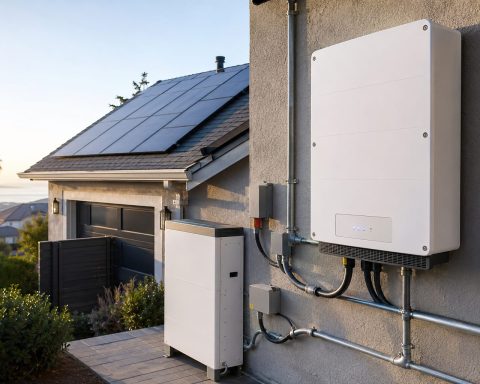
Enphase, which makes microinverters—those devices that convert solar energy into grid-compatible electricity—and also offers home batteries, is lowering its first- and second-quarter sell-through forecasts. CEO Badri Kothandaraman told analysts the company now sees expectations running “10% to 15% below our prior view.” He pointed to tougher TPO (third-party ownership) financing and poor weather as key factors, referring to lease or power purchase models where a third party owns the solar setup. The Motley Fool
The top-line results weren’t exactly a whiff. Sales slipped past the $282.3 million FactSet call, and adjusted earnings landed at 47 cents a share, beating the consensus by four cents. Enphase set its second-quarter revenue outlook midpoint close to where analysts expected. Still, shares dropped anyway—traders were looking for firmer signs that demand has actually hit bottom, not just a marginal beat.
Enphase posted a net loss of $7.4 million, or 6 cents per diluted share, under GAAP. Stripping out certain items, the company’s adjusted profit stood at $62.3 million with a non-GAAP gross margin of 43.9%. According to Enphase, reciprocal tariffs shaved 4.3 percentage points off first-quarter margins.
Enphase is projecting second-quarter revenue in the range of $280 million to $310 million. That figure includes approximately $85 million in safe-harbor shipments, plus battery shipments totaling between 100 and 110 megawatt-hours. Safe-harbor sales refer to orders for products that customers intend to install over an extended timeline, typically to maintain eligibility for tax credits.
Liquidity held up, though volumes weren’t what they’d been. Enphase wrapped up the quarter with $930.6 million in cash, cash equivalents, and marketable securities, following a $632.5 million cash settlement on its 2026 convertible notes. The company also offloaded $235 million in advanced manufacturing production tax credits at 93 cents on the dollar—a move that introduced a discount and extra fees, dragging down the GAAP gross margin.
It wasn’t just Enphase taking the hit. Shares of SolarEdge Technologies, another solar power-electronics firm, slid roughly 7.6% at the open. Sunrun, which focuses on rooftop solar installations, lost around 4.2%.
Management wants investors to look past just the U.S. rooftop-solar trend. Kothandaraman highlighted Enphase’s PROPEL prepaid lease initiative—currently, 200 installers are on board, with around 200 new leases started each week. He also mentioned some “green shoots” in Europe, but added a caution: “market is fickle right now.” The Motley Fool
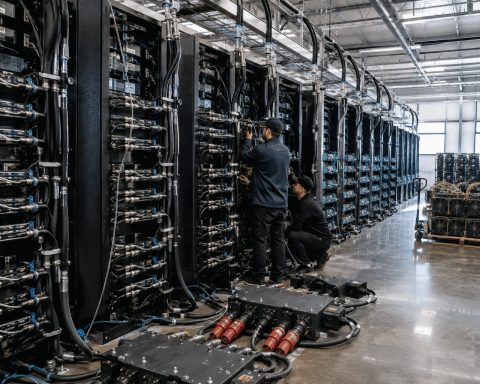
Enphase rolled out its IQ Solid-State Transformer targeting AI data centers—a power-conversion solution designed to convert medium-voltage AC straight into low-voltage DC in a single step. Each 1.25-megawatt rack is set to incorporate 342 power modules, according to the company. Full-scale demos are planned before year-end, while customer pilots are on the calendar for 2027. Volume shipments aren’t expected until 2028.
“AI is changing how power must be delivered,” Kothandaraman said during the product launch. Raghu Belur, who co-founded Enphase and serves as chief product officer, pointed back to the company’s original thesis: “distributed architectures would outperform centralized architectures.” That point was meant to frame the new AI product as a direct outgrowth of Enphase’s inverter business, rather than some offshoot. Enphase Energy
Enphase had already started trimming expenses. Back in January, Reuters said the company planned to lay off roughly 160 employees—just under 6% of its staff—and aimed to get adjusted operating costs down to $70 million to $75 million each quarter beginning with Q3. For the first quarter, non-GAAP operating expenses landed at $77 million.
Still, a recovery isn’t locked in. Enphase faces lingering channel inventory, erratic safe-harbor revenue, margin pressure from tariffs, and its data-center offering isn’t expected to ship at scale for years. The company’s own risk disclosures flagged possible demand swings, shifting policies, buyer behavior, supply snags, and product validation as factors that could push results away from current guidance.
Related articles: Renewable Energy