
Houston, May 9, 2026, 11:04 CDT
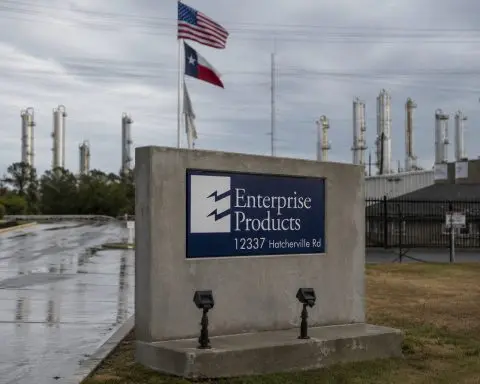
Enterprise Products Partners L.P. units slipped 1.4% to $37.19 on Friday after the company released its 10-Q on May 7. The filing revealed lower revenue for the first quarter, though earnings came in higher. Investors are digesting the numbers from one of the country’s biggest midstream energy players.
Timing is key here. With Enterprise’s first-quarter cash distribution just days away, the fresh filing offers investors a sharper read on whether those record volumes will make up for weaker commodity-linked marketing revenue. The company’s payout stands at $0.55 per common unit—annualized, that’s $2.20. Holders of record as of April 30 are set to receive the distribution on May 14, according to the company.
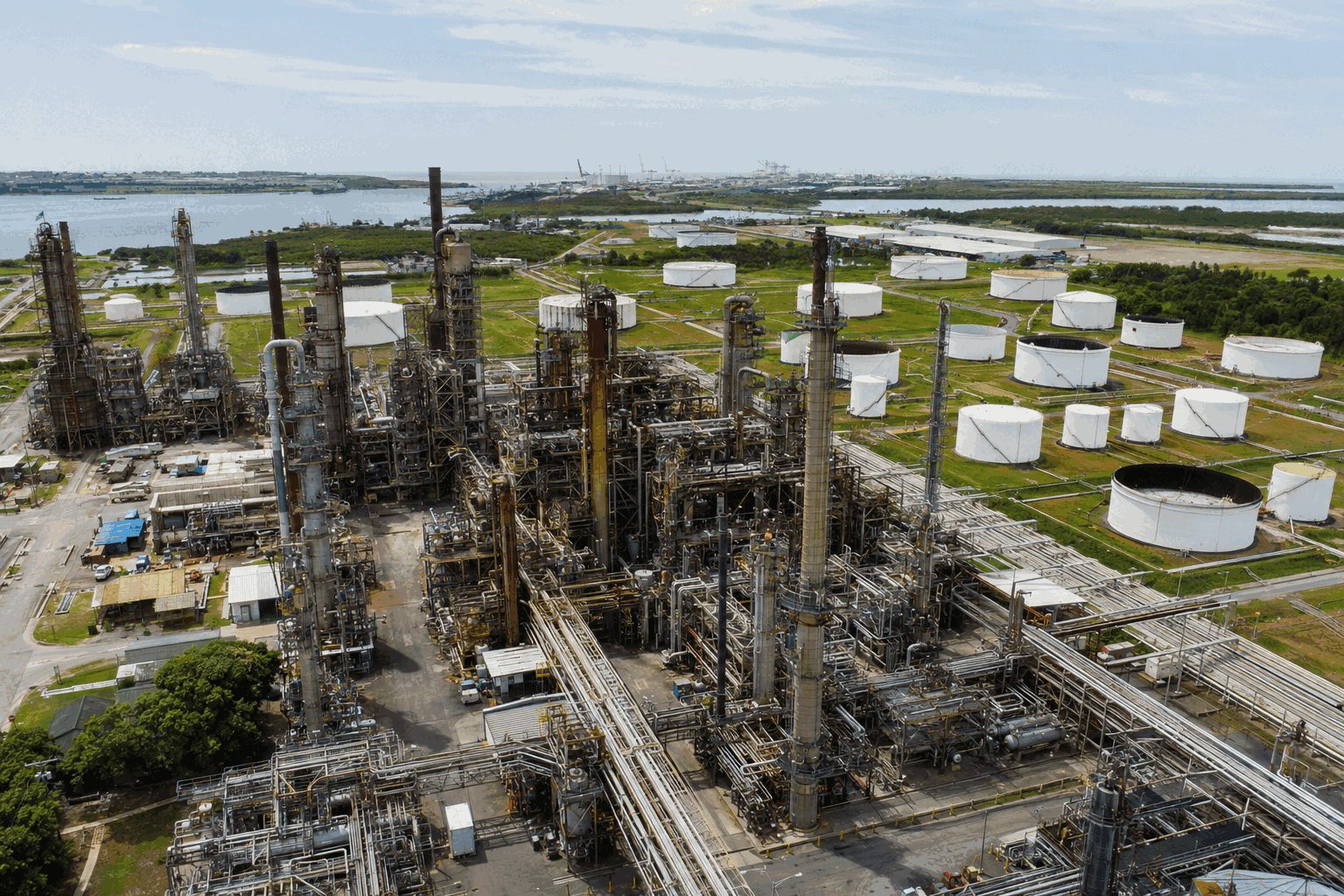
Income-focused investors have more on their minds than simply the size of the next distribution. Enterprise faces a packed lineup of projects, most of them linked to surging demand from Permian Basin gas, NGLs, and Gulf Coast exports. Natural gas liquids—think ethane, propane—get separated from natural gas and find their way into everything from plastics to petrochemical production and fuel.
Houston’s partnership posted first-quarter revenue of $14.39 billion, sliding from $15.42 billion last year. Net income for common unitholders ticked up to $1.48 billion versus $1.39 billion, with diluted earnings per common unit climbing to 68 cents from 64 cents, according to the filing.
The revenue decline traced back to marketing. Enterprise reported a $1.0 billion drop in total revenue from a year ago, pointing to a sharp fall in marketing revenue as the culprit. NGL marketing brought in $1.4 billion less, even as crude oil marketing revenue rose by $1.2 billion thanks to increased sales volumes.
A.J. “Jim” Teague, co-CEO of Enterprise’s general partner, called it “a strong start,” highlighting “12 new operational records” for the quarter. The company logged record natural gas processing inlet volumes at 8.3 billion cubic feet per day, pipeline volumes reaching 14.2 million barrels per day, NGL fractionation at 1.9 million barrels per day, and marine terminal volumes at 2.3 million barrels per day. Enterprise Products Partners L.P.
Enterprise’s adjusted EBITDA came in at $2.7 billion, a 10% increase. The company also posted operational distributable cash flow at $2.1 billion—a non-GAAP metric common among pipeline partnerships for tracking cash that can be paid out or reinvested. That figure was enough to cover declared distributions by a factor of 1.8, according to the company.
The scale of Enterprise’s build-out hasn’t let up. According to its 10-Q, the company projects organic capital spending in 2026 of roughly $3.5 billion to $3.8 billion—$2.9 billion to $3.2 billion of that pegged for growth, prior to factoring in asset-sale proceeds. Management flagged that actual totals may shift, depending on funding conditions or when projects break ground.
Enterprise wasn’t the only one under pressure. Energy Transfer slipped to $19.34 by Friday’s close, while Williams settled at $71.96, and Kinder Morgan wrapped up at $31.41. Despite their different business models, several major U.S. midstream stocks got hit.
Still, there are risks in play. Enterprise’s filing points to a list of potential hits to demand—everything from tougher economic conditions and weaker consumer appetite for hydrocarbon goods, to regulation, competition, and even the weather. Interest rates and commodity price swings are another concern. The company says it mainly turns to derivatives for hedging, not speculation.
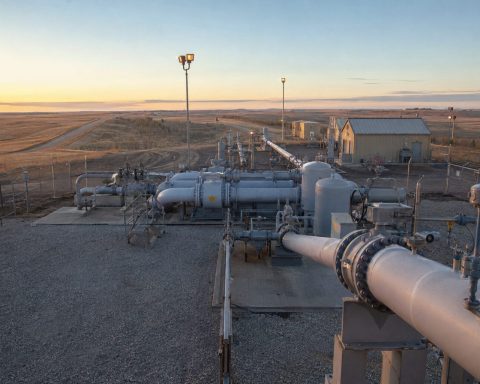
Enterprise still stands as a key midstream player across North America, handling natural gas, NGLs, crude, refined fuels, and petrochemicals via an array of pipelines, storage, processing plants, and marine terminals. Now comes the harder part: converting those fresh volume highs into actual cash, all while managing distributions, debt, and capex without tipping the scales.