Updated: December 14, 2025
US-listed EV and clean energy leaders enter the new week with a rare mix of tailwinds and tripwires: a fresh Federal Reserve rate cut that should support long-duration growth stocks, a catch-up “data deluge” after the fall government shutdown, and a policy backdrop that’s now the single biggest swing factor for renewables and EV demand.
The story of Dec. 8–14 wasn’t just about individual tickers—it was about the new hierarchy of catalysts: (1) US demand signals after the EV tax-credit reset, (2) whether Big Tech’s power appetite accelerates clean power buildouts or pulls capital toward gas and on-site generation, and (3) how fast federal permitting and subsidy rule changes filter into project pipelines.
Below is what mattered most across EVs, solar, storage, utilities and grid equipment—and what to watch in the week ahead.
Market backdrop: rates eased, but the next move depends on delayed data
The Fed cut its benchmark rate by 0.25 percentage point to a 3.50%–3.75% target range on December 10, while emphasizing a data-dependent approach going forward. Federal Reserve+1
That matters for clean-energy and EV equities because many are effectively “duration assets”: they benefit when discount rates fall, but they can re-rate sharply when inflation surprises or bond yields jump.
Now comes the bigger near-term driver: a concentrated week of catch-up US economic releases.
The week-ahead macro calendar that can move EV and clean-energy stocks
Because the 43-day US government shutdown disrupted data collection and publication, key releases have been rescheduled and, in some cases, combined or canceled.
Tuesday, Dec. 16
- Employment Situation (November 2025) is scheduled for release at 8:30 a.m. ET. BLS notes October’s Employment Situation report won’t be published; some establishment survey data for October will be published with November’s data. Bureau of Labor Statistics+1
- Advance Monthly Sales for Retail and Food Services (October 2025) was rescheduled for Dec. 16 by the US Census Bureau. Census.gov
Thursday, Dec. 18
- Consumer Price Index (November 2025) is scheduled for 8:30 a.m. ET. Bureau of Labor Statistics+1
Market calendars are flagging this week as unusually important precisely because investors are trying to rebuild a clean read on growth, jobs and inflation—inputs that directly affect financing costs for renewables and consumer demand for EVs. Kiplinger+1
What happened in EV stocks (Dec. 8–14): demand reality check, autonomy hype, and more downgrades
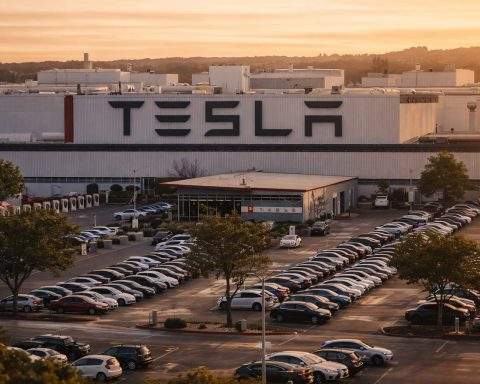
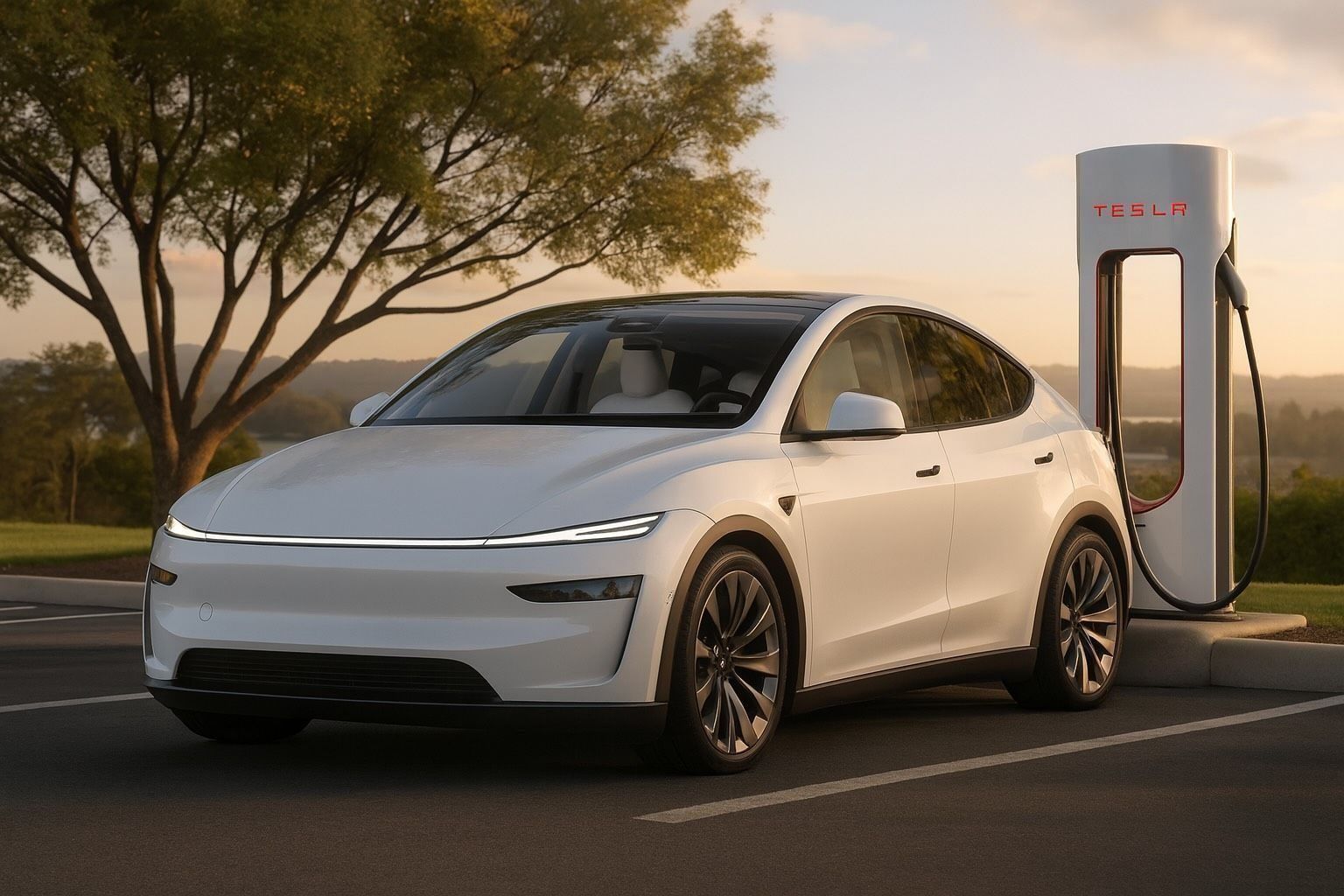
1) Tesla’s US demand signals turned into the week’s headline risk
A key datapoint for EV sentiment hit on Dec. 11: Tesla’s US sales fell nearly 23% in November to about 39,800 vehicles, the lowest since January 2022, according to Cox Automotive data cited by Reuters. Reuters
Two details in that report mattered to investors tracking “EV demand vs. incentives”:
- Reuters cited Cox data showing overall US EV sales fell more than 41% in November, with the tax-credit expiration weighing on the broader category. Reuters
- Tesla’s market share rose to 56.7% from 43.1% even as its volumes declined—suggesting the market contracted, not just Tesla. Reuters
Tesla also leaned on pricing/financing levers, with Reuters pointing to 0% financing offers on a Standard Model Y and discounted inventory listings—moves often read as demand support tactics when the product cycle is mature. Reuters
Week-ahead implication: if Tuesday’s rescheduled jobs report and Thursday’s CPI print push yields higher, the market may again pressure high-multiple EV leaders—especially those needing demand acceleration into 2026.
2) Global EV growth slowed—and North America stood out for the wrong reasons
A separate macro check on EV adoption came from global registration data: Reuters reported that global EV registrations rose 6% in November to just under 2 million, but growth was the slowest since February 2024. Reuters
The geographic split is what US EV investors should focus on:
- China: up 3% to more than 1.3 million registrations (a “plateau” dynamic). Reuters
- North America: down 42% to just over 100,000 registrations following the end of US tax credits, leaving the region down 1% year-to-date in Reuters’ cited data. Reuters
- Europe + Rest of World: strong growth, helped by national incentives (Europe up 36% in the same Reuters report). Reuters
Week-ahead implication: US demand is now the swing factor for US-listed EV pure plays (Tesla, Rivian, Lucid) and for suppliers that depend on North American volumes.
3) Rivian turned the narrative—Autonomy + AI Day drove a sharp repricing
Rivian delivered one of the week’s most dramatic single-stock moves. Reuters reported shares surged about 18% after analysts reacted positively to its AI strategy and a custom self-driving chip initiative. Reuters
Key takeaways investors latched onto:
- Rivian said its R2 models (expected in the first half of 2026) will use a new Rivian Autonomy Processor manufactured by TSMC. Reuters
- The company introduced pricing for a paid driver-assistance package ($2,500 one-time or $49.99/month) and set an ambition for “eyes-off” capability in 2026, while acknowledging current systems still require supervision. Reuters
- The Wall Street Journal also described Rivian’s plan to rapidly expand hands-free coverage and push toward an AI-first autonomy approach. The Wall Street Journal
Week-ahead implication: Rivian’s move reinforces a 2025 market pattern: autonomy/software optionality can matter as much as near-term unit economics—especially in a post-credit demand slowdown.
4) Morgan Stanley’s “EV winter” framing spread beyond Tesla
In analyst commentary that circulated widely on Dec. 8, Morgan Stanley’s new auto analyst shifted ratings across the space—downgrading Tesla and Rivian and cutting Lucid while upgrading General Motors, a signal that some strategists see the EV adoption pause lasting into 2026. Barron’s+1
The common thread: valuation and demand. Tesla’s downgrade was framed as a case where AI/robotaxi upside is increasingly “in the price,” while weaker EV demand and policy changes raise the risk of choppy trading conditions. MarketWatch+1
Week-ahead implication: In a macro-heavy week, “valuation discipline” narratives can regain influence—particularly if CPI surprises to the upside.
Clean energy stocks (Dec. 8–14): AI power demand is real, solar is growing fast, but permitting risk is rising
1) NextEra put Big Tech power demand at the center of the US clean-energy playbook
A major clean-energy headline came early in the week: Reuters reported NextEra Energy expanded its partnership with Google Cloud and secured more than 2.5 GW of clean energy contracts with Meta across the US. Reuters
The detail that matters for “clean energy leaders” investors:
- NextEra described multiple gigawatt-scale data center campuses integrated with new generation and capacity, plus an AI-driven grid reliability product targeted for mid-2026. Reuters
- Reuters also reported NextEra raised its earnings outlook for 2025 and 2026, reflecting confidence in demand-linked project flow. Reuters
Week-ahead implication: utilities and large developers tied to data-center load growth (and capable of building generation + storage at scale) are increasingly seen as “AI picks-and-shovels” in the public markets.
2) US electricity demand forecasts keep climbing—and clean supply is racing reliability needs
The Energy Information Administration forecast that US electricity consumption will reach record highs in 2025 and 2026, underlining the structural demand tailwind behind renewables, storage, grid upgrades and flexible generation. Reuters
At the same time, Reuters described Big Tech and utilities shifting to an “all of the above” approach (renewables, storage, gas and more) to keep up with AI-driven load growth, citing an S&P Global outlook projecting data-center power supplies rising sharply through 2030. Reuters
Week-ahead implication: this demand surge supports the long-term case for solar, storage and grid equipment—but it also invites political and regulatory scrutiny on siting, permitting, and cost pass-through to consumers.
3) Texas delivered a symbolic solar milestone—with real numbers behind it
A Reuters analysis highlighted a milestone in the nation’s largest power network: Texas’ ERCOT grid is on track to generate more power from solar than coal in calendar year 2025.
From January through November, ERCOT generated 2.64 million MWh from solar versus 2.44 million MWh from coal, per data compiled by LSEG cited by Reuters. Reuters
The same report emphasized that:
- Solar accounted for a record 14% of ERCOT’s generation mix Jan–Nov (coal: 13%). Reuters
- Texas is also a leading deployer of utility-scale battery storage, which supports the solar buildout by shifting midday production into peak periods. Reuters
Week-ahead implication: this is a tangible demand-and-deployment signal for US solar developers, EPCs, storage integrators, and inverter suppliers—especially those positioned in utility-scale builds.
4) US solar installations surged—but the outlook is getting more segmented
Another high-signal data point: Reuters reported the US installed 11.7 GW of new solar capacity in Q3, up 49% sequentially, citing a Solar Energy Industries Association (SEIA) and Wood Mackenzie report. Reuters
Solar also represented 58% of all new electricity-generating capacity added through Q3, with more than 30 GW installed year-to-date in the same report. Reuters
But the same Reuters piece and follow-on detail flagged a more mixed near-term setup:
- SEIA lowered its near-term outlook for 2025 and 2026 residential solar by 2% and 8%, respectively, and said module availability is expected to remain tight through next year. Reuters
Week-ahead implication: utility-scale solar and storage leaders may remain better insulated than residential-focused names if financing conditions and consumer affordability stay pressured.
5) The biggest clean-energy headline risk: federal permitting bottlenecks
Perhaps the most market-moving policy story for US renewables was Reuters reporting that President Donald Trump’s administration has effectively frozen approvals for major onshore wind and solar projects at a moment when electricity demand is accelerating. Reuters
Key details from Reuters’ reporting:
- Only one solar project has been approved on federal lands since Trump took office in January, and none have been permitted since July, after Interior Secretary Doug Burgum required personal sign-off for new renewable permitting decisions. Reuters
- Wood Mackenzie identified 18 GW of solar projects on federal lands that were canceled or are inactive due to limited progress since the start of the year. Reuters
- SEIA estimated 500+ solar and storage projects are threatened by the freeze. Reuters
Week-ahead implication: for US-listed clean-energy developers and equipment suppliers, the policy variable isn’t abstract anymore—it’s showing up as real pipeline friction that can delay revenue recognition and raise project finance costs.
6) A partial offset: a federal judge struck down a wind-permit halt
In a separate ruling with direct implications for US wind developers and their supply chains, Reuters reported a federal judge struck down the administration’s order to halt federal approvals for new wind projects, calling the agencies’ efforts unlawful and arbitrary. Reuters
Week-ahead implication: legal challenges can open windows of opportunity—but investors should expect a stop-start cycle where permitting and eligibility rules shift via litigation, agency guidance, and enforcement posture.
The “infrastructure layer” trade: grid equipment and critical materials returned to the spotlight
GE Vernova and the rare-earth supply chain: a reminder that electrification has hard constraints
Reuters reported GE Vernova is working with the US government to increase stockpiles of yttrium, a rare earth used in specialty alloys and coatings for high-temperature applications like gas turbines. Reuters
Reuters cited CEO comments that GE Vernova has inventories “to last the rest of 2025 and into next year,” while also noting prices outside China reportedly rose sharply in 2025 amid export controls and shortages. Reuters
Why it matters for clean energy stocks: even as solar and batteries scale, the grid still needs firm capacity and fast-build infrastructure—and supply chains for turbines, transformers and specialty alloys can become binding constraints on “electrify everything” timelines.
EV & Clean Energy Leaders: the US stock watchlist (themes, not hype)
Rather than treating the sector as one trade, the week’s news reinforced that investors are now pricing five distinct buckets:
- EV incumbents and challengers (demand + autonomy)
- Tesla (TSLA), Rivian (RIVN), Lucid (LCID), plus legacy OEMs like Ford (F) and GM (GM) where capital allocation is shifting with policy and demand.
- Charging and EV infrastructure (utilization + funding risk)
- Charging networks remain sensitive to EV volume growth and subsidy frameworks.
- Utility-scale solar + storage (AI load growth + permitting)
- US solar buildouts are strong in the data, but permitting rules increasingly decide timelines.
- Regulated utilities and clean power developers (contracting + rate base)
- NextEra’s Big Tech contracting momentum highlights how data centers are reshaping utility investment cycles. Reuters
- Grid equipment and “electrification enablers” (supply chain + capex cycle)
- GE Vernova’s rare-earth focus underscores supply-chain sensitivity even in an AI-driven demand boom. Reuters
Week-ahead playbook: 7 catalysts that can move the whole group
- Dec. 16 employment report (and revisions/combination effects): could move rates and risk appetite. Bureau of Labor Statistics+1
- Dec. 16 retail sales release (rescheduled): EV and residential solar are ultimately consumer affordability trades. Census.gov
- Dec. 18 CPI: the most direct lever for yields and valuation multiples. Bureau of Labor Statistics
- Policy headlines on permitting/subsidy eligibility: renewables developers remain headline-sensitive after the Reuters permitting freeze reporting. Reuters
- Follow-through from Rivian’s autonomy pivot: after the rally, markets will scrutinize execution milestones and monetization assumptions. Reuters
- Tesla demand narrative into year-end deliveries: November’s US data raises the bar for a Q4 re-acceleration story. Reuters
- Quarterly options expiration (Fri., Dec. 19): high-beta names can see amplified moves even without new fundamentals.
Bottom line for the week of Dec. 15–19
If you’re tracking EV & clean energy leaders in US stocks, the core question into year-end is no longer “Is electrification happening?”—the data says it is. The question is where the bottlenecks land:
- EVs: demand elasticity after the tax-credit reset, and whether autonomy/software narratives can carry valuations through a volume pause. Reuters+1
- Clean power: AI-driven load growth is pushing utilities and developers to sign big contracts, but federal permitting and subsidy rules can still slow the buildout. Reuters+1
- Rates: this week’s delayed macro releases (jobs, retail sales, CPI) are likely to set the tone for the entire complex into the final stretch of 2025. Bureau of Labor Statistics+1
As always, treat the week as a catalyst cluster: even high-quality leaders can swing sharply when rates, policy, and risk appetite shift at the same time.