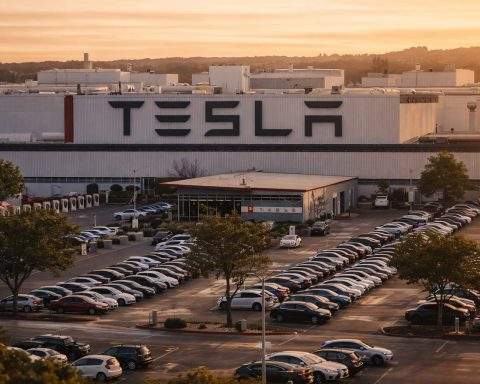
Electric vehicle (EV) stocks are closing out 2025 in a market that looks nothing like the “straight-line adoption” story many investors priced in just a couple of years ago. The headlines on Dec. 20 span corporate governance at Tesla, a renewed autonomy narrative at Rivian, and fresh uncertainty around incentives and regulation in both the U.S. and Europe—each with real implications for margins, volumes, and valuation multiples going into 2026. The Verge+3Reuters+3InsideEVs+3
The throughline is clear: EV stocks are increasingly trading less on “EV penetration” alone and more on (1) software and autonomy optionality, (2) policy and tariff risk, and (3) affordability and inventory reality in core markets. The result is a sector that can still rally hard—but often for very different reasons than in the last cycle. Reuters+3The Verge+3InsideEVs+3
The big 2026 setup for EV stocks: demand volatility, fewer incentives, and a software premium
One of the most important signals for EV investors today is not a single company’s delivery estimate—it’s the shape of demand. Cox Automotive estimates (as cited by InsideEVs) point to U.S. EV sales falling 2.1% in 2025 to about 1.275 million, with battery-electric share of total U.S. sales down to 7.8% (from 8.1% in 2024). InsideEVs also highlights Cox’s view that Q4 2025 ends near 230,000 EV sales, with EV share around 5.7% in the quarter.
Cox Automotive’s own materials underline why the sector is so sensitive to incentives and pricing: only 9 EV models are available under $40,000 versus 56 ICE+ models, and while vehicles under $40K account for 38.7% of industry sales, they make up just 3.7% of EV sales (using November 2025 data). This affordability gap is a major reason EV stock narratives are shifting from “everyone will adopt soon” to “adoption is segmented, and pricing power matters.” Cox Automotive Inc.
Meanwhile, the incentive backdrop has changed materially. InsideEVs describes a pull-forward of demand ahead of the $7,500 U.S. EV tax credit expiration on Sept. 30, followed by a sharp drop. That dynamic—buy now before subsidies vanish, then demand air-pocket—has become a defining feature of the EV tape.
Tesla stock: governance drama eases, but delivery and margin questions intensify
1) Musk pay package restored—big implications for control, dilution, and focus
Tesla dominated EV-stock headlines overnight after the Delaware Supreme Court restored Elon Musk’s 2018 Tesla pay package, which Reuters reports is now worth about $139 billion due to Tesla’s stock price rise. Reuters also notes Tesla shareholders recently approved a new pay package that could be worth $878 billion if performance targets are met, and outlines how Musk’s ownership could rise if the options are exercised.
Beyond the eye-popping numbers, the market takeaway is structural: the ruling potentially reduces one major overhang on Tesla’s governance and leadership stability (at least near term), while keeping attention on how equity awards and performance targets translate into future dilution and internal incentives. Reuters reports Tesla is now incorporated in Texas and highlights new threshold rules that can make certain shareholder lawsuits harder to bring.
2) Deutsche Bank: Q4 deliveries could undershoot—Western markets in focus
On the fundamentals side, Deutsche Bank analyst Edison Yu expects Q4 2025 deliveries around 405,000, implying -14% year over year and -19% quarter over quarter, with delivery declines projected at -34% in Europe and -33% in North America, and about -10% in China. Deutsche Bank also models full-year 2025 at 1.62 million vehicles versus 1.66 million consensus, implying a 9% year-over-year decline under its assumptions, and forecasts automotive gross margin ex-credits at 14.4% (down 100 bps sequentially).
Crucially for Tesla stock, Deutsche Bank argues the robotaxi narrative remains a key valuation support, even as near-term deliveries and margins face pressure—and notes Tesla’s Austin testing progress while cautioning about timelines.
3) U.S. sales data shows the demand challenge is not just theoretical
Independent of forecasts, recent U.S. sales and share data adds texture. MarketWatch reports Tesla is facing one of its weakest U.S. sales quarters since 2022, with Q4 U.S. deliveries estimated down about 22% year over year, and total U.S. deliveries for 2025 around 577,097 (down 8.9%), implying U.S. share falling to 3.5%.
Cox Automotive’s presentation similarly shows Tesla’s estimated U.S. sales at 125,937 in Q4 2025 versus 162,388 in Q4 2024 (about -22.4%), and CY 2025 at 577,097 versus 633,762 in CY 2024 (about -8.9%), with share 3.5% in 2025.
Reuters adds a more recent snapshot: in November 2025, Tesla’s U.S. sales fell nearly 23% year over year to about 39,800 units (Cox Automotive data), despite the launch of cheaper “Standard” variants of the Model Y and Model 3. Reuters
Investor lens for Tesla stock into 2026: Tesla remains the sector’s liquidity center, but it’s increasingly a two-part story—core auto volumes/margins vs. autonomy/robotics optionality—and the market is moving faster on whichever side produces fresher evidence.
Rivian stock: autonomy + AI becomes the narrative, but execution risk rises too
If Tesla represents the “AI premium already embedded,” Rivian represents the question: can an EV manufacturer earn that premium without Tesla-scale margins and volume? Rivian’s Dec. 11 “Autonomy & AI Day” continues to reverberate today, with the company emphasizing custom AI hardware and a next-generation autonomy roadmap. The Verge
The Verge reports Rivian is pushing a vertically integrated approach—data flywheel, new compute, and expanded sensor suite—aimed at higher levels of autonomy over time. It also describes Rivian’s near-term productization strategy: a paid “Autonomy Plus” package priced at $2,900 one-time or $49.99/month, initially free to customers until March 2026, and a hands-free capability expanding to 3.5 million miles of roads in the U.S. and Canada through a software update. The Verge
From the equity-research side, Investors.com reports Wedbush analyst Dan Ives raised Rivian’s price target from $16 to $25, calling 2026 an “inflection year” tied to Rivian’s R2 SUV launch and the autonomy roadmap; the same report notes Rivian shares hit their highest levels since 2023 after recent gains. Investors.com
The trade-off for Rivian stock: autonomy subscriptions can create higher-quality revenue over time—but they also require heavy upfront investment (compute, sensors like lidar, data infrastructure) and carry safety and regulatory scrutiny. The Verge notes Rivian plans to add lidar and more advanced autonomy hardware later, and highlights the capital intensity and the tougher incentive environment.
Legacy automakers and “EV-adjacent” stocks: retrenchment is the theme (and the signal)
The most important EV-stock story outside pure-play names may be this: the industry is re-rating the pace of the transition, and that re-rating is now showing up in supply chain decisions.
Reuters reports LG Energy Solution said Ford terminated an EV battery supply deal worth about 9.6 trillion won ($6.5 billion) after Ford decided to halt production of some EV models due to policy changes and shifting EV demand outlook. Reuters also notes Ford said it would take a $19.5 billion writedown and kill several EV models—one of the clearest “reset” signals from a major automaker this year. Reuters
For EV investors, that matters beyond Ford stock:
- Battery suppliers (LG Energy Solution, SK On, and others) face volume risk when OEMs delay plants or platforms. Reuters notes SK On decided to end its joint venture with Ford for joint battery factories in the U.S.
- Charging providers and infrastructure plays often depend on utilization and EV parc growth; demand slowdowns can compress the timeline for profitability.
This is why EV stocks are increasingly moving in “clusters” around policy and demand data, not just company-specific product launches.
Europe shakes up the rulebook again—Stellantis flags investment risk
In Europe, today’s EV-stock risk factor is less about a single quarter and more about regulatory predictability.
Reuters reports Stellantis CEO Antonio Filosa said the EU’s newly proposed auto-industry measures put manufacturers’ investments in Europe at risk and criticized the lack of urgent measures needed to return the sector to growth. Reuters also notes the European Commission’s plan includes dropping the EU’s effective ban on new combustion-engine cars from 2035, a move that left automakers divided.
Reuters analysis this week suggests that even with the policy “climbdown,” Europe’s auto future may still be electric—while noting the EU floated incentives for smaller, Europe-built EVs and that EVs accounted for 16.4% of EU car sales in the referenced period. Reuters
The Guardian frames the political debate more starkly, reporting that the EU has proposed weakening the 2035 ban and describing the range of reactions from industry and environmental groups.
Why this matters for EV stocks: Europe has been a core demand and margin battleground, especially for manufacturers competing with Chinese brands. When targets, penalties, and compliance mechanisms shift, capital allocation shifts with them—and the market reprices both risk and opportunity.
Volkswagen and “incentive sensitivity”: a case study investors are watching
In the U.S., incentive sensitivity is showing up in very specific product decisions. The Wall Street Journal reports Volkswagen will stop exporting the electric ID. Buzz van to the U.S. in 2026, citing poor sales after the expiration of the $7,500 federal EV tax credit, along with pricing and range concerns and a product recall.
Whether investors are looking at Volkswagen stock directly or using it as a signal, the message is consistent with Cox/InsideEVs data: when incentives vanish, price elasticity becomes brutally visible—especially for vehicles that sit above the mass market’s affordability comfort zone.
The U.S. EV market in one sentence: Q3 pull-forward, Q4 air pocket, 2026 plateau
If you’re trying to understand why EV stocks are so headline-driven right now, the U.S. demand curve described today is the simplest explanation.
- InsideEVs (citing Cox Automotive) says Q4 2025 EV sales are expected around 230,000, down 46% from Q3 and 37% year over year, and that the EV share fell to 5.7% in the quarter.
- Cox Automotive’s deck likewise highlights a 37% year-over-year decline forecast for Q4 EV sales once incentives are gone.
- Looking ahead, InsideEVs reports Cox expects 2026 EV sales roughly flat at around 1.3 million and 8.5% market share.
For EV stocks, a “flat year” can still produce very different equity outcomes:
- Companies with improving unit economics and clear path to profitability can outperform.
- Companies relying on volume growth to cover fixed costs may struggle.
- Companies that can credibly attach software revenue (subscriptions, autonomy) can re-rate—even if unit volumes are choppy.
China remains the swing factor for global EV pricing and margins
Even when today’s headlines are U.S.- and Europe-heavy, investors can’t ignore China’s pricing gravity.
Reuters has recently described the impact of intense competition and pricing pressure on Chinese EV makers’ outlooks, including XPeng forecasting weak fourth-quarter revenue amid a prolonged price war and intensifying competition.
For global EV stocks—especially those selling into China or competing with China-exported models—this matters because China’s price competition often sets the “floor” for what consumers expect elsewhere, particularly once tariffs, local assembly strategies, and incentives evolve. Reuters+1
What to watch next week and into early 2026
For investors tracking EV stocks into the new year, today’s news flow suggests a checklist that’s less about “EVs vs. gas” and more about execution under real constraints:
- Deliveries and pricing signals (Tesla and peers): Watch for evidence that price moves are stabilizing demand without eroding margins beyond expectations.
- Software attachment and autonomy proof points (Rivian, Tesla): Subscriptions can drive valuation, but only if capability, safety, and adoption trend in the right direction.
- Policy and regulatory clarity (U.S. incentives, EU targets): EV stock multiples compress quickly when the rules of the road change.
- Supply chain decisions (battery plants, contracts, capex): OEM pullbacks can ripple through battery makers and EV infrastructure names.
- Affordability breakthroughs: The market is signaling it wants more EVs below key price thresholds—and Cox data highlights how limited that lineup still is.
Bottom line: EV stocks are splitting into “profitability now” and “optionality later”
As of Dec. 20, 2025, the EV-stock landscape is no longer a single trade. It’s bifurcating:
- Scale + optionality (Tesla): governance drama may be easing, but deliveries and margins are under scrutiny, and valuation support increasingly depends on autonomy/robotaxi progress.
- Emerging software narrative (Rivian): autonomy and AI can reopen the multiple story, but execution and capital intensity remain major risks—especially in a tougher incentive environment.
- Legacy OEMs and suppliers: contract cancellations and writedowns show the transition timeline is being recalibrated, and that directly impacts battery and EV-adjacent stocks.
- Europe: policy shifts can create winners and losers, but uncertainty itself is a tax on long-duration investment narratives.