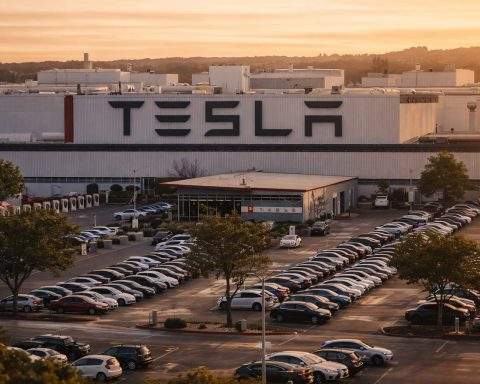
Even with U.S. markets closed for Christmas, EV stocks are still getting fresh inputs on December 25, 2025—from robotaxi optimism and charging-infrastructure warnings to new EV launches and battery/energy-storage deals in Asia.
Taken together, today’s coverage reinforces a theme investors have been pricing in for months: “EV stocks” are no longer trading on EV unit growth alone. They’re increasingly trading on (1) autonomy and software narratives, (2) policy and incentive changes that reshape demand, and (3) who controls batteries, costs, and supply chains.
Below is a detailed roundup of the most notable news, forecasts, and analyses dated Dec. 25, 2025, and what they imply for electric vehicle stocks heading into 2026. CnEVPost
The big EV-stock story on Dec. 25: 2026 is being framed as a “prove-it” year
Several of today’s analyses converge on one idea: 2026 is shaping up to be a year where EV equities are judged less on “EV adoption is inevitable” and more on execution in a tougher, post-incentive environment. That includes everything from robotaxi regulatory approvals to charging rollout pace, and from fresh funding rounds in China to new export-focused vehicle programs in Taiwan. Reuters
Today’s EV stocks headlines (Dec. 25, 2025)
1) Tesla stock narrative: Robotaxis (again) move to the center of the bull case
A widely shared Dec. 25 analysis argues 2026 could be the “year of the Tesla robotaxi,” with Tesla planning Cybercab production in 2026—but stressing that regulatory approvals remain a gating factor for any true commercial rollout. The same commentary notes Tesla’s 2026 plans also include the Tesla Semi and Optimus production timelines as part of a broader “AI + robotics” story investors are attaching to Tesla shares. The Motley Fool
Why it matters for EV stocks: Whether you’re bullish or bearish, this is the core point: for many investors, Tesla is being valued less like a pure automaker and more like an autonomy/AI platform—and that can pull the entire EV-stock complex along with it (especially companies positioned as “next in autonomy”). The Motley Fool
2) Lucid stock spotlight: all-time lows, liquidity messaging, and “survive-to-2026”
A Dec. 25 analysis highlights Lucid touching all-time lows recently and describes the company signaling “strong liquidity runway” while acknowledging a difficult stretch for long-term holders. It points to steps aimed at improving flexibility—such as raising convertible notes due 2031 and using proceeds to address nearer-term maturities—framing the debate as “basement bargain vs. falling knife.” The Motley Fool
Why it matters for EV stocks: Lucid’s storyline is the classic 2025/2026 EV-stock split: capital markets and liquidity matter as much as vehicle specs. In a higher-cost-of-capital world, “who can fund the roadmap” is a key differentiator among smaller EV OEMs. The Motley Fool
3) 2026 demand forecast: Edmunds sees U.S. EV share dipping after incentives fade
A Dec. 25 report citing Edmunds forecasts U.S. new-vehicle sales around 16 million in 2026 and says EV market share could dip to ~6% in 2026, down from an estimated ~7.5% in 2025, as incentive-driven demand fades following the expiration of federal tax credits. CBT News
Why it matters for EV stocks: A softer EV-share forecast doesn’t mean EVs are “over.” But it does suggest 2026 could reward companies that (a) can profit at lower price points, (b) have compelling financing/lease economics, and (c) have non-vehicle revenue streams (software, energy storage, services). CBT News
4) Charging infrastructure warning sign: UK rollout slows, even as EV sales share rises
A Dec. 25 report on the UK market says the public charger rollout slowed in 2025, with 87,200 chargers installed by end of November—an increase of 13,500 versus end-2024—putting growth below 20%, the slowest annual growth since 2022. It also notes EVs accounted for 23% of British car sales in the first 11 months of 2025, up from 19% a year earlier, and highlights policy uncertainty and grid-connection bottlenecks as factors weighing on investment. The Guardian
Why it matters for EV stocks: For charging-network and charging-hardware stocks, the key question is no longer “will EVs grow?” but “does infrastructure scale smoothly enough to keep utilization economics attractive while maintaining reliability?” A slowdown in rollout can cut two ways: it may tighten supply where demand is growing—but it can also signal investment caution when policy signals get mixed. The Guardian
5) Robotaxi operations: the next bottleneck may be charging labor—not vehicles
A Dec. 25 interview-driven report highlights a less-discussed piece of the robotaxi puzzle: humans plugging in robotaxis, cleaning, and depot operations. The CEO of a charging-automation startup describes current depot operations at roughly one human per ~12 robotaxis, arguing automation could reduce labor needs substantially and lower operating costs. Business Insider
Why it matters for EV stocks: If robotaxi narratives keep lifting EV-adjacent equities, the market may increasingly look for picks-and-shovels beneficiaries: automated charging, depot software, fleet-maintenance systems, and power management—the “unsexy” layers that make autonomous fleets scalable. Business Insider
6) Asia supply chain and new entrants: Foxtron’s export EV and China’s capital flows
Two Dec. 25 developments stood out in Asia:
Foxtron (Foxconn/Yulon JV) launches “Bria” EV model: Reuters reports Foxtron launched an EV model called Bria, priced across versions from roughly $28,600 to $36,540, describing it as the first EV made in Taiwan for global export. Reuters also notes Foxtron’s recent acquisition of the Luxgen passenger-car brand for T$787.6 million, with Foxconn and Yulon as key shareholders in Foxtron. Reuters
Changan’s Deepal closes a major Series C: A Dec. 25 report says Deepal (Changan’s EV unit) completed a RMB 6.122 billion (~$874M) Series C, adding new shareholders and citing strong year-to-date sales growth. CnEVPost
Why it matters for EV stocks: These stories reinforce that EV competition is still capitalized and expanding globally, particularly in Asia. Even if U.S./Europe demand growth is bumpier, the global race on cost, supply chain control, and export strategy continues—and that competition can pressure margins for slower-moving or higher-cost EV OEMs. Reuters
7) Battery giants keep widening the “EV-to-grid” angle: CATL’s energy storage push
A Dec. 25 report says CATL signed a three-year energy storage cooperation memorandum targeting a 50 GWh project scale with an electrical equipment maker, framing it as a move to deepen energy storage operations alongside EV batteries. It also breaks out how meaningful storage has become in revenue mix, based on company-reported figures. CnEVPost
Why it matters for EV stocks: For battery leaders (and battery supply chain names), the next leg of growth is increasingly described as EV + energy storage, not EV alone. That can diversify revenue and reduce sensitivity to near-term EV demand swings—an angle equity markets often reward. CnEVPost
What these Dec. 25 signals mean for EV stocks heading into 2026
The market is splitting “EV stocks” into three buckets
1) Platform/autonomy valuation stories
These are equities where investors talk about EVs, but value is increasingly tied to autonomy, AI chips, robotaxis, and software. Today’s Tesla robotaxi coverage sits squarely here. The Motley Fool
2) Manufacturing + liquidity stories
This includes EV OEMs where the central question is cash burn, funding runway, and scaling production efficiently. Today’s Lucid analysis is a clear example of how markets frame these names. The Motley Fool
3) Infrastructure + supply chain control stories
Charging rollout pace (UK) and battery/energy-storage expansion (CATL) are reminders that the EV ecosystem is as much about grid access, utilization economics, and supply chain leverage as it is about vehicles. The Guardian
The 2026 watchlist: themes and catalysts investors are likely to price first
Robotaxi reality checks
If the robotaxi narrative stays hot, the catalysts investors typically watch include:
- Regulatory progress and approvals (especially for unsupervised operation)
- Production readiness for dedicated robotaxi vehicles
- Fleet operations scalability, including charging and depot automation (the “boring” bottleneck) The Motley Fool
Demand and affordability after incentives
With Edmunds projecting softer EV share next year, watch for:
- Lower-priced models and improved financing/lease offers
- Evidence that demand can hold without subsidies
- Used-market dynamics and residual values (important for leasing economics) CBT News
Infrastructure pace and grid constraints
The UK charger slowdown story highlights a durable constraint: it’s not just building chargers—it’s connecting them, maintaining them, and making the economics work. That theme can spill into charging-network stocks and utilities as well as OEM adoption curves. The Guardian
Asia export strategy and cost competition
Foxtron’s export positioning and Deepal’s fresh capital reinforce the competitive landscape—particularly around mid-priced EVs and aggressive scaling. For investors, that often translates into margin pressure elsewhere unless brands can differentiate on software, autonomy, or ecosystem integration. Reuters
Bottom line for EV stocks on Dec. 25, 2025
Today’s EV-stock news flow isn’t about one earnings beat or one delivery number—it’s about how the market is setting up 2026:
- Tesla and autonomy narratives keep pulling attention (and valuation frameworks) toward robotaxis and AI. The Motley Fool
- Demand forecasts are getting more cautious as incentive effects fade, raising the bar for profitability and affordability. CBT News
- Charging and grid buildout remains a real-world constraint, even in markets where EV penetration is rising. The Guardian
- Asia’s EV and battery ecosystem continues to deploy capital and expand globally—raising competitive intensity. Reuters
As always, EV stocks can move sharply on narrative momentum—especially around robotaxis—but the next phase of performance is likely to hinge on execution: approvals, costs, charging reliability, and balance-sheet strength.