Published Sunday, December 21, 2025
EV stocks head into the final full week of 2025 with a familiar mix of tailwinds and landmines: thinning holiday liquidity, a heavy macro-data Tuesday, and an EV policy backdrop that has shifted dramatically since the U.S. clean-vehicle tax-credit changes took effect this fall. Add a fresh autonomy narrative at Tesla and Rivian—and balance-sheet pressure across several smaller EV makers—and you have a setup where headlines can move shares more than fundamentals.
This week’s reality check: markets will be open fewer hours. U.S. stocks are scheduled to close early on Wednesday, Dec. 24 (1:00 p.m. ET) and remain closed on Thursday, Dec. 25. New York Stock Exchange+2Nasdaq+2
Below is what matters most for EV stocks in the week ahead—what’s moving the group now, what’s likely to move it next, and the specific events investors will be watching day-by-day.
The week-ahead calendar that matters for EV stocks
EV shares often trade like “long-duration” growth assets—meaning moves in bond yields, risk appetite, and macro surprise data can swing them quickly. This is especially true in a holiday-shortened week when liquidity is thinner than usual.
Market hours (U.S.)
- Wednesday, Dec. 24: Early close for U.S. stock markets at 1:00 p.m. ET New York Stock Exchange+1
- Thursday, Dec. 25: Markets closed (Christmas Day) Nasdaq+1
- Investing coverage also flags an early close Wednesday and a closed Thursday for the holiday week. Investopedia
Key U.S. macro releases
- Tuesday, Dec. 23 (8:30 a.m. ET):GDP, 3rd Quarter 2025 (Initial Estimate) and corporate profits (preliminary), per BEA schedule update Bureau of Economic Analysis
- Tuesday, Dec. 23 (10:00 a.m. ET):Conference Board Consumer Confidence (next release date and time) The Conference Board
- Wednesday, Dec. 24 (8:30 a.m. ET):Initial Jobless Claims released on Wednesday (holiday week exception) OUI
Why EV investors should care: a surprise swing in growth or confidence expectations can push yields and equity risk appetite—often magnifying moves in Tesla and other high-beta EV names.
Theme 1: EV policy whiplash is still the sector’s biggest overhang
The single most important “macro” factor for U.S.-listed EV stocks right now isn’t oil prices or even interest rates—it’s policy-driven demand and pricing power.
1) The post-tax-credit reality is settling in
In 2025, sweeping U.S. legislation ended the widely discussed $7,500 new-EV credit and $4,000 used-EV credit on Sept. 30, 2025, per Reuters reporting at the time. Reuters
The IRS clean-vehicle credit guidance underscores how eligibility tightened around that Sept. 30, 2025 cutoff (including “acquired on or before” language for certain situations). IRS
What that means for stocks: the market has shifted from “subsidy-supported volume growth” toward “prove you can profitably grow without it”—and it’s not just EV startups feeling the pressure.
2) Automakers are pivoting toward hybrids—and investors are rewarding pragmatism
Ford’s recent strategy overhaul is one of the clearest examples of how legacy automakers are adapting. The Financial Times reports Ford announced a $19.5 billion pre-tax charge as it shifts away from large EVs and leans harder into hybrids/ICE profitability, citing weaker demand and policy changes. Financial Times
Reuters also reported Ford retreating from EVs with a $19.5 billion charge as policy changes took hold. Reuters
Investor takeaway for the week ahead: EV pure-plays can still rally hard on autonomy or product catalysts—but the broader market is signaling it wants disciplined capex, clear paths to margin, and credible unit economics.
3) Charging infrastructure is now a legal and political battleground
A major EV tailwind in prior years was federally supported charging buildout. Reuters reported 16 U.S. states sued over the suspension of a $5 billion EV charging program (and related actions). Reuters
Why this matters for EV stocks:
- For charging-network names, funding uncertainty can hit growth assumptions and utilization forecasts.
- For automakers, slower infrastructure rollout can dampen mainstream adoption—especially for non-Tesla ecosystems in regions with sparse fast-charging.
Theme 2: Autonomy is back in the driver’s seat—Tesla and Rivian are leading the narrative
For much of 2025, “EV stock” often traded as a proxy for price cuts, demand softness, and subsidy rollbacks. In the last two weeks, the story has shifted: autonomy and AI are pulling attention (and capital) back into select names.
Tesla: Robotaxi headlines are multiplying
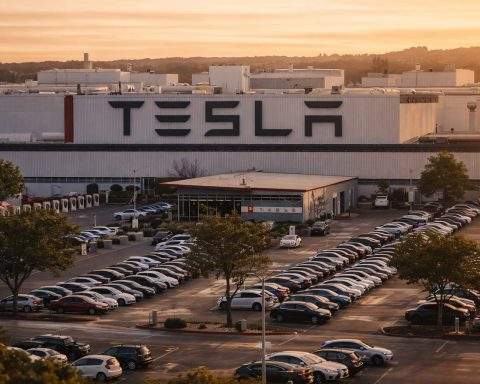
Reuters reported Tesla shares jumped after Elon Musk confirmed driverless robotaxi testing (including comments about testing with no occupants). Reuters
Over this weekend, Business Insider reported Tesla has been recruiting factory workers and sales staff as operators supporting its Robotaxi service while Full Self-Driving is engaged, and described permitting constraints and the reality that fully driverless commercial operations still face regulatory hurdles in key states. Business Insider+1
What to watch this week:
- Any new regulatory developments (permits, restrictions, incident reporting) can move the stock quickly.
- Any signals about fleet scale and wait times can shape investor perception of near-term monetization versus “still experimental.”
Rivian: AI Day momentum is turning into Wall Street upgrades
Rivian’s recent rally has been fueled by its autonomy roadmap and custom chip strategy. Reuters reported Rivian shares surged after analysts cheered the move toward a custom self-driving chip and a new AI strategy. Reuters
Barron’s reported Baird upgraded Rivian to Buy and raised its price target to $25, pointing to the R2 platform and longer-term product momentum. Barron’s
Investor’s Business Daily also highlighted Wedbush raising its Rivian target to $25, framing 2026 as an “inflection year” narrative around R2 and autonomy. Investors
What to watch this week:
- Momentum traders will be sensitive to follow-through analyst notes and any company commentary that either reinforces or cools the autonomy story.
- In a thin holiday tape, Rivian is a prime candidate for outsized swings—up or down—because sentiment is doing a lot of the work.
Theme 3: Global EV demand is still growing—but the winners are diverging sharply
Even with subsidy rollbacks in some regions, the global EV market hasn’t “stopped.” But the market’s growth is increasingly uneven—and stock performance is following that divergence.
Global sales: growth continues, especially in China
Reuters noted global EV sales rose 21% year-on-year to 18.5 million vehicles in the first 11 months of 2025, citing consultancy Rho Motion. Reuters
That same Reuters analysis also flags policy shifts (U.S. subsidy rollbacks and Europe deferring some prior targets), underscoring why demand trajectories are becoming more region-specific. Reuters
Europe: affordability battles and brand competition remain intense
Tesla launched a lower-priced Model 3 variant in Europe to boost sales amid competition and softer demand, according to Reuters. Reuters
For Chinese OEMs, regional expansion continues: Reuters reported a deal tied to assembling XPeng’s models in Malaysia, reflecting broader Southeast Asia manufacturing strategies. Reuters
What to watch this week:
- Any late-month updates that hint at December delivery momentum in key markets (Europe, China) can shift near-term sentiment—even before official monthly numbers.
- News on pricing and incentives will matter more than usual because consumers are increasingly payment-sensitive after subsidy rollbacks.
Theme 4: Regulation and consumer trust are becoming stock catalysts (yes, really)
Regulatory actions don’t always move EV stocks day-to-day—until they touch core marketing claims like range, degradation, and warranties.
Reuters reported Italy ended probes into Tesla, BYD, Stellantis, and Volkswagen over alleged misleading EV consumer information—closing the cases after companies agreed to increase transparency, including clearer range/degradation information and new tools to help consumers compare range. Reuters
Why this matters for the week ahead:
- EVs are increasingly sold on software-like claims (range estimates, feature packages, autonomy tiers). Regulators focusing on “truth in advertising” can create headline risk—and potentially influence warranty cost assumptions.
Theme 5: Financing and balance-sheet stress is still the dividing line between survivors and strugglers
Even as autonomy narratives lift a few names, the sector still has clear “haves and have-nots” in liquidity and funding access.
Polestar: liquidity backstop from Geely
Reuters reported Polestar secured a shareholder loan of up to $600 million from majority owner Geely, structured as subordinated financing. Reuters
Volkswagen’s PowerCo: external funding options in focus
Reuters reported Volkswagen’s battery unit PowerCo is looking more closely at external financing options as Volkswagen reins in investment—raising the prospect of partners, joint ventures, or even an IPO path over time. Reuters
Lucid: production guidance cuts remain a red flag
Reuters reported Lucid cut its 2025 production forecast to 18,000 vehicles amid supply and production constraints, highlighting the ongoing execution challenge for smaller EV makers. Reuters
What to watch this week:
- Any capital-markets headlines (loans, equity raises, covenant changes) can move small- and mid-cap EV names sharply in a thin holiday week.
- Investors are more sensitive than usual to cash burn and production realism after a year where demand and incentives shifted quickly.
EV stocks to watch this week: what could move each name
This isn’t a “buy list”—it’s a catalysts list for the week ahead.
- Tesla (TSLA): Robotaxi staffing, fleet scaling details, and regulatory headlines. Reuters and Business Insider reporting has elevated autonomy to a front-page catalyst again. Reuters+2Business Insider+2
- Rivian (RIVN): Follow-through from AI Day and the wave of analyst target moves; the stock has become a sentiment bellwether for “EV + AI.” Reuters+2Barron’s+2
- Ford (F): Market digestion of its EV strategy reset and the implications for U.S. EV demand and supplier ecosystems. Financial Times+1
- Polestar (PSNY): Funding headlines and liquidity narrative after the Geely loan. Reuters
- Lucid (LCID): Any new commentary around production constraints or demand after the guidance cut. Reuters
- Volkswagen / battery supply chain exposure: Watch for capital discipline and PowerCo funding structure signals. Reuters
- China EV makers (BYD, NIO, XPeng, Li Auto): Market-share and expansion headlines; Southeast Asia assembly moves and European competition remain central themes. Reuters+2Reuters+2
- Charging and infrastructure-linked names: Any updates on the multi-state lawsuit and federal program direction could shift sentiment. Reuters
The “Santa rally” question matters for EV stocks, too
A year-end risk-on burst can lift EV shares even when company-specific fundamentals are unchanged—especially with liquidity thinner than normal.
MarketWatch notes the historical idea of a “Santa Claus rally” and how investors are watching whether markets can still stage a late-year push. MarketWatch
The Financial Times similarly highlights uncertainty around the usual year-end rally pattern amid broader market volatility and macro concerns. Financial Times
Translation for EV traders: if broad equities turn decisively risk-on (or risk-off) around Tuesday’s GDP and confidence data, EV stocks can amplify the move—because they tend to sit at the intersection of growth expectations, rates, and investor sentiment.
Bottom line for the week ahead
EV stocks enter the week of Dec. 22–26 facing a compressed calendar and a catalyst-heavy narrative:
- Macro matters: GDP and consumer confidence hit Tuesday; jobless claims Wednesday morning—then liquidity drops into the holiday. Bureau of Economic Analysis+2The Conferenc…
- Policy is still the demand lever: the post-credit landscape is reshaping product strategy and investor expectations. Reuters+2IRS+2
- Autonomy is the upside story: Tesla and Rivian are reclaiming mindshare with robotaxi and AI-chip narratives. Reuters+2Barron’s+2
- Balance sheets still decide who survives: funding headlines for Polestar, capex discipline at VW’s battery unit, and production constraints at Lucid remain reminders that not all EV stocks are the same asset class. Reuters+2Reuters+2