
New York, May 22, 2026, 14:02 EDT
- Family Dollar has shuttered at least 350 stores in the U.S. since July 2025, fresh location-data analysis shows.
- Cuts are hitting hardest in the South, Appalachia, and older cities.
- The new private-equity owners want to cut underperforming stores and are pitching a turnaround.
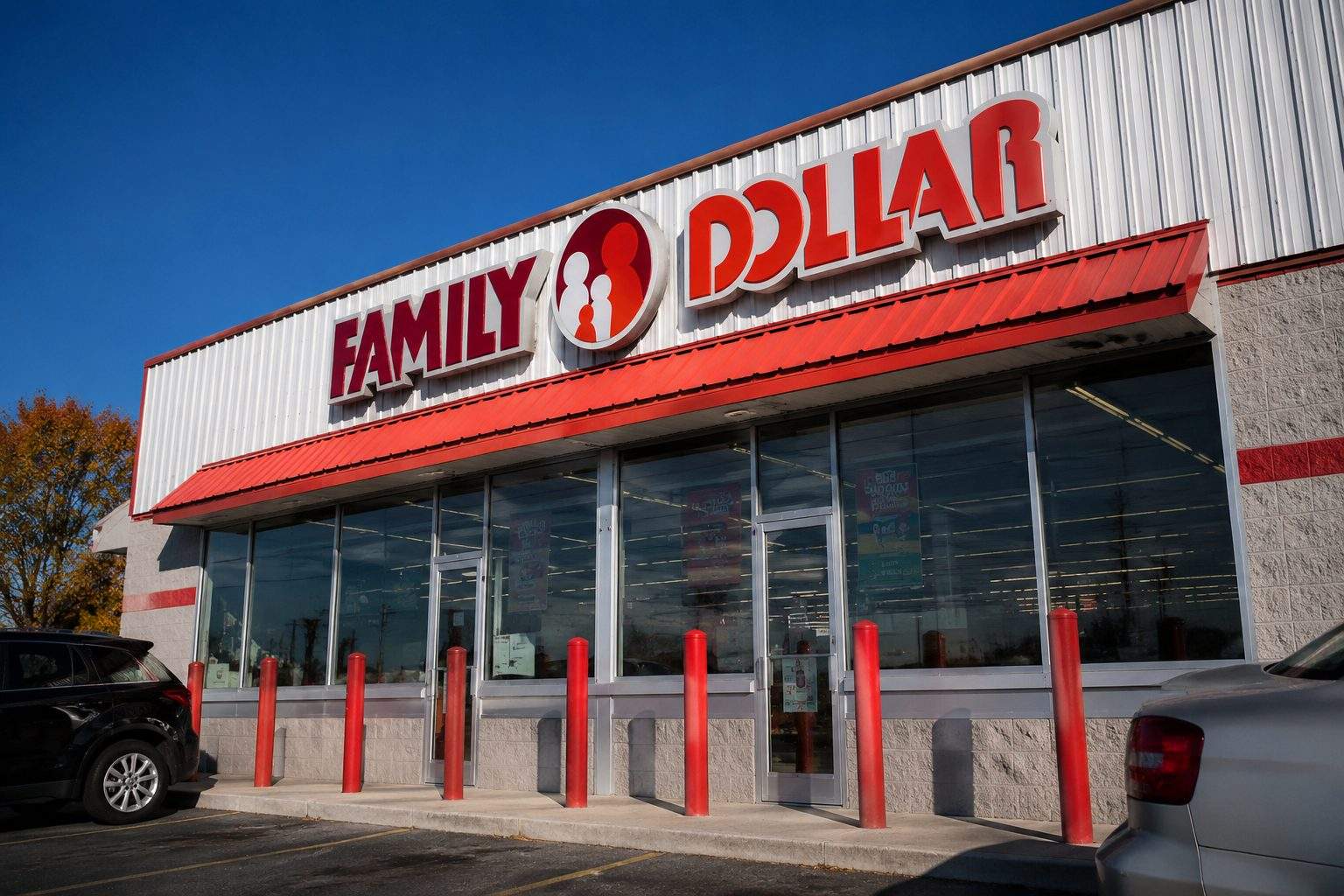
Family Dollar has shut down at least 350 U.S. locations over the past 10 months, according to a location-data review. The string of closures started under Dollar Tree and is now challenging the chain’s private-equity buyers. Local Falcon said it matched Family Dollar’s public store directory listings on July 7, 2025 and May 12, 2026, and then checked dropped stores on Google Maps.
The closure schedule is important since lots of these shutdowns go beyond accounting. Some of these stores are in areas where people depend on discount shops for groceries, cleaning supplies and home necessities. Trips to bigger stores aren’t easy. In Warren, Michigan, Axios Detroit said a Family Dollar on Eight Mile Road was about to close. Liquidation signs are up and even fixtures are on sale.
Family Dollar is getting its first real test without Dollar Tree. Dollar Tree closed the $1.0075 billion cash sale to Brigade Capital Management and Macellum Capital Management in July 2025, wrapping up its difficult tenure with the banner. Dollar Tree said when the sale went through that it could now focus on its main business.
Family Dollar is calling the cuts part of a reset, not an exit from value retail. Chairman and CEO Duncan MacNaughton in March said the priority was “simplifying the business” and “improving execution in our stores.” The company reported about $13 billion in revenue for fiscal 2025, 2.5% growth in comparable sales, and $495 million in EBITDA, which strips out interest, taxes, depreciation and amortization. PR Newswire
Family Dollar store numbers are dropping. Local Falcon said Texas is down 35 stores, Ohio is down 28, and Georgia closed 26 locations. Pennsylvania lost 15. Arkansas had the biggest percentage drop for any state with at least 50 starting stores, cutting 13.9% of shops. Six states—Idaho, Massachusetts, Montana, South Dakota, Utah and Wyoming—didn’t lose any.
Dollar Tree is cutting store count after it said in March 2024 it would shutter about 600 Family Dollar locations in the first half of the fiscal year and close another 370 Family Dollar stores as leases ran out. The retailer also plans to close roughly 30 Dollar Tree stores over time. The decisions came after reviewing market conditions and checking how each store was doing.
Family Dollar is shutting down its location at Cooper and Terry roads in Jackson, Mississippi, by the end of May, Mississippi Today said. Clearance discounts go up to 70% as the store moves to close. Bobby “Bulldog” Rhymes, who lives nearby, told the outlet the closure means he’ll have to drive longer for basics: “Instead of 15 minutes, you’re talking 40 or an hour.” News From The States
Family Dollar’s troubles were bigger than just ownership changes, analysts said. Evercore’s Michael Montani told Reuters in March the Dollar Tree sale was “addition by subtraction.” Mari Shor at Columbia Threadneedle Investments said Dollar Tree’s growth target was “aggressive” given the macro environment. Dollar Tree CEO Mike Creedon told Reuters, “everybody is hurting right now,” as more people shopped at discounters due to inflation. Reuters
Discounters are moving at different speeds. Dollar General wants about 450 more U.S. stores in 2026 and is remodeling a lot of locations. Dollar Tree is working to focus its own business after getting rid of Family Dollar. Walmart still sets the price pace for groceries and household goods with much of the low-income crowd.
Family Dollar is testing new formats. In March, the company said it was working on an extra-small-box store for dense city markets, planning to pilot the concept in 2026 and look for expansion starting in 2027. Retail Dive said the turnaround plan lists about 70 separate initiatives, touching merchandising, store operations, supply chain, and tech.
Closing underperforming stores might not solve Dollar Tree’s problems with weak shopper loyalty, price gaps, or convenience. Neil Saunders at GlobalData told AP that Dollar Tree “bit off far more than it could chew” by taking on Family Dollar. Marshal Cohen at Circana warned that shuttering stores could take away a “critical place” for lower-income shoppers to find value deals. That’s the tough part for the turnaround. Fewer loss-making stores might help the numbers, but fewer stores nearby could hurt the customer Family Dollar says it still wants. apnews.com



![US Stock Market Today 08/28/2026 [UPDATE: 02:04 EDT] [Marvell Stalls Near Overnight Low as Price Discovery Fades]](https://ts2.tech/wp-content/uploads/2026/08/US-market-dashboard-2026-08-28-0159-480x384.jpg "US Stock Market Today 08/28/2026 [UPDATE: 02:04 EDT] [Marvell Stalls Near Overnight Low as Price Discovery Fades]")