
The FCC approved the Reflect orbital space mirror project. The company targets 50,000 satellites, meaning launches could hit nearly 25 per day if it sticks to its timeline.
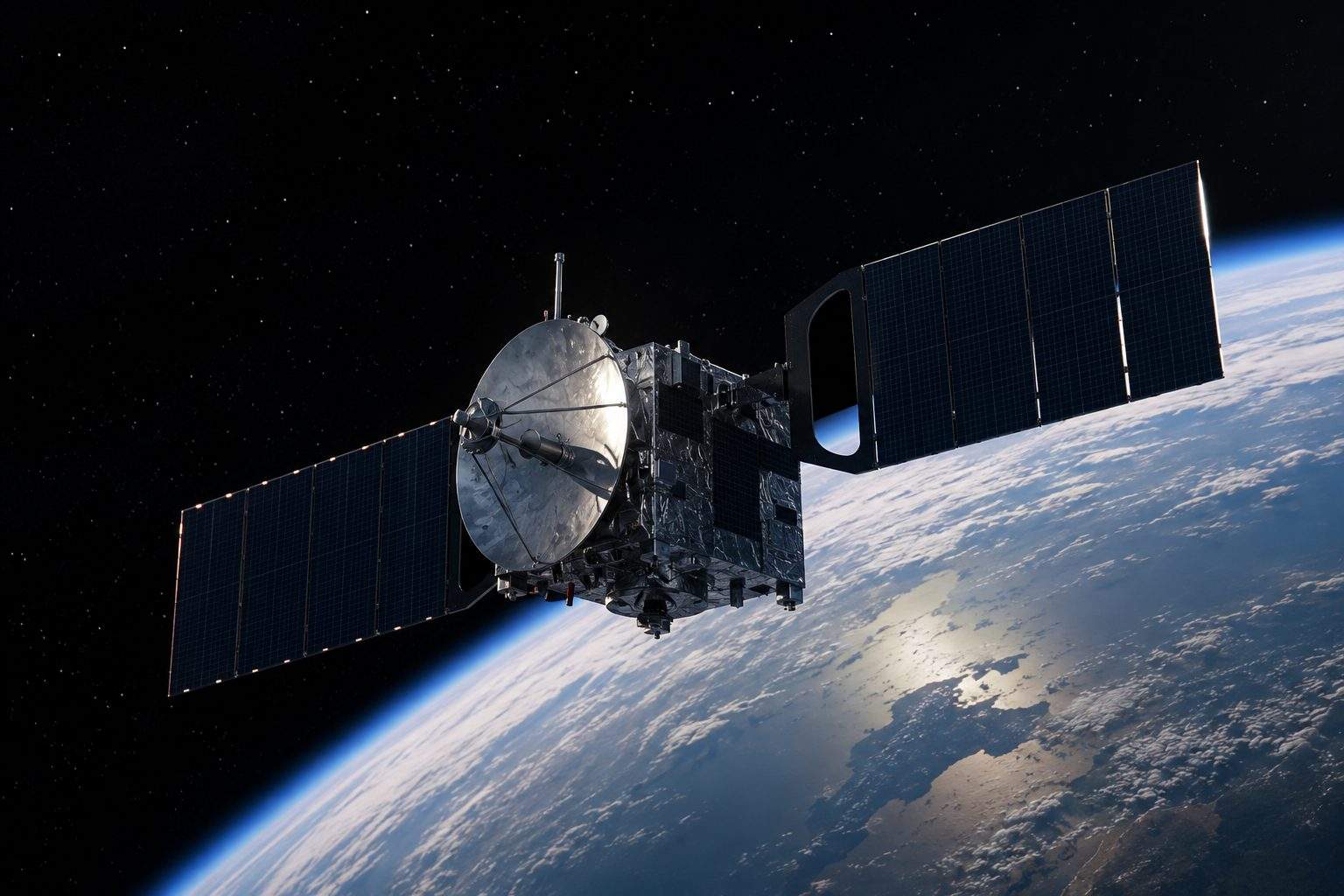
The U.S. Federal Communications Commission signed off on Reflect Orbital’s first sunlight-reflecting test satellite. The order allows just one unit. That’s 0.002% of what the startup says is its target of over 50,000 satellites by 2035.
The Earendil-1 grant gives permission for UHF, S-band, and X-band radio links from an orbit around 625 kilometres up. The term is two years, with about one year allowed for operations and less than one for deorbit, much shorter than the 15-year window on a regular FCC space-station licence. Reflect must put up a surety bond by Aug. 10 as a guarantee against default. The FCC said any new satellite applications would face a separate review.
That’s the key difference for capital. The order clears one hurdle on communications and orbital debris for a single experiment, but it doesn’t create demand, set prices, solve costs, win environmental approval or answer the bigger economics for a fleet of tens of thousands.
Reflect plans to launch Earendil-1 later this year but hasn’t named a date. “This license is the first step toward rigorously testing our technology’s efficacy,” said co-founder and CEO Ben Nowack. The team is focused on things like measured brightness, how well it points, how long the beam lasts, power output, and proving the safeguards actually work. Via Satellite
U.S. cash equity markets are closed for the weekend. The S&P 500 added 1.2% over the week, the Nasdaq Composite climbed 1.7%, but the Russell 2000 slid 0.6%. Reflect isn’t publicly listed, so there’s no stock move after the approval; the company is still a venture-stage hardware play.
Reflect Orbital’s roadmap stretches its energy plans past the first lighting test. Lux measures light intensity at a surface. Capacity factor is the share of actual power to the max possible. Reflect says its energy service stays in testing through 2028, with a 1% capacity-factor lift aimed for 2030 and 20% by 2035.
| Measure | FCC-cleared test and 2026 step | Reflect’s stated 2035 target |
|---|---|---|
| Spacecraft | FCC approved one; company plans two more | Over 50,000 units |
| Lighting | 0.1 lux for five minutes, matches a full moon | Up to 36,000 lux for several hours |
| Energy service | In testing | 20% gain in capacity factor, 300 W/m² for three hours |
| Regulatory status | One licensed radio station, valid two years | No fleet license |
After 2028, the planned expansion gets tougher. The minimum pace jumps from around 2.6 satellites per day in 2028 to close to 25 a day between 2031 and 2035. That figure doesn’t count failed satellites, any needed replacements, or delays.
| Target year | Fleet target | Minimum additions from prior milestone | Implied average deployment |
|---|---|---|---|
| 2026 | 2 | — | — |
| 2027 | 36 | 34 to be added in one year | 0.09 each day |
| 2028 | 1,000+ | At least 964 more in one year | 2.64 per day |
| 2030 | 5,000+ | At least 4,000 over two years | 5.48 a day |
| 2035 | 50,000+ | At least 45,000 in five years | 24.64 per day |
These figures use year-end targets and assume even deployment for each period. Attrition and replacements aren’t included.
Factory output and upfront funding are key to how the market will value Reflect. The company brought in $20 million in a Series A round led by Lux Capital in May 2025, with Sequoia Capital and Starship Ventures also taking part. Details on unit costs, launch spending, customer pricing or signed revenue weren’t included in the news. Lux managing partner Josh Wolfe said the platform could be used from “critical operations to energy resilience,” though said it’s not possible yet to know how much the company will need to raise in the future based on what was released. Reflect Orbital
Brightness is also a problem for competition, not just for a product’s success. The European Southern Observatory said SpaceX has worked to dim its broadband satellites, but Reflect’s service counts on those satellites being highly reflective. ESO astronomer Olivier Hainaut said sunlit satellites end up “much brighter than distant galaxies.” His models found a single Reflect mirror could ruin a shot from a camera like the Vera C. Rubin Observatory’s, and a whole group could make every picture useless when the satellites are sunlit. These are just simulations, not data from Earendil-1. European Southern Observatory
The risks aren’t just about the mirror failing. Earendil-1 could fall short on brightness or pointing, and costs could jump past what customers want. There’s also manufacturing or launch delays to consider, and astronomers or others could push back harder when they see actual results. One satellite isn’t enough for regulatory cover if they want a full fleet. If this test is weak, Reflect might miss the technical proof and struggle to get funding for more satellites.
U.S. markets open again Monday, July 13, at 9:30 a.m. Eastern. Reflect says only that launch is set for “later this year,” so for now, eyes stay on a possible launch timeline, any independent testing updates, customer deals and price details. The Aug. 10 bond filing is still the main regulatory marker ahead. With no fresh numbers, FCC’s approval lets Reflect run tests, but that’s not enough to call it a business yet. nasdaq.com
Related articles: Stock Market