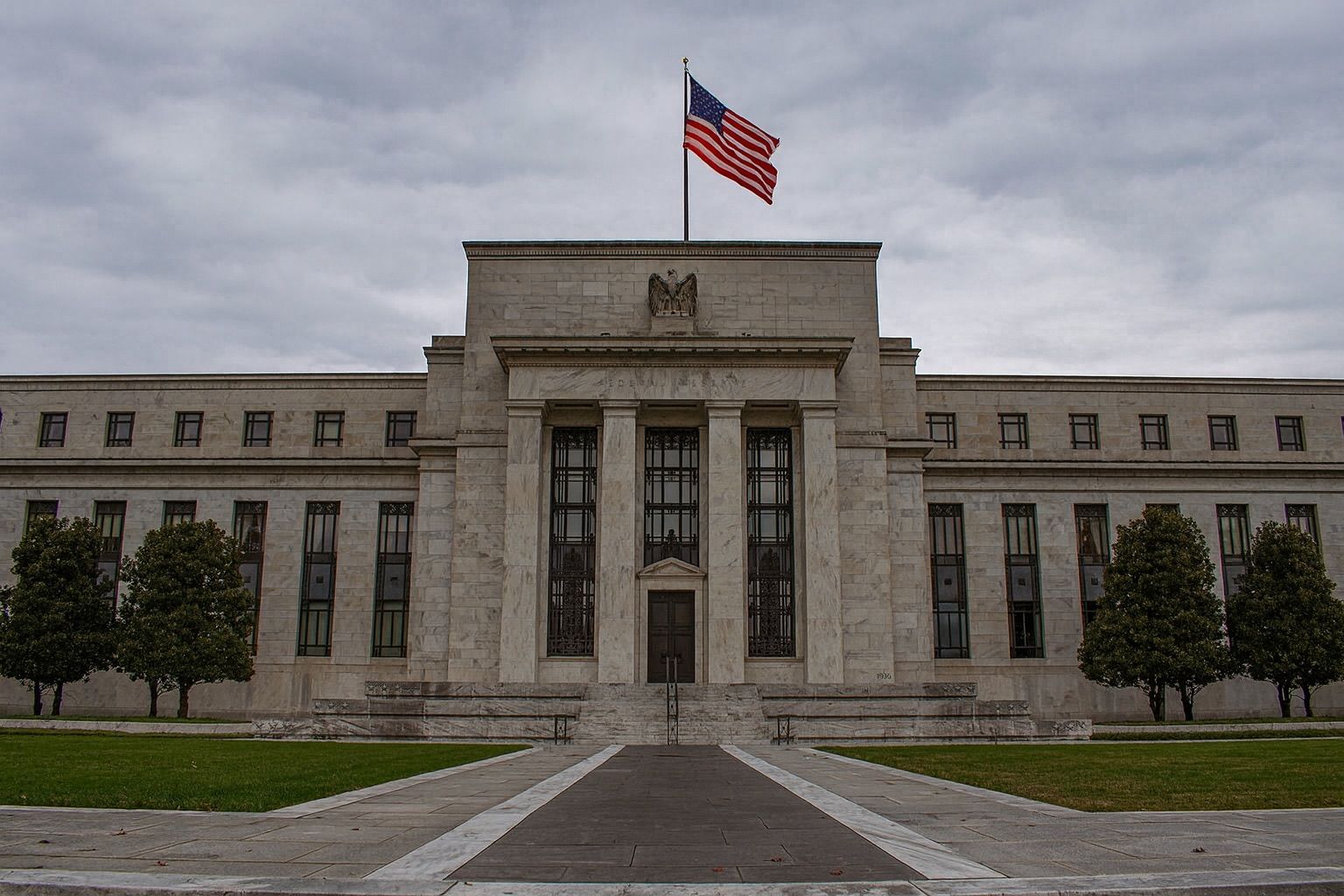

Dateline — November 7, 2025. The Federal Reserve’s money‑market backstop has roared to life at month‑end and into this week. Banks drew on the Standing Repo Facility (SRF) in record size at the turn of October, part of a roughly $125 billion burst of short‑term liquidity across five trading days aimed at smoothing funding markets and averting a broader credit squeeze. Today, New York Fed President John Williams said the Fed may soon need to rebuild reserves by gradually purchasing assets—a technical step for liquidity management, not a policy pivot—after the Fed’s decision last week to halt quantitative tightening (QT) on December 1.
What happened
- Record SRF take‑up at month‑end. On Friday, Oct. 31, the SRF lent $50.35 billion in two auctions—the largest daily usage since the facility was created in 2021—as month‑end frictions pinched funding. On the same day, money funds also parked $51.8 billion at the Fed’s reverse‑repo (ON RRP) facility, underscoring two‑way pressures in the plumbing of short‑term markets.
- Five‑day liquidity surge totals about $125 billion. Tallying the late‑October/early‑November operations—including a $22 billion SRF day the following Monday—puts the five‑day gross injection near $125 billion, according to contemporaneous tallies and reporting. The aim: keep settlement and collateral markets running smoothly as reserves thin.
- Today’s signal from the New York Fed. Speaking in Frankfurt, John Williams said reserves appear to be moving from “abundant” toward “ample.” Once “ample” is reached, the “next step” would be gradual asset purchases to maintain smooth rate control—explicitly framed as reserve management, not stimulus. He also said he expects continued active use of the SRF as needed. Reuters+1
- Policy backdrop: QT pause and a rate cut. At its Oct. 29 meeting, the Fed cut the federal funds target range by 25 bps to 3.75%–4.00% and said it will stop shrinking its securities holdings on Dec. 1, shifting to full reinvestment (with agency MBS proceeds to Treasuries). The SRF minimum bid rate is currently 4.00%, per the Fed’s implementation note and desk FAQs.
Why now? The mechanics behind the liquidity pulse
Two forces tightened cash this autumn:
- QT and dwindling buffers. As QT ran, the system’s cushion—reserve balances—slipped toward the boundary of “ample.” In the latest H.4.1 data (week ended Nov. 5), reserve balances averaged $2.86 trillion, down sharply from a year earlier, a level consistent with more frequent money‑market frictions. Federal Reserve
- Calendar frictions & collateral flows. Month‑end, quarter‑end and heavy Treasury issuance/settlement dates can bump repo rates and fragment cash. When market rates pop above the SRF’s 4.00% minimum, it becomes economical to swap Treasuries/agency MBS for overnight cash at the Fed. That’s exactly what happened around Oct. 31, when SRF take‑up set a record.
Key numbers (at a glance)
- $50.35 B — single‑day SRF usage record (Oct. 31).
- ~$125 B — cumulative SRF liquidity across five trading days around month‑end, per aggregated reporting.
- $2.86 T — reserve balances (weekly average, week ended Nov. 5).
- 3.75%–4.00% — current policy rate; SRF floor at 4.00%.
“This isn’t QE”: What the SRF actually does
The SRF is a daily, overnight repo backstop where eligible banks and dealers pledge Treasuries or agency MBS to borrow cash from the Fed for one day, typically at the SRF minimum rate (today 4.00%). It caps spikes in repo funding costs and helps the Fed control short‑term rates. Funds roll off the next day; the cash isn’t permanent and isn’t an asset‑purchase program meant to stimulate demand.
That said, gross SRF additions can be offset by flows into ON RRP, meaning net system liquidity on a given day may be smaller than the headline SRF number. On Oct. 31, for example, $51.8 billion in ON RRP usage coincided with the $50.35 billion SRF draw.
Today’s fresh twist: Reserve‑management purchases on the horizon?
Williams’ remarks effectively lay out the post‑QT playbook: once reserves settle at “ample,” the Fed expects to stabilizethem with measured asset purchases—not to ease policy, but to maintain control of overnight rates and prevent the kind of funding flare‑ups seen at quarter‑ and year‑ends. Markets will parse this as technical balance‑sheet expansiondistinct from QE. Reuters
Timeline: How we got here
- Oct. 29: Ahead of the meeting outcome, SRF usage had already picked up; the Fed then cut rates 25 bps and announced QT would stop on Dec. 1. Chair Jerome Powell emphasized December policy is not pre‑decided.
- Oct. 31: Record SRF day ($50.35 B) as repo rates ran hot at month‑end; ON RRP absorbed $51.8 B the same day.
- Nov. 3: Another $22 B in SRF take‑up as frictions lingered into the new month.
- Nov. 5–6: H.4.1 shows average reserves at ~$2.86 T, consistent with the Fed’s decision to halt runoff.
- Nov. 7 (today): Williams says reserve‑management purchases may be needed “not long” from now, reinforcing that this is operational, not a shift toward QE. Reuters
What it means (and who should care)
- Banks & dealers. The SRF is functioning as designed—a ceiling on repo rates and a swift safety valve when private cash is dear. Expect usage to ebb and flow around calendar pinch points even after QT ends.
- Investors across asset classes. Funding stability reduces the risk of forced selling in rates and credit. But don’t confuse overnight repos with policy easing; the SRF doesn’t add durable liquidity unless rolled daily. Powell also stressed that another December cut is “not a foregone conclusion.” Federal Reserve
- Macro takeaway. The Fed is drawing a line under QT and preparing to fine‑tune reserves. That should lower the odds of a 2019‑style repo flare‑up while keeping policy focused on inflation and employment.
FAQs
Is the Fed “bailing out” banks?
No. SRF loans are fully collateralized, overnight repos at a penalty‑like rate relative to easy market conditions. They’re meant to cap funding stress, not subsidize risk‑taking. Federal Reserve Bank of New York
Why did usage spike to a record?
A mix of month‑end balance‑sheet constraints, heavy Treasury settlements, and thinner reserve buffers pushed repo rates up; the SRF stepped in as a rate ceiling.
What’s changing on December 1?
The Fed will end balance‑sheet runoff and reinvest maturities to hold the portfolio roughly steady—a shift from draining reserves to maintaining them.
Will the Fed start buying bonds again?
Possibly, but framed as reserve‑management purchases to stabilize liquidity—not QE. Williams said this could come “not long” after reserves reach “ample.” Reuters
The bottom line
The Fed’s liquidity plumbing is doing its job: a five‑day, ~$125 billion burst of overnight repos bridged a funding pinch without signaling a policy pivot. With QT ending on Dec. 1 and officials preparing to fine‑tune reserves—potentially via technical asset purchases—the central bank is trying to ensure rate control and market functioningwithout re‑opening the monetary‑easing spigot. For now, the message is operational steadiness, not stimulus.
Sources & further reading:
- Reuters on record SRF usage and today’s Williams remarks.
- ABC News and Economic Times on the five‑day liquidity burst and the follow‑on $22 B SRF day.
- Federal Reserve FOMC Implementation Note (Oct. 29) and Powell press conference transcript.
- Federal Reserve H.4.1 weekly balance‑sheet data (reserves).
- New York Fed SRF FAQs (parameters, minimum bid rate).
Editor’s note: This explainer is for information only and does not constitute investment advice.
Related articles: Federal Reserve