
NEW YORK, April 23, 2026, 10:47 EDT.
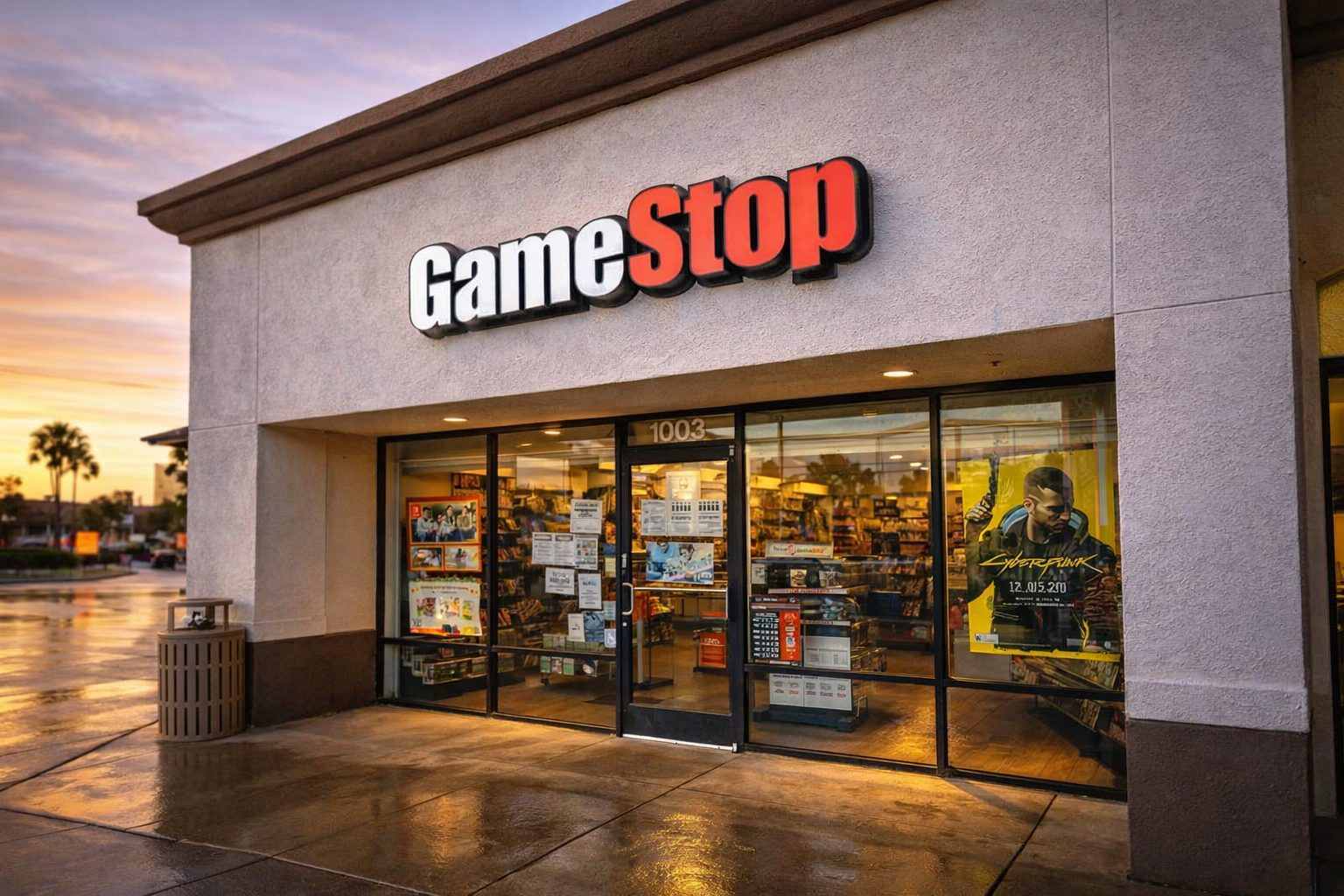
GameStop stock edged lower Thursday morning, reversing some of the previous day’s jump sparked by a meme-driven console trade-in offer. At 10:31 a.m. ET, shares were trading at $25.24, down roughly 1.6% after hitting $26.14 earlier.
It’s significant: GameStop still reacts sharply to retail-driven hype, despite its underlying business facing pressure as the sector moves toward downloads and online sales. The result? Shares bounce between feverish rallies and the weight of an uncertain, drawn-out turnaround.
Earlier this week, GameStop rolled out a limited-time deal, dangling as much as $420.69 in cash to Pro members trading in an Xbox Series X or PlayStation 5 through April 22. By Thursday, though, that window had shut. The company’s trade-in pages reflected a sharp return to baseline: top payout for an Xbox Series X dropped to $192.50 in cash, or $275 if you opt for store credit.
The promotion tapped into GameStop’s ongoing dependence on trade-ins and used games to drive foot traffic. Shares climbed 4.74% to $25.62 on Wednesday, Benzinga noted, as traders jumped on the news.
GameStop, setting aside the meme-fueled hype for a moment, is moving into fresh territory. On April 14, the company introduced Power Packs—a digital trading-card platform that lets customers buy digital packs linked directly to actual PSA-graded cards held in PSA’s vault. Pricing runs the gamut, from $25 up to $2,500 per pack.
That change arrives as GameStop’s old-school retail segment continues to contract. Fourth-quarter revenue dropped 14% in March; hardware and accessories sales slid to $535.6 million, down from $725.8 million the year before. Cohen has said trading cards and collectibles are now a “significant” priority for the company. Reuters
Cohen’s got some flexibility here, thanks to the balance sheet. GameStop’s latest annual filing listed $6.3 billion in cash and cash equivalents, plus another $2.7 billion parked in marketable securities—mostly short-term plays—at the end of January. The company also reported $4.2 billion in convertible notes, debt that could morph into stock depending on certain terms, and counted 2,206 stores globally.
The pressure from rivals hasn’t let up. GameStop flagged competition from big-box retailers, electronics stores, plus streaming platforms like Sony, Xbox Live from Microsoft, and Nintendo Switch Online. That’s a reminder: each attempt to revive foot traffic and used-game trade-ins is running headlong into an industry still tilting digital.
Valuation is all over the place. Simply Wall St, in a note from last week, ran the numbers through a discounted cash flow model and arrived at $164.96 per share for intrinsic value. But they also flagged that GameStop’s earnings multiple sits at 26.6—well above the specialty retail group’s 20.8 average and far higher than its immediate peers at 16.4.
Michael Burry, the “Big Short” investor, said back in January that “The value is not in another big short squeeze.” He characterized the stock more as a wager on Cohen’s capital allocation. Reuters
Still, this trade isn’t locked in. As of March 31, roughly 62.8 million GameStop shares—15.33% of the available float—were being sold short, so there’s a significant chunk of the market still wagering against the stock. If no major strategic pivot materializes and the core retail business keeps losing ground, attention is likely to swing back to declining sales and the pressure from digital rivals instead of the most recent round of hype.
Related articles: NYSE:GME




![Australia Stock Market Today 28/08/2026 [UPDATE: 13:36 AEST] [Banks and BHP Lift ASX as WAM, PEXA Sink 18%]](https://ts2.tech/wp-content/uploads/2026/08/AU-market-dashboard-2026-08-28-1334-480x384.jpg "Australia Stock Market Today 28/08/2026 [UPDATE: 13:36 AEST] [Banks and BHP Lift ASX as WAM, PEXA Sink 18%]")